Chapter 13: College Years
College years
More independence and responsibility, New dining environment, New and different food options, Different social circumstances and influences, Demanding schedules
Influence our food choice
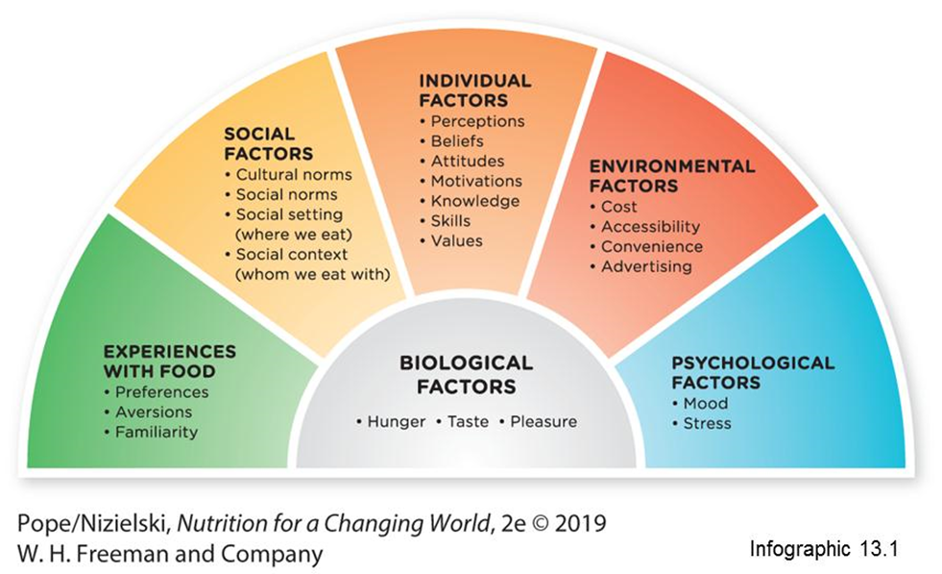
Adolescence (ages 13 to 17 years) and late adolescence/young adulthood (ages 18 to 21 years) are critical times for growth and development.
Calcium is critical for bone growth and mineralization RDA for age 14 to 18 years: 1300 mg RDA for age 19 years and older: 1000 mg
Iron needs are higher for females than for males due to the need to replace losses from menstruation
RDA for males age 14 to 18 years: 11 mg RDA for males age 19 years and older: 8 mg RDA for females age 14 to 18 years: 15 mg RDA for females age 19 to 50 years: 18 mg
Freshman 15 is a myth
Studies suggest many college freshman do gain weight—but the gain averages 3 to 4 pounds May be due to the many environmental changes that result in eating more and moving less
dining behavior strategies
- Dine before you become overhungry. It's easy to overfill your plate when you are hungry, and we tend to eat whatever is in front of us.
- Use smaller plates to avoid taking too much food. Finishing a full plate makes you feel full. The larger the plate, the more you'll need to eat before you see that the plate is emptying and the visual cue tells you to slow down.
- Relax and eat slowly. Have a conversation during a meal, or put the fork down between bites.
- When you enter an unlimited buffet line, its sheer abundance prompts you to eat more. Reduce the influence of this prompt by thinking about portion control and smaller servings before you enter the line.
- Sit as far away from the source of food as possible. The farther you are from the buffet, the less likely you will be to get up and have seconds (or thirds).
eating disorder
Associated with emotional and psychological issues Depression Anxiety Perfectionism Low self-esteem Distorted body image
Estimated to affect: 10% to 20% of college-age women 4% to 10% of college-age men
The potential causes of eating disorders are many, varied, and complex
Genetics and predisposition Psychological and personality issues Social norms and cultural environmental factors Unrealistic ideals for body shape and size as well as eating and exercise patterns
Diasgnosing eating disorder
Anorexia nervosa Bulimia nervosa Binge eating disorder
Approximately 0.5% to 1% of older adolescent girls and young women meet the criteria for anorexia nervosa
Dramatic weight loss Preoccupation with weight, calories, food, fat grams, or dieting Frequent comments about feeling “fat” or overweight despite weight loss
Self-esteem overly related to body image Denial of hunger
Approximately 1% to 2% of older adolescent girls and young women meet the criteria for bulimia nervosa
Orthorexia nervosa, a fixation on “righteous eating,” is not officially recognized by DSM-5
Anorexia nervosa Dehydration, fatigue, low body temperature, hair loss, demineralization of bone, low blood pressure, and loss of cardiac muscle Hormonal imbalances and cessation of menstruation Bulimia nervosa Electrolyte imbalances possibly resulting in life-threatening cardiac arrhythmias Hormonal imbalances Self-induced vomiting possibly leading to dehydration, teeth erosion, and esophageal damage or tears Binge eating disorder Conditions and chronic diseases related to obesity
National Institute on Alcohol Abuse and Alcoholism (NIAAA)
Alcohol is the common name for ethanol
Potentially intoxicating ingredient found in beer, wine, and liquor Has drug-like effects, acting as a central nervous system depressant
- Absorbed in the stomach and small intestine, Moves into the bloodstream through diffusion, Dispersed throughout the water-containing portions of the body
the liver can metabolize only 1 ounce of alcohol per hour, regardless of how much has been consumed
When excessive amounts of alcohol are consumed, another metabolic pathway breaks alcohol down to acetaldehyde, which has potentially greater toxic effects on cells and organs
Women experience a more rapid rise in blood alcohol levels than do men of the same size with similar alcohol intakes
This heightened effect is primarily based on differences in body composition
Women have proportionally more body fat (and lower body water).
Blood alcohol concentration (BAC) is determined by measuring the amount of alcohol in the breath
BAC of 0.08% is the legal limit for intoxication in the United States for drivers 21 years of age and older
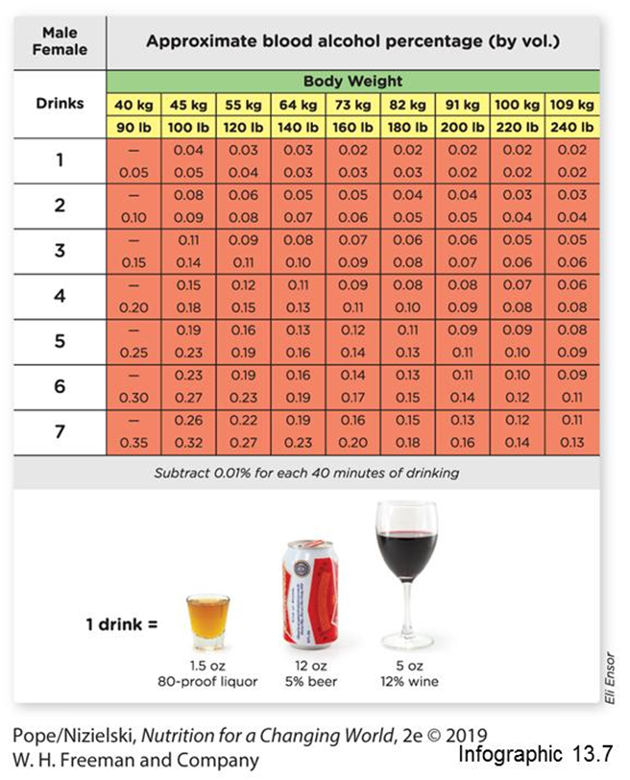
Moderate intake definitions: Men: two standard alcoholic drinks per day Women: one standard alcoholic drink per day Associated with reduction in risk of several chronic diseases and overall mortality risk
Reduced risk of heart disease
never drink alcohol
Children and adolescents Possible permanent impairment in cognitive function Possible increased risk of fatal and nonfatal injuries
Pregnant women CDC: No safe amount during pregnancy Possibility of fetal alcohol spectrum disorder
Binge drinking Reported by 17% of general population and 40% of college students
4 or more drinks for women and 5 or more drinks for men within about 2 hours Heavy drinking 8 or more drinks per week for women and 15 or more drinks per week for men
Alcohol use disorder Medical diagnosis given to individuals who have severe problems with alcohol consumption and meet certain diagnostic criteria Alcohol poisoning Life-threatening condition due to excess alcohol consumption; a medical emergency
Alcohol lacks nutrient value and adds empty calories to the diet