Civil Rights Vocabulary
Poll Tax | A fee paid in order to vote | 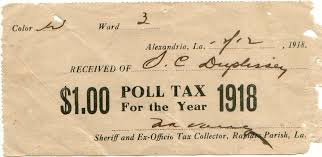  |
|---|---|---|
Civil Rights | The rights of citizens to political and social freedom/equality |  |
Racism | Prejudice or discrimination towards someone based upon their race |  |
Boycott | Refusing to buy a good or service as a form of protest |  |
Passive Resistance | Nonviolent opposition to authority |  |
Integration | The act of putting separate people groups or things together |  |
Jim Crow Laws | Laws that made segregation legal | 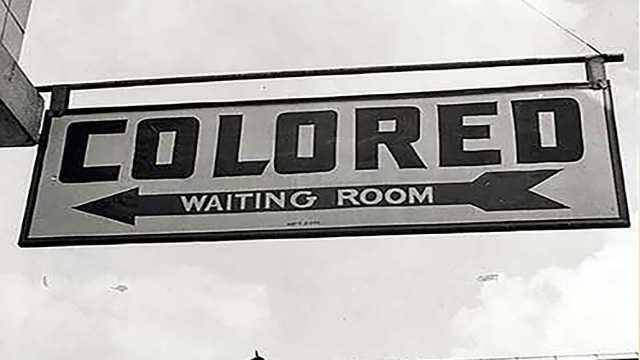 |
Sit In | To occupy a place as a form of protest | 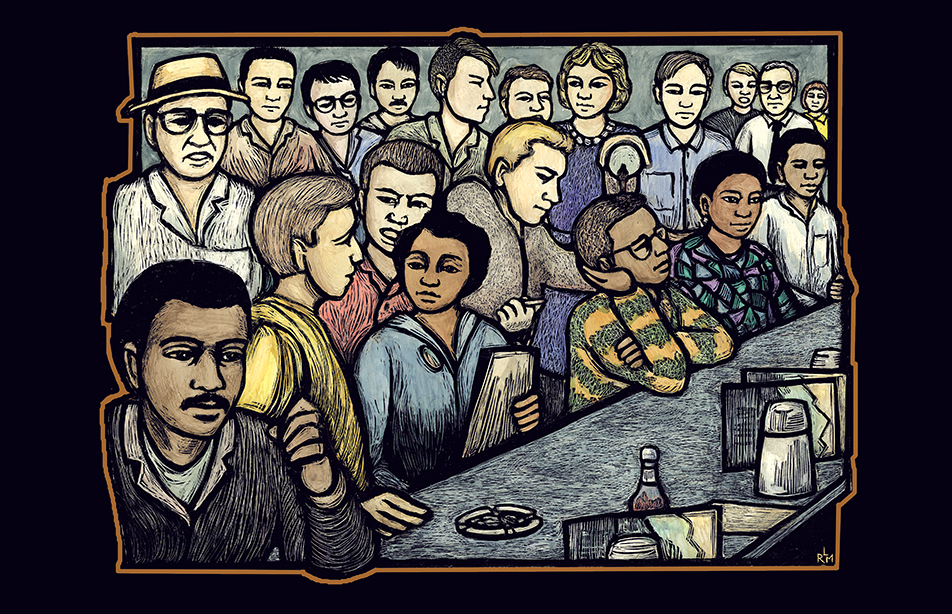 |
Segregation | The act of separating people or things by a common characteristic |  |
Riot | A violent disturbance of peace by a crowd of people |  |
NAACP | An organization created to fight for equality for minorities |  |
Constitutional | Saying that something agrees with the constitution |  |
Act | Another word for a law |  |
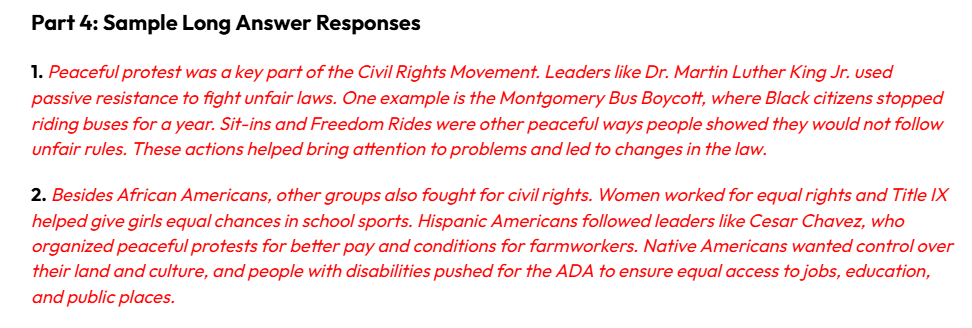
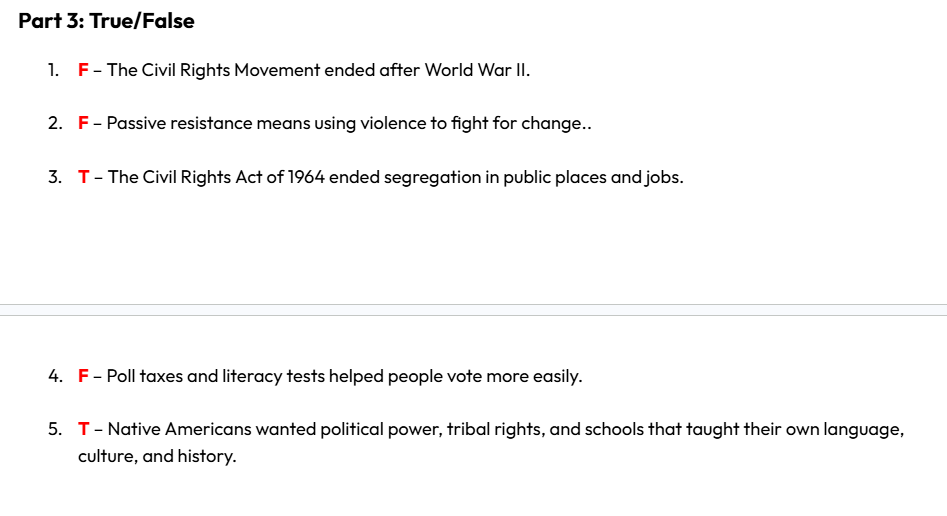
Civil rights are the rights of individuals to receive equal treatment and have equal opportunities regardless of characteristics such as race, gender, disability, or religion. The civil rights movement, particularly in the United States during the 1950s and 1960s, sought to end segregation and discrimination against African Americans and secured legislation to protect these rights.
Key milestones in the civil rights movement include the Civil Rights Act of 1964, which outlawed discrimination based on race, color, religion,[REDACTED], or national origin, and the Voting Rights Act of 1965, which aimed to eliminate barriers to voting for African Americans. Prominent figures in the movement included Martin Luther King Jr., Rosa Parks, and Malcolm X, who all played significant roles in advocating for justice and equality.
The struggle for civil rights continues today, addressing issues such as police brutality, voting access, and discrimination in various forms.