Endocrinology
Introduction to Endocrinology
function and purpose of hormones
classification, structure and synthesis of hormones
pathways of nervous to endocrine regulation
effects of hormone interactions
pathologies of the endocrine system
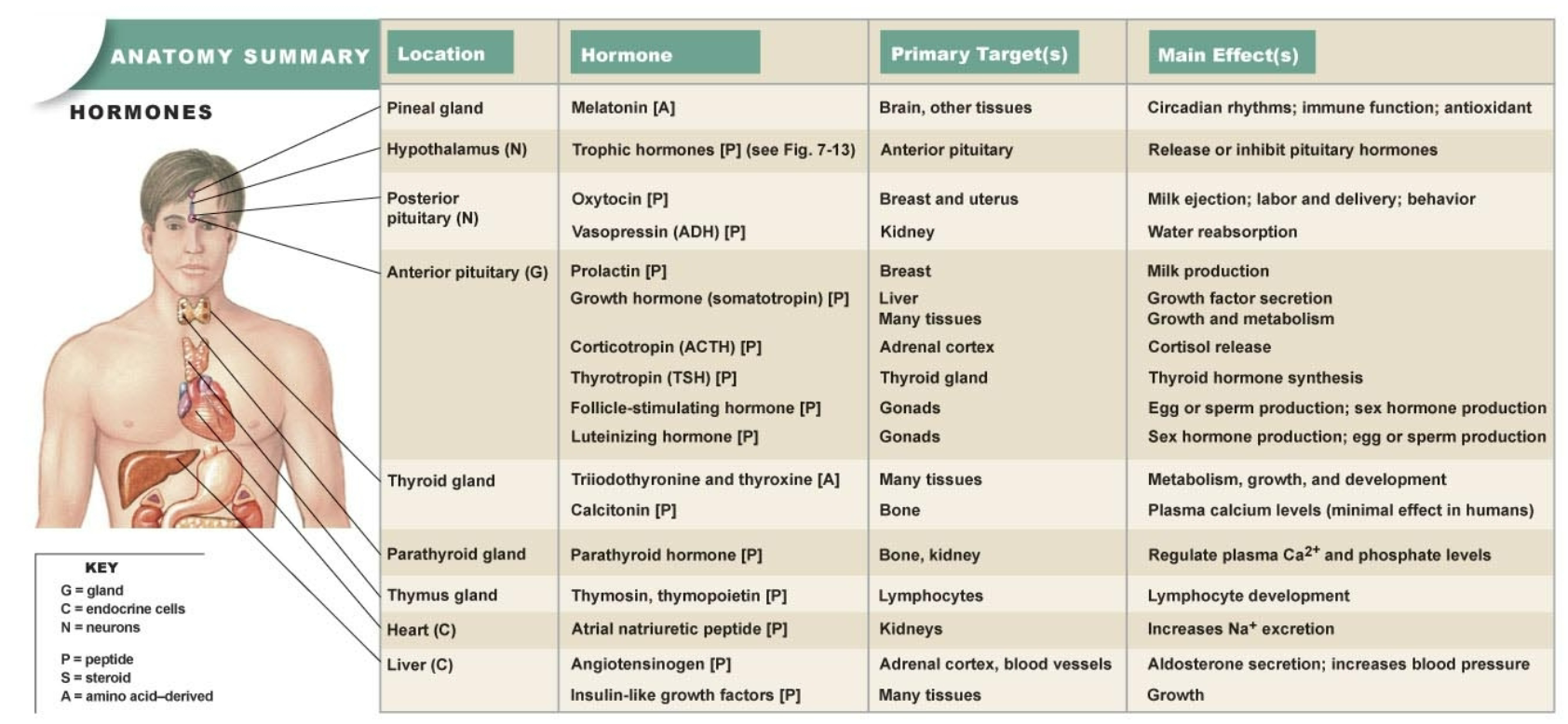
Anatomy Summary: Hormones
Hormone Details:
Pineal Gland:
Hormone: Melatonin [A]
Primary Targets: Brain, other tissues
Main Effects: Circadian rhythms; immune function; antioxidant.
Hypothalamus (N):
Hormone: Trophic hormones [P]
Primary Target: Anterior pituitary
Main Effects: Release or inhibit pituitary hormones.
Posterior Pituitary (N):
Hormones: Oxytocin [P], Vasopressin (ADH) [P]
Primary Targets: Breast and uterus, Kidney
Main Effects: Milk ejection; labor and delivery; behavior, Water reabsorption.
Anterior Pituitary (G):
Hormones: Prolactin [P], Growth hormone [P], Corticotropin (ACTH) [P], Thyrotropin (TSH) [P], Follicle-stimulating hormone [P], Luteinizing hormone [P]
Primary Targets: Breast, Liver, Gonads, many tissues
Main Effects: Milk production; growth; cortisol release; thyroid hormone synthesis; egg/sperm sexual hormone production.
Thyroid Gland:
Hormones: Triiodothyronine (T3) and Thyroxine (T4) [A], Calcitonin [P]
Primary Targets: Many tissues, Bone
Main Effects: Metabolism, growth, development; regulate plasma Ca2+ levels.
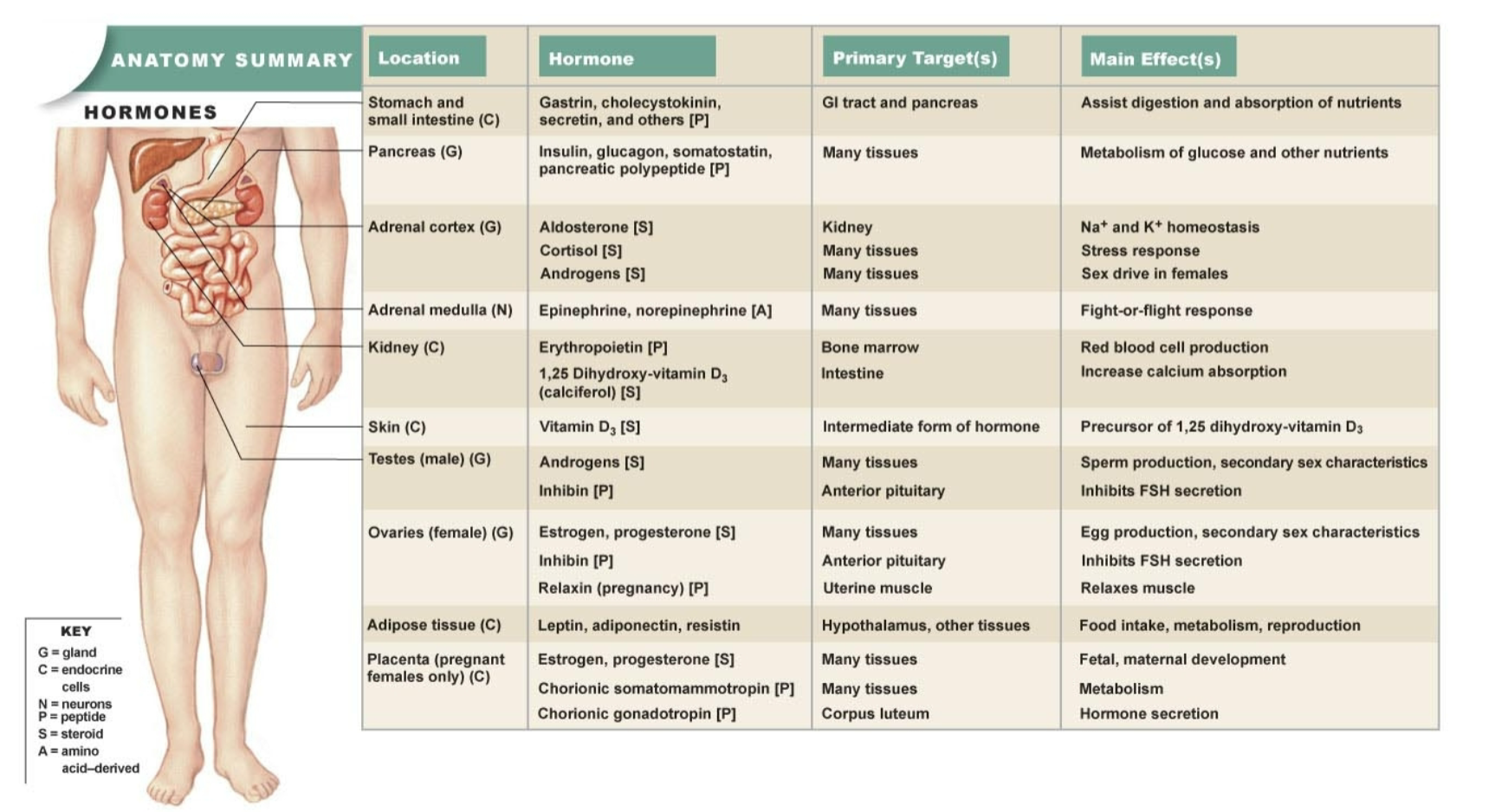
Adrenal Cortex:
Hormones: Aldosterone [S], Cortisol [S], Androgens [S]
Primary Targets: Kidney, many tissues
Main Effects: Na+ and K+ homeostasis; glucose homeostasis; sex hormone production.
Adrenal Medulla (N):
Hormones: Epinephrine, norepinephrine [A]
Primary Targets: Many tissues
Main Effects: Fight-or-flight response.
Pancreas (G):
Hormones: Insulin, glucagon, somatostatin, pancreatic polypeptide [P]
Primary Targets: Many tissues
Main Effects: Metabolism of glucose; assist digestion and nutrient absorption.
Others:
Thyroid hormones influence basal metabolic rate, enhance catecholamines actions.
Thymus gland influences lymphocyte development.
Vitamin D regulates calcium absorption.
Chemical Regulating Systems
Hormones: Function as cell-to-cell communication molecules.
Characteristics:
Made in glands or specific cells.
Transported via blood to distant target tissues.
Activate physiological responses upon binding to receptors.
Pheromones: Involved in organism-to-organism communication.
Hormones: Function
Hormonal functions include:
Rate control of enzymatic reactions.
Transport regulation of ions or molecules across membranes.
Gene expression and protein synthesis modification.
Hormones exert effects at low concentrations (nanomole or picomole range).
Hormones circulate everywhere, but they only bind and act on target cells that have the specific receptors for them.
Their activity is defined by half-life indicating length of action.
short half life = hormone acts quick but effects don’t last long
long half life = hormone stays in bloodstream for longer duration, producing more sustainable effects
Hormones: Classification
Categories:
Peptide or Protein Hormones (most hormones)
Steroid Hormones
Amine Hormones
Hormones: Peptides or Proteins
Hormone Types:
Preprohormone: Large, inactive precursor. It more so guides the hormone to the right place inside the cell (usually the ER).
Prohormone: Created by cutting of the signal part and going through post-translational modification
Peptide hormone-receptor complex: When the final, active hormone is released binds to its receptor on a target cell causing signal transduction, conversion of hormone’s signals into physiological responses
Peptide Hormone Synthesis, Packaging, and Release
mRNA binds amino acids into a peptide chain = preprohormone
Enzyme in ER cleave signal sequence = inactive prohormone
Prohormone passes from ER through the Golgi complex.
Secretory vesicles bud off the Golgi and releases its contents by exocytosis into the extracellular space
The active hormone is released via exocytosis into the circulation for transport to its target
Peptide Hormone-Receptor Complex
Mechanism:
Hormone binds to surface receptor. This causes a chain of events in the cell without the hormone ever entering it.
Enzyme activation - activated receptor triggers enzymes inside the cell membrane or cytoplasm
Open channels - Some receptors directly or indirectly open ion channels (can change electrical/chemical environment)
Second messengers are small molecules produced inside the cell in response to the first messenger (the hormone).
Cellular response - the signal leads to a specific physiological change in the target cell
Steroid Hormones: Features and Action
Characteristics:
Cholesterol-derived, lipophilic, can enter target cell
Activation of DNA in cytoplasm or nucleus for protein synthesis.
Slow-acting with longer half-lives.
Examples: Cortisol, estrogen, testosterone.
Action:
steroid hormones travel via plasma protein carriers (because they are hydrophobic)
bind to receptor in cytoplasm or nucleus OR bind to membrane receptors that use second messenger systems to create rapid cellular responses
receptor-hormone complex binds to DNA and turn genes on (activate) or off (repress) depending on the signal
Activated genes make mRNA (messenger RNA), which carries the genetic instructions out of the nucleus to the cytoplasm.
Translation produces new proteins for cell processes
Amine Hormones: Features
Derived from one of two amino acids
tyrosine
tryptophan
examples:
thyroid hormones
catecholamines
epinephrine
norepinephrine
dopamine
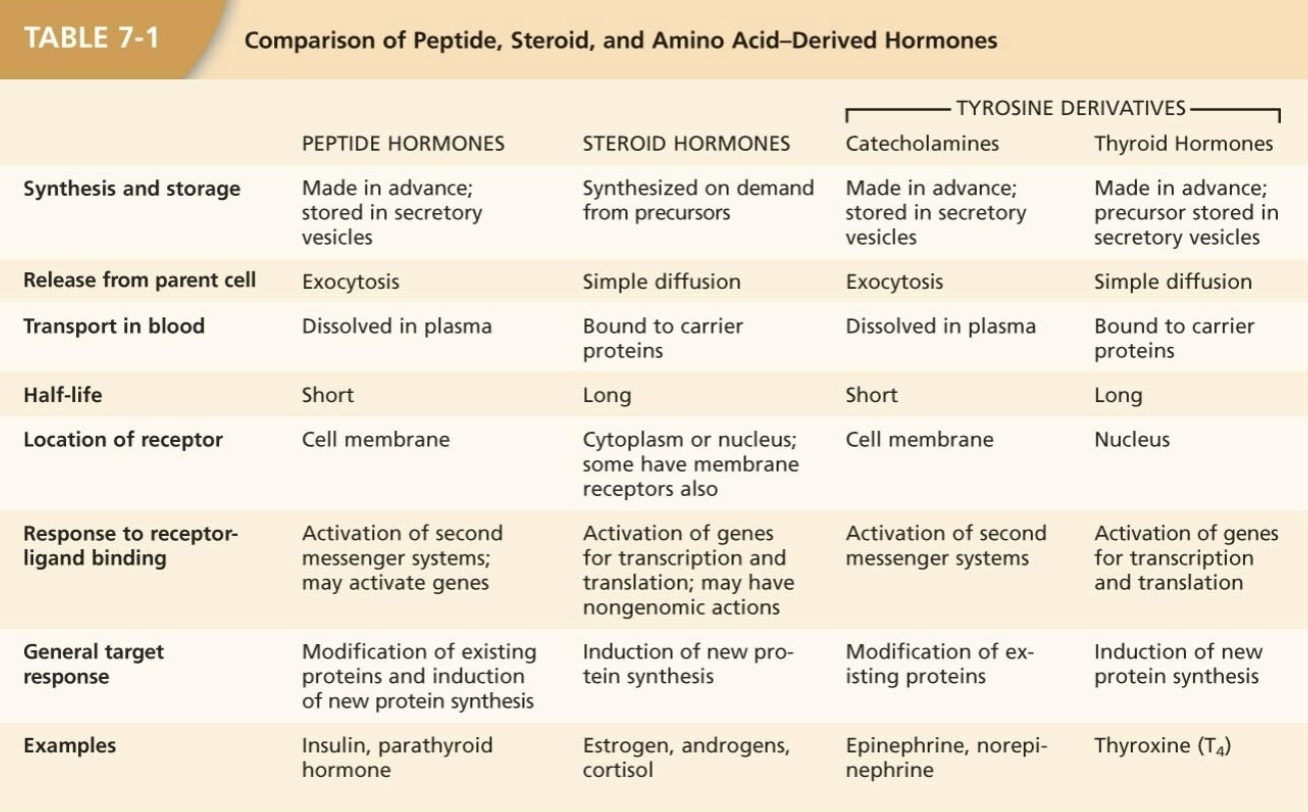
Comparison of Hormones
Peptide Hormones:
Synthesis and Storage: Made in advance; stored in secretory vesicles.
Release from Parent Cell: Via exocytosis.
Transport in Blood: Dissolved in plasma.
Half-life: Short.
Location of Receptor: Cell membrane; activates second messenger systems.
Examples: Insulin, parathyroid hormone.
Steroid Hormones:
Synthesis: On-demand from precursors.
Release from Parent Cell: Simple diffusion.
Transport in Blood: Bound to carrier proteins.
Half-life: Long.
Location of Receptor: Cytoplasm or nucleus.
Examples: Estrogen, cortisol.
Amine Hormones:
Derived from: Tyrosine and tryptophan.
Examples: Catecholamines (epinephrine, norepinephrine).
Endocrine Reflex Pathways
endocrine reflex pathway- feedback loop your body uses to detect changes and correct them using hormones
Steps of endocrine reflex:
Stimulus - a change in the body that needs correction (ex: low blood sugar)
Afferent signal - tells the body what changed
Integration - decision making step, control center processes the information and decides how to respond (ex: integrating center could be an endocrine gland itself like the pancreas releasing glucagon to raise blood sugar)
Efferent signal (the hormone) - hormone travels through the bloodstream to target cells
Physiological action - the effect of the hormone causes on target cells or tissues (ex: glucagon tells the liver to release stored glucose → blood sugar rises back to normal)
Negative feedback - once the body returns to normal levels, the system shuts off the response to the original stimulus to prevent overcorrection/hormone overproduction
Control of Hormone Secretion
Control by various stimuli:
Nervous System: Direct regulation.
Chemical Changes: In blood composition.
Hormonal: Distension/stretch or other hormones influence secretion patterns.
Pituitary Gland Anatomy
Anterior Pituitary: True endocrine gland of epithelial origin (secretes GH, TSH, ACTH, PRL, FSH, LH).
Posterior Pituitary: Extension of neural tissue; stores hormones like oxytocin and vasopressin. This back part does not actually make hormones, only stores and releases hormones back by the hypothalamus
Infundibulum connects pituitary to the brain.
Anterior Pituitary Hormones
Cell Types:
Somatotrophs: secrete growth hormone (GH).
Thyrotrophs: secrete thyroid stimulating hormone TSH.
Corticotrophs: secrete adrenocorticotropic hormone ACTH.
Lactotrophs: secrete prolactin (PRL).
Gonadotrophs: secrete two gonadotropins:
Follicle-stimulating-hormone (FSH)
Luteinizing hormone (LH)
Hypothalamic Control
Release of hormones by the anterior pituitary is regulated by the hypothalamus
Ex: Growth hormone–releasing hormone (GHRH), Thyrotropin-releasing hormone (TRH).
Hypothalamic-Hypophyseal Portal System
a special network of blood vessels that directly connects the hypothalamus to the anterior pituitary gland
This system allows the hypothalamus to send hormones quickly and efficiently to the anterior pituitary without those hormones getting diluted in the general bloodstream
neurons synthesizing trophic hormones release them into capillaries of the portal system
portal vessels carry the trophic hormones directly to the anterior pituitary
endocrine cells release their hormones into the second set of capillaries for distribution to the rest of the body
Thyroid gland
butterfly shaped
2 cells types
follicular cells produce: T3 and T4
parafollicular cells produce: calcitonin
most cells of the body have receptors for T3 and T4
typically initiate gene transcription and protein synthesis
functions include:
increased basal metabolic rate
enhance actions of catecholamines
regulate development and growth of nervous tissue and bones
hyperthyroidism
increases oxygen consumption and metabolic heat production
increase protein catabolism and may cause muscle weakness
Hyperexcitable reflexes and psychological disturbances
Influence B-adrenergic receptors in the heart (high heart rate and force of contraction
hypothyroidism
slow metabolic rate and oxygen consumption
decreased protien synthesis
negative effects on the nervous system
slow heart rate
Parathyroid gland
small round masses of glandular tissue partially embedded in the thyroid gland
contains secretory “chief” cells
release parathyroid hormone (PTH)
PTH is a major regulator in extracellular Ca+2, Mg+2and HPO4-2 concentrations
Role of calcium in the body
important intracellular signal
structural functions- physical strength of bone matrix and help hold cells together at tight junctions
cofactors in blood coagulation
required for the normal excitability of neurons and all types of muscle
bone is a depot for stored Ca+2
osteoblasts deposit calcium as they create new bone matrix
osteoclasts break down bone matrix during bone resorption
Hormonal Control of Calcium Balance
parathyroid hormone (released when plasma Ca+2 is low)
mobilizes calcium from bone
enhances renal reabsorption of calcium
stimulates release of calcitriol (increases intestinal calcium absorption)
calcitonin (released when plasma Ca+2 is high)
decreases bone resorption
increases renal calcium excretion
Adrenal Glands
2 in the body (top of the kidney)
two different tissue types and layers
inner medulla- produces catecholamine hormones
outer medulla- produces a variety of steroid hormones
consists of three layers/zones
zona glomerulosa - secrete mineralcorticoids (maintain mineral levels of the blood)
zona fasciculata - secrete glucocorticoids (affect glucose homeostasis)
zona reticularis - secrete androgens (steroid hormones that have masculinizing effects)
adrenal medulla- extension of sympathetic nervous system
norepinephrine
epinephrine
cortisol of adrenal cortex
helps the body cope with long-term stress. It protects against hypoglycemia by stimulating catabolism of energy stores.
Pineal gland
found in the brain
secretes melatonin
amine hormone derived from serotonin
pancreatic hormones
alpha cells- secrete glucagon
beta cells- secrete insulin
delta cells- secrete somatostatin
F cells- secrete pancreatic polypeptide
Pathologies of Endocrine System
Hypersecretion: Excess hormone due to tumors or conditions such as Graves’ disease.
Hyposecretion: Deficient hormones like thyroid hormone (goiter) and insulin (diabetes).
Abnormal receptor activity (downregulation) or transduction anomalies can also lead to disorders.
Cushing's Syndrome
Condition: Hypercortisolism with specific symptoms including central adiposity and osteoporosis.
Diagnostic Tests: Dexamethasone suppression test, urine cortisol levels, imaging studies.
causes of hypercortisolism
adrenal tumor that autonomously secretes cortisol (primary)
pituitary tumor that autonomously secretes ACTH (secondar)