HS unit 4 (final exam)
relationships
Learning how to act in a relationship
Watching our parents, grandparents, other parents we know, relationships on TV
gender roles
parent/child relationship teaches us
early childhood friendships
There is a difference between a romantic relationship and a friendship; while romantic relationships often involve deeper emotional connections and physical intimacy, friendships are typically based on mutual respect and shared interests without such attachments. (passion vs. Exclusivity)
Sternberg’s triangular theory of love

What does a good relationship look like?
good communication skills
good conflict management skills
good listening skills
understanding differences
common interests-spending time together
equally committed
What are some ‘red flags’ that a relationship is unhealthy?
unequal commitments- the more committed is not happy and loses power
interpreting time spent apart as rejection
Jealousy can lead to violence
poor conflict management- criticism, defensiveness, name-calling, withdrawal
physical, verbal, or emotional abuse.
An unhealthy relationship can cause stress, anxiety, depression, and other mental health issues. It also leads to physical health issues as well. Can affect those around the relationship in the same way.
When to give up and move on…
depends on the situations-new relationship, marriage, children
IF you feel it is worth fighting for, then you have communicated, tried to make changes, given it a chance, or couples counseling
reduces regrets and repeated failures.
How to “ break up.”
You’ve given it a fair chance → don’t make one person feel responsible, not even “ it’s not you, it’s me” → time away from each other, not “let’s still be friends” → why would you want to be with someone who doesn’t want to be with you? move on if the other party is not interested.
How do we choose our relationships?
attracted first to appearances, then to the person/personality/values… second becomes more important with time though → we look for similarities- educational level, lifestyle, values, looks
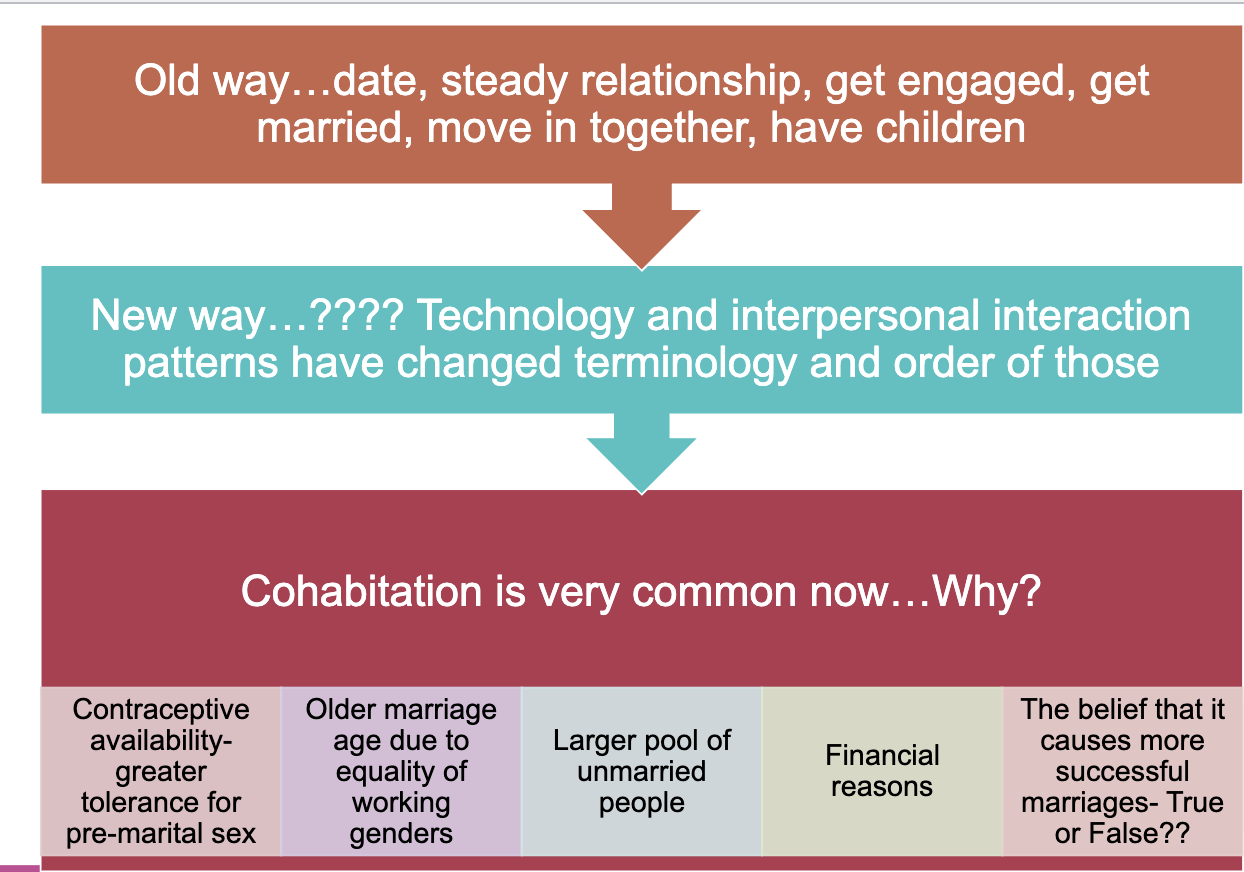
Relationship development in the U.S
Which is healthier? being in a relationship or being single?
Relationship → safer behavior: less risk-taking, socially connected, maintaining a healthier lifestyle, fewer mental problems
Single → time to develop a sense of self, more able to build strong friendships, time to devote to more activities, more likely to help out friends and family
Choice to marry today versus the past.
Today, there is more personal choice
not as many arranged marriages
not always the man who decides to propose
not as much pressure to marry by a certain age
Both genders can develop careers first
can be pickier with more time
more of a personal and emotional choice for both
Personal/Emotional choice of spouse = more and higher expectations!
Divorce rates
more choice = higher expectation= more divorce
Both partners are working…does that mean equal division of housework/childrearing?
The social stigma of divorce has decreased.
Some people don’t view marriage as permanent anymore- they might give up more easily. Time gets tough
children of divorce
Need more counseling
Spending equal time with both parents is most important
parents not talking badly about the other
Parents should limit time with the other parent
parents working together and showing cooperation
unless one parent was abusive
What to think about before getting married?
Similar interest
communication skills/conflict management skills
kids?
balancing roles
where you want to live?
religion?
Family Relationships after the birth of the first child
family dynamics change
more traditional gender roles
less marital satisfaction and time spent together
more stress- financial stress, less sleep
What makes a successful family?
dinner together?= less likely to use drugs, teen pregnancies, etc
time spent together = healthier communication and relationships, which lead to better choices and support
dinner together, family meetings, family traditions, chores, weekend activities
Parent/Child relationship
4 parenting types-
Authoritarian- characterized by high demands and low responsiveness, where parents set strict rules and expect children to comply without question.
authoritative- characterized by high demands and high responsiveness, where parents enforce rules but also provide emotional support and reasoning behind expectations, fostering a balanced environment for their children.
perissive/indulgent- characterized by low demands and high responsiveness, where parents are warm and accepting but may struggle to enforce rules or boundaries.
uninvolved- characterized by low demands and low responsiveness, where parents are detached from their children's lives, providing little guidance or support.
Authoritative is the preferred style: children ned attetion and love, but also structure, discipline, and routine
The parents' style should match the child’s temperament
3 types-
Easy
Difficut
slow to warm up
Single parenting
The effect on the child depends on the situation → if the child is alone a lot, has less supervision, and financial circumstances contribute to this. → less likely to be successful in school
Consideration for stepfamilies:
families are usually less cohesive naturally, take more work/attention/ kindness to build
Kids are more adaptable to changes and new things as they grow up
Step-parent should never try to take the place of the other parent/ other parent should not badmouth the step-parent
Step-parent should never be the disciplinarian
Age of the child DOES make a difference
Sexual Health
What makes us male or female?
XX or XY
hormones (male-testosterone, dopamine, female- etrogen, progesterone)
reproductive parts at birth
gender, gender role, gender identity
What happens during puberty- reproductive development
Puberty
males:
Facial hair
larynx gets bigger (causing a deeper voice)
armpit hair
pubic hair
sex organs grow
muscle develops more
Female:
breast development
menstruationbegins
armpit hair
pubic hair
curvier body shape
PMS and PMDD
not just an excuse or joke for moodiness- due to a change in hormones due to the menstrual cycle
physical symptoms: breast tenderness, bloating, headache, fatigue, sleep issues, appetite issues
emotional symptoms: irritability, mood swings, depression, anxiety, concentration issues
PMDD causes more severe symptoms and interferes with normal life activities (work, social, etc.)
treatment varies from exercise, limiting alcohol, tobacco, and salt, calcium supplementation, stress management, to medications or hormone control, or SSRIs
The Menstrual Cycle-

The menstrual cycle always happens
Ovulation is when an egg is released, one week after the period
menstruation- period (1-7 days)
sperm can last almost a week, and eggs only last 1-2 days
responsible sexual behavior
open, honest communication about intentions/relationship
sexual activities agreed upon
sexual privacy
contraception use and agreement
STD discussion/testing
Sober sex- most accidents happen (STDs, pregnancies, misuse of contraceptives)
taking responsibility for possible consequences (safe sex, not safe sex)… what would happen IF, before it happens.

Typical Use vs. Perfect Use

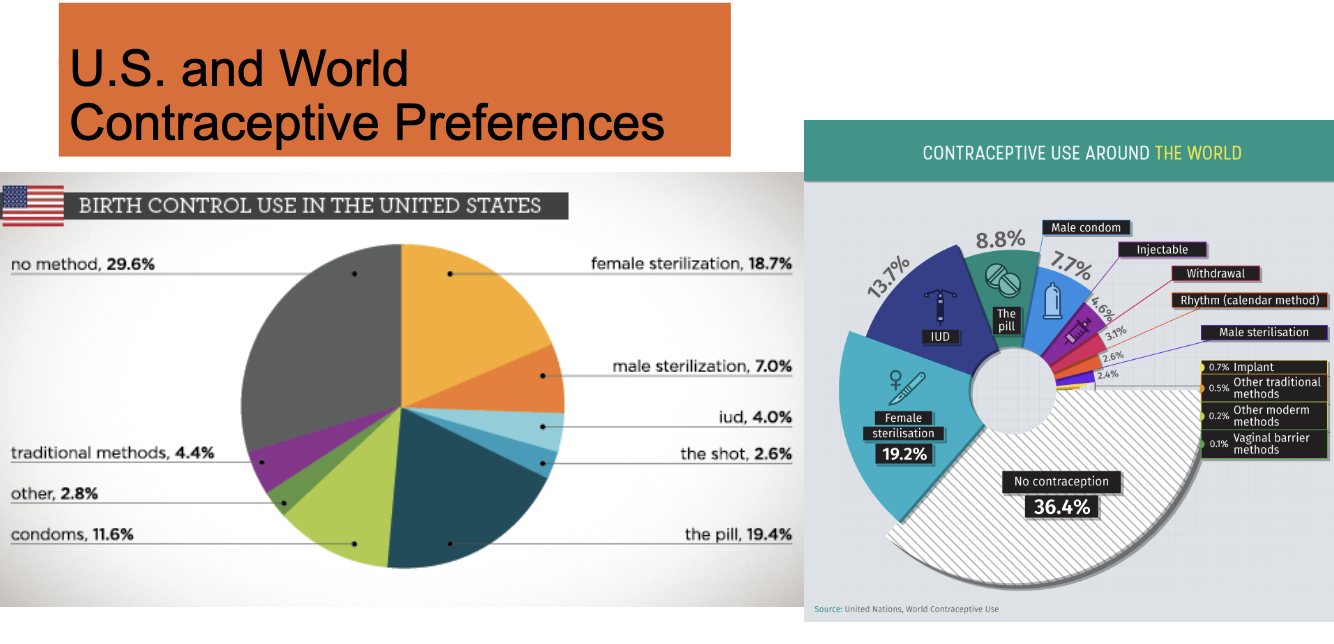
Which method is right for you?
a lot of factors to consider besides effectiveness:
premanence
religious beliefs
convenience
forgetfulness, organized
immediacy
relationship status
Your control over it
STD protection
pregnancy protection
side effects
wellness worksheet 40
Abortion
pro-life vs. pro-choice
where most Americans fall
legal background and changes
30-day video (showing next, down need to know more than what’s in the video)
Your position… will journal after 30 days video (wellness worksheet 42)
Importance of knowing NOW girls and guys!!!

Prep for parenthood:
both parents-
age and physical health
financial circumstances
your relationship
career and childcare plans
emotional states
support team
attitudes towards children
religous beliefs
discipline beliefs
Women care-
Existing medical conditions
current use of substances
past pregnancy issues
disease risk
immunization history
dietary habits
family history of diseases/disorders or of multiple births
folic acid and prenatal vitamins
prenatal care
regular medical checkups- blood pressure, weight gain, size, and position of fetus
blood tests- blood type, anemia, STD
Appropriate diet, how much more? What to avoid?
avoidance of alcohol, tobacco, caffeine, or drugs
excercise
childbirth classes for the first child
Options for Fetal testing
Amniocentesis- a procedure in which amniotic fluid is sampled from the sac surrounding the fetus to test for genetic abnormalities and other conditions. Results can take 3 days to 4 weeks, depending on the specific tests being conducted and the laboratory processing time.
Chorionic villus sampling- a prenatal test that involves taking a small sample of tissue from the placenta (chorionic villi) to analyze for genetic disorders. This procedure can be performed as early as the 10th week of pregnancy or the 13th week, and results typically take about 1 to 2 weeks to be available.
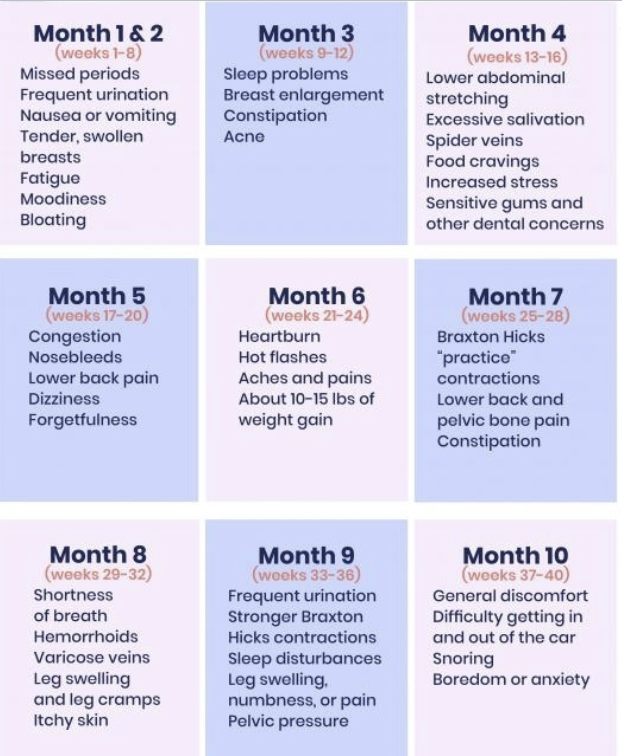
How the body changes during pregnancy-
Weight gain is a common change during pregnancy, with an average increase of 25 to 35 pounds recommended for women with a normal pre-pregnancy weight. This weight gain supports fetal development and includes the weight of the baby, placenta, and increased blood volume.
blood flow- changing hormones increase the elasticity and volume of the circulatory system. This means the body pumps blood at a rate it isn’t used to to accommodate a growing baby.
Flexibility- pregnancy increases the hormone relaxin, which is responsible for making ligaments and tissues more elastic. This can give women a false sense of flexibility, which increases tears and sprains.
Oxygen intake- lung function improves during pregnancy. An increase in the depth of each breath increases the amount of air a pregnant woman inhales by up to 50% or more
hormones increase- oxytocin, prolactin, skin pigmentation changes- stretch marks, cardiac-Respiratory Output, uterus enlargement by 50-60X original size
The embryonic period is weeks 1-8
fetal period is from week 9 until birth
embryonic period is characterized by the development of structures (organs)
fetal period is characterized by the growth of those structures.
week 4-
heart begins to beat
arms buds appear
liver, pancreas, and gallbladder start to form
spleen appears
week 5-
eyes start to form
leg buds appear
hands appear
blood begins to circulate
facial features start to develop
Week 6-
Lungs start to form
fingers and toes form
week 7-
Hir follicles start to form
elbows and toes are visible
week 8-
Face begins to look human
external ears start to form
week 9-15
reproductive organs form
tooth buds appear
eyelids form
fetus is very active
Brain activity can be detected
week 16-26
brain develops rapidly
Alveoli form in the lungs
internal parts of the eyes and ears form
eyebrows, eyelashes, and nails appear
muscle develop
week 27-38
Body fat increases rapidly
bones complete their development
Head hair gets coarser and thicker
brain is continuously active
Every 12 weeks is a new trimester
1st- all major body structures form, morning sickness
2nd- can detect gender, can suck thumb, movements felt by mother, can see and hear
3rd- gains the most weight, head down position, survival probable at 34 weeks
Phases and stages of labor
First stage: dilation of the cervix and contractions begin, lasting until the cervix is fully dilated to 10 cm. The cervix relaxes, dilating and thinning. Water breaks/contractions, head to the hospital when contractions are less than 5 min apart or water breaks
Second stage: pushing and delivery of the baby, where the baby travels through the birth canal. Uterine contractions increase in strength, and the infant is delivered. pain meds administered early in this stage- not too early or too late, pushing on contractions.
Third stage: delivery of the placenta, completing the childbirth process.
Labor Pain Relief Options
Nitrous Oxide
administered: a gas that’s breathed in through a mask. It helps reduce anxiety and helps to relax during labor pain. Half of users still had severe pain, but 92% said there was less pain with it than without. The common side effects are Giddiness or Dizziness, and they wear off quickly.
IV Opioids
administered: given through a tube inserted in the arm. It helps someone not care much about the pain during labor, and 2/3 still had moderate to severe pain, but 75% said it was helpful. The common side effects are lower blood pressure, itching, nausea, and dizziness.
Epidural Analgesia
administered: given through a tube in the lower back. It blocks most of the pain sensation during labor; its effectiveness is more likely to reduce the risk of having severe pain after an epidural. 91% says it’s helpful. and the common side effects are lower BP, slower labor, fever, and more monitoring.

Immunity and Infection
The chain of Infection
links in the chain
transmitted through a chain (6 links)
pathogen- disease-causing microorganism
reservoir- natural environment of the pathogen: person, animal, or environmental component
portal of Exit
means of transmission
direct transmission
Indirect transmission
Vectors- carriers of the pathogen from one host to another
Portal of entry
penetration of the skin
inhalation through the mouth or nose
ingestion
New host
Breaking the chain is public health
Chain of infection
Pathogen → Reservoir → Portal of exit → means of transmission → Portal of entry → New host
ways to break the chain
Pasteurization of milk
chlorination of drinking water
disifectants
medical treatment and testing
insect and rodent eradication
quatantine
condoms
masks
convering mouth while coughing
handwashing
avoiding infected individuals
sexual abstinence or safer sex
saitary practices
insect repellant
immunization
health promotion
medical treatment
Body’s Defense System
Physical and chemical barriers
skin, mucous membranes, respiratory tract, cilia
The immunological defenders consist of Mast cells, macrophages, natural killer cells, dendritic cells, monocytes, neutrophils, basophils, esoinophil
The Inflammatory Response
Histamine
Dilation of blood vessels, heat, redness, and swelling
The immune response
White blood cells are drawn to the site
Many symptoms of disease are due to an inflammatory response and not the infection itself, like fever, runny nose, etc.
Fever is a good thing during illness, which means your body is fighting the illness.
People are usually most contagious before symptoms appear, while infection is multiplying in the body- some feel a little “ off”- stay home! (prodromal stage)
Immunization
The process of ‘priming’ the body to remember and encounter what a specific antigen memory cells
types of immunity
acquired immunity
The ability of a memory cell to remember a previous infection
Vaccine-
Introduction of a killed or weakened pathogen to stimulate the body to produce antibodies
Active immunity
Person prduces his or her own antibodies to the microorganism
passive immunity
Injection of antibodies produced by other human beings or animals, quick but temporary, the body needs to produce its own memory cells)
Infection is stopped before the stage at which symptoms appear in most cases, with immunity to it.
Immunization issues
Vaccine shortages in the U.S.
Vaccine safety
Allergy: The body’s Defense system gone Haywire
Allergens
Pollen, animal danders, dust mites and cockroaches, molds, food, insects, etc.
The allergic response
The body recognizes something unharmful as a harmful invader and attacks, setting an inflammatory response (excessive sometimes)
Other immune disorders: Autoimmune Diseases
Instead of the body recognizing the invader as harmful, it recognizes itself as harmful and attacks itself
can be caused by the immune system breaking down
getting older, infections, chemotherapy
Autoimmune diseases
Rheumatoid arthritis
Systemic lupus erythematosus
HIV

Antibiotic Treatment for Bacterial Infection
only works for bacteria, not virusesThe
actions of antibiotics kill or interfere with reproduction
antibiotic resistance- what DR.’s are doing
Antibiotic shortage- lack of production and bacterial mutation
proper antibiotic usage
Don’t take an antibiotic every time you are sick
Use antibiotics as directed, the whole course!
Never take an antibiotic without a prescription
How to treat Viruses
Treat symptoms so you’re not as miserable while…
The virus runs its course, and the body fights it off.f Antibioticdon'ttt work, unless the virus has caused a secondary bacterial infection (e.g., pneumonia, ear infection, sinus infection caused by cold/flu)
Some antiviral drugs, rarely prescribed, have side effects needed to be addressed early in the infection
immunization (natural or vaccination) is best
Factors contributing to emerging infections
Drug Resistance- overprescribing, misusing antibiotics, disease mutation, the strongest survive
Less research and production of drugs treating infections (for better money-makers, long-term use)
Environmental changes
Travel and Commerce- worldwide
Mass food production and distribution
Human behavior changes
Support your immune system
How can you support your immune system?
Balanced diet
Enough sleep
Exercise
Don’t smoke
Moderation of alcohol
Wash your hands
Avoid contact with contagious people
Plenty of clean water
Avoid contact with vermin
Practice safe sex
Do not use Injectable drugs
Vaccinations
Controlling Stress
STD or STI’s
20-25% of those with an STD do not disclose this to their partners
Intoxication can increase the risk
STD
Left untreated, some can cause infertility, increase the risk of getting cancer
19,000,000+ new cases of STDs in the US each year
75% of sexually active people will get HPV at some point during their lives
1 in 2 sexually active young people will get an STD by the age of 25
Most young people with STDs don’t even know they have them
Bacterial vs. viral STDs
bacterial-
Living, antibiotics treat it
example- chlamydia, gonorrhea, syphilis
Virus-
Non-living, NO CURE, but vaccines for HPV and Hepatitis
example: HPV (Genital warts), HIV ( AIDS), Herpes, Hepatitis B

Aging and Death
Aging- The process of the reduction in the body’s potential to repair and regenerate tissue
genetically determined and affected by one’s environment.
Senior by US government is 65 years old
Aging is Inevitable
from genetic and biochemical processes like DNA damage, genetically programmed aging, impaired protein metabolism, changes in energy metabolism, and likely many other processes.
These biological changes increase the risk of many diseases
Gradual aging and impairment from disease cause physiological changes throughout the body.
Gerontology- The study of physical changes that occur with aging
programmed aging theory- our bodies age because of a hardwired pattern of shifts in gene expression that have been programmed through evolution
Damage- related aging theory- environmental exposures such as disease, toxins, and natural radiation cause genetic and cellular damage that eventually exceeds the capacity of our body’s repair systems
Psychological aging refers to the cognitive, emotional, and behavioral changes that naturally occur in humans over time
Social aging refers to the shifts in our relationships and societal roles as we age
Life-Enhancing measures: Age-Proofing
Challenge your mind
Lower risk of developing dementia
Maintain/develop Physical Fitness
Enhances both psychological and Physical health
Eat wisely
Eating a varied diet full of nutrient-rich foods
Maintain a healthy weight- 35% are obese
Control Drinking and Overdependence on Medications
No tobacco
Schedule Physical Examinations
Recognize and reduce Stress
Nurture social Connections
Dealing with the changes of aging
planning for social changes
retirement
changing roles and relationships
developing satisfying interests outside work
financial planning
Increased leisure time
Adapting to physical changes
80% of seniors have at least one chronic condition
energy levels
changes in senses- vision, hearing
arthritis
100 different types of arthritis
Osteoarthritis is the most common
50% over 65 have some form
Menopause
Osteoporosis
risk of falls
The functioning of the body remains steady until after 70
Psychological and Cognitive Changes
Dementia
Group of symptoms showing cognitive decline- loss of mental function like memory, language, attention, etc.
Alzheimer’s disease- a progressive brain disease causing 60-80% of dementia cases
Greif
Aging is associated with dealing with loss- loved ones, friends, abilities, appearance, etc.
Unresolved grief and chronic health conditions can lead to depression
Life in an aging society
America’s Aging
People 65 and older
About 16% of the total population in 2019
Expected to more than double by 2060-32%
Life expectancy- 78 years
Average length of time we can expect to live
if live to 65, your expectancy goes up to 84.5
Maximum life span is 120 years
Family and Community Resources for older adults
Living an care options
community resources
senior citizens centers or adult day-care centers
visiting nurses
household services
friendly visitor or daily telephone reassrance services
home food delivery
family members
Transportation
Governmental Aid and Policies
Medicare and medicaid for healthcare
stipends for food
social security for income and daily living expenses
In 1945- 8 working adults per senior
now- 4 working adults per senior
by 2050- 2.5 working adults per senior
S.S will have to change to account for this
Why women live longer
Two X chromosomes and differences in mitochondrial inheritance provide a genetic advantage protecting
females from many diseases
• Estrogen protects against #1 cause of death
• Testosterone has negative effect on immune system and longevity
• Men have more visceral fat (fat surrounding vital organs)
• Males- riskier behavior, more likely to drink and smoke, may not handle stress as well
• But women are more likely to have nonlethal (but life altering) chronic conditions into old age, be single, live alone, and be poor
Understanding Death and Dying
Defining Death
Clinical Death - traditionally defined as when the heart and lungs cease
Brain Death - when supportive medical tech is used, brain waves are used to determine alive/dead
Cellular death- the breakdown of metabolic processes and results in complete nonfunctionality at the cellular level
• Mature Understanding of Death- recognition that death is universal and irreversible
▫ Begins between 6-9 years old
▫ Continues to develop through lifespan
▫ Elderly have a deeper understanding due to facing their own mortality, losing friends and loved ones, etc.
▫ Young people may not want to think about it as much and can avoid it more
▫ Depends on culture and society too
Planning for Death
• Making a Will
▫ A legal instrument expressing a person’s wishes for his or her property after death- otherwise distributed by state rules
• Advance Directive
▫ wishes about medical care and organ donation (living will), and appointing healthcare proxy/power of attorney
• End of Life Care
In case of a terminal illness - Home, Hospital, Nursing home or Hospice
Hospice is available for individuals with 6 months or less to live where goal is to prevent pain and suffering, improve quality of life for patient and family
Decisions at the End of Life
• Passive Euthanasia - Withholding or withdrawing treatment, providing pain relief or sedation that speed death
• Physician-assisted suicide (PAS)
Physician provides lethal drug to patient to use themselves
Legal in some states
• Active euthanasia
Intentional act of ending someone’s life
Illegal
Another Decision: becoming an Organ Donor
• Avg 95 organ transplants every day in US
▫ Each day, 80 people receive an organ and 20 people on the waiting list die.
▫ Over 100,000 Americans waiting for organ transplants
▫ One deceased donor can save up to 8 lives and can save or improve quality of 100 more people through tissues.
Planning a funeral or memorial service
• Disposition of the Body
▫ Social, cultural, religious, psychological, and interpersonal considerations
▫ Burial
▫ Cremation
• Arranging a Service- more about a Celebration of life, memories, supporting each other, paying respects, saying goodbye- just as important with cremation
Coping With Dying
Stages of Dying
Elisabeth Kubler-Ross
1. Denial – deny the fact of death “Not me”
2. Anger – lash out; “Why me?”
3. Bargaining – try to discover way out
4. Depression – accept their fate; sadness
5. Acceptance – point of resolution
Now, more focus on tasks that require attention in order to cope
Charles Corr
1.Physical. Satisfying bodily needs and minimizing physical distress
2.Psychological. Maximizing a sense of security, self-worth, autonomy, and richness in living
3. Social. Sustaining significant relationships and addressing the social implications of dying
4.Spiritual. Identifying, developing, or reaffirming sources of meaning and fostering hope
Coping with Loss
Experiencing Grief
○ Reaction to loss
○ No right or wrong way to do it
○ Comes in waves
○ Talking and social support help
○ Usually gets better over time
○ Complicated grief- sometimes sudden death or someone who has a history of depression
○ Medication/Therapy recommended
Tasks of Grief (Dr. William Worden)
1. Accepting reality
2. Working through the pain
3. Adjusting to a changed environment
4. Emotionally relocating the deceased and moving on with life
X marks the spot:
Dr. Sharon Moalem in his book The Better Half. He agrues that women are genetically supperior to men interms of survival, resilience, and longevity because they possess 2 X chromosomes, wheras men have one X and one Y
1. The "Two Toolbox" Advantage (XX vs. XY)
The central biological argument is based on the difference between the X and Y chromosomes:
The Power of X: The X chromosome contains approximately 1,000 genes, many of which control the brain and the immune system.
The Limitation of Y: The Y chromosome is small (about 70 genes) and mostly handles male reproductive traits (like sperm production).
Genetic Redundancy: Because women have two Xs, if one has a "spelling mistake" or genetic mutation, the other healthy X can compensate. Men only have one X, so if it is faulty, they have no "backup."
Example: In Hunter syndrome, a woman’s healthy X cells produce enough enzymes to support her faulty cells, leaving her unaffected. A man with the same faulty X will suffer from the disease.
Shutterstock
Explore
2. X-Inactivation and "Genetic Horsepower"
Moalem explains how female cells utilize their two chromosomes through a process called X-inactivation:
Cell Diversity: Early in development, one X is randomly turned off in each cell. This creates two distinct populations of cells (some using the mother’s X, some the father’s).
The "Foreman" Effect: The body can "choose" which X cells perform better for specific organs. For instance, if the father's X builds a better heart, the body will use more of those cells for the heart.
EXITS (Escape from X-Inactivation Tumor Suppressor Genes): About 25% of the "turned-off" X chromosome remains active. This provides women with extra "genetic horsepower" to fight off diseases like cancer.
3. Immune System Performance
Women generally have more robust immune systems, but this comes with a trade-off:
Survival Advantage: Women are better at fighting infections (like COVID-19 or MERS) because they have two different "toolkits" of immune cells to deploy against a virus.
The Trade-off (Autoimmunity): Because women have two different populations of cells (mother-X and father-X), the immune cells can sometimes get "confused" and attack other cells in the body, thinking they are invaders. This is why women suffer from autoimmune diseases (like Lupus) at much higher rates than men.
Hormonal Impact: Testosterone (male) tends to suppress the immune system, while Estrogen (female) enhances it.
4. Evolutionary Purpose
Evolution favors the survival of the sex that provides the most care for the young.
In Mammals: Females provide milk and primary care, so they evolved the XX survival advantage.
In Birds: In species where the male provides more care/calories, the males often possess the double-chromosome advantage. It is a survival mechanism for the species, not just a gender trait.
5. Key Data Points for Exams
Longevity: 80% of centenarians and 95% of super-centenarians are women.
Infant Mortality: Male infants in NICUs face higher rates of infection and death than female infants.
Cancer: Men have a 20% higher risk of cancer and a 40% higher chance of dying from it.
Developmental Issues: Boys are more likely to have congenital malformations (e.g., club foot, cleft palate) because they lack the "backup" X chromosome.
Men are from mars video
1. Men and Women Communicate Differently
They are like they’re from “different planets”
They use the same words but mean different things
Example:
A man saying “nothing” = leave me alone
A woman saying “nothing” = ask me what’s wrong
2. Different Ways of Handling Stress
Men (“Mars”)
Withdraw and want space (“go to their cave”)
Focus on solving problems or distracting themselves
Women (“Venus”)
Want to talk and express feelings
Feel “overwhelmed” and need emotional support
3. Common Misunderstandings
Women may think men don’t care when they pull away
Men may feel attacked or overwhelmed when women bring up many problems
Both are actually trying to show love, just in different ways
4. Major Relationship Advice
Understand and respect differences
Don’t assume your partner thinks like you
Learn how your partner shows and receives love
5. Key Emotional Needs
Women need:
Understanding
Care
Respect
Men need:
Trust
Acceptance
Appreciation
6. Big Takeaway
Healthy relationships come from:
Communication
Understanding differences
Giving love in the way your partner needs (not how you prefer)
🧩 Overall Message
Relationships aren’t failing because people care less—they’re failing because people expect more without understanding each other.
The Face and Body
The Golden Ratio: Researchers use a mathematical formula (Plato's Golden Ratio) to measure facial perfection; a score above six is considered attractive, while a ten represents perfection.
Hormonal Markers: Masculine features (large jaws, heavy brows) and feminine features (smaller jaws, thinner brows) are driven by testosterone and estrogen/progesterone, respectively. These serve as subconscious signals of reproductive health.
Symmetry: Facial symmetry is a marker of health and genetic stability, as it shows the fetus developed without being significantly affected by poor nutrition or infection.
Movement: Men are drawn to a 7/10 waist-to-hip ratio (the "hourglass" shape). Research shows that people who know they are being watched for sexiness will exaggerate their movements, such as a woman swaying her hips or a man swaggering his shoulders.
Vocal and Olfactory Clues
Voice Pitch: Men generally prefer women with higher-pitched voices (linked to higher estrogen and youth), while women prefer men with deeper voices (linked to high testosterone).
The "Sweaty T-Shirt" Study: Women are subconsciously attracted to the scent of men whose Major Histocompatibility Complex (MHC) genes differ from their own. This ensures offspring have a broader, superior immune system and acts as a biological mechanism to avoid incest.
Chemical Warfare: Women produce chemicals called copulins during ovulation that can actually cloud a man's judgment, making him find all women more attractive.
Social and Psychological Factors
Status vs. Beauty: While men prioritize physical attractiveness, women often prioritize a partner's status and resources. In experiments, a man's perceived sex appeal increased significantly when he was assigned a high-paying job, even if his physical attractiveness was rated low.
The Mating Game: In social settings, people naturally tend to pair up with others of a similar attractiveness level, a process called "matching".
The Chemistry of Long-Term Love
Stages of Attraction: The video identifies three distinct brain systems for love:
Lust: Driven by testosterone.
Romantic Love: Driven by dopamine, which creates feelings of euphoria and addiction.
Attachment: Driven by hormones like vasopressin (in men) and oxytocin (in women), which facilitate long-term pair bonding.
Enduring Love: Brain scans of couples married for over 20 years show that some can maintain the same dopamine-driven activity in the "reward" centers of the brain as those who have just fallen in love.