Emotions
WEEK 1 - L1 - INTRO, THEORETICAL APPROACHES, & RESEARCH METHODS
Introduction Emotions
Defining emotions
one definition:
“Episodic, relatively short-term, biologically based patterns of perception, experience, physiology, action, and communication that occur in response to specific physical and social challenges and opportunities.”
but not all aspects of this definition are accepted by all scientists (we will see which aspect)
there are more definitions (around 150!), all with their own shortcomings
therefore, it may be more appropriate to “define” emotions in terms of their characteristic and their similarities and differences to other affective phenomena
see online clip week 1
Emotions
relatively brief states
arise in response to an object or event
motivational states that guide behavior
Theoretical Approaches
where do emotions come from and what do they do?
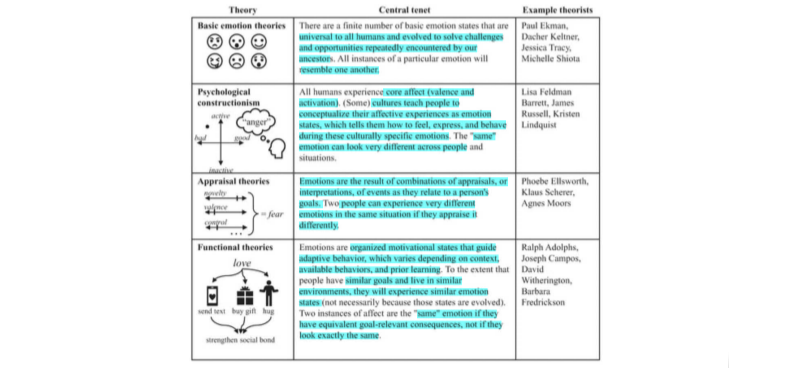
Basic emotion theories
Psychological constructionist theories
Appraisal theories
Functional theories
Comparing theories
universality
are emotions the same across cultures / individuals?
discreteness
how many emotions exist and how distinct are they?
coherence
do all components of an emotion occur together?
» Basic emotion theories
how natural selection may have caused humans to have the emotions they have
emotions are biologically evolved programs that helped ancestors survive
each emotion (fear, anger, joy, sadness, disgust, surprise, contempt) has a distinct neural and physiological signature
universal across all humans and cultures (Darwin, Ekman)
facial expressions correspond to basic emotional states
when triggered, all components (feeling, physiology, behavior) cohere automatically
Focus: evolutionary origin and biological mechanisms
» Psychological constructionist theories
How cultural learning causes people to develop the capacity to experience specific emotions
emotions are learned psychological constructions
formed through development, socialization, and culture
only core affect (valence and activation) is universal
valence: pleasantness vs unpleasantness
activation: high or low intensity
emotions are context-dependent and variable
emotional experiences exist on continuous dimensions, not discrete categories
components of emotion do not always align coherently
Focus: learning, experience, and conceptual variability
» Appraisal theories
which thoughts give rise to which emotions?
emotions arise from immediate evaluations (appraisals) of circumstances
appraisal is a mental process that detects events and evaluates their significance for well-being
appraisals are dimensional (e.g., valence, novelty/originality, control, norms)
they occur on a continuum and often unconsciously
primary appraisals: fast and automatic
secondary appraisal: slower, learned
distinct emotions emerge from specific appraisal patterns
partial coherence: appraisal patterns predict some but not all components
Focus: cognitive mechanisms that trigger and shape emotional experiences
» Functional theories
how people’s goals and situations they are in make one emotion more useful than other
focus on the function of emotion - what do emotion do for people right now?
emotions regulate behavior, decision-making, and social connection
emotional intelligence (Salovey & Mayer, 1990): ability to recognize, understand, and use emotions adaptively
emotional patterns can be learned through environmental interaction, not only evolved
Oatley & Johnson-Laird (1987): emotions adjust behavior to regulate goals
Fredrickson’s broaden-and-build theory: positive emotions broaden attention and build long-term resources
expressions vary, but each emotion maintain a consistent functional goal (e.g., love → closeness)
focus: immediate adaptive purpose and goal regulation
Summary
Theory | Universality | Discreteness | Coherence |
Basic Emotion | very HIGH - innate and universal across cultures | HIGH - distinct biological “packages” | HIGH - components cooccur automatically |
Psychological constructionist | LOW - only core affect is universal | LOW - emotions are dimensional blends | LOW - components vary independently |
Appraisal | MODERATE - universal appraisal dimensions | MODERATE - discrete emotions from patterns of appraisal | MODERATE - partial coherence depending on context |
Functional | MODERATE to HIGH - shared functional goals | MODERATE - defined by goal or consequences | MODERATE to HIGH - coherence through purpose, not identical form |
Research Methods
how can we conduct research on emotions?
How do we measure emotions?
emotional responses:
subjective feelings
facial expressions
central nervous system CNS
peripheral nervous system PNS
somatic
autonomic (sympathetic and parasympathetic)
link emotional responses to measures:
subjective feelings → questionnaires
facial expressions → objective coding systems
CNS → neuroimaging methods
PNS → physiological methods
however, to measure emotional responses, we first need to ensure that emotions are elicited → that’s why researchers use emotion induction methods ↴
Tools to induce emotions
film clips
emotion-inducing images (e.g., IAPS)
recall of emotional memories
music
scripted social interaction
naturally occurring emotions (daily questionnaire app)
DISCUSSION: INDUCING EMOTIONS WITH VIDEO
what are the advantages of using video clips to induce emotions?
easy to standardize across participants
strong emotional impact
cost-effective and easy to administer
what are the limitations or potential risks of this method?
emotions may not be equally induced for everyone
cultural variation in emotion perception
ethical concerns (e.g., sadness, fear)
possible habituation if reused
how could we measure whether the induction was effective?
manipulation check (e.g., self-report emotion questionnaire)
Things to consider when designing an emotion experiment
what do I manipulate?
independent variable - e.g., type of stimulus, emotional intensity, context
how do I induce emotion?
video clips, music, images, social stress, recall, etc.
what do I measure?
dependent variable - what changes as a result of your manipulation?
which measures do I use?
self-report scales, physiological data, behavioral indicators, neural activity, etc.
within or between-subject design?
do participants experience one or several conditions?
how do I verify that the induction worked?
manipulation check - e.g., post-task emotion rating or physiological response
who are my participants?
sample size, demographics, individual differences in emotion reactivity
any ethical considerations?
potential distress, informed consent, debriefing, right to withdraw
WEEK 1 - CLIP 1 - WHAT ARE EMOTIONS & WHY DO WE HAVE THEM?
Affective Phenomena
emotions are effective phenomena, but there are also other affective phenomena that are not emotions↴
preferences
never fully reasoned, there are feelings involved
different from emotions
attitudes
cognition is involved but there are feelings involved
again different from emotions
moods
unlike emotions, moods don’t have a clear reason
moods last longer than emotions
affective predispositions
they are personality traits
predisposition to show a certain emotion
for example, being a grumpy person
interpersonal stances
friendliness, shyness, anxiousness
not emotions
aesthetic emotions
scientist can’t explain
art, music, etc.
no need for something important to happen
utilitarian emotions
evolutionary
something important has to happen
Features of Emotions
reaction to a stimulus → there’s a concrete trigger
appraisal → we consider the event important
experience and expression → I can be angry but also don’t express it
limited duration
Motivation to display specific behaviors
capacity to regulate emotions → we are not defenseless victims of our emotions
effect on the individual AND OTHERS
social information
when we see someone get emotional it gives us information about that person
adaptive
they prioritize our reactions
anticipation plays a role
Timeline
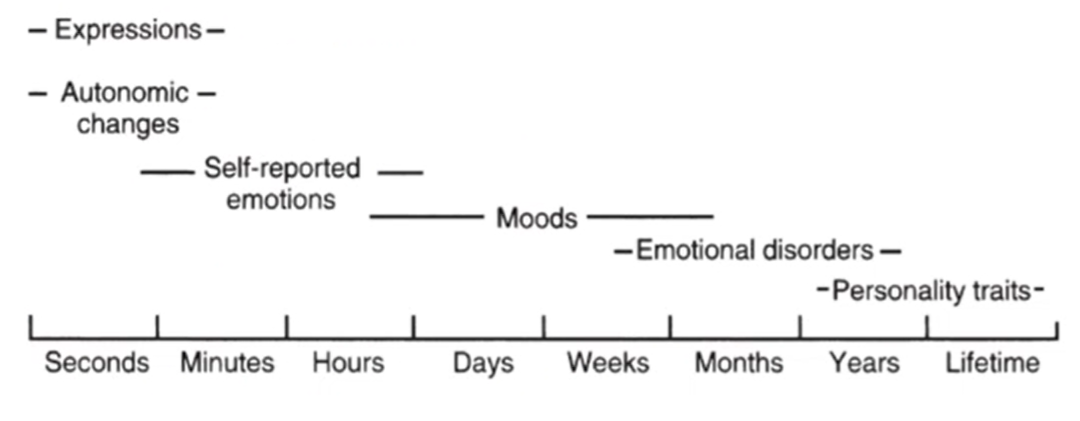
↳ self-reported emotions
Function of Emotions
emotions help us to display optimal behavior in a certain situation
Conditions for Adaptive Emotions
accurate appraisal → if you are angry at nothing than it’s not adaptive
proper degree of importance attached to situation
prioritizing goals corresponds with importance → if you have a fight with your bf during exam week you should be able to postpone the argument
reactions make sense for the situation
high emotional intelligence
“Anybody can become angry - that’s easy, but to be angry at the right person, and to the right degree, at the right time, and for the right purpose, and the right way - that’s not within everybody’s power and isn’t easy”
Aristotle
WEEK 1 - CH1 - INTRO TO EMOTION
Defining Emotion
Affect:
general term for any psychological process that involves evaluation
having a positive or negative response
Emotions fall under this umbrella. But so do other psychological constructs like
also attitudes
Your dislike of cilantro is affective, because for you, cilantro is bad.
Moods also fall under the affect umbrella, but scientists generally view them as different from emotions.
Moods are longer-lasting and less goal-directed than emotions.
Moods bias how people interpret and respond to situations, so they can nudge people towards particular emotions
Theorizing About Emotion
affective science → research about emotions
4 theories:
basic emotion theories
psychological constructionist theories
appraisal theories
functional theories
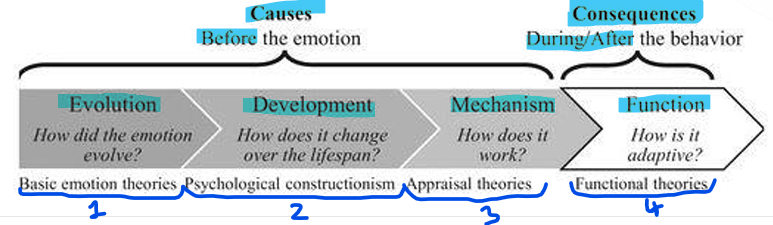
attempting to answer the question, ''What causes emotions?''
However, they each focus on a different meaning of the word ''cause.''
Basic emotion theories focus on how natural selection, over millions of years, may have caused humans to have the emotions they have.
Psychological constructionist theories argue that cultural learning causes people to develop the capacity to experience specific emotions.
Appraisal theories ask which thoughts cause or give rise to, which emotions
functional theories focus on how people's goals, along with different types of situations people find themselves in, cause one emotion to be more useful ( functional) than another
They are all wrong, to some extent, but some are useful
The four major emotion theories map loosely onto behavioral ethologist Niko Tinbergen's four questions:
argued that all questions about animal (and human) behavior fall into one of four categories:
evolution → How did the behavior emerge over many generations
development → How does the behavior emerge within an individual over time
mechanism →How does the behavior work and what causes it in the moment
function → How is the behavior adaptive for the organism

Comparing Theories
Universality: Do all humans in all cultures have similar emotional experiences?
Discreteness: How many emotions are there and how distinct are they from one another?
Coherence: When a person experiences an emotion, do all the components occur together?
Summary
Western philosophers once thought emotions should be tamed by rational thought, but modem-day affective scientists believe emotions are necessary for survival.
Emotions are motivational states that guide behavior. We start with the following definition, ''episodic, relatively short-term, biologically based patterns of perception, experience, physiology, action, and communication that occur in response to specific physical and social challenges and opportunities.''
The four major emotion theories each emphasize a different question according to Tinbergen's framework
The theories disagree the most on the issues of universality, discreteness, and coherence.
Affective science is an ever-evolving field. We encourage you to be a critical consumer of science, including the science in this book. Go read the original scientific studies if they interest you, confuse you, or make you cringe
WEEK 1 - CH2 - THEORIES OF EMOTION
Basic Emotion Theories
Universality
criteria to classifying an emotion as basic:
Expressions that are produced and recognized across cultures and that may involve more than just the face (e.g., the voice)
Distinct patterns of physiology.
Automatic activation of the associated action tendency.
Presence in other primates.
Discreteness and coherence
All the components of an emotion happen together (or "cohere") because they are integrated in an affect program
Affect programs: innate brain systems that are preset to tell the body what to do when faced with a particular event
there is a separate program for each of the basic emotions
does not mean that everyone's anger looks and feels exactly alike
develop similarly for all people (they are innate), they can change to include knowledge gained through individual experience
action tendencies: part of the affect program which make the person ready to perform specific behaviors to successfully address challenges and take advantage of opportunities
action is not inevitable → It could be adjusted to best fit the specific situation, or even prevented from occurring if necessary.
but an emotion's action tendency should have been adaptive in the ancient past, not just the present day.
possible action tendencies by looking at animal behavior: What do animals face in their environment, and what actions do they take to survive?
For instance, anger evolved to address obstacles through the action tendencies of biting and hitting with the adaptive outcome of destroying the obstacle.
Fear evolved to address threats through the action tendency of running away with the adaptive outcome of escape.
anticipation evolved to address opportunities of new territories through the action tendencies of examining and exploring with the adaptive outcome of acquiring new information.
→ These ancient action tendencies persist even if they are no longer adaptive in the present
Developmental detail - why study emotion development?
A complete developmental theory associates the unfolding of the components of emotion with that of many other skills and capacities.
These include maturation of the visual and motor systems and the acquisition of complex cognitive capacities, such as the ability to represent the self as an object of thought.
the behavioral and physiological components of fear rely on having a body with response systems that are mature enough to detect danger and run away.
envy and pride require the cognitive abilities of self-reflection and social comparison
initial attachment relationship with a caretaker
Psychological Constructionist Theories
Universality
core affect: the innate and universal component of emotion
Core affect is generally thought to be composed of two fundamental dimensions of conscious experience.
degree to which a state is pleasant versus unpleasant → valence
and the degree to which a state is activated versus deactivated → activation
Discreteness and coherence
Categorization: the mental process that takes experience and gives it structure and meaning
The emotion categories people learn by interacting with others and with the world are associated in memory with information about the probable causes of feelings, the relationships among the bodily changes, and predictions about what behavior tends to follow
Appraisal Theories
Appraisal: mental process that allows an individual to detect objects and events in the environment and evaluate their significance for the individual's immediate well-being
Circumstances can be appraised along many dimensions, and it is the pattern of appraisals that gives rise to particular emotions
in terms of how positive, novel, relevant to current goals, and congruent with norms their circumstances are, as well as whether the self or someone else was the initial cause of those circumstances
appraisals are not on and off; they are a matter of degree
this type of continuum is known as a dimension
unconsciously and unintentionally.
different appraisals lead to different emotions, an experimenter gave ambiguous, negative feedback to participants as they engaged in a difficult task.
The feedback caused different emotions across participants.
Some felt shame, some guilt, some anger, and some reported experiencing sadness.
Appraisals of the feedback situation, especially in terms of how important it was for the self, who caused it, and whether or not it was expected, predicted which of those negative emotions the participants reported feeling
Discreteness and coherence
biopsychosocial model: an appraisal theory about how appraisal of stressful circumstances impacts physiology and behavioral performance
When confronted with a stressful situation, like a difficult final exam, you may feel that you have the resources to cope with the situation. You have the time to study and the confidence that, even if the exam is hard, you have done well on past exams and will probably do well on this one.
challenge appraisal
your heart pumps more blood and the blood can flow efficiently to your limbs, improving performance in whatever task is at hand
Your friend, meanwhile, appraises the same exam differently. They are convinced that no amount of studying will be enough and if they fail this exam, their future will be ruined.
threat appraisal
your friends heart doesn't work as efficiently, and blood vessel constriction prevents the blood from fully oxygenating your muscles
⭐Notice that this appraisal-focused model does not predict that physiology will cohere with emotions, instead, it predicts physiology will cohere with appraisals.
Functional Theories
emotional intelligence → capacity to pay attention to and understand one's own emotions and those of others, and subsequently to use those emotions to guide behavior and decisions
Universality
Different functional theories focus on different functional consequences of emotions.
cognitive theory of emotions: views emotions as serving a regulatory capacity in terms of managing people's goals.
emotions come about when individuals, consciously or unconsciously, note that their behavior requires some adjustment.
specific emotions occur when progress on specific types of goals -which happen to be universal and highly repetitive- is interrupted.
the emotion then reorganizes and redirects the individual's activity in the service of a new goal, or at least in such a way as to deal with what has just occurred

broaden-and-build theory: describes the ways in which the positive emotions such as joy, interest, and contentment help an individual respond to opportunities to thrive.
first, that positive emotional states temporarily broaden the individual's repertoire of thoughts and actions.
Fredrickson notes, for example, that positive emotions are associated with an expansion, or widening, of the focus of visual attention
Instead of focusing exclusively on details, individuals in positive emotional states consider a wider number of cues and meanings from the environment
people in happy states explore visual scenes more extensively, pay more attention to the periphery of the scene and generally show greater flexibility of visual and semantic attention
more easily change their focus of attention and more easily access new or unusual word meanings. People's bodily movements are even broader, or more expansive, when they are in positive states
Revisiting our Definition of Emotion
"episodic, relatively short-term, biologically-based patterns of perception, experience, physiology, action, and communication that occur in response to specific physical and social challenges and opportunities"
Basic emotion definition: "episodic, relatively short-term, biologically-based, affect programs with consistent effects on perception, experience, physiology, action, and communication that occur in response to specific physical and social challenges and opportunities encountered repeatedly by humans over evolutionary history."
Psychological constructionism definition: "
episodic, relatively short term, biologically-based patterns of perception, experience, physiology, action, and communication thatoccur in response to specific physical and social challenges and opportunitiesthe person conceptualizes as an emotion, bringing order to an otherwise unique and context-dependent experience."Appraisal theory definition: "episodic, relatively short-term, biologically-based patterns of perception, experience, physiology, action, and communication that
occur in response to specific physical and social challenges and opportunitiesmap onto cognitive appraisals about the situation."Functional theory definition: "episodic, relatively short-term, biologically-based patterns of perception, experience, physiology, action, and communication that prepare the person for context-specific, goal-directed behavior,
occur in response to specific physical and social challenges and opportunities."
Summary
Basic emotion theories hold that emotions are evolved and programmed responses to certain opportunities and challenges posed by the environment. One of the key predictions of the basic emotion theory of emotion, which we will revisit several times in this book, is that a set of universally recognized facial expressions of emotion exists.
The psychological constructionist theory of emotion states that emotions are phenomena that are given shape by the process of categorization. Emotions are not stable biological entities, but rather elaborated within linguistic and cultural contexts.
The major contribution of appraisal theories of emotion is the idea that emotions are elicited and differentiated by evaluations (appraisals) of the environment with respect to the current goals and interests of the individual experiencing the emotion.
Functional theories of emotion agree with basic emotion theories that emotions drive adaptive behavior. However, they define a category of emotions (e.g. "anger") not by its expression (scowl) or by a specific behavior (punch), but instead by its functional consequence (correcting a perceived injustice).
Appraisal, functional, and constructionist theories agree that the different components of emotion can be quite separate and have separate time courses and that an inevitable set of components does not accompany all emotional episodes. They usually do not endorse the basic emotion idea of affect programs.
WEEK 1 - CH3 - METHODS FOR THE SCIENCE OF EMOTION
Tools for Inducing Emotional Responses
Scripted social interaction
cover story (deception) about the experimental hypothesis and the use of a scripted social interaction involving the…
…experimenter or a fake participant (a confederate) who is working with the experimenter
Developmental detail - Getting little ones emotional (ethically)
the mother is often enlisted to help generate emotional responding.
For instance, to look at the effects of facial expressions on the emotional expression of infants, instructed mothers to make happy, sad, and angry facial expressions at their ten-week-olds while saying sentences that conveyed the same emotion.
One difficulty with this procedure is that not all caretakers are good actors.
Nevertheless, this study and others found evidence that the babies were likely to match their facial expressions to their mothers
At a slightly later age, scripted interactions can also be used to elicit emotions.
For example, elicited anger responses in seven-month-old babies by having the mother or the experimenter give their baby a Gerber teething biscuit and then take it away (and out of reach!).
Because babies at this age are usually not independently mobile, manipulations such as this, successfully induce frustration and anger
Study Designs
Quasi-experimental design
experimental and control conditions
but participants are not randomly assigned to them
enhances ecological validity → phenomenon occurs in daily life
Correlational designs
experience sampling: online, app, daily questionnaires
Induction methods are not all the same
there are ways in which the methods can be compared that can help you choose which is the best for your specific research question
most important dimensions are:
Experimental demand
Standardization
Complexity
Ecological validity
Experimental demand: how easy it is for experimental participants to guess what a study is designed to test.
Experimental demand is high if the participant can very easily guess
undesirable in cases in which the participant is motivated and able to change their behavior to either help or hurt the experimenter.
Exposure to clearly happy or sad films, images, or music can seem to participants like obvious attempts to manipulate mood or emotional response
Standardization: the extent to which the method used to induce emotions has been pilot-tested for effectiveness and reliability across people and contexts
Complexity and ecological validity are related ideas:
Whereas complexity refers to invoking many components of the emotion in the laboratory experience,
ecological validity is the extent to which the experience is similar to what might be experienced in daily life.
The emotional experience in the laboratory is influenced and sometimes constrained by the methods being used by the experimenter
For instance, when participants are lying in a magnetic resonance imaging (MRI) scanner viewing IAPS images, the complexity and ecological validity of the emotional response must be viewed as limited
Not only do the images not produce a complex state, but the fact that the participant may not move limits the extent to which the body can be involved in the experience of the emotional response
Measuring Emotions
Facial expressions
component method: induced contraction of facial muscles with the use of electric currents and took pics → developed as the widely used anatomically based coding system , the Facial Action Coding Scheme (FACS) → FACS measures the appearance of changes in the face caused by muscular movements
judgement method: information that an observer can infer from facial expressions
Central nervous system
systems of the brain that are active in response to an emotional event, such as a reaction to the sight of two puppies playing
Peripheral nervous system
Somatic nervous system (SNS) innervates skeletal muscles, including those of the face, that are under voluntary control
execute plans to make the movements that are necessary to walk, run, get dressed, and pick up a coffee cup or a cell phone
Autonomic nervous system (ANS) internal balance of your body when you are faced with changing circumstances and adjusting innervation of smooth muscles-such as the heart-and glands
→ sympathetic
→parasympathetic
Assessment methods are not all the same
Just as available methods for inducing emotions do not all accomplish the same thing, neither do methods for measuring emotions
The important considerations for choosing a way to measure emotions in research are whether the method is:
Language-based.
Subjective versus objective.
Measuring discrete or more global states of emotion
invasive.
Expensive.
Summary
We described many ways to (ethically) induce emotional states in the laboratory, including the use of film, music, scripted interaction, and the presentation of emotional images.
We noted that emotions can also be studied by harnessing naturally occurring emotions. Outside of the laboratory, experience sampling techniques can be used to collect reports about emotions as they occur in real-life situations.
There are also many techniques for measuring individuals' emotional states, including the use of questionnaires, the assessment of facial expressions, and recordings from the brain and physiology.
By using many methods and assessing many parts of the whole elephant that we call an emotion, we can start to get closer to some truths about the components of emotion and their harmony or disharmony; about the involvement of all of "human nature"-the processes of the mind and the body -that make up an emotional experience; and about the role that emotions play in social life, the topic of the remainder of the book.
WEEK 2 - L2 - EMOTION REGULATION & EXPRESSION
Content & Learning Goals & Focus of this Lecture
Emotion Regulation in Context
Emotion Expression & Recognition
understand emotion regulation as a context-sensitive, dynamic process rather than a fixed skill
analyze how goals, context, and relationships shape regulatory choices
recognize the flexibility and polyregulation required in real-world settings
connect regulation to implicit and interpersonal processes
explore how emotion regulation shapes expression (what we show or hide)
understand multimodal emotion recognition and its contextual nature
critically reflect on technological emotion detection (e.g., FaceReader)
connect expression, recognition, and regulation as a social feedback loop
emotion as a dynamic process
regulated inside, expressed outside, and shaped in context
The emotional feedback loop
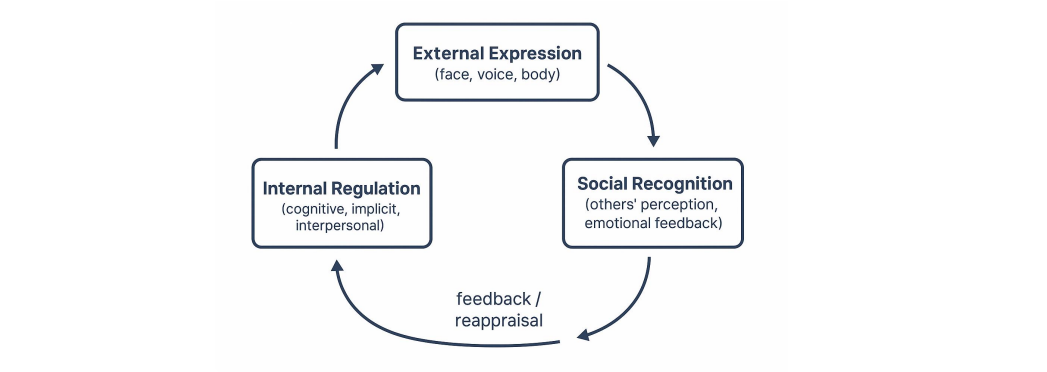
1) Emotion Regulation in Context
when and why does emotion regulation work (or not)?
Process model Gross
see clip 2 (below)
Other examples of emotion regulation strategies
strategy | definition |
rumination | repetitively and passively thinking about your feelings and problems |
distraction | redirecting attention within a situation or shifts attention away from the situation |
enhancement | up-regulation or accentuation of feelings |
catastrophizing | thoughts of explicitly emphasizing the terror of what you have experienced |
self-blame | thoughts of putting the blame on yourself |
other-blame | thoughts of putting the blame on the environment or another person |
putting into perspective | emphasizing the relativity of the event when comparing it to other events (to make yourself feel better) |
acceptance | thoughts of accepting what you have experienced and resigning yourself to what has happened |
Scenario: Possible emotion regulation strategies?
a student receives unexpected critical feedback from the professor right after a group presentation. She feels embarrassed and defensive.
putting into perspective → “other students also got bad feedback”
Beyond “good” or “bad” strategies
no strategy is universally adaptive
→ effectiveness depends on context, timing, and motivation
example:
distraction may help in acute stress, but hinder processing in the long term
suppression may protect relationships short-term, but reduce authenticity over time
Short-term vs Long-term effects
strategy | short-term effects | long-term effects |
reappraisal | reduces immediate negative affect; promotes composure | builds resilience and learning orientation; associated with better academic outcomes |
suppression | maintains professionalism; prevents escalation | increases physiological stress, reduces authenticity, can harm group relationships |
distraction | temporarily eases distress | avoids reflection; emotions may resurface later |
social support | offers emotional relief and perspective | strengthens relationships; promotes adaptive coping |
rumination | intensifies negative emotion | maintains shame/defensiveness; impairs self-confidence |
Emotion regulation goals
different goals/motives for regulating emotions
hedonic motives: aiming to feel better (comfort, pleasure, calm)
instrumental motives: aiming to feel useful emotions (e.g., stress for focus, anger for assertiveness)
prosocial motives: to protect the feelings of others
self-protective motives: protect their safety or to elicit helpful reactions from others
impression management motives: the fear of being judged negatively by others
Emotion regulation goals in context
goal conflicts require strategic choice, based on:
how you value your emotions
your repertoire of emotion regulation strategies
your emotion regulation abilities
your effort to employ a strategy
Emotion regulation flexibility and polyregulation
flexibility: matching strategies to situational demands
polyregulation: using multiple strategies together or in sequence
adaptive regulation = context sensitivity x repertoire x responsiveness
Case: Emotion regulation flexibility
It's a regular working day for Pete. He is in the office with 4 colleagues. Recently a new colleague joined. This guy has an irritating voice. Pete tends to roll his eyes when the new colleague talks. The other colleagues don't seem to be bothered by it. Because Pete doesn't want to show his colleagues how irritated he is, he tries to suppress the tendency to look annoyed. The colleague also can't help having an irritating voice. Pete thinks that if he worked somewhere else, there would always be something he didn't like. He has heard from friends that they work with 15 people in one room. He would go completely crazy!
Pete is glad that his work is done. Tonight, he is having friends over for dinner! He bikes home but is in the middle of a rainstorm on the way home. He doesn't want to let it ruin his good mood and thinks of the nice evening he has ahead of him. Now that he is getting wet, this is actually a good opportunity to jump into the shower before his friends arrive.
When his friends arrive, they have a great time. They laugh like crazy, and Pete tells tall tales. His face speaks volumes.
suppression of expression
reappraisal
putting into perspective
distraction
reappraisal
Implicit and interpersonal regulation
implicit regulation: automatic, learned emotion control (habits, attentional biases)
interpersonal regulation: influencing or being influenced by others’ emotions
co-regulation in teams, families, or couples
emotional contagion and empathy
2) Emotion Expression & Recognition
what do our expressions reveal - and what do others actually see?
From regulation to expression
regulation shapes what we show
we might suppress, exaggerate, or mask emotions depending on goals and context
expression itself can regulate emotion (smiling can lift mood)
Expression as communication
expression communicates internal states, intentions, and social meaning
display rules: learned norms about when to show or hide emotion
expressions serve both personal and relational goals
Multimodal emotion recognition
emotion is perceived through multiple channels
facial expression
vocal tone and prosody
body posture and movement
context (social and cultures)
recognition depends on integration of cues - and is influenced by our own state and biases
embodied simulation
we simulate others’ expressions using our own emotion and motor systems, giving us access to their underlying feelings
Automated emotion detection
Noldu’s FaceReader:
software that classifies basic emotions based on facial Actions Units
estimates valence and arousal, useful for research and training
strengths:
objective
fast
consistent
limitations:
lack context sensitivity
sensitive to lighting and angles
struggles with mixed or regulated expressions
cannot infer intentional regulation
Key Takeaways
concept | deep insight | example |
emotion regulation is contextual | no one strategy fits all | suppression may help socially but harms authenticity |
flexibility is key | match strategy to situation | distraction → reappraisal sequence |
regulation can be social | we regulate with and for others | comforting a peer |
expression is part of regulation | what we show influences what we feel | smiling to stay calm |
recognition is multimodal | context and cues matter | facial + vocal + body signals |
recognition closes the loop | what others see reshapes what we feel | feedback loop |
WEEK 2 - CLIP 2 - EMOTION REGULATION
Gross (1998,2015)
defines emotion regulation as: process by which individuals influence what emotions they have, when to have them, how they experience and express them
→ people choose to reduce, strengthen, or maintain the experience of positive / negative emotions depending on their goals and their regulation efforts
Tamir (2016)
distinguished between 2 emotion regulation goals:
1. Hedonic
short-term desires to feel better
increasing positive emotions
reducing negative emotions
2. Instrumental
social or performative motives that can be aided by emotion regulation
for example, you may choose to not express your anger in order to maintain a good relationship with your friend
⭐Hedonic goals may not match instrumental goals → you can reduce positive emotions in order to focus on studying
Process Model by Gross
explains emotion regulation process over time
5 emotion regulation strategies
these 5 strategies in the model affect each other (for example, expressing your happiness → makes the situation more pleasant)
1. Situation selection
you select a situation to influence your emotions
antecedent-focused (applied before the emotional response is generated)
2. Situation modification
you alter the situation you are in to alter it’s emotional impact
antecedent-focused (applied before the emotional response is generated)
3. Attention deployment
you direct your attention to influence your emotions
antecedent-focused (applied before the emotional response is generated)
4. Cognitive change
you modify your appraisal / interpretation of a situation to modify it’s emotional impact
antecedent-focused (applied before the emotional response is generated)
5. Response modulation
you directly change your behavioral, experiential, or psychological emotional response
response-focused (after the emotional responses are activated)
2 most researched emotion regulation strategies by Gross:
1) Reappraisal
cognitive change strategy (4) aimed at modifying the emotional meaning and impact of an emotional situation
being bullied → stronger
→ Reappraisal = adaptive (+)
higher self-esteem, life satisfaction, well-being
lower psychopathology (anxiety, and depressive symptoms…)
2) Expressive suppression
response modulation strategy (5) → inhibition of emotional expression
hold your tears to show that it doesn’t bother you
→ Expressive suppression = maladaptive (-)
lower self-esteem, life satisfaction, well-being
higher psychopathology (anxiety, and depressive symptoms…)
Other Strategies
Adaptive (+)
distraction
enhancement
putting it into perspective
acceptance
Maladaptive (-)
rumination
catastrophizing
self-blame
other-blame
however according to the process model:
emotions don’t need to be regulated all the time, but just when they interfere with goals
and whether strategies are adaptive or maladaptive depends on the context of the situation
for example, expressive suppression can be adaptive in the short-run
Emotion Regulation Flexibility
using different strategies based on the current situations demands
emotion poly-regulation: using multiple strategies at the same time
WEEK 2 - L3 - MINDFULNESS
Overview
what is happiness?
its effects and how to promote it
what is mindfulness?
mindfulness and stress/ emotions
mindfulness-based interventions
efficacy
mindfulness and emotion regulation
Happiness
historic overview of the book not always correct → skip!
e.g. ancient hedonism was not about seeking momentary pleasure, but avoiding pain, including mental pain caused by desire…
definition happiness:
Lyubomirsky et al: subjective well-being = having frequent positive and infrequent negative emotions + life satisfaction (last two often aren’t included in research)
positive effects happiness:
happy behavior = attractive to others → easier connection and collaboration (also in experimental research)
better health (better cardiac and immune function, healthier lifestyle)
occupational success (also better performance)
What determines happiness?
50% set point → genetics
40% intentional activity → daily life
10% circumstances → sociodemographic
this is hypothetical! (book “who is happy” is misleading)
empirical studies show variable results → intentional activity interventions <10%
what predicts happiness?
limited evidence for money or whether (only limited correlations)
affective forecasting (ability to predict our future emotions): people are poor at it, why?
impact bias (expected impact inflated), perhaps because of focalism (cognitive bias where people overemphasize one specific piece of information)
hedonic adaptation (tendency to quickly return to a stable, baseline level of happiness), plausibly because of survival value of novel information
social comparison: downward vs upward
So, what boosts happiness?
gratitude
randomized trials of interventions show modest positive effects (small effects on average, 1% explained variance)
expressing kindness to others
randomized trials of interventions show modest positive effects (small effects on average, 3% explained variance)
talking to strangers → only some individual studies show some positive effects
mindfulness
book provides only references on decreases of negative emotions (medium-sized effects), but:
randomized trials of interventions on well-being show modest positive effects (small effects on average, 3% explained variance)
book is incorrect that we know the mechanism of mindfulness
and large interindividual differences! →possible effects of differences in baseline well-being - should get more attention
Mindfulness
paying attention in a particular way: on purpose, in the present moment, and non-judgmentally
to:
anything that enters consciousness, sensory, proprioceptive, mental phenomena
attention:
open
direct → voluntary and pre-reflexive → prior to judgment
judgment-free
“the clear and single-minded awareness of what actually happens to us and in us at the successive moments of perception”
“it offers a bare display of what is taking place”
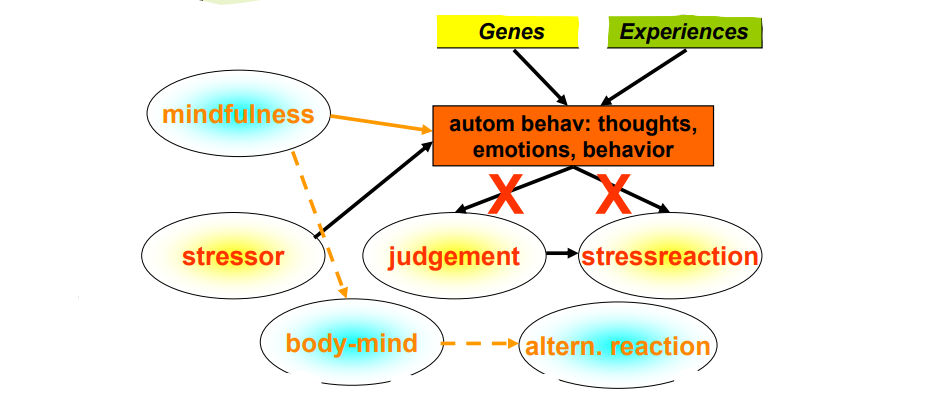
judgement → appraisal
West vs East
western psychology
focused on parts of self, which one does not like and tries to change, for a better future
ancient eastern psychology facets:
acceptance of reality (including oneself as totality) at it is in the moment
integration
mindfulness (acceptance) concepts in western psychology
3rd wave of CBT interventions:
Mindfulness Based Stress Reduction (MBSR)
Mindfulness Based Cognitive Therapy (MBCT)
Dialectical Behavior Therapy (DBT)
Acceptance and Commitment Therapy (ACT)
Meta-Cognitive Therapy (MCT)
Mindfulness misconceptions
“you need to make your mind empty”
→ No, thoughts are ok, you just don’t have to take them seriously all the time
“mindfulness strives for a "pink sunglasses world and is vague”
→ full catastrophe living
→ take reality for what it is
“mindfulness leads to passivity”
→ No, reality includes ones own inner signals!
→ more healthy and authentic action
Emotion regulation paradox
mindfulness stance:
emotion (experience) does NOT need to get regulated
just mental phenomenon
ACT: not negative emotions per se are unfavorable, but experiential avoidance of negative emotions
“just feel feelings as feelings, think thoughts as thoughts, fully and without defense, and get on with the business of living”
mindfulness paradox:
people want their emotion (experience) regulated →
in MBSR they learn it is not necessary, just accept them as they appear →
emotions get regulated… how?
The RICH model of mindfulness and psychological well-being
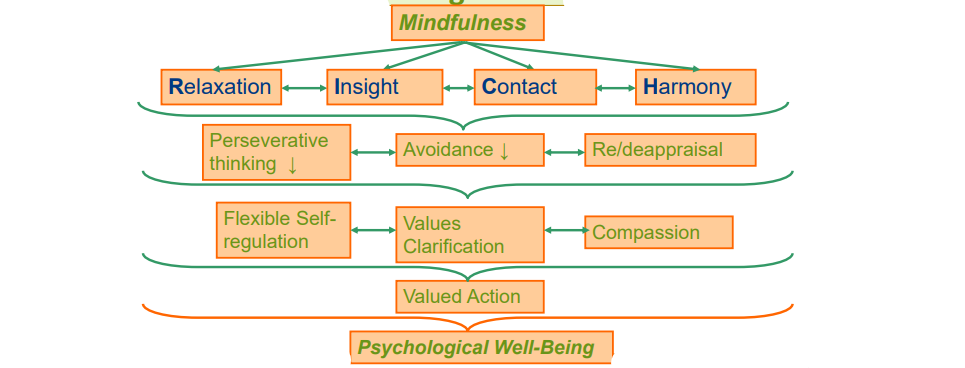
Mindfulness-Based Stress Reduction (MBSR)
dual processing: usually noticing thinking → redirecting attention to…
interoceptive phenomena: breathing (mediation), body (body scan, mindful yoga), emotion
but also introspection: watching thoughts
phenomena are acknowledged/ accepted as they are!
in daily life practicing mindful attention
8 groups sessions of 2 hours (+ 35 min homework every day!)
Psychological correlates
self-reported mindfulness correlates with:
general distress ↓
anxiety, depressive symptoms ↓
Neuroticism ↓
Extraversion and openness ↑
BUT:
correlation causation
chicken-egg paradox
Psychological effects: intervention
Scientific evidence for beneficial psychological effects of MBSR is accumulating:
General distress ↓
Anxiety, worry, rumination ↓
Depressive symptoms ↓
Pain ↓
Sleep quality ↑
Quality of life (QoL) ↑
Meta-analysis 1 → on symptoms of anxiety and depression: mean effect size of (overall) (in psychol. patients),
Meta-analysis 2 → mean effect size Hedges ; vs. other psychological therapies , except CBT/BT: same
Effect on self-reported mindfulness
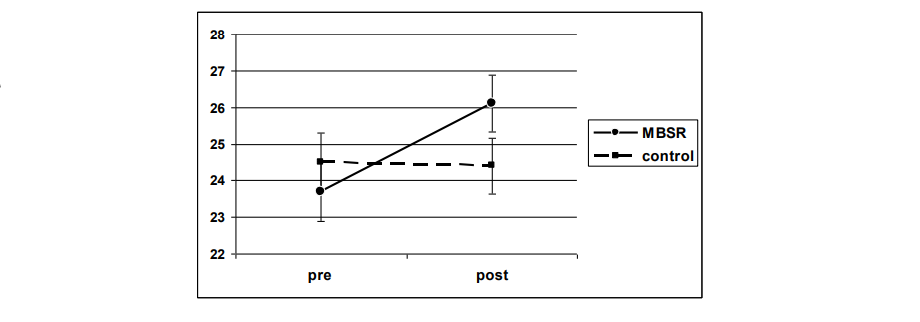
interaction effect → MBSR was successful in increasing mindfulness
Example: effect on feelings of distress
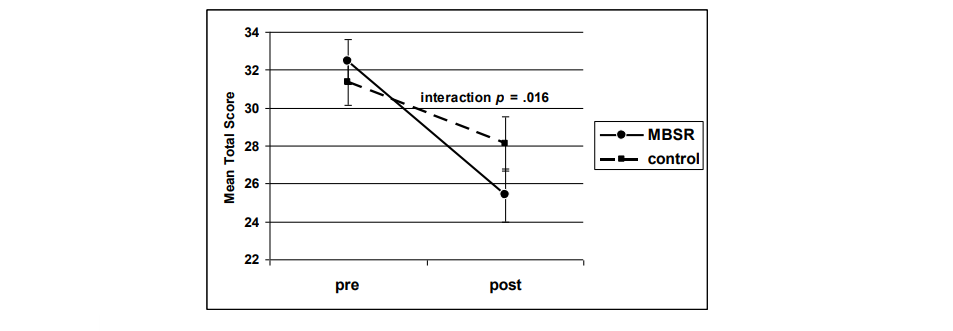
interaction effect → MBSR successfully reduced distress
Effect on overall quality of life
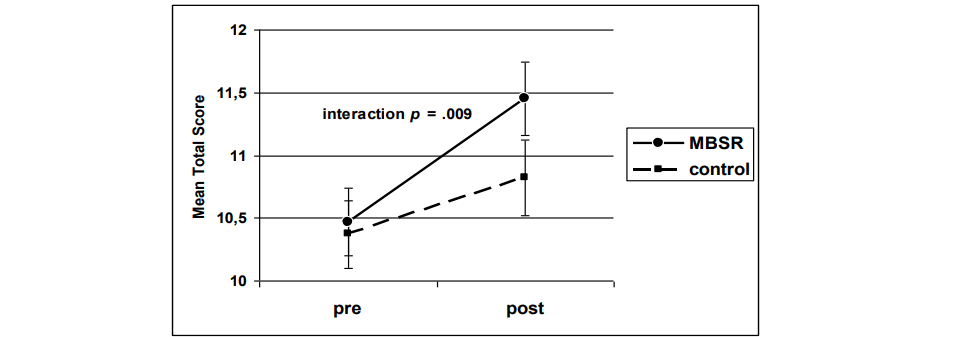
interaction effect → MBSR successfully increased quality of life
Brain mechanism: prefrontal cortex
prefrontal cortex areas such as MPFC, RVLPFC, and VMPFC are responsible for emotion regulation
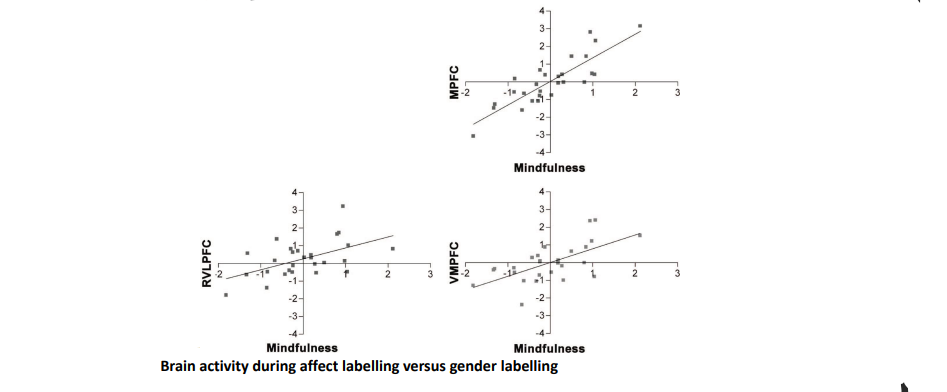
→ Higher mindfulness is associated with greater recruitment of prefrontal control regions during emotional processing
And negative correlation with amygdala activity
amygdala → negative emotions
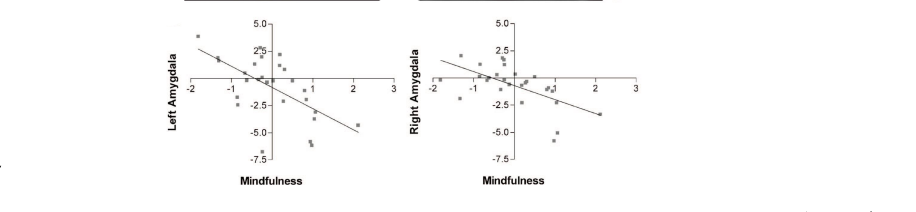
→ As mindfulness increases amygdala activity decreases during emotional processing
Does it work for everyone equally?

→ less effective in male diabetic patients on depressive symptoms
[usually there is no sex differences
in this study men dropped out because they usually aren’t open to it and they didn’t know when signing up that they were gonna do manfulness
but usually no sex differences when participants volunteer knowing there is mindfulness involved]
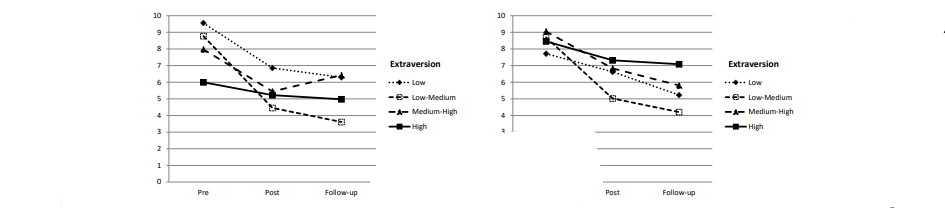
→ less effective in high extraverted diabetic patients on depressive (left) and anxiety (right) symptoms
[these two are exceptions!
No moderators found]
Is mindfulness responsible?
in > 130 patients with diabetes
positive effects of mindfulness therapy on perceived stress
“statistically mediated” by mindful non-reacting (letting go)
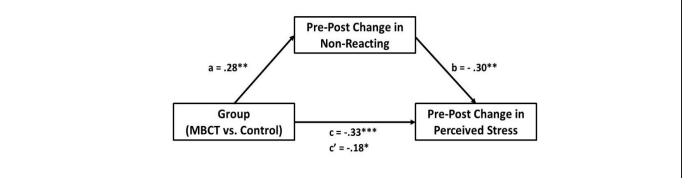
Is mindfulness the mechanism?
mindfulness predicts less negative mood the next day, but not vice versa
Buffer effect mindfulness
in > 200 patients with rheumatoid arthritis:
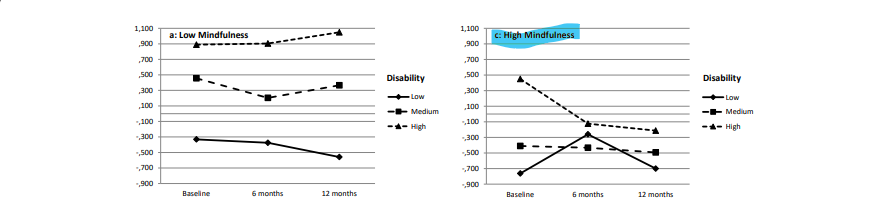
mindfulness → less stress a year later, even when the disability is high
Mindfulness: conclusions
mindfulness is a cognitive attitude/skill
correlates with adaptive psychological constructs
seems to buffer against psychological stress
forms basis for new (3rd wave) therapies
which are effective for emotional problems and increase quality of life compared to waitlist and active interventions, but equally effective to CBT
moderators only beginning to be examined: role of sex and extraversion needs to be researched more
change in mindfulness mediates the effects and may indeed be the mechanism of action
future research should examine more for whom mindfulness vs content-oriented therapies help best
WEEK 3 - L4 - MENTALIZATION BASED TREATMENT
Patient: Wendy
background:
22 years old, alone, quit with her studies
she was raised up by a very dominant mother
Wendy felt extremely rejected by her mother
sexual abuse by her father, which has been a secret till now
Problematic Interaction Patterns
attitude: “everything is all right, there is nothing wrong with me” → this way she keeps distance from other people, but she feels very lonely
she does everything people ask her to do → people-pleaser
she is very anxious for critics and rejection
Situation:
in the previous session the therapist asked Wendy: “Why do you still do everything you’re mother asks you?”
it was the end of the session and Wendy was overwhelmed by emotion she started crying and it didn’t stop
the therapist had to stop the session and Wendy went home crying
Wendy 1
“You don’t even care about me, we should stop therapy, this isn’t working for me, I just cry all week and you let me go like nothing happened, you don’t care”
What does Wendy experience?
thoughts and feelings are “too real”
extreme rigid, everything is absolute
reading people’s thoughts
no room for perspectives
suspicious and hostile
What kind of response do feel as a therapist?
you don’t know how to react or what to say
you yourself will be overwhelmed by emotions
you nod and you hope it will pass
you become irritated because of her attitude
Psychic equivalence mode
internal reality = external reality
specific understanding (“I feel this, which means it’s the truth”)
extremely rigid thinking, absolute convictions, etc.
being able to read the thoughts of others, “knowing” what they are like, etc
no room for other perspectives
negative cognitions about oneself are viewed as the absolute truth
internal experiences can be frightening (flashbacks)
distrust and hostility are often the affect
THOUGHTS & FEELINGS OF CLIENT
rigid
no doubt
security
absolute
certainty
“what I feel is reality”
→ “This therapy won’t help me, It’s simply a fact that I AM crazy. I know you think so too, but you’re too much of a coward to tell me. I should just end it all…”
THOUGHTS & FEELINGS OF THERAPIST
hopeless: “this will never work”
powerless: “I don’t know what to say”
angry: “not this shit again”
anxious: “ how do I talk him out of this?”
amazed/surprised: “huh? what did he just say?”
Wendy 2
“I can’t breath, please give me new medication, this therapy isn’t working, I need meds, please, please help me”
What does Wendy experience?
“I feel this, which means it’s the truth”
asking for action of the therapist
demanding
What kind of response do you feel as a therapist?
guilty → you feel like you can’t do it right
you want to do something
give her practical tips, arrange things for her
angry or helpless
Teleological mode
intentions are only seen when someone else does something (action)
states of mind are recognized and believed only if their outcomes are physically observable
THOUGHTS & FEELINGS OF CLIENT
self-destructive behavior
It’s about what you DO and not what do you say”
“only what I see is reality”
→ “ Something has to be done, why don’t you see that I feel so awfully bad. I have to have some medication, I have to speak to a psychiatrist. How are you going to arrange this?”
THOUGHTS & FEELINGS OF THERAPIST
fear
insecurity
uncertainty
“I have to do something”
“maybe it will help if I call her tonight”
“how can I show her that I am involved?”
“she’s trying to manipulate me”
Wendy 3
“I feel great, I cried all week, you know I went to chakra therapy and I felt everything, it was great, I feel great”
What does Wendy experience?
not lively
emptiness
doesn’t show any feelings
absence of emotions
there is no meaning in what she says
looks like she is keeping distance
what she says is not consistent
What kind of response do you feel as a therapist?
you are very bored
go along with not feeling like how the client is doing → identifying with the model
detachment
sometimes working hard only “cognitive”
you think there is a lot of progress in the treatment
Pretend mode
the internal world has been disconnected from the external world
linked to emptiness, meaninglessness, and dissociation
in the session, endless and inconsistent (unimportant) discussion of thoughts and feelings → meaningless
risky behaviors such as drug use, impulsive purchases, binge eating, self-harm → patients want to feel again
the inner mental world is not experienced as dependent on the physical existence: self-harm, suicide attempts
emptiness
meaningless
dissociation
no change
absence of joy
lack of emotion
THOUGHTS AND EMOTIONS OF THE THERAPIST - Pretend Mode
boredom
detachment
illusion of progress
What Is Mentalizing
inside out trailer
Definition of mentalizing
ability to understand actions of oneself and others, explicitly and implicitly, in terms of intentional mental states (feelings, thoughts, intentions, wishes and desires)
Characteristics of mentalizing
mental states (emotions, thoughts, etc.) occur on the inside, barely visible
we draw our “conclusions” (make assumptions) about mental states
mistakes are easily made when drawing these conclusions
the core principle in this process is to adopt a “not knowing stand” and open attitude, with a willingness to learn
Mentalizing - Self and the other relationship
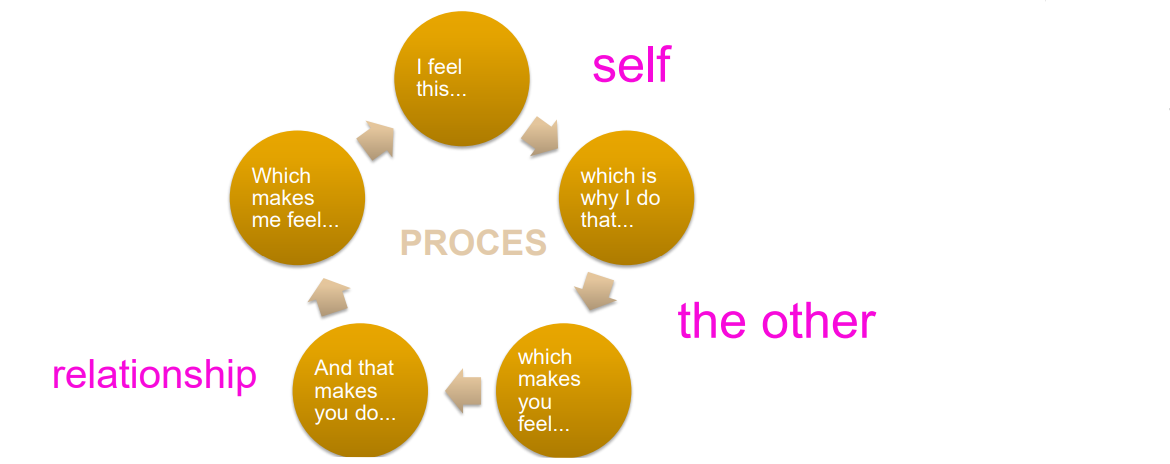
to view ourselves “from the outside” and other people’s inner worlds
the normal ability to ascribe meaning and intent to human behavior
the ability to understand emotions, thoughts, intentions, and desires
mentalizing creates a meaningful self
helps us understand ourselves and others
mentalizing allows us to understand why mix ups occur
essential for human interaction and relationships
How and When Does the Ability to Mentalize Develop?
gradual development process starting at birth:
intentionality (shared attention) → age 1
play pretend and language use to refer to internal conditions → early childhood
sophisticated understanding of emotions → early childhood
→ ⭐broccoli-cracker experiment
pre-mentalizing modes:
teleological mode (+/- 1.5 years)
object constancy: “if i can’t see it, its not there”
psychic equivalence mode (+/- 2 years)
internal reality = external reality
still no realization that others enjoy different things than him → own reality = only reality
play pretend mode (+/- 3 to 4 years)
internal reality becomes separated from external reality
chair = train
mentalizing → integration of the modes above (around 4 years)
mental states are only 1 representation of multiple perspectives on reality
2 important factors:
secure attachments
and within that secure attachment relation, the marked mirroring
Core processes in developing mentalizing
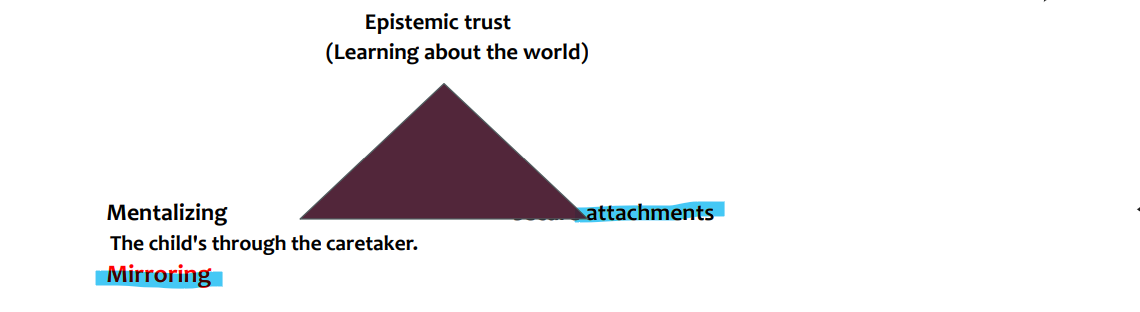
Core process: Attachment
In order to survive, every child has an innate capacity to look for closeness and protection in others (Bowlby)
Attachment is regulation of emotions in interaction with others
Children develop the ability to mentalize in relation to attachment figures
ATTACHMENT STRATEGIES IN CHILDHOOD
Feeling secure: anxiety and sadness at separation, immediate recovery of closeness when reunited, then continues playing and exploring
Avoidance: demonstrates little fear upon separation, avoids parent when reunited
Ambivalence: Anxious at separation, clingy, angry and tense at reunion
Disorganized: no coherent strategy
ATTACHMENT STYLES IN ADULTS (PARENTS)
Autonomous: explains in a clear, coherent and nuanced manner
Reserved: idealizes parents without substantiation, parents unimportant, lack of concrete memories
Preoccupied: confused and non-objective, passive, angry-conflicted or angry-confused
Unprocessed/disorganized: unprocessed pain of loss or memories of abuse come flooding back
DISTRIBUTION AMONG AVERAGE POPULATION
secure (60%)
insecure (40%)
avoidant (20%)
ambivalent (15%)
disorganized (5%)
PSYCHOPATHOLOGY
insecure attachment does NOT automatically lead to psychopathology
disorganized attachment does lead to psychopathology at a later age
the ability to mentalize is less in people with an insecure attachment style than with people with a secure attachment style
stress and trauma reduce the ability to mentalize
reduced ability to mentalize makes it harder to interact with others
Core process: Mirroring
Congruent mirroring (same action)
Observer’s brain activity matches the same action/emotion they’re seeing.
Example: you see someone smile → your “smile” system lights up.
Same movement, same emotion, same neural pattern.
Direct matching. No translation.
→ “I see it, I internally do it.”
Incongruent mirroring (no matching)
The observer’s response does NOT match the other person’s emotion or action.
Can be opposite, mismatched, or emotionally off-beat.
Often regulated, defensive, or socially strategic.
Examples:
Someone is sad → you smile or laugh (awkward coping, not villain arc).
Someone is angry → you stay overly calm or emotionally flat.
Therapist stays neutral while client is emotional.
→“I see your emotion… and I’m not matching it.”
Marked mirroring (same emotion)
The observer mirrors the emotion, not the exact action.
Different expression, same feeling.
Example: someone cries → you don’t cry, but your sadness/emotion circuits activate.
Think of it as emotional tagging, not copy-paste.
→ “I get how you feel, even if I’m not doing what you’re doing.”
Unmarked mirroring (automatic)
Automatic, unconscious, and literal copying of another person.
No emotional “translation,” no regulation, no context check.
Same action, same expression, same timing.
Example:
Someone yawns → you yawn.
Someone crosses their arms → suddenly you’re doing it too.
Baby sticks out tongue, adult sticks out tongue back (iconic).
→ “I saw it. I did it. No thoughts.”
Contingent mirroring (situational)
The response is context-dependent, not automatic.
You mirror only when it’s socially relevant or appropriate.
Example: comforting someone who’s upset vs staying neutral in a professional setting.
Involves higher-level regulation and social cognition.
→ “I could mirror, but let me read the room first.”
HOW DO YOU LEARN TO DEAL WITH AFFECT? - Marked and Congruent Mirroring
child in state of arousal
parent notices the child’s mental state and understands what is happening → resonance
parent shows that they are thinking about the child → reflection
parent responds, not in a state of arousal themselves → marked expression
child understands that it is understandable, can be calmed down, starts to understand own feelings
THE EFFECTS OF UNMARKED MIRRORING
parent resonates accurately, but not markedly (too realistic)
escalation because no containment takes place
child’s feelings remain intense and frightening
⭐unmarked mirroring → no distinction between own experiences and those of others → no secondary representation of the emotion → psychic equivalence mode
[internal reality = external reality
specific understanding (“I feel this, which means it’s the truth”)
extremely rigid thinking, absolute convictions, etc.
being able to read the thoughts of others, “knowing” what they are like, etc
no room for other perspectives
negative cognitions about oneself are viewed as the absolute truth
internal experiences can be frightening (flashbacks)
distrust and hostility are often the affect]
THE EFFECTS OF INCONGRUENT MIRRORING
parent does not resonate appropriately in relation to the child’s experience
inner experience not rooted in reality → false self, emptiness
⭐incongruent mirroring → mirrored feelings do not match internal feelings → non-matching secondary representations → incoherence and fragmentation of self image (unstable self image) → pretend mode
[the internal world has been disconnected from the external world
linked to emptiness, meaninglessness, and dissociation
in the session, endless and inconsistent (unimportant) discussion of thoughts and feelings → meaningless
risky behaviors such as drug use, impulsive purchases, binge eating, self-harm → patients want to feel again
the inner mental world is not experienced as dependent on the physical existence: self-harm, suicide attempts]
Mental representation: Development of regulated affect
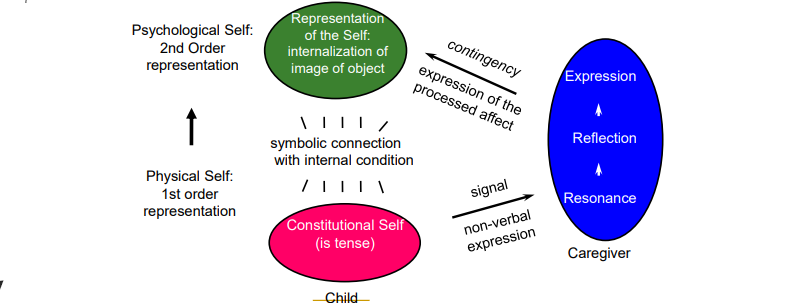
Affect regulation
safe:
modulate and calming of painful
→ mentalizing
avoidant:
over-regulation of the affect
→ pretend mode
preoccupied:
under-regulation of the affect
→ psychic equivalent mode
disorganized:
over/under-regulation
→ pretend mode
→ psychic equivalent mode
Bio-behavioral “Switch” Model
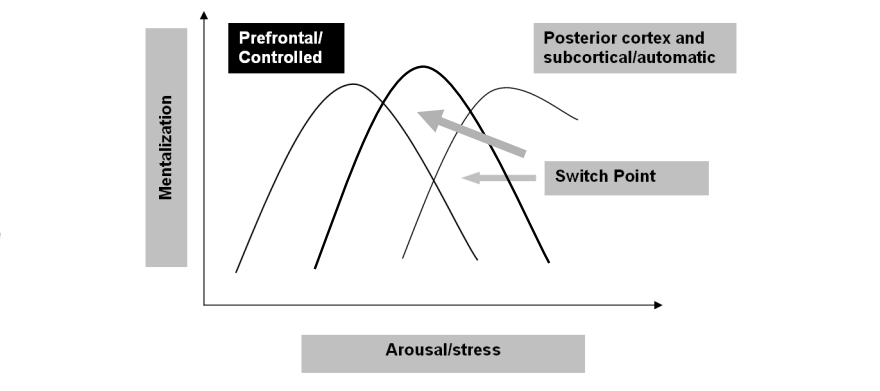
“The bio-behavioral switch model proposes that caregiver presence suppresses children’s physiological stress responses, shifting regulation from biological to social systems.”
Secure → switch flips easily
Insecure → switch is unreliable or broken
What does Good Mentalizing look like?
with respect to the feeling and thoughts of others:
realization of being barely visible
absence of paranoia
contemplation and reflection
place things in the right perspective
sincere interest
be open to new discoveries
forgiveness
predictability
the perception of own psychological functioning
positive appreciation of changeability
development-oriented
realistic doubts
understanding of the existence of preconscious content
general standards and attitudes, for example, a degree of researchability and moderation
WEEK 3 - CLIP 3 - COGNITIVE PREOCESSES
what does the cognitive emotion model entail?
what is appraisal?
Cognitive Emotion Model Magda Arnold & Richard Lazarus
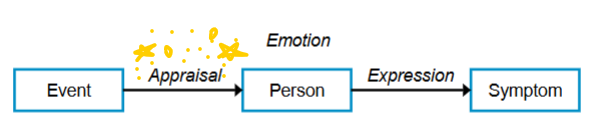
cognitive therapies are based on this model
basic premise of the model: event itself does NOT cause emotions but its the appraisal that matters
how do I view the situation?
how important is it?
do I find it positive or negative?
is it a challenge or a threat?
who do I consider responsible?
for example → something very serious happens and I think…
…I caused that: guilt
…my neighbor caused that: anger
…it was bound to happen: sadness
→ who I consider responsible determines my emotion
→ what the event is does NOT matter (it can be sometimes)
⭐appraisal is important for therapy because bad situations are bound to happen in someone’s life, we can’t stop that but we can change how we look at those situations!
So, the cognitive emotional model states that → appraisal precedes feelings
but is that the case all the time?
for example, when you are disgusted by a food you first react then cognitive processes and appraisal kicks in
Kinds of Appraisal
there’s 2 kinds of appraisal
but there are different models, what one considers primary and secondary appraisal differ between them
but in general…
1. Primary appraisal
immediate, automatic, and partly unconscious evaluation of whether a stimulus / situation is…
good or bad
relevant or irrelevant
→ and whether if we want to avoid or approach the person / situation
2. Secondary appraisal
appraisal in relation to more specific goals and/or ego involvement
for example, moral values, important ideals
has 2 categories ↴
→ DISCRETE APPROACHES
appraisal gives rise to a distinct emotion (Lazarus)
→ DIMENSIONAL APPROACHES
focuses on components of appraisal that can relate to several emotions (Smith & Ellsworth)
» Secondary Appraisal: Discrete Approaches
Core relational theme (Lazarus)
summary of different classes of events that elicit emotions
situation / emotions that are critical for human evolution
for example, survival, reproduction, collaboration → benefit, harm or loss, threat, coping potential, blame
EMOTION | CORE RELATIONAL THEME |
anger | a demeaning offense against me and mine |
anxiety | facing uncertain, existential threat |
fright | facing an immediate, concrete, and overwhelming physical danger |
guilt | having transgressed a moral imperative |
shame | having failed to live up to an ego-ideal |
sadness | having experienced an irrevocable loss |
envy | wanting what someone else has |
jealousy | resenting a third party for loss or threat to another's affection or favor |
disgust | taking in or being too close to an indigestible object or idea |
happiness | making reasonable progress toward to realization of a goal |
pride | enhancement of one’s ego-identity by taking credit for a valued object or achievement, either our own or that of someone or group with whom we identify |
relief | a distressing goal-incongruent condition that has changed for the better or gone away |
hope | fearing the worst but yearning for the better |
love | desiring or participating in affection, usually but not necessarily reciprocated |
compassion | being moved by another’s suffering and wanting to help |
so the correlational themes indicate the kinds of situations that trigger those emotions
→ very limited: emotions can involve more than hat is stated in those themes
» Secondary Appraisal: Dimensional Approaches
Smith & Ellsworth
distinguished 8 different dimensions of meaning that capture the appraisal processes that lead to different emotions:
PLEASENTNESS → good or bad
ATTENTIONAL ACTIVITY → whether it attracts attention
CONTROL → to what extent can we control this situation
CERTAINTY → how confident you are in the situation
GOAL-PATH OBSTACLE → to what extent are your goals hindered
LEGITIMACY → fair or unfair
RESPONSIBILITY → are you responsible or not
ANTICIPATED EFFORT → none or much
Scherer
distinguished 8 different evaluation checks that always occur in a fixed order:
Expectation: did you expect that event to occur?
Pleasantness: did you find the event pleasant or unpleasant?
Goal conduciveness: did the event help or hinder you in the achievements of your goals?
Fairness: was the event just or unfair?
Causation: who caused the event?
Coping ability: were you able to cope effectively with the event improper or immoral?
Morality: was your behavior in the event immoral?
Self-consistency: did the event have a positive or negative influence on your self-worth?
Third Phase of Appraisal: Social Sharing
when we experience emotions (especially strong ones) we have a tendency to share it with others
why…↴
MOTIVES FOR SOCIAL SHARING (Rimé)
Rehearse → to remember or re-experience the event
Vent → to express or alleviate pent-up emotions, to attempt catharsis
Obtain help, support, and comfort → to receive consolation and sympathy
Legitimization → to validate one’s emotions of the event and have them approved
Clarification and meaning → to clarify certain aspects of the event that were not well understood, to find meaning in the happenings of the event
Advice → to seek guidance and find solutions to problems created by the event
Bonding → to become closer to others and reduce feelings of loneliness
Empathy → to emotionally arouse or touch the listener
Draw attention → to receive attention from others, possibly to impress others
Entertain → to engage others and facilitate social interactions
Responses of Targets
Social support: attempts at comforting, expressing unconditional support, showing empathy and understanding
Physical gestures: non-verbal comfort or consolation, such as hugging, kissing, or touching
Concrete actions: talking about or attempting to do something outside of the emotional situation (distraction)
De-dramatization: putting the situation in perspective, telling the person that it also happens to other people, that it is not so bad
Questioning: asking more information or clarifying things about the experience
→ happens in everyday life, but also therapy sessions (more systematically)
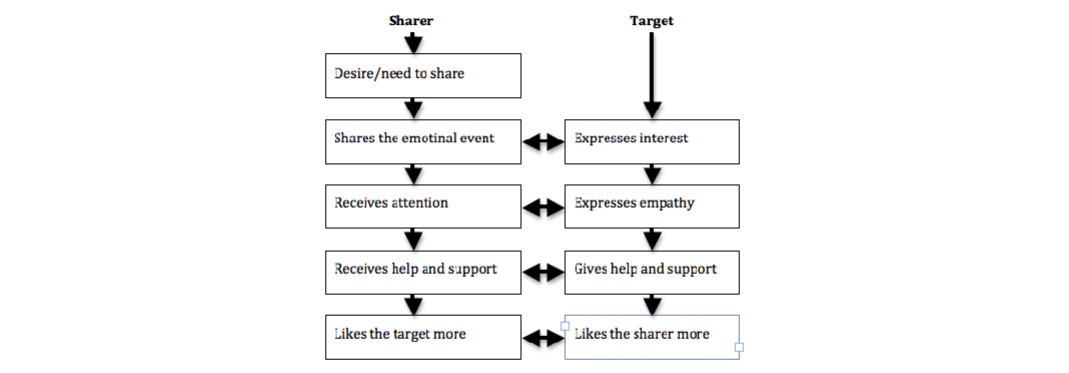
⭐sharing leads to a closer bond, especially when the information is more private
WEEK 4 - CLIP 4 - EMOTIONAL DISORDERS AND THERAPY
what is the role of emotions in mental disorders?
what is the role of emotions in psychotherapy?
Individual Differences in Emotions
in the kind of situations that evoke specific emotions
same situation evokes different emotions in different people
in the tendency to appraise situations in a certain way
some might find a situation threatening while others don’t
in the tendency / (in)capacity to experience (certain) emotions
some people tend to respond with anger
in the intensity and duration of the experienced emotions
in the intensity and duration of the expression of emotions
this related to emotion regulation tendencies
the way emotions are (not) regulated and (not) expressed
in the (in)capacity to recognize one’s own specific emotions
alexithymia: having no words for emotions
a personality trait, people differ in the dimension (men score higher)
secondary alexithymia: due to trauma
NOT a personality trait
in the (in)capacity to recognize emotions in others
autism spectrum disorder (ASD)
in the specific relation between different emotions
women often relate anger with powerlessness which accompanies with crying
in men this is less often
in the specific relation between valence (+ / -) and arousal
some people feel more arousal when they experience negative emotions
⭐scoring high on a dimension does not necessarily mean that you have a mental disorder (unless of course it’s considered a criteria)
Emotions & Psychopathology
emotion and emotion regulation play a role in:
the development (etiology) of psychopathology
the consequences/manifestations of psychopathy
the impact of therapy
people who seek therapy usually withhold information that is crucial for therapy because they are ashamed of it
Emotional Problems
one emotion may become very prominent
anxiety disorders
depressive disorders
one reacts to events with deviant emotional responses
violence
emotions are not properly regulated → emotions are more intense, last longer or interfere strongly with daily lives
generalized anxiety disorder
deviant behavior is used to regulate emotions
OCD
a more general incapacity to experience and express emotions
emotional numbness → depersonalization and derealization disorder
incapacity to experience certain very specific emotions (empathy, love, guilt)
emotions of others are not recognized
ASD
Proof that emotions differ between healthy people and mentally ill people - Antisocial personality criteria

Proof that emotions differ - Dual threshold anger model

⭐best choice → middle, between expression threshold and impropriety threshold (you can apply this to other emotion as well)
Psychotherapy
Psychoanalysis (Freud)
becoming aware of transference of emotion schemas to present moment
how the client behaves now has to do with emotion schemas that have become maladaptive in the past
new-form: Mentalization-Based Treatment (MBT)
borderline personality disorder (BPD)
based on knowing what’s going on inside yourself and others and interpreting what motives are likely behind
Rogerian counseling (Rogers)
person-centered
non-directive
providing a safe, empathetic, nonjudgmental space for self-examination
not used much because it takes long
Cognitive-Behavioral therapy (CBT)
changing irrational/maladaptive thinking/behavior
newer forms:
Mindfulness-Based Cognitive Therapy (MBCT)
Acceptance and Commitment Therapy (ACT)
Dialectical-Behavioral Therapy (DBT)
Emotion-Focused therapy (EFT)
emotions help clarify goals and values
change is achieved by replacing an emotion by another emotion
WEEK 5 - CLIP 5 - INDIVIDUAL DIFFERENCES
Content
how does the development of emotions occur?
what is the influence of person and environment on emotional development?
Paul Ekman (Evolutionary Emotion Theory): Nature vs Nurture
humans like animals are equipped at birth with behaviors for survival and the ability to learn.
Do emotions also belong to these inner behavior?
basic emotions:
happiness
sadness
fear
disgust
anger
surprise
contempt
learned/ self-conscious emotions:
love
guilt
shame
regret
pride
empathy
…
Basic Emotions
what do these basic emotions have in common:
a distinct subjective or phenomenological quality
we know the difference between feeling sad and happy (same goes for learned emotions)
a specific innately determined neural substrate
a characteristic facial expression / neuro-muscular expressive pattern
independent of language and culture
also displayed by blind and deaf children
Universality of Emotions (Ekman)
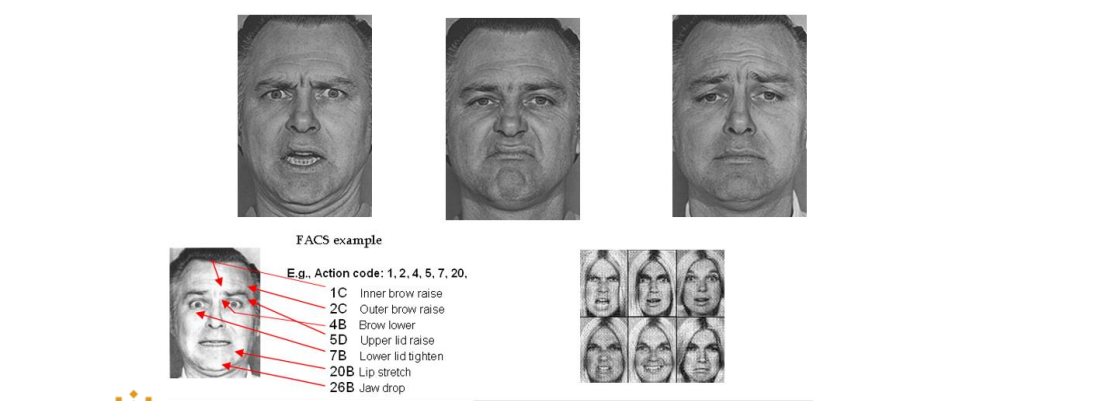
most emotions are about social circumstances, but an exception is disgust
the earliest expression of emotion is disgust
it can be observed in newborns in response to sour taste
physical disgust (with food and germs: crucial for survival) → moral disgust (when norms of the group)
oral to moral
Lisa Feldman Barrett: Criticisms / Questions
aren’t the specific emotional expressions not just posed expressions, not real ones from daily life?
emotions by Ekman are post-facial expressions
they don’t occur like that in real life
no ecological validity
are these expressions really recognized worldwide, in all cultures?
aren’t bodily expressions important as well?
Ekman only focuses on the face
is every specific emotion associated with a specific physiological pattern?
she thinks we need specific context to determine what type of physiological response comes with a particular feeling
anxiousness in one context might be associated with a different physiological response than in another context
Self-conscious Emotions: Mirror Test
The idea is that the basic emotions are there from birth, but the self-conscious emotions develop later.
There's more doubt about universality culture plays a bigger role.
They would occur from the moment a person recognizes himself in the mirror.
So, as soon as you put a baby in front of the mirror, and he knows, well, that's me, and not another baby.
From that moment, a child can start experiencing emotions like shame, guilt, regret, and pride. This is true not only for children, but also for animals
Development of Emotions
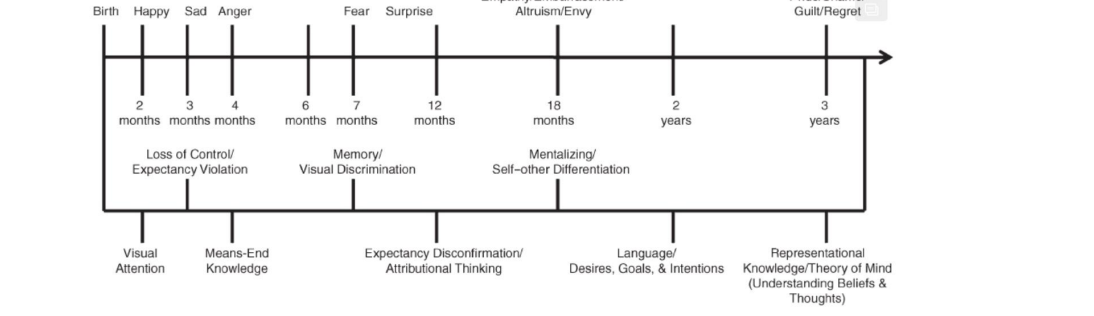
disgust is the first
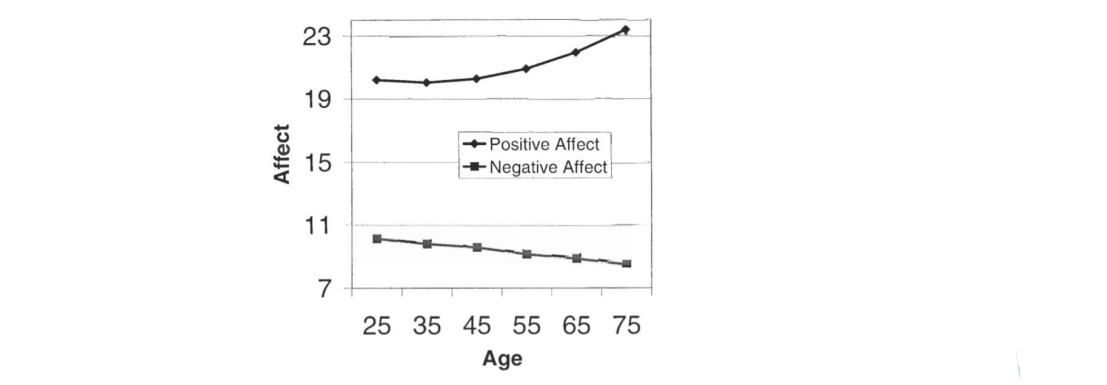
Individual Differences
temperament
personality
negative life events
parenting
attachment
siblings
peers
broader social context

WEEK 6 - CLIP 6 - EMOTIONS IN COMMUNICATION
Content
what emotion expressions can be distinguished?
what effects do emotion expressions have on other people?
Modes to Transmit Information
facial expressions
gestures
vocal information
verbal information
touch
via music/ art
pheromones (?) → And there's growing evidence that the number of emotions, such as fear, disgust and sexual router, are associated with the emission of camo signals. For example, certain odors, and as other people can smell our emotions. And this is a new field.
Imperfect Communication
miscommunication: the meaning attributed to an intentional message by the receiver is different than that intended by the sender
attempted communication: a process by which a sender a conveys a message that is not received by the receiver
misinterpretation: the sender unintentionality sends a message that a receiver interprets as conveying a specific intent
Kinds of Information that can be Transmitted
about the expresser’s internal state
about the expresser’s appraisal of the situation
about his/her goals, desires, and motives
about his/her behavioral intentions, social predispositions
about his/her personality
about his/her norms and values
Facial Expressions: Affective Reactions in Others
reciprocal reactions:
emotional contagion or effective (true) empathy
e.g., anger triggers anger
complementary reactions:
e.g., anger triggers fear



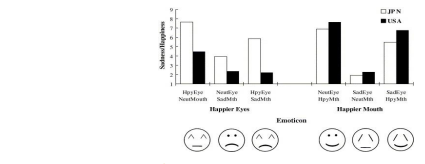
Kinds of Nonverbal Behavior
emblems: nonverbal gestures that directly translate to words (e.g., peace sign)
illustrators: gestures that accompany our speech to make it vivid, visual, and emphatic (e.g., waving your arms)
regulators: nonverbal behaviors that we use to coordinate conservation (e.g., turn to or away from a person, pointing)
self-adaptors: nervous behaviors that lack intention, meant to release energy (e.g., chew on your lip)
display of specific emotion: face (muscles, tears, blushing, sweat), body
expression via art/music
physiological reactions that can be perceived - pheromones?

The expression of an emotion is not merely an expression, but also the transmission of information.