Evolution
Evolution: A change in the genetic makeup of a population over time due to its environment.
Charles Darwin is credited, when we talk about this topic. Evolution means the changing of organisms, and adapting to their environments.
Genetic Drift: Any random change to the allele frequency of a population due to a chance event.
Binomial Monoculture: Unique, Two- part name. Genus and Species Name and latin or latin-ish name.
In this topic we can talk about natural selection as it is an important topic.
Natural Selection: When organisms adapt to their environments to survive and be the fittest. The fittest being able to reproduce, survive, and not necessary strong. Such as earth worms, they are underneath the earth obtaining the resources no one else goes for.
There are many components for natural selection:
Genetic Variation
Struggle for existence
Competition
Survival of the Fittest
Increased frequency of the best traits
Many types of selection include
Balancing selection: In which in the population, there are two different traits, and both of them have certain advantages to offer in different environments, though this helps diversify the populations.
Directional Selection: Directional selection is where in a population a a trait moves to a extremist position and no one has seen before, and it does that because it will increase the survival rate.
Disruptive Selection: Disruptive Selection is a trait getting divided into two or more traits
Some key points that support evolution is homologous structures.
Homologous structures: Those are structures are structures that are the same in two different organisms, and show that they both evoluted. They have the same structures, but different functions
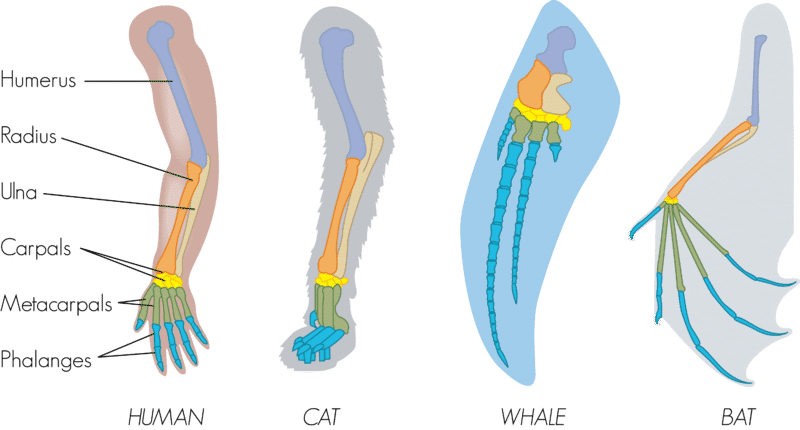 There is another type of structure we can see, such as a vestegial structure.
Vestigial Structure: A vestigial structure is a structure that has no use in an organisms body, though are there from ancestors. Such as the appendix. It was known that appendix in earlier times was a filter, for the food we used to eat that would be dirty. The appendix would not let the dirty food pass without filtering it.
Though there is a structure that is not good for supporting evolution:
Analogous Structure: Analogous structures are structures in organism that have the same purpose, though they don’t have the same structure like vestigial structure or homologous structures. Showing that these analogous structure don’t have a common ancestor.
Comparative Biochemistry
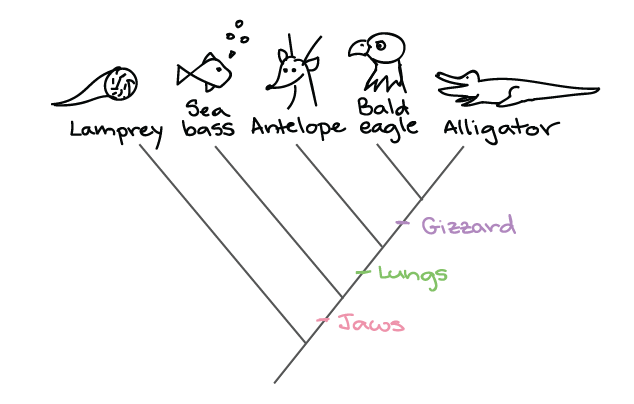
A phylogenetic tree is a type of tree, helping at looking at common ancestors from an organism past. Showing similarities and differences in a characteristics of an organism. It is a branching diagram.
Convergence: Unrelated organisms develop similar traits.
what do we call the use of radioactive isotopes as a measure for determine the age of fossils? Radiometric Dating
The earth is 4.5 billion years old.
Though when the species have CHANGED OVER TIME then genes help
by showing common similarities in nucleotide
amino acid
Sex progression happens from new traits.
DNA- RNA-Amino Acid- Protein-Traits.
On the opposite hand there was man called Lamarack. He believed that evolution happened from the traits used or unused by the animals. After that, the traits would be passed down to offsprings of the organism.
Components of Natural Selection
Genetic Variation
Struggle for existence
Competition
Survival of the fittest
Increased frequency of the best traits.
The Adaptions
Morphological Adaption: structures are adapted to specific needs and environments on the exterior structures of the organism. On the outside. No anatomy.
Behavioral Adaptations : based on how an organism interacts with its environment
Physiological Adaptations : Adaptations on a molecular level
* Things inside the body
Geographical Adaption: Physical features.
A species: is a group of organisms which have the ability to reproduce with members of their group
Speciation
If a species changes enough that it can no longer interbreed with the original species a new species can form.
There are different types of speciation.
Geographical isolation: Separated by different forms of lands
Temporal isolation: When species are separated by time, for example when they can’t breed because they are separated by time.
Behavioral Isolation: When organisms act differently.
Mechanical isolation: When organisms organs are incompatible.
The Domain in linneauses tree or something was a broad subject, but there were many parts to it.
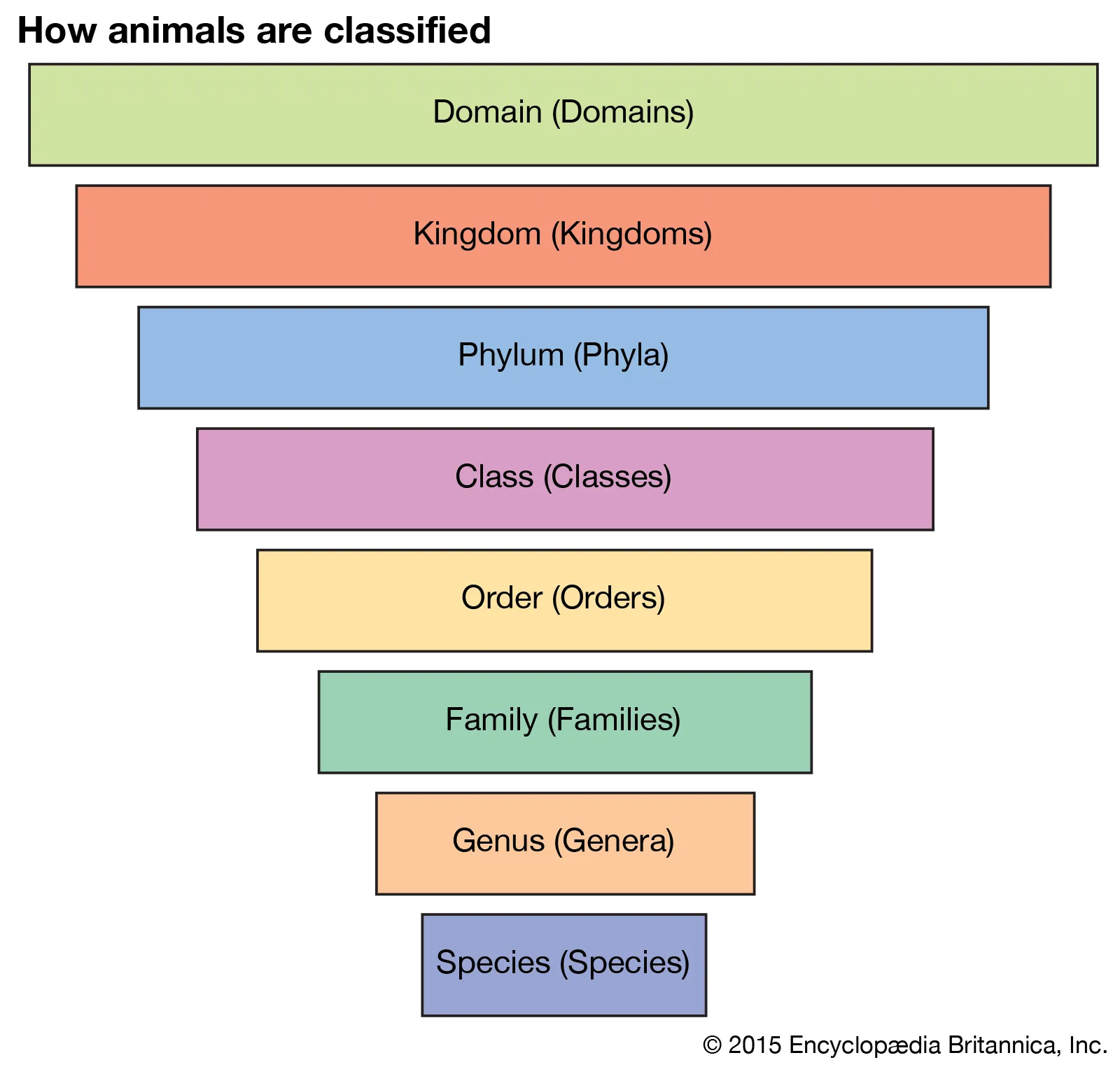 Smallests- Species,Genus, family, order, class, phylum, kingdom, domain( largest).
Domain
(bacteria and arches are both prokaryotes, though they were once known as monera).
Bacteria
Archea
Bacteria here are prokaryotes
More related to eukaryotypes.
More rna polymerase
Eukarya
Makes up all the life forms with the nucleus and all the life.
Kingdom
Protista
single celled organisms.
Autotrophs and Heterotrophs
Fungi
Heterotrophs
Plantae
Autotrophs
Animalia
Heterotrophs