Tuberculosis
Case
42 y/o male
admitted via A&E due to injury & seizure
symptoms - productive cough, weight loss, night sweats. Unclear duration
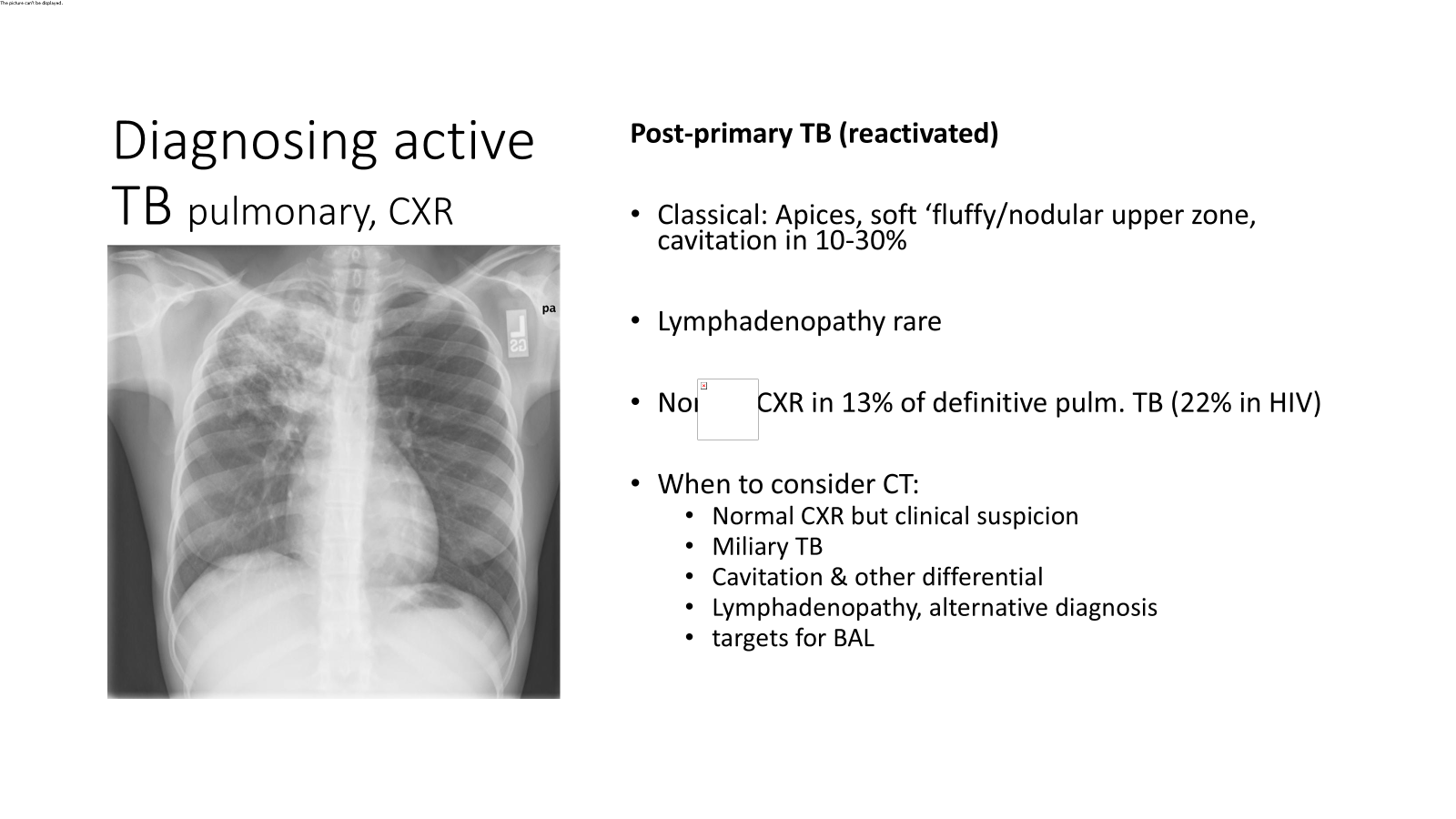
Chest xray is patchy and nodular consolidation, cavitation, more white in right lung
>alcohol abuse
>history of violence
>chaotic lifestyle
based on chest xray admitted to negative pressure room
sputum sample smear positive for AAFB. MTB complex. Culture +ve
nurses with TB patients for 6 months
TB is contagious
the more deprived you are, more common to have TB
Vulnerable Groups in UK
if you come from a country with high prevalence***
incidence among non UK born individuals 19 times higher than those born in the UK
HIV positive, immunosuppressed
Elderly, neonates, diabetics
Homeless, alcoholics, IDU’s and those with mental health problems and those in prisons approx 1 in 10 of all cases
TB second to covid as cause of death in 2021 but now it is number one cause of death
mycobacterium non motile bacillus, slow growing, disease is slow, treatment is long
aerobic, predilection for apices of lungs
uniquely has a very thick fatty cell wall -resistance to acids, alkalis and detergents
-resistant to neutrophil and macrophage destruction
NOT ALL AAFBS ARE TB
TB spread airborne (pulmonary and laryngeal TB spreads, others don’t)
•TB bacteria attached to aerosol droplets which can remain suspended in air for many hours, especially if there is poor air circulation
•Someone else breath these bacteria in
•Usually requires prolonged close contact
•Outdoors mycobacteria eliminated by UV radiation and dilution
Exception to rule of how TB is spread is Mycobacterium bovis, which can be spread by consumption of unpasteurized infected cows’ milk (very uncommon in the U.K.)
NOT spread by -shaking hands -sharing food -touching surfaces -sharing toothbrushes -kissing
Immunopathology

The Th1 cell mediated immunological response is a two-edged sword
Eliminates / Reduces number of invading mycobacteria
Tissue destruction is a consequence of activation of macrophages
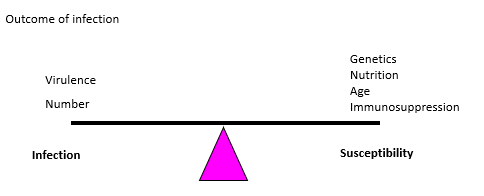
Primary infection
No preceding exposure or immunity
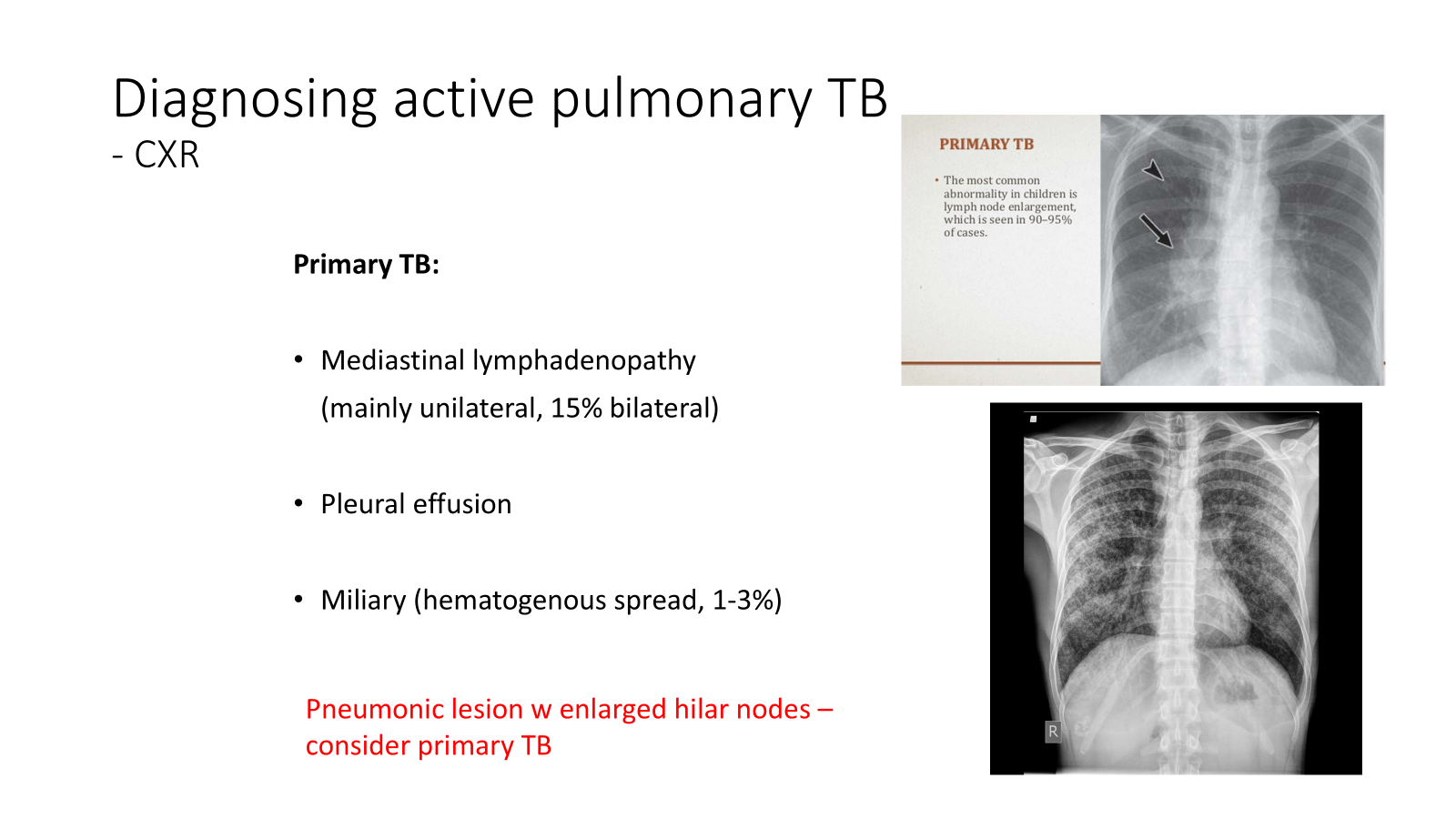
Mycobacteria spread via lymphatics to draining hilar lymph nodes
Usually no symptoms, can be fever, malaise. Erythema nodosum, rarely chest signs
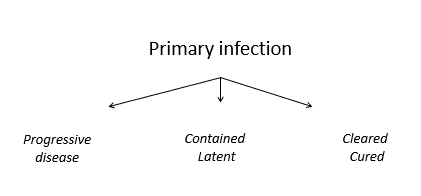
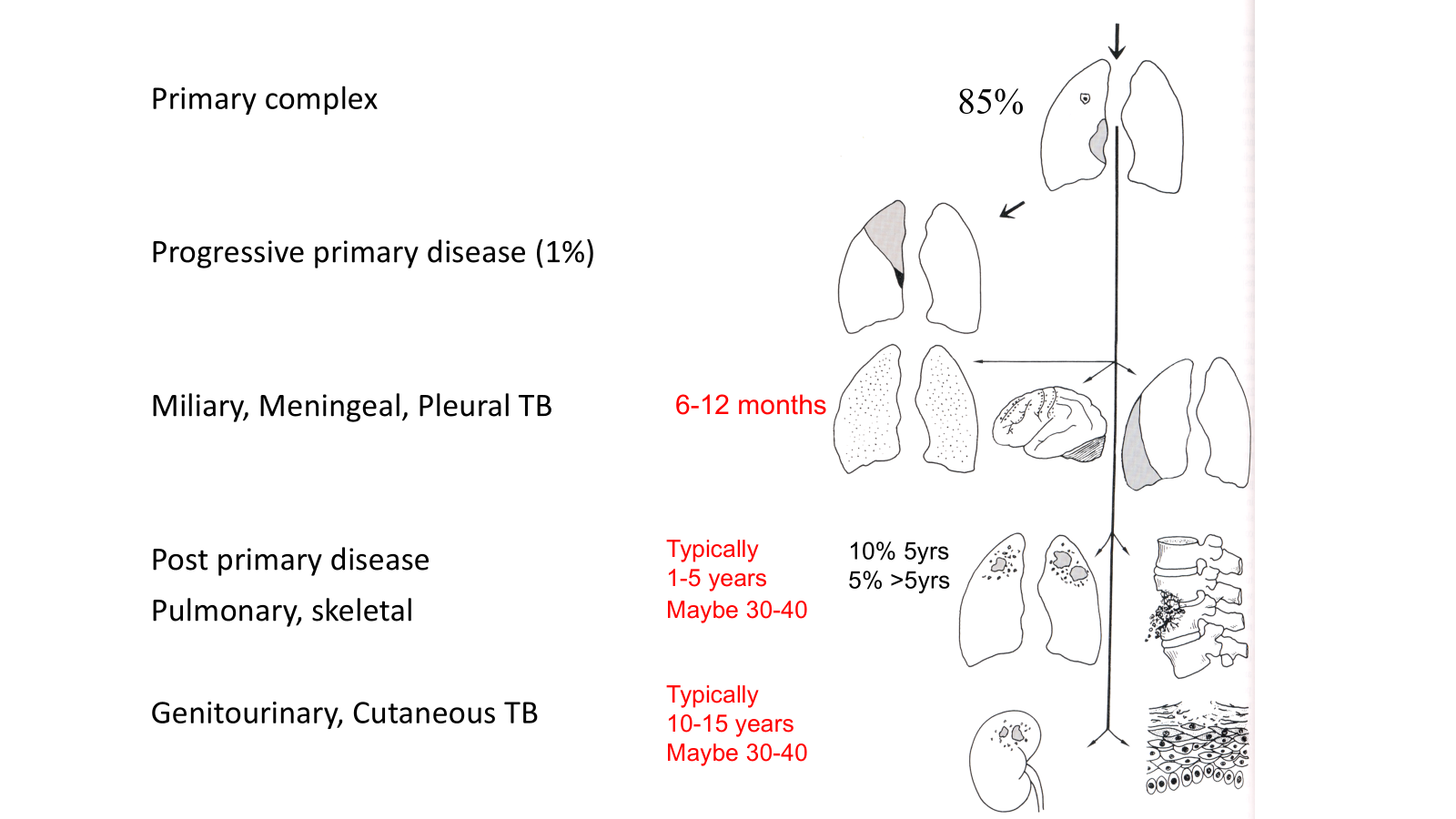
In the majority (>85%)
Initial lesion + local lymph node (Primary complex)
Heals with or without scar. May calcify (Ghon focus + complex)
Associated with development of immunity to tuberculoprotein

Primary Infection
•In a small number (1%)
Primary infection progresses to Tuberculous bronchopneumonia
Primary focus continues to enlarge - cavitation
Enlarged hilar lymph compress bronchi, lobar collapse
Enlarged lymph node discharges into bronchus
Poor prognosis
•In a small number (1-3%)
Miliary TB (looked like millet seeds on autopsy) develops, with hematogenous spread of bacteria to multiple organs
Fine mottling on X-ray, widespread small granulomata
CNS TB in 10-30%
Post primary disease
•Only in humans. Animals usually succumb to primary TB and never develops post-primary disease
•Two main hypothesis
1.TB bacteria entering a dormant stage with low or no replication over prolonged periods of time
2. Balanced state of replication and destruction by immune mechanisms
Clinical Presentation
cough, fever, drenchy night sweats, weight loss (last three symptoms main)
C-Reactive Proteins normal in 15%, ESR normal in 21%
fever absent in 37%
sweats absent in 39%
weight loss absent in 38%
all three absent in 25%
Treatment rules: •Multiple drug therapy is essential
•Single agent treatment leads to drug resistant organisms within 14 days
•Therapy must continue for at least 6 months
•TB therapy is a job for committed specialists only
•Legal requirement to notify all cases
•Test for HIV, Hepatitis B and C
Treatment
4 drugs, 2 months
2 months 4 drugs
standard 70kg patient takes 12 tablets daily
•6 months duration
•7-9 months (Monoresistance)
•12 months (CNS TB, H monoresistance extensive disease)
•6-9-12-18-20 months (MDR-RR TB)
•Pyridoxine (Vitamin B6) with isoniazid to reduce risk of neuropathy
•Steroids (CNS, Milliary TB, Pericardial)
•Vitamin-D substitution ?