biology 2
mitosis
mitosis is how cells divide (except gametes) to form two daughter cells
the new cells can be used for growth, development and repair
uncontrolled mitosis is cancer
(interphase) - everything doubles
PROPHASE - chromosomes condense
METAPHASE - chromosomes line up along the equator of the cell
ANAPHASE - chromatids are pulled to opposite poles of the cell by cell fibres
TELOPHASE - two nuclei form
(cytokinesis) - they split into two and
specialised cells and differentiation
animals - muscle, sperm, nerve, etc.
plants - root hair cells, phloem, xylem cells, etc
SPERM
the role of a sperm cell is to deliver genetic material to an egg in order to fertilise it
it only has half as much genetic material
flagellum
lots of mitochondria
digestive enzymes at the tip
DIFFERENTIATION
→ the process by which a stem
cell changes to become specialised
brain
regions of the brain:
cerebral cortex → consciousness, memory, language
made up of two hemispheres
cerebellum → balance and coordination
hypothalamus → regulating body temp.
brain stem → connects brain to spinal chord
medulla → control our unconscious activities like breathing
scientists study the brain by:
studying people who have brain damage
electrically stimulate different parts of the brain
scanning the brain (CT, X-RAYS, PET, MRI)
MRI and PET scans are better at scanning/mapping underlying activity
treating the brain:
lots can go wrong: tumours, infection, mental health, trauma
the skull is very fragile
drugs can be difficult because we don’t fully understand the brain
the nervous system
the nervous system is responsible for coordinating behaviours and responding to surroundings
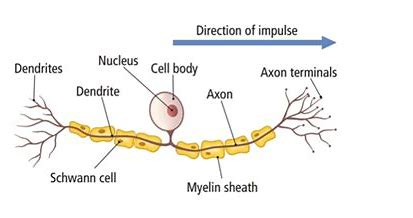
they carry electrical impulses
long
thin
a synapse is a gap between two cells
when it reaches the end of the nerve it releases chemicals called neurotransmitters
the neurotransmitters diffuse across the synapse to the next neurone
which triggers another electrical impulse on the next cell
REFLEXES
reflexes are rapid automatic responses to stimuli to decrease the change of injury
stimuli is detected by receptors
sensory neurones
relay neurones
motor neurone
effector, muscle or gland
muscle contracts to move away from the stimili
eyes
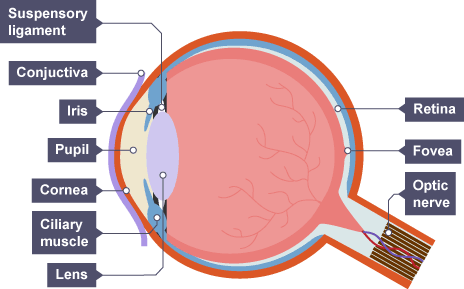
when light hit the eye it first hits the transparent cornea so light can pass through
cornea has no blood so oxygen has to diffuse into the cornea instead
it causes the light to refract
the iris is a muscle which controls the size of the pupil
in bright light your retina could be damaged so there is a reflex which controls the size of your pupil
in bright light the pupil is constricted to prevent damage
circular muscles contract, radial muscles relax
in low light the pupil is dilated to see as well as possible
radial muscles contract, circular muscles relax
the pupil is just a gap to allow light through to the lens
the lens also refracts light but it can change shape to control how much it refracts the light so it can always focus the light onto the retina
the retina has cone cells (sensitive to colour of light, but don’t work very well in low light) and rod cells (black and white but more sensitive to light)
fovea is a spot on the retina with only cone cells where we focus the light onto
the optic nerve takes the impulses generated by the receptor cells to the brain
TO FOCUS ON DISTANT OBJECTS
ciliary muscle relaxes which allows the suspensory ligaments to contract
pulls the lens into a less rounded shape
so the light is refracted less
TO FOCUS ON A NEAR OBJECT
ciliary muscle contracts
suspensory ligaments relax
lens becomes more rounded
light is refracted more
EYE PROBLEMS
cataracts → cloudy lens
colour blindness → issue with the cones on the retina
longsightedness → lens can’t refract light enough or because the eyeball is too short → convex lens
short-sightedness → lens bends light too much or eyeball too long → concave lens
stem cells
stem cells divide by mitosis
stem cells can differentiate into specialised cells
zygote → divides lots to form an embryo with embryonic stem cells because we need lots of types of cells in our body
in an adult we have stem cells in bone marrow but they can differentiate into types of blood cells to replace damaged cells
in plants they are found in the meristem tissue (growing areas of the plant)
as the plant grows the cells differentiate into all the cells that the plant needs
some conditions are caused by faulty cells, e.g. type one diabetes and paralysis
we can use stem cells to replace the faulty cells
usually scientists would extract embryonic stem cells and then grow them in a lab before stimulating them to differentiate in the desired way
CONS
requires embryonic cells but there is a limited supply
rejection
virus transmission
tumour development because stem cells divide very quickly naturally
some people think using the embryos is wrong because they are alive
we can’t use adult stem cells in the same way because they can only differentiate into a few things however they could be used to treat blood conditions