WEEK 5.1- Drug Development: History, Discovery, and Regulation
Course Scope and Regulation in Australia
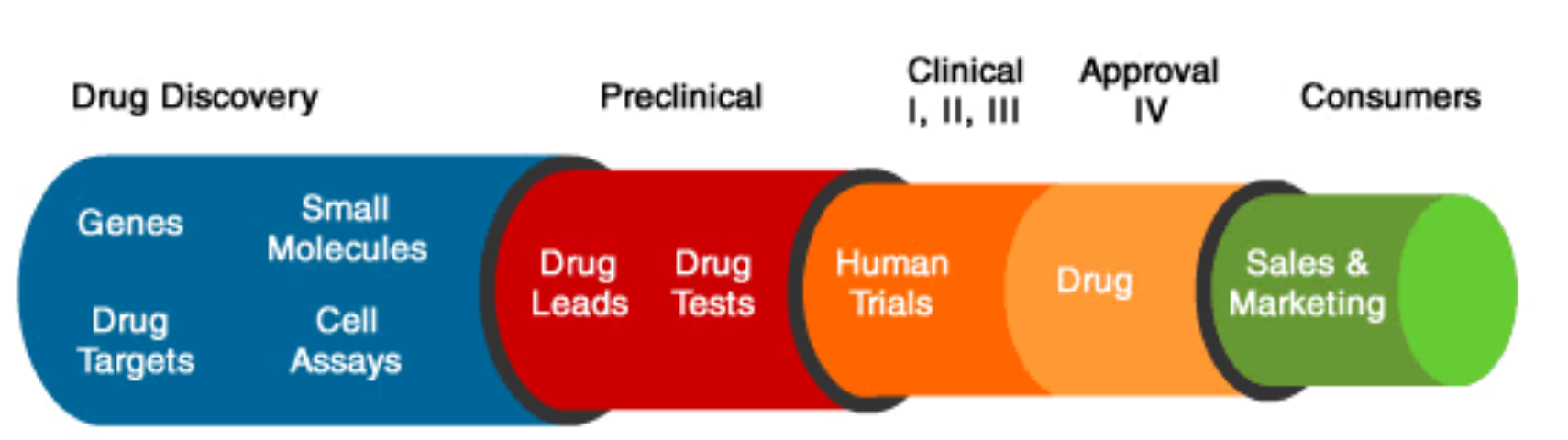
From Drug discovery through testing, regulation and marketing.
Key stages include: drug discovery, drug design, in vitro & in vivo testing, clinical trials, regulation of therapeutic goods in Australia (the TGA), and access and availability of therapeutic goods in Australia (the PBAC; the PBS).
History of Medicinal Plants
Sumerian clay slab from Nagpur —
12 recipes for drug preparation referring to over including poppy, henbane & mandrake
Pen T\'Sao written by Emperor Shen Nung — 365 drugs; dried parts of medicinal plants including ginseng, cinnamon bark, camphor
Ebers papyrus — collection of referring to and drugs used for therapy including aloe, senna, garlic, willow, juniper
Homer\'s epics — — 63 plant species used in pharmacotherapy from Minoan, Mycenaean, and Egyptian/Assyrian contexts
Hippocrates (459-370 BC) — about classified by physiological action
Narcotics: opium, henbane, deadly nightshade & mandrake
Emetics: hellebore & hazel wort
Diuretics: celery, parsley, asparagus, garlic
19th Century Advances
Isolation of alkaloids from:
poppy ()
ipecacuanha ()
Strychnos ()
Quinine ()
Isolation of glycosides
Use of Digitalis purpurea extract to treat heart conditions first described in English medical literature in
As chemistry advanced, other active substances from medicinal plants were discovered
Opium Poppy Constituents
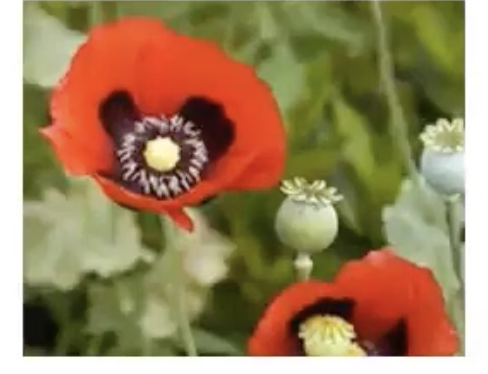
The opium poppy contains a variety of compounds:
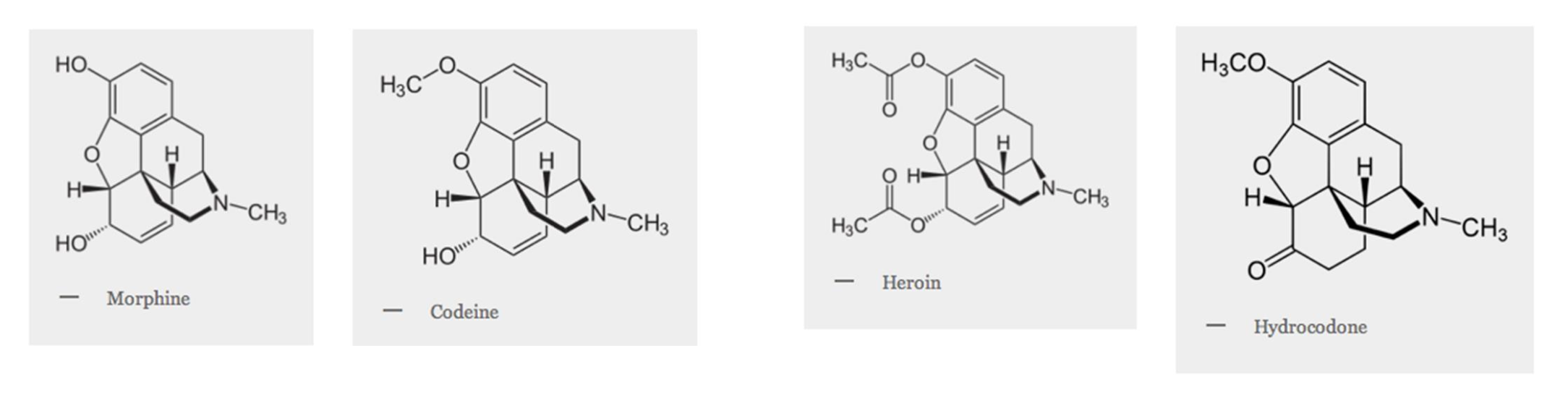
Codeine
Thebaine
Morphine (main active ingredient)
Morphine: History and Pharmacology
Morphine used as a narcotic in Sumerian cultures in Asia as early as
Isolated from dried poppy resin by Friedrich W. Sert\u00fcrner in the early ; named \"morphium\" after Morpheus, the Greek god of dreams
In , Sir Robert Robinson proposed the correct structure of morphine
Morphine is particularly effective in relieving severe, continuous pain such as that experienced by patients with terminal cancer — without loss of consciousness where other analgesics fail
Side effects: severe constipation, respiratory depression, drowsiness, vomiting, loss of appetite, etc.; highly addictive and induces tolerance
Heroin: Origin and Marketing
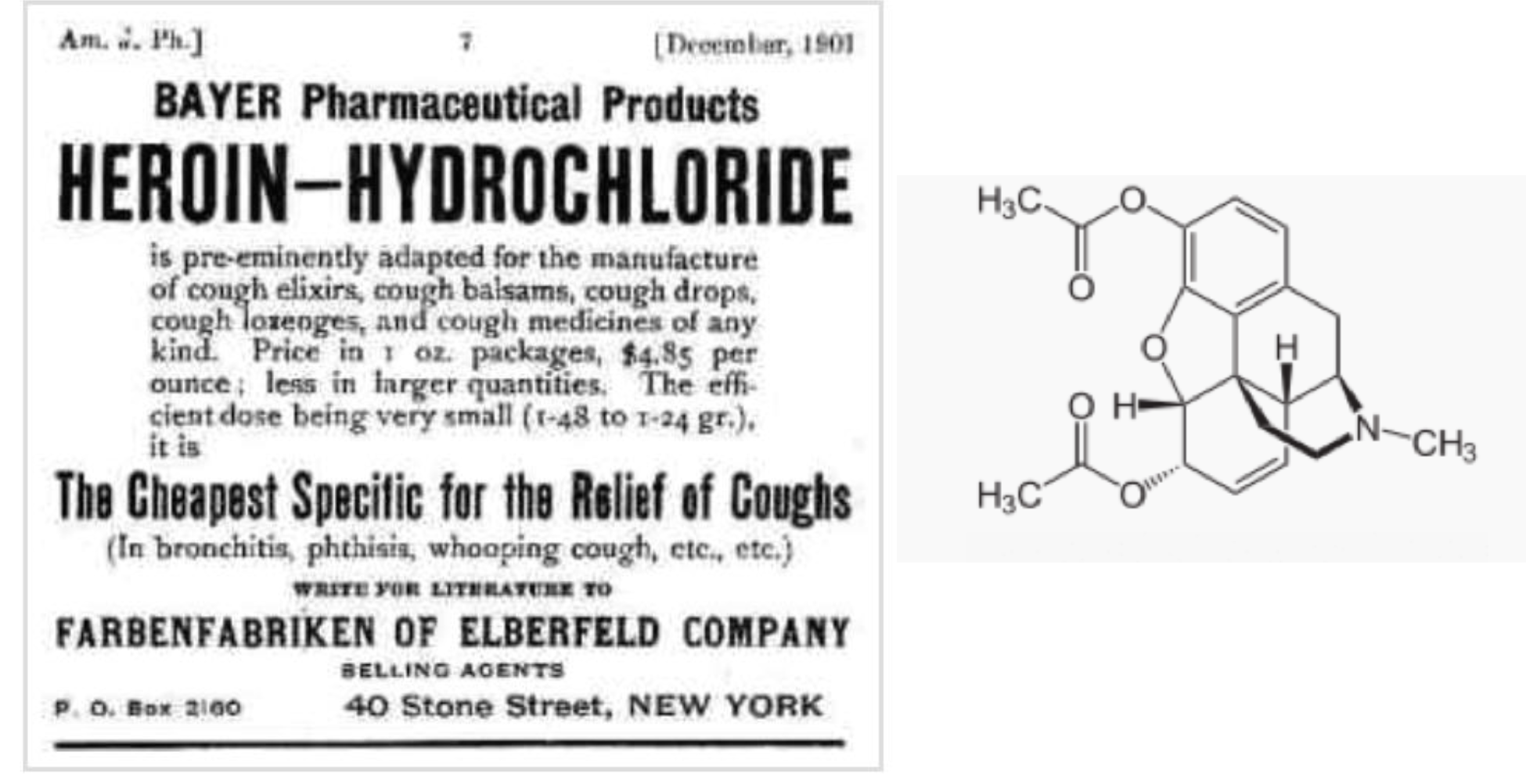
Heroine (diacetylmorphine) was invented by mistake
It was used in cough mixtures, especially for children
Advertised by Bayer in the early days as a cough remedy with preparations like heroin hydrochloride; claimed to be an efficient cough suppressant with small effective doses
The product was marketed as a sedative/antitussive, not primarily as an analgesic
Morphine vs Heroin pharmacokinetics
Morphine binds more tightly than heroin to opioid receptors in the brain, so one might expect morphine to give a stronger high
In reality, heroin is more potent and addictive because the two acetyl groups render it more lipid-soluble, allowing faster diffusion through the blood–brain barrier
Thus, heroin reaches the brain more rapidly than morphine, contributing to its higher perceived potency
Quinine: History, Isolation and Synthesis
Quinine derived from powdered dried bark of the cinchona tree, native to South America; used by Quechua Indians of Peru to treat fevers
Jesuit priests carried cinchona bark to Europe in the to treat malaria
Quinine isolated in by Pierre Joseph Pelletier and Joseph Caventou
First total synthesis achieved by and in
Quinine kills the parasites causing malaria; mode of action is complex and not fully understood
Willow Bark and Salicylic Acid
Doctrine of Signatures: belief that the plant resembling a body part can cure related ailments; willow bark was used for fevers
Rev Edward Stone investigated willow bark on the ground near rivers and noted its fever-reducing effects
Willow bark contains salicin, which is metabolized in vivo to the active agent salicylic acid
Salicylic acid led to the development of acetylsalicylic acid (aspirin) in the late 19th century; mechanism of action not discovered until the 1970s
Willow Bark: Timeline
1763: Rev. Edward Stone described willow bark experiments for treating ague (intermittent fever, pain, chills, fatigue)
1820s-1830s: isolation of salicylic acid
1897: Bayer developed acetylsalicylic acid (aspirin)
1915: aspirin approved as an OTC medication in tablet form
Serendipity in Drug Discovery
Serendipity: discoveries made by accident and sagacity
Term coined by Horace Walpole in 1754
Sagacity: penetrating intelligence, keen perception, and sound judgment
Pasteur\'s Maxim on Observation
A famous adage: in the field of observation, chance favors only the prepared mind
Penicillin
Alexander Fleming, 1928
During influenza research, a mould contaminant on a Staphylococcus culture plate created a bacteria-free zone
Isolation of the mould revealed a substance with powerful activity against many bacteria affecting humans
Fleming\'s reflection: he did not plan to revolutionize medicine, but his observations changed everything
Cisplatin
Barnett Rosenberg, 1965, studying effects of electric fields on E. coli growth
Bacteria increased in size but ceased to divide when exposed to an electric field; a platinum compound released from platinum plates was implicated
Hypothesized that if this compound could inhibit bacterial cell division, it might stop tumor growth
Human trials conducted in ; FDA approval in
LSD Discovery and Hofmann
Hofmann synthesized Lysergic acid diethylamide (LSD-25) and, in 1943, reported a novel psychoactive experience
Described experiences of intense, kaleidoscopic imagery and color changes while working with LSD
Existing Drugs with New Uses: Mechlorethamine (Mustine)
Mechlorethamine was used as a chemical warfare agent (mustard gas) during WWI
Approved for medical use in the US in
Used to treat Hodgkin\'s lymphoma, some non-Hodgkin\'s lymphomas, various leukemias
Existing Drugs with New Uses: Aspirin (Acetylsalicylic Acid)
Analgesic, antipyretic, anti-inflammatory
1988: FDA proposed new uses for aspirin to reduce risk of recurrent myocardial infarction and to prevent first myocardial infarction in patients with unstable angina
Aspirin has also been studied for cancer risk reduction in recent years
The ASPREE Study (Aspirin in Reducing Events in the Elderly)
March 2010 – January 2018: international clinical trial
Design: randomized, double-blind, placebo-controlled trial of daily low-dose aspirin ()
Population: healthy older people without prior cardiovascular disease, dementia, or significant physical disability
Enrollment: participants
Results (average follow-up ): aspirin did not prolong disability-free survival or dementia
Cardiovascular endpoints not significantly reduced; major bleeding risk higher in aspirin group
Trial characterized as the gold-standard for evaluating aspirin in the elderly
Thalidomide
Initially used as a sedative, hypnotic, and antiemetic
Currently approved to treat: erythema nodosum leprosum (in US/AU) and multiple myeloma (US/AU/EU)
Is Serendipity a Thing of the Past?
Several anti-serendipity factors identified:
Move toward rational drug design based on translational research
Reduction in the amount of time clinicians have to observe patients
Greater reliance on double-blind placebo-controlled designs to demonstrate efficacy
Historical references and further reading
Historical review of medicinal plants\' usage: B. Petrovska. Pharmacogn. Rev. 6, 1-5 (2012).
Nitrogen mustard: origin of chemotherapy for cancer. J. Einhorn. Int. J. Radiation Oncol. Biol. Phys., 11, 1375-1378.
Chance favours the prepared mind – from serendipity to rational drug design. H. Kubinyi. J. Receptors and Signal Transduction, 19, 15-39.