8- tropic biomes
The tropics – the abiotic environment
Part 1: Abiotic factors shaping tropical biomes
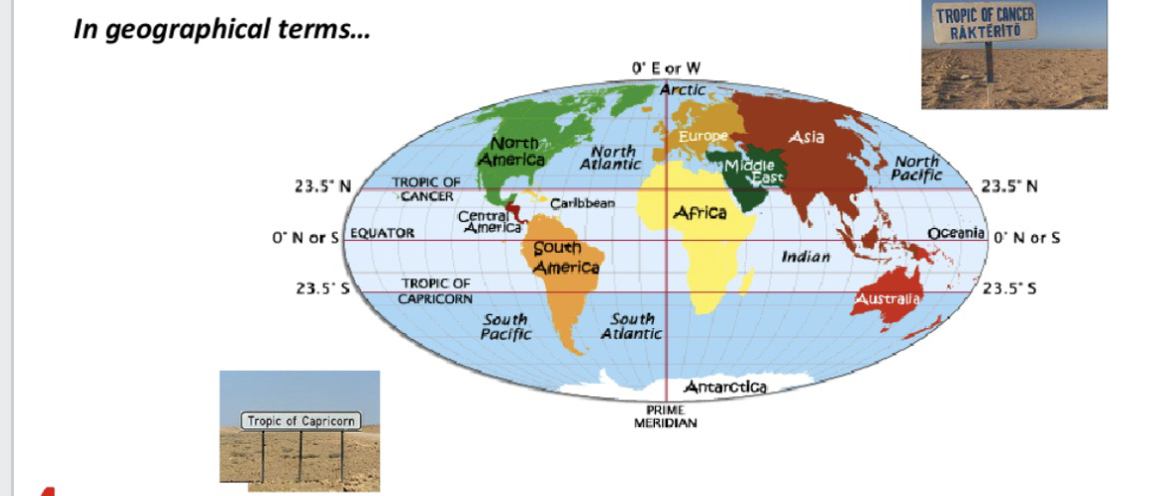
Tropical climate
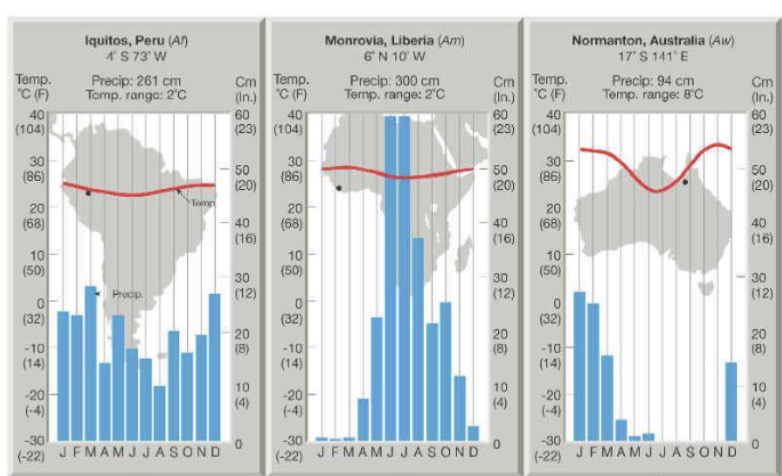
• diurnal temperature range > annual temperature range: seasonality is reflected in differences in rainfall
• amount and distribution of rainfall throughout the year define different tropical climates
• monthly temperatures peak during dry season
• diurnal temp. range: dry season > wet season (why
Köppen climate classification
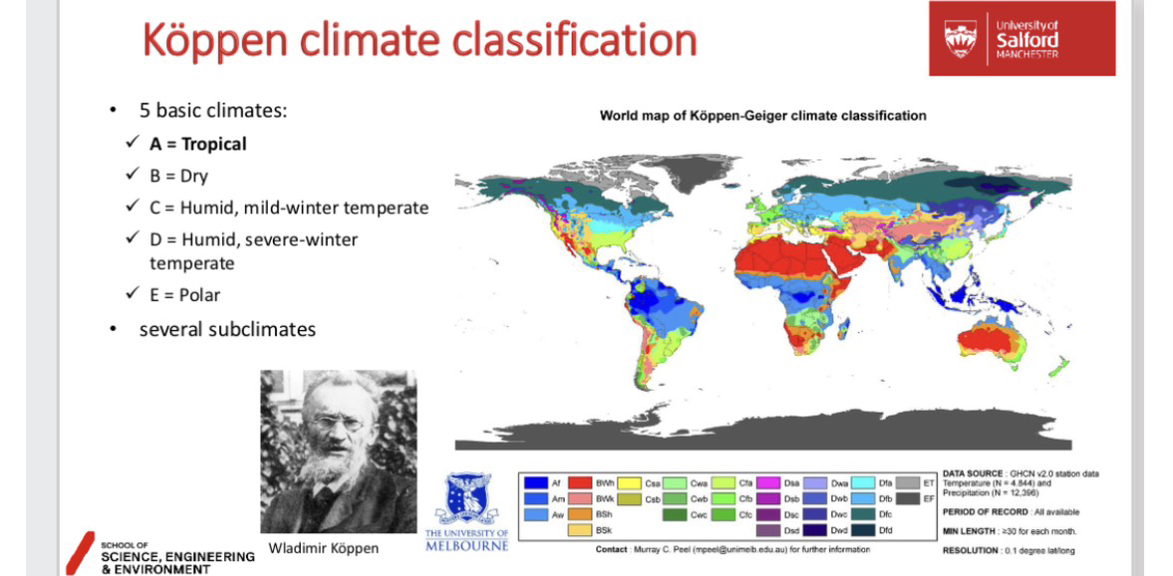
• Tropical climates (A): every month with average temperature > 18°C, with significant rainfall
• Af = Tropical Rainforest, avg. precipitation at least 60 mm / month
• Am = Monsoon Rainforest, driest month < 60 mm, but > 4% of annual precipitation
• Aw = Tropical Savanna, driest month < 60 mm and < 4% annual precipitation
Examples of climate diagrams for each tropical subclimate
Intertropical Convergence Zone (ITCZ)
• a band of low-pressure, cloudiness, and rainfall around the equator where winds
originating in the northern and southern hemispheres come together
Global atmospheric circulation
atmospheric circulation is driven by differential solar heating of the Earth
• annual radiation load is highest in the tropics, because:
-sunlight is concentrated on a smaller surface area
-sunlight travels shorter distances through atmosphere
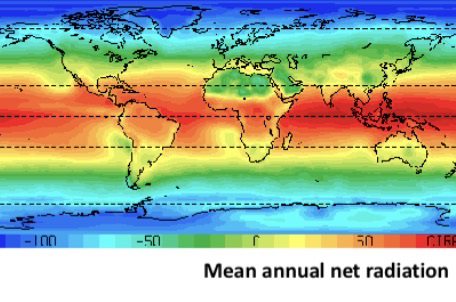
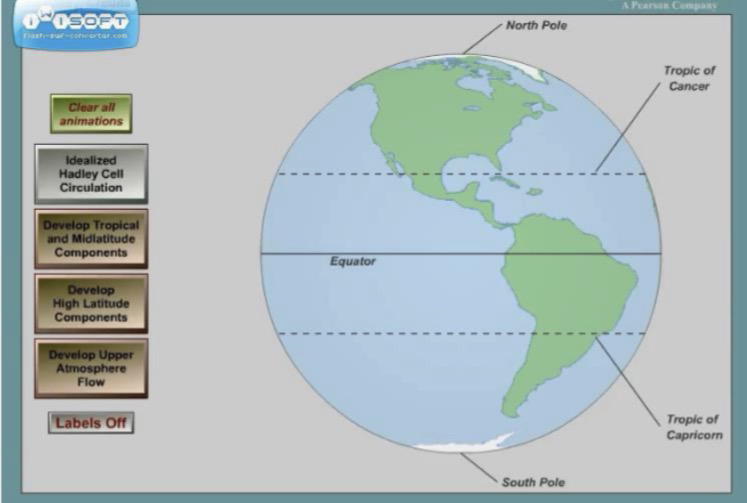
at the equator warm, moist air rises, cools as it rises and expands, rain falls:
• cool air descends at ca. 30° N and S
• equatorward surface flow produces the ITCZ
• Coriolis force deflects these winds to the west
—> trade wind
Seasonal ITCZ movement
The Inter Tropical Convergence Zone, or ITCZ, is a belt of low pressure which circles the Earth generally near the equator where the trade winds of the Northern and Southern Hemispheres come together
• Tropical wet and dry seasons are controlled by latitudinal seasonal movement of the ITCZ
• different heating characteristics of land and water produce “bends” in ITCZ line
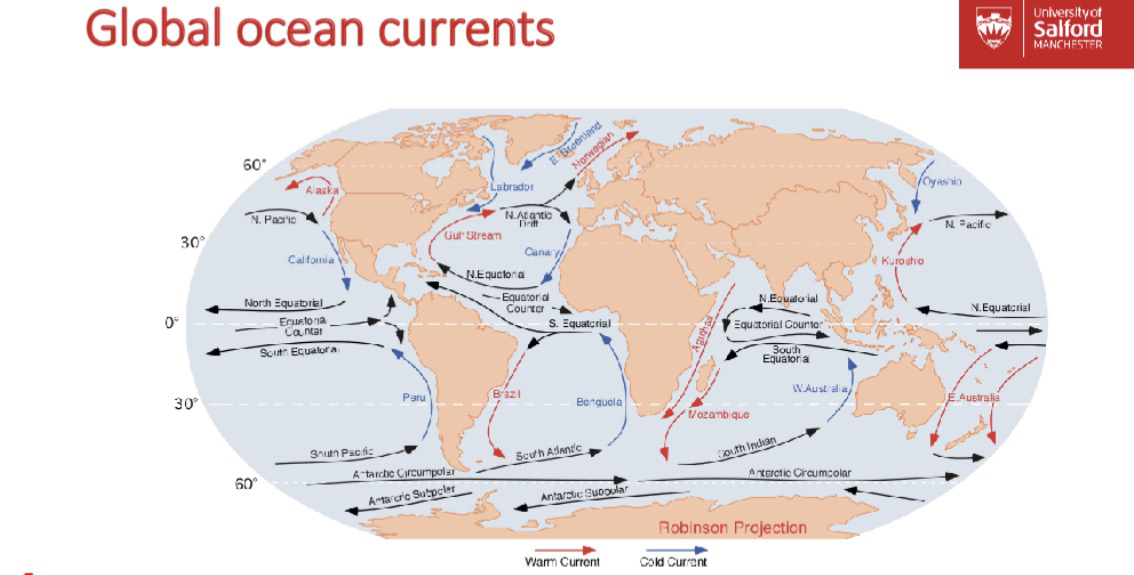
consequences of global wind and ocean currents at tropical latitudes:
Eastern sides of landmasses receive warm,
moist air from trade-winds and lots of rainCold upwelling off the west coast of
continents, and hence aridity along the
western side of the continent
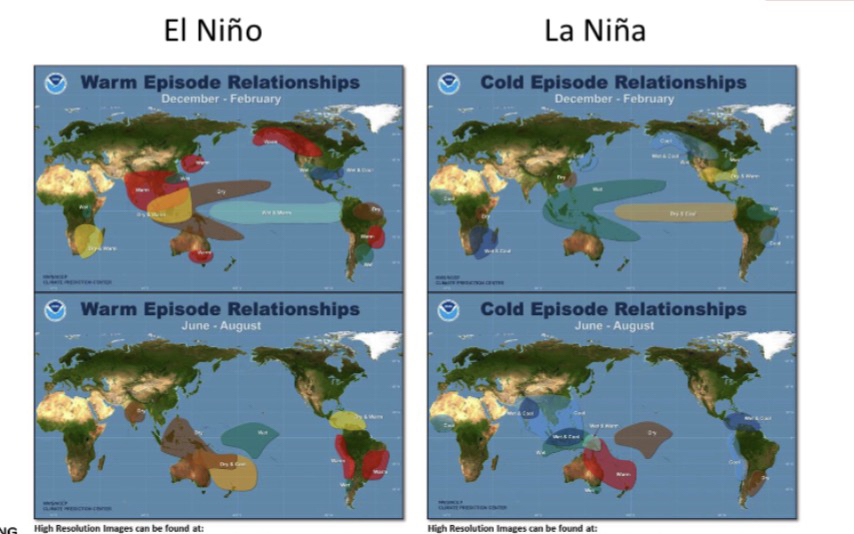
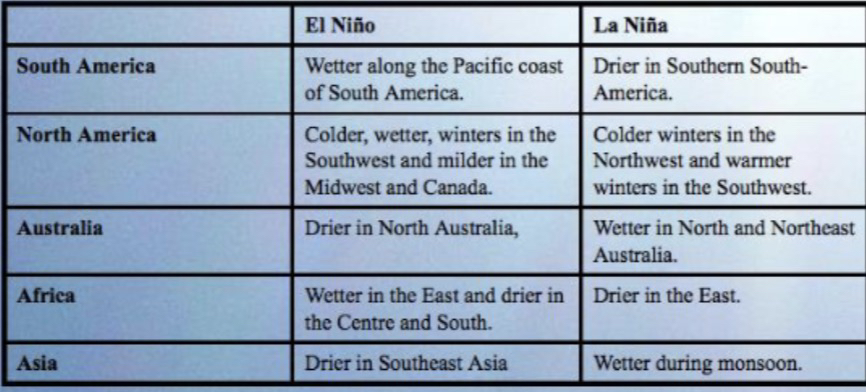
El Niño/La Niña events
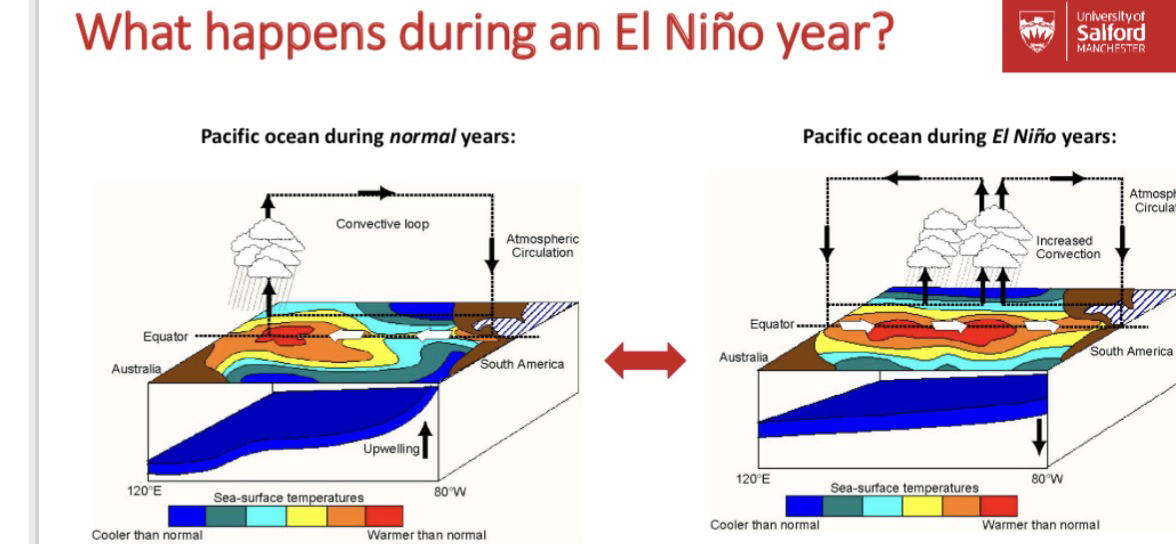
• El Niño
is the warming of sea-surface
temperatures (SSTs) in the equatorial Pacific
Ocean which influences atmospheric
circulation, and consequently rainfall and
temperature in specific areas around the world
• La Niña
is the cooling of SSTs in the equatorial
Pacific Ocean, having the opposite effect of El
Niño
Indicators of an El Niño
Rise in air pressure over the Indian Ocean coupled with a fall in pressure over the central and eastern Pacific (Southern Oscillation)
Westerly tropical trade winds weaken or reverse direction
Warm, nutrient-poor, water reaches the west coast of South America and replaces the cold, nutrient-rich waters of the Humboldt Current
Sea level rise due to thermal expansion of the
warming wate
Current ENSO status:
La Niña Advisory Equatorial sea surface temperatures (SSTs) are mostly below average across most of the Pacific Ocean.
La Niña conditions are favoured to persist through December 2025-February 2026, with a transition to ENSO- neutral likely in January-March 2026.
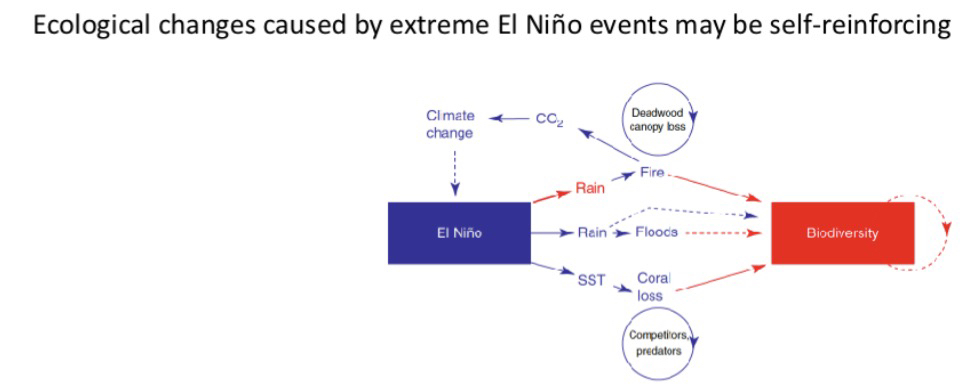
Ecological consequences of El Niño events
-Fairly strong overlap between areas affected by El Niño and La Niña and the world’s biodiversity hotspot
• If moderate in intensity and infrequent, ENSO
events could theoretically increase diversity
(“Intermediate Disturbance Hypothesis”
(Connell 1978)
Fire & drought
tree mortality, reproductive failure
Increased rainfall
ENSO-induced increases in precipitation act as resource pulses for primary producers in water- limited ecosystems:
- increase in plant cover, plant growth, flower and fruit production
Flooding can cause catastrophic ecosystem change, with immediate abiotic and biotic impacts that may influence community regeneration:
-erosion, changes in salinity, increased sediment in water, oxygen deprivation and habitat disruption can all have effects on biodiversity
Increased sea-surface temperature
Changes in the speed and direction of ocean currents:
-influence movement and long-distance
dispersal of marine organisms
Reductions in nutrient upwelling:
-e.g. primary productivity in the eastern Pacific can fall to as low as 6% of normal during El Niño years, heavy impact on zooplankton and fish populations with effects at higher trophic levels (e.g. birds)
Coral bleaching (loss of symbiotic zooxanthellae) and mortality of reef-building corals during ENSO events, exacerbated by the effects of global heating