Unit3.2 (cell growth and division)
Essential Questions
Why are cells small?
Check and sign up for Panther Periods!
What is happening to the cell?
Do we have one big cell or several small ones?
Understanding Cell Size
Cell Size and Surface Area to Volume Ratio
The size and shape of cells affect nutrient delivery.
The relationship between a cell's surface area and its volume is important.
Surface area and volume ratio does NOT stay the same as the cell size increases.
Larger cells have difficulty passing materials in and out of their membrane.
Limits to Cell Growth
DNA Overload- cell won’t have enough DNA.
Material Overload- Large cells require too much energy to move materials over greater distances.
Calculating Surface Area to Volume Ratio
Cube Example
For a cube with 1 cm side length:
Surface Area = L x W x # of sides = 1 x 1 x 6 = 6 cm²
Volume = L x W x H = 1 x 1 x 1 = 1 cm³
Surface Area to Volume Ratio = 6/1 or 6:1
2 cm side length
Surface Area = 2 x 2 x 6 = 24 cm²
Volume = 2 x 2 x 2 = 8 cm³
Ratio = 24/8 or 3:1
3 cm side length
Surface Area = 3 x 3 x 6 = 54 cm²
Volume = 3 x 3 x 3 = 27 cm³
Ratio = 54/27 or 2:1
Volume increases more rapidly than surface area, decreasing the surface area-to-volume ratio.
Chromosomes and Cell Structure
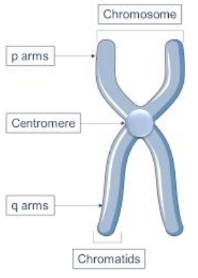
Chromosomes
Made of DNA and protein.
Chromatin
Loose strands of DNA and protein that wind up tightly to form chromosomes.
Centromere
Protein disk holding chromatids together at the center of a cell.
Kinetochore
where spindle fibers attach to the chromosome
Sister Chromatids
2 chromatids connected by a centromere.
Cell Functions
Cell Growth
Cells grow by increase in size.
Cell Repair
Cells repair by being replaced.
Phases of healing:
Phase 1: Exudative phase (filling with fibrin)
Phase 2: Resorptive phase (removal of dead cells)
Phase 3: Proliferative phase (new cells formed)
Phase 4: Repair phase (closure of the wound)
Cell Reproduction
Cells reproduce by dividing. They divide to create identical new cells.
Cell Regeneration
Cells regenerate by regrowth of damaged or missing organs, such as a gecko regrowing its tail.
Cell Division- Process by which cells divide.
Prokaryotes vs. Eukaryotes
Prokaryotes
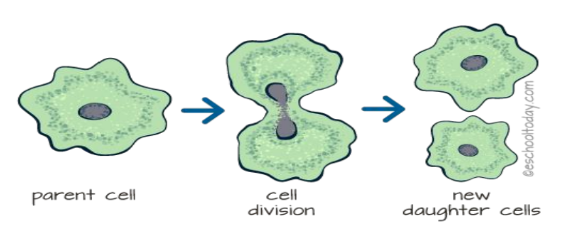
Divide through binary fission
1 parent cell splits -> creates 2 identical daughter cells
.
Eukaryotes
Divide through mitosis
1 parent cell, nuclear division -> forms 2 IDENTICAL diploid daughter cells.
Diploid: cell that has 2 sets of chromosomes
Haploid (Half-loid): cell that has 1 set of chromosomes
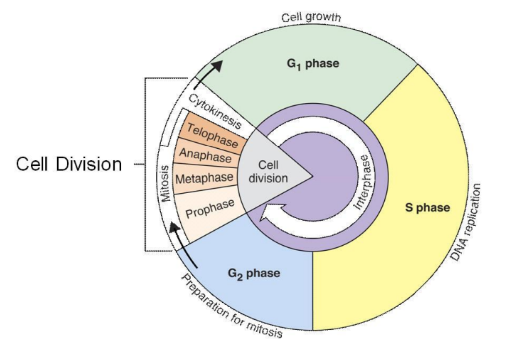
Cell Cycle- series of events the cell goes through as it grows and divides
Interphase: Period between cell divisions.
G1 Phase: Synthesis of new proteins and organelles, cell grows in size.
S Phase: Chromosome replication, synthesis of key proteins associated with chromosomes, synthesis of DNA.
G2 Phase: Copies made of organelles and molecules for division.
Mitosis: Cell division (body cells).
Mitosis
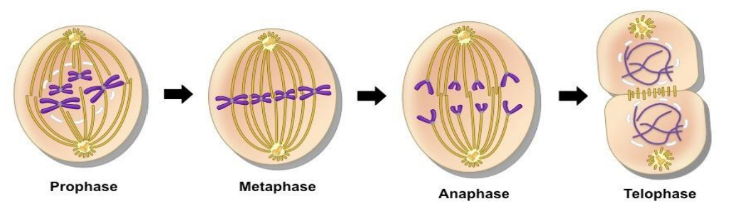
Phases of Mitosis:
Prophase
Metaphase
Anaphase
Telophase
Cytokinesis
“PMAT”+ Cytokinesis
Detailed Phases
Prophase:
Longest phase
Chromosomes become visible
Chromatin condense into chromosomes
Nucleolus disappeares
Centrioles Separate and move to opposite sides of nucleus forming spindles
Nuclear envelope breaks down
Metaphase:
Chromosomes align at the equator (middle of cell)
Spindle fibers attach to centromeres
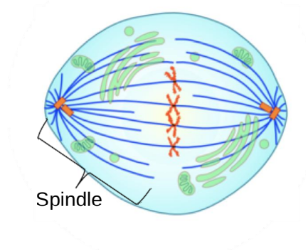
Anaphase:
Centromeres split
Chromosomes are pulled toward the poles (chromatin)
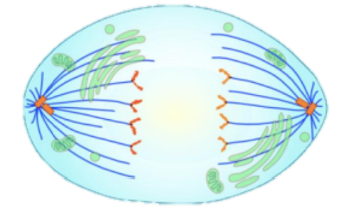
Telophase:
Chromosomes uncoil
Nuclear envelope forms
Spindles break apart
Nucleolus is visible
Cleavage furrow forms
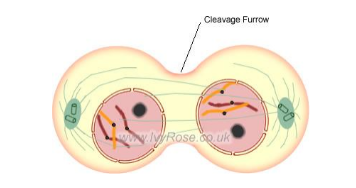
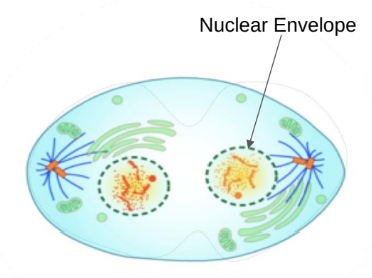
Cytokinesis:
Cytoplasmic division- cytoplasm drawn inward into two equal parts.
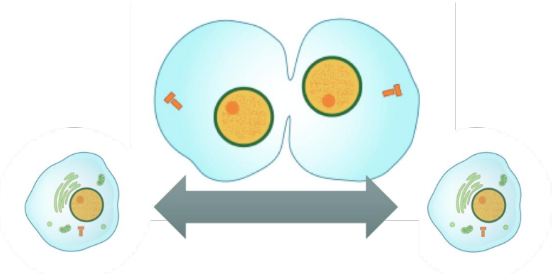
Mitosis results in two distinct daughter cells, each with a complete set of organelles and genetic material.
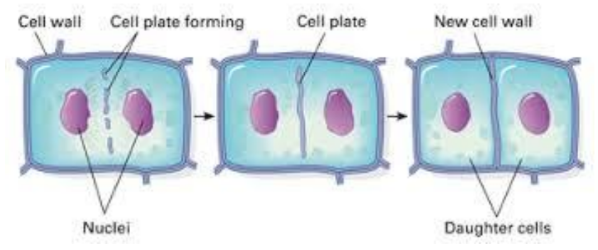
Plant Cell- Cell Division
Formation of cell plate between the 2 cells during cytokinesis, eventually developing into a cell wall.
Meiosis
Meiosis Definition
Cell division for sex cells (egg and sperm)
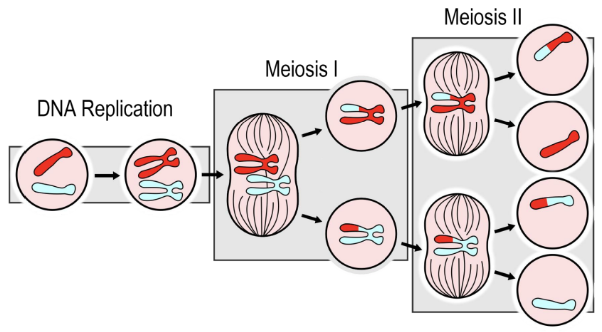
Producing 4 genetically different haploid cells
.
Haploid vs. Diploid
Diploid (2N): cells that have 2 sets of chromosomes, all the cells in your body except the sex cells.
Haploid (N): cells that has 1 set of chromosomes, sperm/eggs (gametes).
Homologous Chromosomes- corresponding chromosomes, 1 from a female, 1 from a male
Pair up during meiosis
Same side, same genes
#of chromosomes in gametes (sex cells)= 23
#of chromosomes in somatic (body) cells= 46
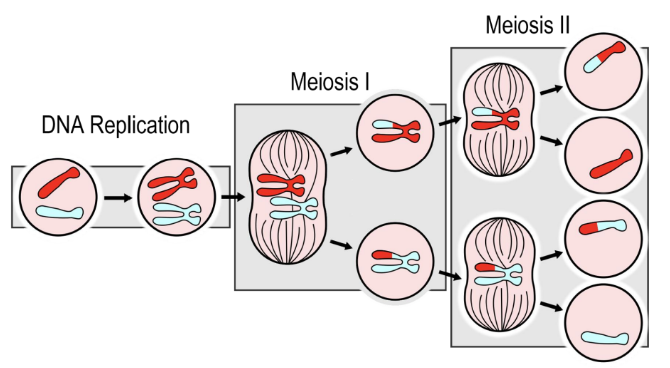
Meiosis Process
Meiosis I: Reduction division (halving chromosomes you started with).
Meiosis II: Completes meiosis to produce 4 genetically different haploid gametes.
Meiosis I
Prophase I
Metaphase I
Anaphase I
Telophase I
Cytokinesis I
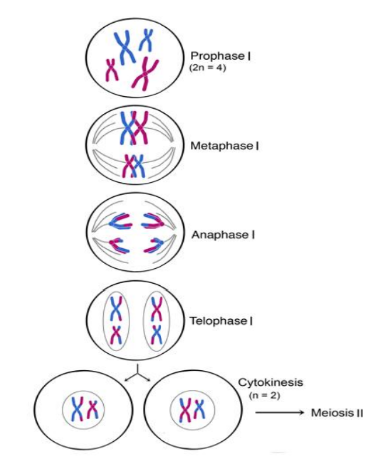
Interphase- starts with a diploid cell and is identical to mitosis process.
cell grows by producing protein and organelles, chromosomes replicate, centrosomes/centrioles replicate, prepares for cell division
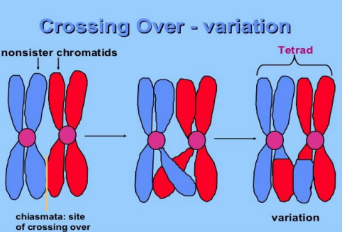
Prophase I- tetrads form= 2 homologous (same) chromosomes (4 chromatid)
crossing over- homologous chromosomes line up next to each other and chromatids exchange DNA pieces. Provides genetic variation.
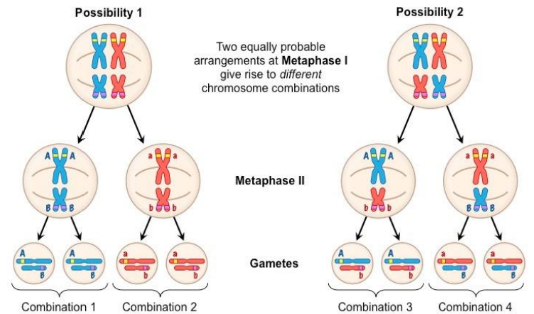
Metaphase I- Independent Assortment: homologous chromosomes stack in the middle of the cell randomly. Provides genetic variation.
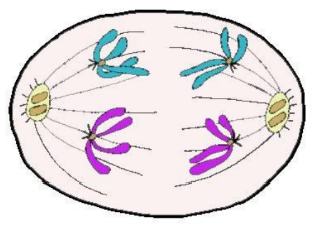
Anaphase I- Homologous chromosomes are pulled apart and move to opposite ends of the cell
Telophase I and Cytokinesis I- telophase occurs and the cell divides into 2 cells through cytokinesis.
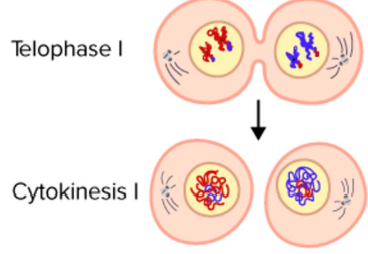
Result of Meiosis I- 2 different haploid cells, reduction division
Result of Meiosis II- 2 haploid cells from Meiosis I start Meiosis II, exactly the same as mitosis except there is no interphase between Meiosis I and II.
4 genetically different haploid gametes
Gametes
In males, all 4 cells develop into sperm
in females, 3 cells abort and 1 cell develops into an egg
Polar bodies= 3 aborted eggs, provide nutrients to egg
Mitosis vs. Meiosis
Mitosis Meiosis
Body cells Sex Cells
Produces 2 identical daughter Crossing over and
diploid cells independent assortment
one cell division 4 gen. different haploid cells
. 2 cell divisions