examination per adomen (EPA)
how completed:
ensure fetal growth consistant with gestational age
determine lie position/ locate fetal parts+ presenting
ausculate fetal heart
preparation for visit:
get recorses required
respect hygene
maternal comfort
respect privacy
view and update records/ notes
componants of EPA-
inspection:
visual appreance of abdomen
size and shape- primigravida VS multigravida
skin changes- stretch marks (striae gravidarum)/ scars from previous surgery/ bruise/ rash
fatal movement
Palpation:
measure fundal height
use NICE guidlines for measurements
place finger pads on abdomen below xiphisternum
downward movement till firmness of fundus felt
measure fundus with tape measure
can feel fetal movements
fundal palpation/ lateral palpation/ pelvic palpation
fundal papation- how fetus lying, palms of hands either side of fundus and closed hands together. buttock feel soft and less hard, head feel smooth round and ballotable
lateral palpation- locating fetal back, hands placed umbilical cord level and at back, apply pressure alternitavely with hands.
pelvic palpation- identify part of fetus lying in lower pole of uterus over pelvic brim to determin presentation, engagement can determin in latter week of pregnancy
auscultation-
see fetal heart beat.
determin rhythem and rate
normal rhythem- 110-160
check with woman if regular movements
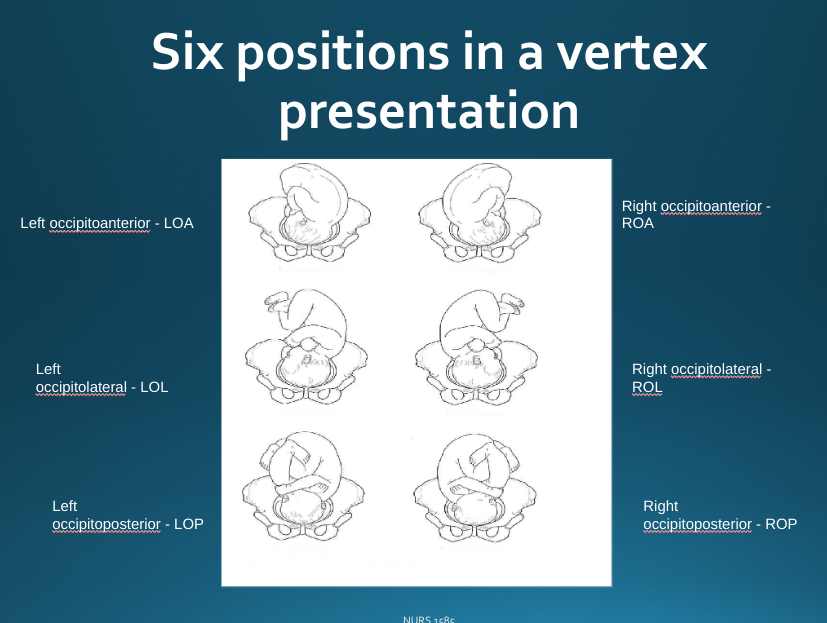
positions of fetus-


termomoligy-
left occipito-anterior- LOA
right occipito-anterior- ROA
left occipito-leteral- LOL
right occipito-leteral- ROL
left occopito-posterior- LOP
right occopito-posterior- ROP
engagement of fetal head-
widest presenting transverse diameter of fetal head passed through pelvic brim
determin descent of fetal head- estimated in fiths above pelvic brim