Chapter 13: Genotype & Mutation
Genotype, Phenotype, and the Genetic Basis of Variation
Fundamental Genetic Terminology:
Genotype: The specific genetic makeup of an individual organism, representing the precise combination of alleles present at given gene loci.
Phenotype: The observable physical, biochemical, and physiological traits or characteristics of an organism, resulting directly from the complex interaction between its genotype and the surrounding environment.
Gene: A hereditary unit consisting of a specific sequence of DNA that encodes functional RNA or protein products.
Alleles: Alternative forms of the same gene that correspond to different DNA sequences and occupy the same gene locus on homologous chromosomes.
Homozygous: The state of possessing two identical alleles at a specific gene locus (e.g., or ).
Heterozygous: The state of possessing two different alleles at a specific gene locus (e.g., ).
Hemizygous: The state of having only a single copy of a gene or chromosome segment in an otherwise diploid organism (e.g., genes located on male sex chromosomes).
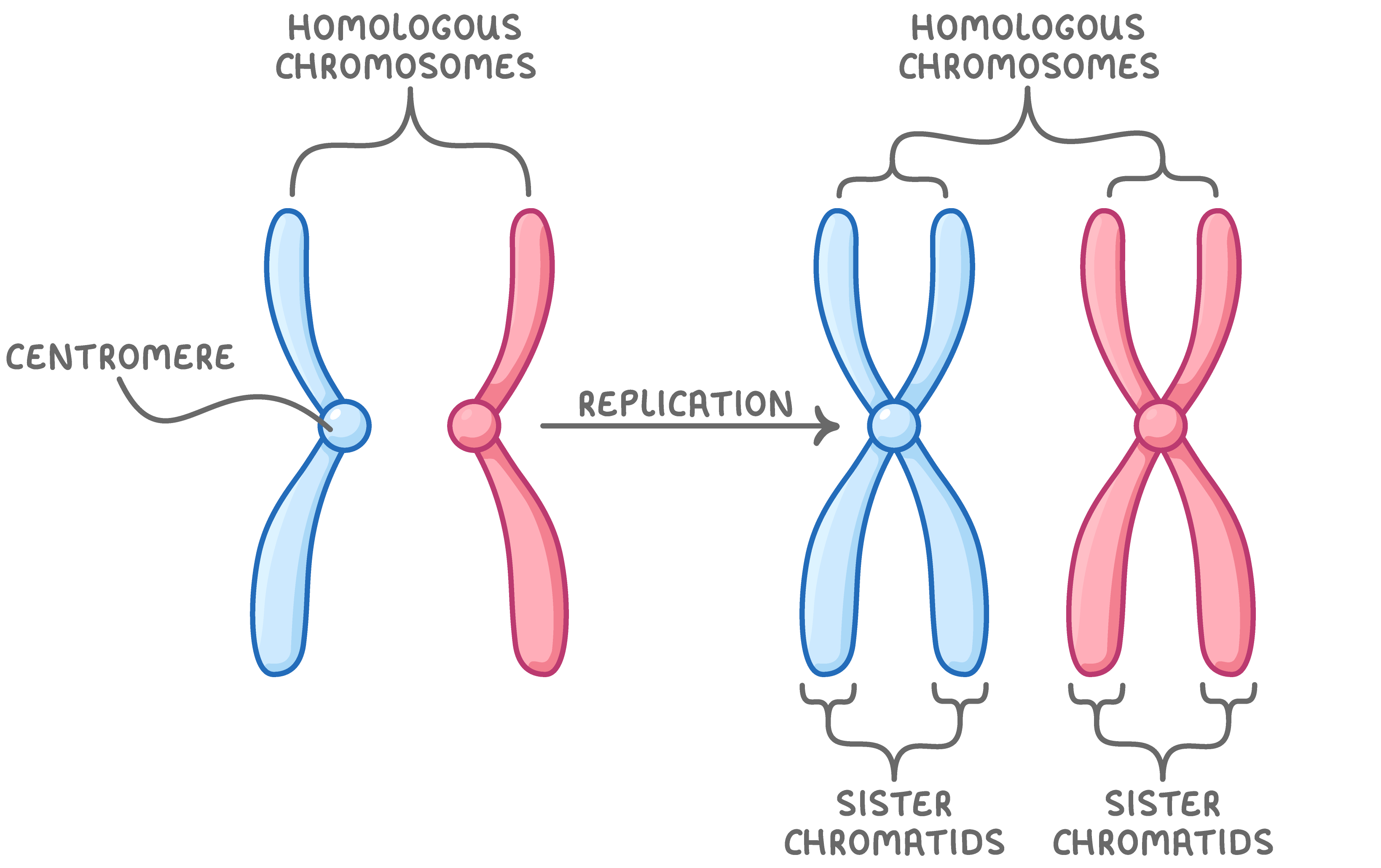
Homologous Pairs of Chromosomes: A set of two chromosomes—one inherited from the maternal parent and one from the paternal parent—that carry the identical sequence of genes arranged in the same linear order (gene loci), but which may possess identical or differing alleles at each locus.
Polymorphism: Any genetic difference, sequence variation, or alternative allele among individuals that is present within a population.
Single Nucleotide Polymorphism (SNP): A specific type of polymorphism characterized by a single base-pair substitution occurring at a defined chromosomal position among individuals in a population.
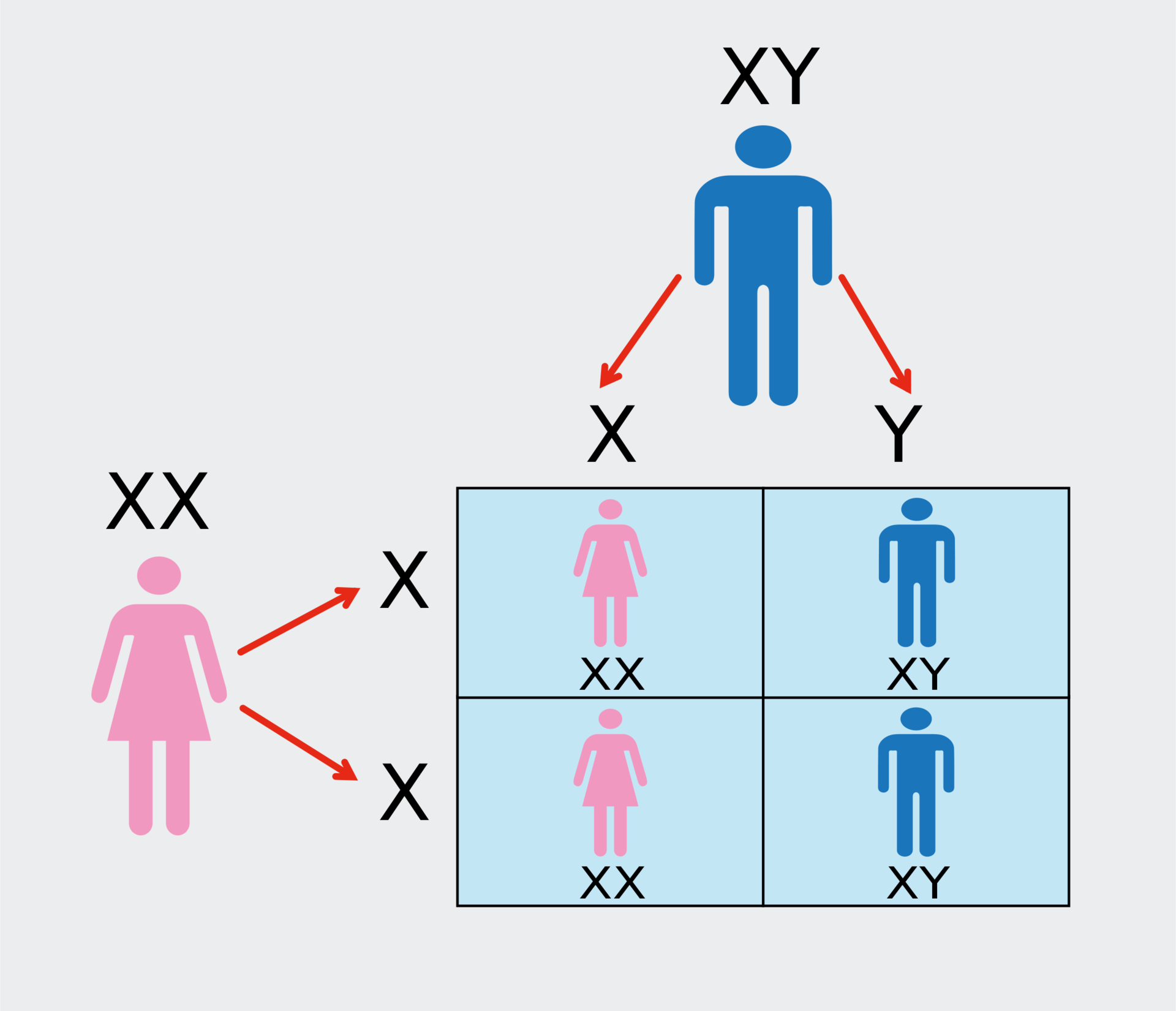
Chromosomes 23 pairs, also known as sex chromosomes, determine an individual's sex in many organisms, with females typically having two X chromosomes and males having one X and one Y chromosome.

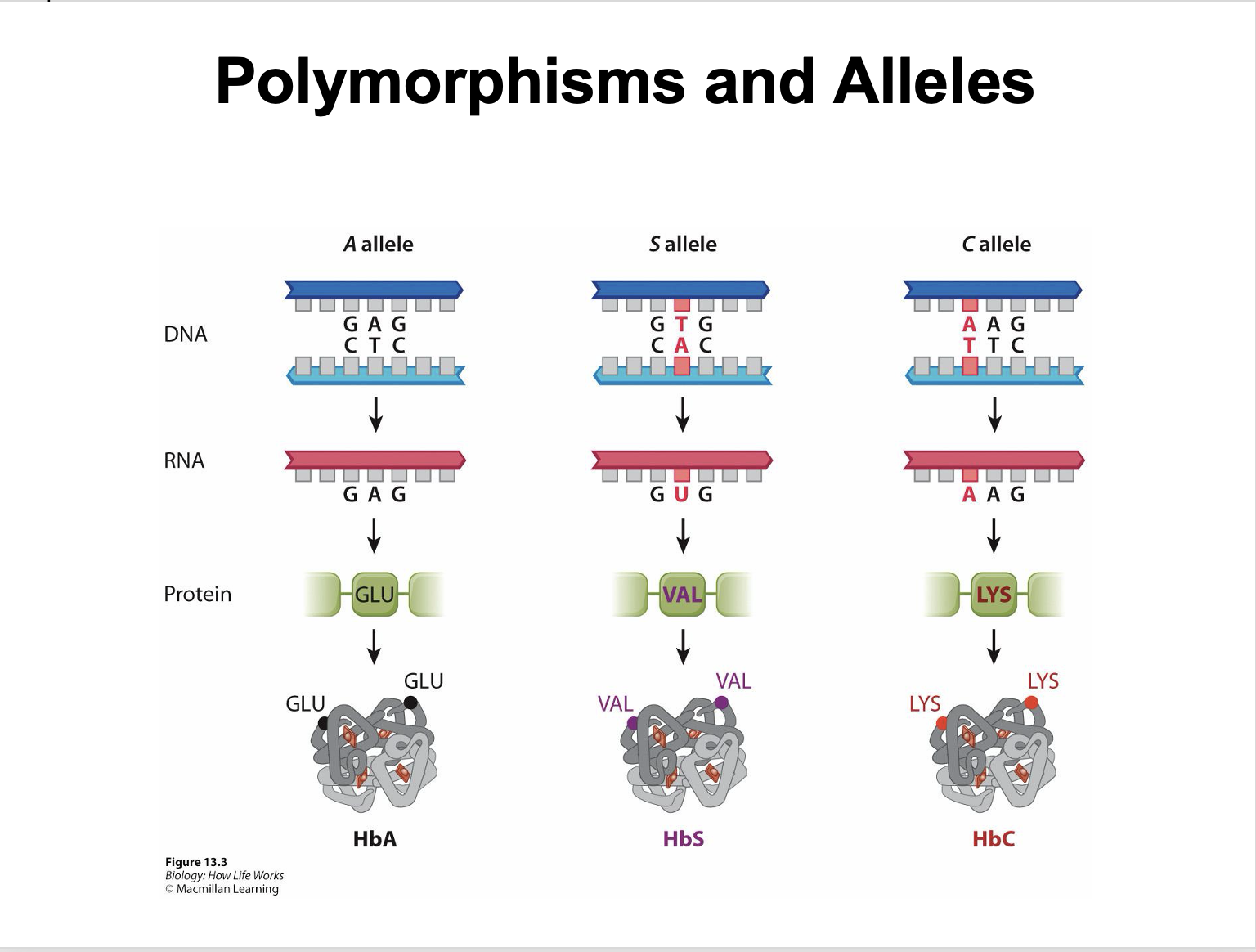
Allelic Diversity at the Hemoglobin Subunit Beta Gene:
The gene encoding the human -globin subunit of hemoglobin displays multiple polymorphic alleles that alter both transcription and translation products:
Nonmutant Allele ():
DNA Sequence (transcribed template/coding): / .
Messenger RNA (mRNA) Codon: .
Amino Acid: Glutamic acid ().
Protein Phenotype: Produces standard, fully functional adult hemoglobin ().
Mutant Allele ():
DNA Sequence: / .
Messenger RNA (mRNA) Codon: .
Amino Acid: Valine ().
Protein Phenotype: Results in sickle hemoglobin ().
Mutant Allele ():
DNA Sequence: / .
Messenger RNA (mRNA) Codon: .
Amino Acid: Lysine ().
Protein Phenotype: Results in variant hemoglobin ().
Concepts and Classifications of Mutations
Definition and Evolutionary Role:
A mutation is broadly defined as any heritable change in the nucleotide sequence of the genetic material.
Mutations serve as the primary and ultimate origin of all novel genetic variation upon which evolutionary processes act.
Mutations arise spontaneously and at random with respect to the immediate physiological needs or survival advantages of an organism.
Depending on their phenotypic consequences, mutations are categorized into three major functional classes: harmful (deleterious), neutral, and beneficial.
Harmful Mutations and Neurodegenerative Disease:
Deleterious mutations diminish biological fitness or cause debilitating pathological states.
A notable example is Huntington's disease, caused by a mutation in the gene:
The gene encodes huntingtin, a large protein expressed widely across bodily tissues but found in particularly high concentrations within the central nervous system.
Nonmutant Alleles: Feature a variable trinucleotide repeat tract containing to consecutive codons. These codons translate into a polyglutamine sequence containing to consecutive glutamine () residues within the peptide chain (e.g., ).
Mutant Alleles: Feature unstable expansions containing excessive trinucleotide repeats, yielding to consecutive codons that translate into an elongated polyglutamine tract ( to glutamines; e.g., ).
Pathological Phenotype: The abnormal polyglutamine expansion triggers protein misfolding, aggregate formation, severe bilateral atrophy of cerebral cortex tissue and basal ganglia, and prominent dilation of brain ventricles (enlarged ventricles).

Neutral Polymorphisms and the Taste Receptor:
Neutral mutations exert no discernible positive or negative effect on an organism's overall fitness, reproductive success, or survival.
A canonical human neutral polymorphism occurs in the gene, which encodes a G-protein-coupled taste receptor expressed on taste buds of the tongue.
The receptor mediates the ability to perceive bitter taste sensations from specific chemical compounds, notably phenylthiocarbamide ().
Two primary haplotype alleles predominate in human populations: the taster allele (, encoding Proline-Alanine-Valine) and the non-taster allele (, encoding Alanine-Valine-Isoleucine):
Individuals homozygous for the allele () are invariably tasters, registering intense bitterness when exposed to .
Heterozygous individuals possessing at least one copy of the allele (e.g., ) are almost universally non-tasters or display significantly attenuated sensitivity.
The observed geographical frequency of phenotypically confirmed "tasters" ranges between and across distinct worldwide populations.
Beneficial Mutations and Lactase Persistence:
Beneficial mutations confer an adaptive advantage that enhances the organism's probability of surviving and reproducing in specific ecological or cultural niches.
Physiological Norm in Mammals: In nearly all mammals, transcription of the gene encoding lactase—the digestive enzyme responsible for hydrolyzing the milk disaccharide lactose into glucose and galactose—is strictly downregulated and ceases entirely after the weaning period.
Lactase Persistence Alleles: Specific regulatory mutations allow ongoing, lifelong lactase gene transcription through adulthood.
Evolutionary Selection: Lactase persistence alleles arose and were strongly selected for in pastoralist human populations that domesticated dairy livestock. High frequencies ( to ) appear in northwestern Europe, sections of the Arabian Peninsula, and specific pastoral populations across northern and eastern Africa, whereas populations without historical dairying traditions maintain rates near to .

Genotype-by-Environment Interactions:
The phenotypic effect of an allele is not necessarily fixed; it can be drastically altered by the external environment or by the genomic background (epistatic interactions with other genes).
Sickle-Cell Hemoglobin Dynamics:
Homozygous individuals produce exclusively hemoglobin; red blood cells polymerize under low oxygen tension, adopt a rigid sickle morphology, occlude capillaries, and cause severe, life-threatening sickle-cell anemia.
Heterozygous individuals with the genotype have sickle-cell trait; they exhibit mild or low levels of anemia that are generally well tolerated.
Environmental Impact of Malaria: In geographical regions where the malaria parasite (Plasmodium falciparum) is endemic, heterozygous individuals possess a substantial survival advantage compared to both homozygous individuals (who suffer severe, often fatal malaria) and homozygous individuals (who suffer high mortality from severe sickle-cell anemia). This heterozygote advantage maintains the deleterious allele at elevated frequencies in malaria-stricken zones.
Quantitative Dynamics and Mechanics of Mutation Rates
Genome-Wide vs. Single-Nucleotide Mutation Rates:
The probability of a mutation occurring at any individual nucleotide pair during a single replication cycle is exceptionally low.
Because eukaryotic genomes comprise millions to billions of base pairs, new mutations arise frequently across the genome as a whole in every generation.
The rate of mutation is fundamentally influenced by overall genome size, the number of cell divisions preceding gametogenesis, and the enzymatic fidelity of DNA polymerases.

Comparative Rates Across Taxa:
When measured as the rate per nucleotide pair per round of replication, values vary from approximately in unicellular bacteria and fungi down to approximately in complex multicellular organisms like mice and humans.
When measured as the average number of mutations per genome per generation, the metric shifts dramatically across taxa:
Unicellular organisms (e.g., bacteria, yeast) and simple molds demonstrate minimal values, ranging between approximately and mutations per genome per generation.
Nematodes (Caenorhabditis elegans) exhibit roughly mutations per genome per generation.
Fruit flies (Drosophila melanogaster) accumulate approximately mutation per genome per generation.
Mice (Mus musculus) display approximately to mutations per genome per generation.
Humans (Homo sapiens) experience approximately new mutations per genome per generation.

Mutation Tolerance in the Human Genome:
Humans comfortably tolerate an average burden of roughly novel mutations per genome per generation because approximately to of human genomic DNA consists of noncoding sequences (introns, intergenic regions, repetitive elements).
Consequently, the overwhelming majority of newly introduced nucleotide alterations fall into noncoding tracts and do not compromise protein-coding sequences or essential regulatory elements.
Sex-Biased Mutation Rates and Replication Rounds:
In humans, the spontaneous point mutation rate is markedly higher in males than in females.
In human females, the complete complement of primary oocytes undergoes approximately rounds of mitotic division during embryonic development, after which they enter prolonged meiotic arrest until ovulation.
In human males, spermatogonia undergo continuous, lifelong mitotic divisions to generate sperm cells. A sperm cell produced by a -year-old male is the culmination of roughly or more successive rounds of DNA replication.
Every round of DNA replication carries an intrinsic basal risk of replication error; therefore, the vastly greater number of cell divisions occurring in the male germ line accounts for the increased transmission of paternal point mutations.
In addition to sex-based variances, specific genomic regions designated as mutational hotspots display elevated error rates due to base composition and repetitive architectural motifs.
Somatic Versus Germ-Line Mutations and Oncogenesis
Biological Distinctions Between Cell Lineages:
Somatic Mutations: Occur strictly in nonreproductive somatic cells. They are transmitted mitotically only to the descendants of that specific cell within the body, giving rise to mosaic patches or clones of mutant tissue, but cannot be transmitted to offspring.
Germ-Line Mutations: Occur directly within reproductive cells (germ cells, gamete precursors, sperm, or ova). They are transmitted directly to offspring and are subsequently replicated into every somatic and germ-line cell of the resulting progeny.

Evolutionary and Pathological Consequences:
For evolutionary adaptation and hereditary transmission, the mutation rate measured per organismal generation is the determining parameter because only germ-line mutations persist across evolutionary timescales.
For individual disease etiology and tissue degeneration (such as oncogenesis), the mutation rate per cycle of DNA replication is the critical parameter because each somatic replication cycle introduces alterations that expand clone size and can culminate in malignant transformation.
Multistep Progression of Somatic Mutations in Colorectal Cancer:
Malignant transformation typically requires the sequential, clonal accumulation of several discrete driver mutations within a single lineage of dividing somatic cells.
Step 1 (Loss of ): A normal, nonmutant epithelial cell within the colon wall incurs an initial somatic mutation inactivating the adenomatous polyposis coli () tumor suppressor gene. Mitotic proliferation produces a localized cluster of mutant cells, resulting in a small benign polyp (adenoma).
Step 2 (Activation of ): Within this growing clone of -mutant cells, a secondary mutation occurs in an oncogene such as . The acquisition of active accelerates uncontrolled cell division, driving the growth of a large benign polyp.
Step 3 (Inactivation of ): A subsequent tertiary mutation strikes the tumor suppressor gene in a cell already carrying both and mutations. The functional loss of abolishes DNA damage checkpoints and apoptotic induction, propelling the lineage into a fully invasive, malignant colon carcinoma.

Inherited Predisposition vs. Sporadic Somatic Cancer:
While the vast majority of human carcinomas arise entirely from stochastic somatic mutations occurring throughout an individual's lifetime, some individuals inherit a deleterious mutation through a parental germ cell.
For instance, an individual who inherits an activated or mutated allele from a parent possesses that predisposing mutation within every single somatic cell in their body.
Consequently, those cells require fewer subsequent somatic mutational events to cross the threshold into full malignancy, resulting in an exceptionally elevated lifetime risk of developing cancer.
Personal whole-genome sequencing allows clinicians to identify carried germ-line risk variants and implement targeted preventative screening.
Experimental Verification of the Random Nature of Mutation
The Directed vs. Random Mutation Hypotheses:
Historically, two competing hypotheses explained how bacteria acquire resistance to environmental stressors (such as antibiotic exposure):
The Directed Mutation Hypothesis: Predicts that environmental exposure directly stimulates or directs the physiological production of specific mutations required for survival.
The Random Mutation Hypothesis: Predicts that mutations conferring resistance arise spontaneously and randomly in the population prior to any selective exposure; the selective agent merely kills susceptible individuals, selecting for pre-existing resistant variants.
The Lederberg Replica Plating Technique:
Joshua and Esther Lederberg proved that mutations arise spontaneously and randomly using replica plating with a sterile velvet disk.
Step 1 (Master Plate): Bacterial cells are suspended, diluted, and spread evenly onto a master agar plate containing complete, nonselective nutrient medium. Following incubation, discrete, spatially isolated bacterial colonies form across the plate.
Step 2 (Velvet Transfer): A cylindrical wooden or metal block covered in sterile velvet is pressed gently onto the master plate. The microscopic velvet fibers act as thousands of tiny inoculating needles, picking up a representative imprint of cells from each individual colony while maintaining their precise spatial geometry.
Step 3 (Replica Inoculation): The velvet disk is stamped onto two new agar plates in identical orientations:
A control plate containing nonselective medium without antibiotic.
An experimental plate containing selective medium supplemented with an antibiotic (e.g., penicillin or streptomycin).


Experimental Results and Conclusions:
On the nonselective control plate, all bacterial colonies successfully grow, recapitulating the identical geographic pattern of the master plate.
On the antibiotic-containing selective plate, only one or a few colonies survive and grow.
By aligning the plates, the exact colony on the original master plate that gave rise to the resistant replica colony can be identified.
When cells are sampled directly from that specific colony on the master plate (which had never been exposed to antibiotics) and grown in liquid culture, the entire resulting population proves to be fully antibiotic-resistant.
This experiment demonstrated that the mutation conferring antibiotic resistance was present within those bacterial cells prior to any physical encounter with the antibiotic, definitively confirming that mutations arise randomly and independently of environmental selective pressures.

Small-Scale Point Mutations and Molecular Consequences
Mechanics of Point Mutation Fixation:
A point mutation represents a localized alteration in a single nucleotide base pair.
Replication Mismatch: During DNA replication, DNA polymerase occasionally incorporates an incorrect non-complementary nucleotide (for example, mispairing a Guanine [] opposite a Thymine [] template base).
Failure of Proofreading: If the exonuclease proofreading activity of DNA polymerase fails to excise the mismatched base, the error remains embedded in the nascent daughter strand.
First Round of Replication: One resulting double-stranded duplex retains the original nonmutant sequence (), while the sister duplex contains an uncorrected mispair ().
Second Round of Replication: During the subsequent replication cycle, the two strands separate:
The parental template strand carrying the correct Thymine specifies an Adenine, reproducing a faithful wild-type pair.
The mutated template strand carrying the mismatched Guanine specifies a Cytosine (), establishing a permanent, stable base pair.
Once fixed as a base pair, this mutation is recognized as standard complementary DNA and is replicated faithfully by all downstream polymerase enzymes.

Synonymous (Silent) Mutations:
Due to the degeneracy of the universal genetic code—wherein multiple distinct triplet codons specify the same amino acid—a point mutation in a protein-coding sequence may not alter the primary peptide structure.
Molecular Mechanism: A nucleotide substitution that alters a codon to a synonymous triplet specifying the identical amino acid (e.g., , both encoding glutamic acid, ).
Phenotypic Consequence: The resulting polypeptide sequence remains completely unchanged; hence, the mutation is phenotypically silent and typically neutral with respect to natural selection.

Nonsynonymous (Missense) Mutations:
A single nucleotide substitution that alters a triplet codon such that it encodes a completely different amino acid.
Molecular Mechanism: In the -globin gene, an transversion in the coding strand replaces a codon with a codon, substituting glutamic acid with valine () at position , producing the sickle-cell allele ().
Alternative Missense Variant: In the same codon, a transition yields an triplet, replacing glutamic acid with lysine () to form the allele.
Phenotypic Consequence: Missense mutations can drastically modify secondary, tertiary, and quaternary protein folding, alter active site geometry, impair subunit binding, or diminish catalytic efficiency.

Nonsense Mutations:
A point mutation that converts a sense codon encoding an amino acid into one of the three translational stop codons (, , or in mRNA).
Molecular Mechanism: For example, an transversion altering a (glutamic acid) codon into a termination signal.
Phenotypic Consequence: Translation halts prematurely at the newly created stop codon, yielding an abbreviated, truncated polypeptide chain.
Truncated proteins almost invariably fail to fold properly, lose all physiological function, and are rapidly targeted for degradation by intracellular proteasome machinery.

Small-Scale Insertions and Deletions (Indels):
Involve the physical addition or removal of one or more nucleotide pairs within a DNA molecule.
In-Frame Deletions and Insertions:
Occur whenever the number of inserted or deleted base pairs is an exact multiple of three ().
The open reading frame downstream of the mutation remains intact; translation continues normally except for the net addition or loss of specific amino acids corresponding to the deleted/inserted codons.
Cystic Fibrosis ( Mutation): The most widespread pathogenic mutation underlying cystic fibrosis involves a specific three-base-pair in-frame deletion in the (Cystic Fibrosis Transmembrane Conductance Regulator) gene located on human chromosome .
The normal sequence encodes an isoleucine codon (), followed by a phenylalanine codon (), and a glycine codon (). The deletion removes the three nucleotides encoding phenylalanine at position .
Pathology: The resulting mutant CFTR protein lacks Phe, rendering the polypeptide structurally unstable. Cellular quality-control chaperones in the endoplasmic reticulum identify the misfolded channel and degrade it before it can traffic to the apical plasma membrane. The absence of functional CFTR channels abolishes chloride ion transport out of epithelial cells, causing mucosal dehydration, exocrine organ obstruction, and recurrent pulmonary infections.

Frameshift Mutations:
Occur whenever the number of inserted or deleted base pairs is not an exact multiple of three ().
Because the translational machinery reads non-overlapping triplet codons, an indel not divisible by three permanently alters the reading frame of the entire mRNA transcript downstream of the mutation site.
Analogy: Consider a three-letter reading frame:
THE BIG BOY SAW THE CAT EAT THE BUG. If an extra letter (B) is inserted immediately after the first word:THB IGB OYS AWT HEC ATE ATT HEB UG.Molecular Example: In an mRNA sequence translating
...PRO - GLU - GLU - LYS - SER - ALA...from codonsCCU - GAG - GAG - AAG - UCU - GCC, inserting a single cytosine (C) between the first and second codons yieldsCCU - CGA - GGA - GAA - GUC - UGC - C....The translated amino acid chain becomes completely altered downstream:
...PRO - ARG - GLY - GLU - VAL - CYS....Frameshift mutations usually generate an out-of-frame nonsense stop codon shortly downstream, producing nonfunctional truncated proteins.

Transposable Elements and Somatic Variegation
Structure and Behavior of Transposons:
Transposable elements (transposons or "jumping genes") are discrete segments of DNA capable of moving from one location to another within a genome.
Discovered by geneticist Barbara McClintock during her pioneering cytogenetic studies of Indian corn (Zea mays).
Transposition Mechanisms:
A transposable element can excise itself from an existing genomic site and insert into a new locus on the same or a different chromosome.
If a transposon jumps into or directly adjacent to a structural gene or its promoter, it disrupts the reading frame or regulatory architecture, inactivating the gene.
If the transposable element subsequently excises itself from the disrupted gene, wild-type gene function is frequently restored.

Variegation in Maize Kernels:
In corn, kernel pigmentation is governed by the biosynthesis of purple anthocyanin pigments.
Insertion of a transposable element into the anthocyanin pigment gene disrupts enzyme synthesis, resulting in unpigmented, yellow kernels.
During kernel development, if the transposon spontaneously excises from the pigment gene in a somatic cell, the nonmutant gene sequence is restored.
That cell and all of its mitotic progeny regain the ability to synthesize anthocyanin, producing distinctive purple spots and sectors against a yellow background.

Developmental Timing and Clonal Sector Size:
The physical size of a revertant somatic sector is directly correlated with the developmental timing of the transposition event:
Early Transposition: If excision occurs early in embryonic or organ development, the revertant cell undergoes numerous subsequent rounds of mitotic division. This yields an expansive clone of pigmented cells, visible as large blotches or broad phenotypic sectors.
Late Transposition: If excision occurs late in development when organogenesis is nearly complete, the revertant cell undergoes only a few subsequent mitotic divisions. This generates a restricted clone, visible as tiny speckles or small spots scattered across the tissue.
This principle is illustrated in Drosophila eye pigmentation mutants:

Large-Scale Chromosomal Mutations and Gene Family Evolution
Types of Chromosomal Rearrangements:
Chromosomal Duplication: An alteration in which a segment of a chromosome is repeated, producing two or more copies of that region. Duplications generally arise from unequal crossing over during meiosis or replication slippage.
Chromosomal Deletion: The physical loss of a segment of a chromosome, typically resulting from replication errors or the misrepair of double-stranded DNA breaks. Chromosomal deletions are usually far more deleterious to an organism's viability than duplications because they cause severe gene-dosage imbalances or uncover lethal recessive alleles.

Chromosomal Inversion: A structural aberration wherein a chromosome breaks in two places, the internal fragment rotates , and it rejoins the chromosome in reversed physical orientation. This alters the linear gene order along the chromosome while maintaining overall gene dosage.

Reciprocal Translocation: Occurs when breaks happen in two non-homologous chromosomes, and the terminal acentric fragments are reciprocally exchanged before repair pathways rejoin the ends. In balanced reciprocal translocations, the net genetic content is conserved, though gene expression can be disrupted if a breakpoint falls within a functional gene locus or severs a coding sequence from its native promoter.

Duplication, Divergence, and the Evolution of Gene Families:
Gene Duplication and Evolutionary Divergence: When a gene is duplicated, an organism carries an extra, redundant copy of that locus. While one copy is constrained by purifying selection to maintain the critical original function, the second duplicated copy is "free to vary" without compromising host survival.
Over evolutionary timescales, random mutations accumulate within the duplicate gene, leading to subfunctionalization (specialization of roles) or neofunctionalization (acquisition of novel functions).
Gene Family: A cluster of evolutionary related genes that arose via ancestral duplication events and share high sequence homology and related biological functions.
Evolution of the Human -Globin Family on Chromosome :
Derived from an ancestral globin gene that duplicated approximately million years ago, subsequently bifurcating into distinct embryonic, fetal, and adult globin clusters.
Today, the human -globin locus on chromosome contains five developmentally regulated, functional paralogs: -globin (expressed during early embryonic stages), -globin and -globin (expressed during fetal development to provide higher oxygen-binding affinity than maternal adult blood), and -globin and -globin (expressed postnatally in adults).

Copy-Number Variation (CNV):
Copy-number variation refers to structural variations in which the number of copies of large segments of the genome (spanning thousands to millions of base pairs, often containing multiple complete genes) differs among individuals.
CNVs contribute significantly to human genetic diversity and phenotypic plasticity.

Dietary Adaptation and the AMY1 Gene:
The AMY1 gene, located on chromosome , encodes human salivary amylase, an enzyme that catalyzes the initial hydrolysis of complex dietary starch into simple oligosaccharides.
In human societies historically reliant on low-starch diets (e.g., hunter-gatherer or pastoralist populations), the mean AMY1 copy number is approximately copies per chromosome .
In agricultural societies historically consuming high-starch diets (e.g., European, Asian, and Mesoamerican grain-farming populations), natural selection favored AMY1 duplications, driving the mean copy number to approximately copies per chromosome (with individuals possessing up to copies per chromosome).
Higher AMY1 copy number directly correlates with increased salivary amylase protein production, improving starch digestion efficiency.

Tandem Repeats and DNA Profiling:
Highly polymorphic genomic regions containing variable numbers of short tandem repeats (STRs) or variable number tandem repeats (VNTRs) consist of repeated nucleotide motifs (e.g., ).
Allelic Diversity: Different alleles () correspond directly to variations in the total number of repetitive units.
Genotyping via Polymerase Chain Reaction (PCR): Synthetic DNA primers designed to flank the invariant sequences flanking the repeat region amplify the intervening repeat tract.
Gel Electrophoresis Separation: Because shorter DNA fragments migrate faster through an agarose or polyacrylamide matrix under an electric field, each allele migrates to a position inversely proportional to its repeat count.
Forensic Profiling: Homozygotes display a single diagnostic band on a gel, while heterozygotes display two distinct bands. The combination of multiple unlinked tandem repeat loci yields a unique DNA fingerprint for forensic individualization and paternity exclusion.

DNA Damage Lesions and Environmental Mutagens
Agents of Mutagenesis:
Mutations can arise endogenously via spontaneous chemical degradation (tautomeric shifts, deamination, depurination) or replication infidelity.
Alternatively, external physical and chemical agents known as mutagens dramatically accelerate the baseline rate of DNA damage:
Ultraviolet (UV) Radiation: Excites pyrimidine rings, forming covalent bonds between adjacent pyrimidines on the same strand to produce cross-linked thymine bases (cyclobutane pyrimidine dimers / thymine dimers), distorting the double helix and blocking replicative polymerases.
Ionizing Radiation and X-rays: Possess high energy that cleaves phosphodiester bonds, generating single-stranded breaks in the DNA backbone or double-stranded breaks in the DNA backbone.
Reactive Oxygen Species (ROS): Metabolites like hydrogen peroxide (), superoxide radicals, and hydroxyl radicals cause oxidative base modifications and spontaneous depurination, leaving a missing base (apurinic/apyrimidinic AP site).
Alkylating Agents and Carcinogens: Highly reactive electrophilic chemicals (e.g., benzopyrene from tobacco smoke, ethyl methanesulfonate) covalently attach large chemical adducts, forming bulky side groups attached to bases that block transcription and replication.

Analytical Scenarios, Clicker Questions, and Worked Problems
Analysis of Mosquito Resistance to DDT:
Scenario: A mosquito population is exposed to the pesticide DDT over several consecutive generations. By the end of this period, the vast majority of mosquitoes in the population display robust physiological resistance to DDT.
Question: What is the most likely biological explanation for this rapid emergence of resistance?
Answer & Rationale: Some individuals in the original population already possessed random, pre-existing mutations that conferred resistance prior to pesticide application. The introduction of DDT exerted strong directional selection, eliminating susceptible individuals lacking the variant while allowing resistant individuals to survive and reproduce. DDT did not cause or direct the mutation; resistance mutations pre-existed exposure.
Tolerability of Mutations in the Human Genome:
Scenario: Humans accumulate an estimated novel germ-line mutations per genome per generation.
Question: Why is this substantial mutational load physiologically tolerable in human populations?
Answer & Rationale: Most of the human genome () consists of noncoding DNA. Consequently, the vast majority of stochastic mutations land in non-essential, noncoding intergenic or intronic tracts and do not compromise protein structure, gene expression, or cellular fitness.
Sex Disparity in Human Germ-Line Mutation Rates:
Scenario: Empirical genomic sequencing demonstrates that the spontaneous rate of point mutations in humans is significantly higher in males than in females.
Question: What underlying cellular mechanism accounts for this elevated mutation rate in males?
Answer & Rationale: Male germ-line cells (spermatogonia) divide continuously via mitosis throughout adult reproductive life, undergoing hundreds of rounds of DNA replication. In contrast, female germ-line cells undergo only approximately mitotic divisions during fetal development before entering prolonged meiotic arrest. Because every round of DNA replication entails a finite probability of polymerase error, the greater number of replication cycles in the male germ line accounts for the increased rate of point mutations.
Synonymous Versus Nonsynonymous Divergence in Mammalian Insulin:
Scenario: Comparative sequence alignment of the insulin gene between two mammalian lineages (e.g., humans and rats) reveals that synonymous nucleotide substitutions far outnumber nonsynonymous substitutions that alter amino acids.
Question: Why do synonymous mutations predominate over amino acid substitutions in evolutionary sequence comparisons?
Answer & Rationale: Mutations occur randomly with respect to organismal fitness. However, nonsynonymous point mutations that alter amino acids typically disrupt the tertiary structure, receptor-binding interface, or physiological efficacy of the insulin polypeptide. These deleterious missense mutations are eliminated by purifying (negative) natural selection. Conversely, synonymous mutations leave the polypeptide sequence unaltered, remain phenotypically neutral, and are retained over evolutionary time.
Somatic Sectoring and Transposition Timing in Fruit Fly Eye Mutants:
Scenario: Two independent mutant strains of Drosophila are isolated, both containing a transposable element inserted into a gene required for red eye pigment biosynthesis, rendering their eyes yellow. When the transposon undergoes somatic transposition and excises from the gene, wild-type pigment production is restored in that cell and its mitotic descendants. Mutant strain displays small red sectors scattered across the eye, whereas mutant strain displays large red blotches.
Question: What do these contrasting phenotypic patterns indicate regarding the relative developmental timing of transposition in strains and ?
Answer & Rationale: The transposon in mutant strain transposes at a later time in development than that in mutant strain . Late transposition events allow the revertant cell to undergo only a few cell divisions, generating small clonal sectors (spots). Early transposition events permit the revertant cell to undergo numerous subsequent mitotic divisions, generating large clonal patches (blotches).
Gene Family Duplication and Speciation Phylogenetic Timing:
Scenario: A phylogenetic tree depicts three successive gene duplication events giving rise to a gene family consisting of four paralogous sequences, , and . An investigator sequences these loci in two closely related species and discovers that each species possesses two gene copies: Species carries copies and , while Species carries copies and . Sequence comparison demonstrates that is nearly identical to , and is nearly identical to , whereas the pair is highly divergent from the pair.
Question: At which evolutionary interval did speciation occur?
Answer & Rationale: Speciation took place in the ancestral lineage at interval labeled . The substantial divergence between the clade and the clade indicates that an initial duplication event preceded the speciation event. Subsequent lineage-specific duplications within each diverging species independently produced the terminal paralog pairs ( in one species and in the other).
Forensic Exclusion via Short Tandem Repeat Analysis:
Scenario: Criminologists analyze crime scene biological evidence () and compare it against blood samples collected from two suspects (Suspect and Suspect ) using a single polymorphic tandem repeat locus.
Question: Which suspect can be conclusively excluded as the perpetrator based on the resulting gel electrophoresis banding pattern?
Answer & Rationale: Suspect is definitely innocent. If the tandem repeat genotype of Suspect fails to match the specific allele bands recovered from the crime scene evidence (), that suspect is excluded with complete certainty. A suspect can only remain implicated if their electrophoretic band profile matches the evidentiary DNA profile.
Practice Review Set Solutions and Conceptual Rationales
Question 1: Nature of Sequence Alteration:
Item: Any change in the nucleotide base sequence of DNA is formally defined as: (a) Transcription, (b) Translation, (c) Codons, (d) Mutation.
Solution: (d) Mutation.
Question 2: Gene Variants:
Item: True or False: The different structural and sequence forms of the same gene are called alleles.
Solution: True.
Question 3: Individual Genetic Makeup:
Item: The specific genetic constitution of an individual organism is termed: (a) Phenotype, (b) Genotype, (c) Variation, (d) Polymorphism.
Solution: (b) Genotype.
Question 4: Interaction Underlying Observable Traits:
Item: Fill-in-the-blank:
\_\_\_\_\_\_\_is the result of interaction between the genotype and the environment.Solution: Phenotype.
Question 5: Nature of Homologous Chromosomes:
Item: True or False: Homologous pairs of chromosomes are two chromosomes (one maternal and one paternal) carrying the same genes in the same locus order with either identical or different alleles.
Solution: True.
Question 6: Genotypic State of Identical Alleles:
Item: The human -globin subunit of hemoglobin is encoded by an allele pair, . Individuals with the genotype are: (a) Heterozygous, (b) Homozygous, (c) Hemizygous.
Solution: (b) Homozygous.
Question 7: Genotypic State of Differing Alleles:
Item: Individuals possessing two different alleles at the same gene locus are termed: (a) Heterozygous, (b) Homozygous, (c) Hemizygous.
Solution: (a) Heterozygous.
Question 8: Definition of SNPs:
Item: True or False: Single nucleotide polymorphisms (SNPs) refer specifically to single base-pair differences occurring among populations.
Solution: True.
Question 9: Malarial Fitness of Heterozygotes:
Item: Heterozygous individuals with the hemoglobin -subunit allele combination are: (a) Resistant to malaria, (b) Susceptible to malaria, (c) Neither susceptible nor resistant to malaria.
Solution: (a) Resistant to malaria (they display significantly enhanced survival against lethal Plasmodium falciparum infection relative to homozygotes).
Question 10: Clinical Severity of Homozygotes:
Item: Homozygous individuals possessing the hemoglobin -subunit allele combination : (a) Do not have sickle-cell anemia, (b) Have mild sickle-cell anemia, (c) Have severe sickle-cell anemia.
Solution: (c) Have severe sickle-cell anemia.
Question 11: Germ-Line Mutation Transmission:
Item: True or False: Germ-line mutations occur within reproductive cells and can be passed on to subsequent generations of offspring.
Solution: True.
Question 12: Premature Termination Mutations:
Item: Point mutations that introduce a premature translational stop codon, terminating protein synthesis, are termed: (a) Missense or Nonsynonymous mutation, (b) Silent or synonymous mutation, (c) Nonsense mutation, (d) Frameshift mutation, (e) In-frame mutation.
Solution: (c) Nonsense mutation.
Question 13: Amino Acid Replacement Mutations:
Item: Point mutations that cause the substitution of one amino acid for another in the translated protein are termed: (a) Missense or Nonsynonymous mutation, (b) Silent or synonymous mutation, (c) Nonsense mutation, (d) Frameshift mutation, (e) In-frame mutation.
Solution: (a) Missense or Nonsynonymous mutation.
Question 14: Codon Changes Without Amino Acid Replacements:
Item: Point mutations that alter the codon sequence but do not change the specified amino acid are termed: (a) Missense or Nonsynonymous mutation, (b) Silent or synonymous mutation, (c) Nonsense mutation, (d) Frameshift mutation, (e) In-frame mutation.
Solution: (b) Silent or synonymous mutation.
Question 15: Translational Reading Frame Alterations:
Item: A mutation caused by the insertion or deletion of a number of nucleotides not divisible by three, altering the translational reading frame of mRNA downstream from the lesion, is termed: (a) Missense or Nonsynonymous mutation, (b) Silent or synonymous mutation, (c) Nonsense mutation, (d) Frameshift mutation, (e) In-frame mutation.
Solution: (d) Frameshift mutation.
Question 16: Terminal Exchange of Non-Homologous Chromosome Fragments:
Item: A chromosomal mutation in which two non-homologous chromosomes are broken and their terminal segments exchanged prior to repair is termed: (a) Deletion, (b) Inversion, (c) Reciprocal translocation, (d) Duplication.
Solution: (c) Reciprocal translocation.
Question 17: Origin of Gene Families:
Item: The class of chromosomal mutation that provides redundant genetic material that diverges over evolutionary time to generate gene families is: (a) Deletion, (b) Inversion, (c) Reciprocal translocation, (d) Duplication.
Solution: (d) Duplication.
Question 18: Reversal of Chromosomal Gene Order:
Item: A chromosomal mutation that results in an end-to-end rotation and reversal of linear gene order within a segment is termed: (a) Deletion, (b) Inversion, (c) Reciprocal translocation, (d) Duplication.
Solution: (b) Inversion.