Exam 3
Fetal Growth & Development
Growth Rate
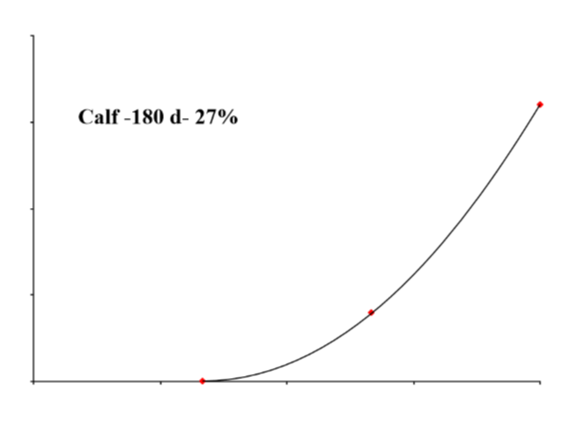
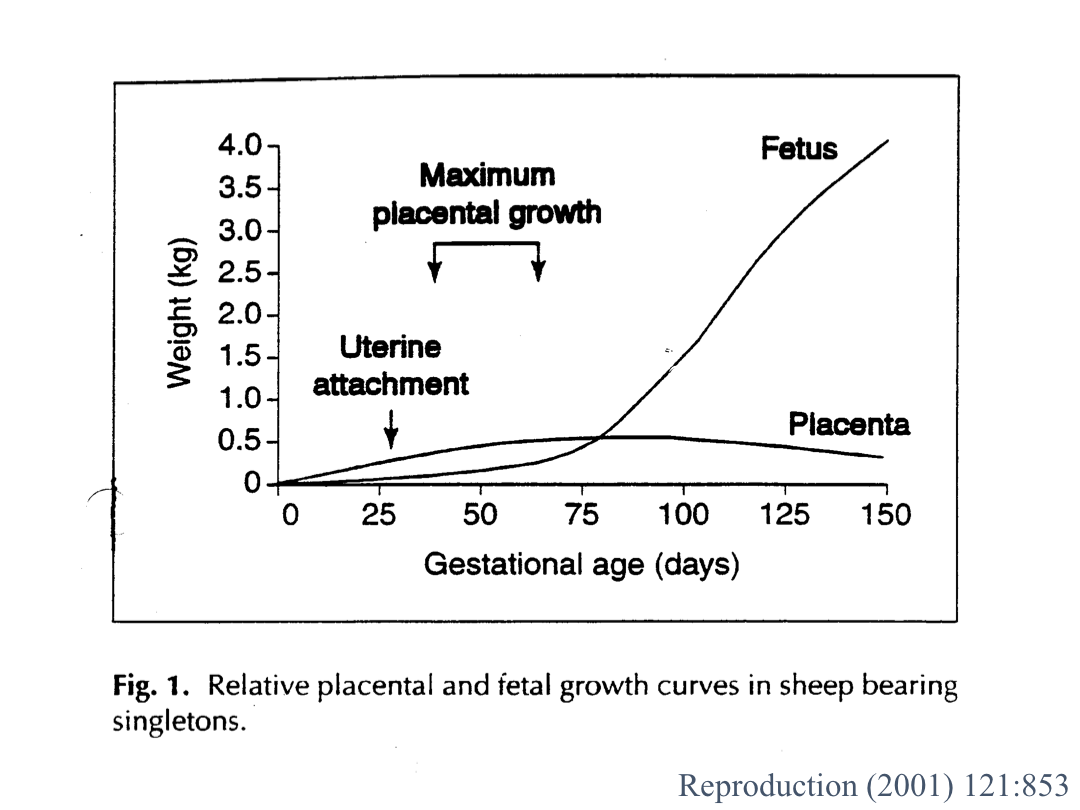
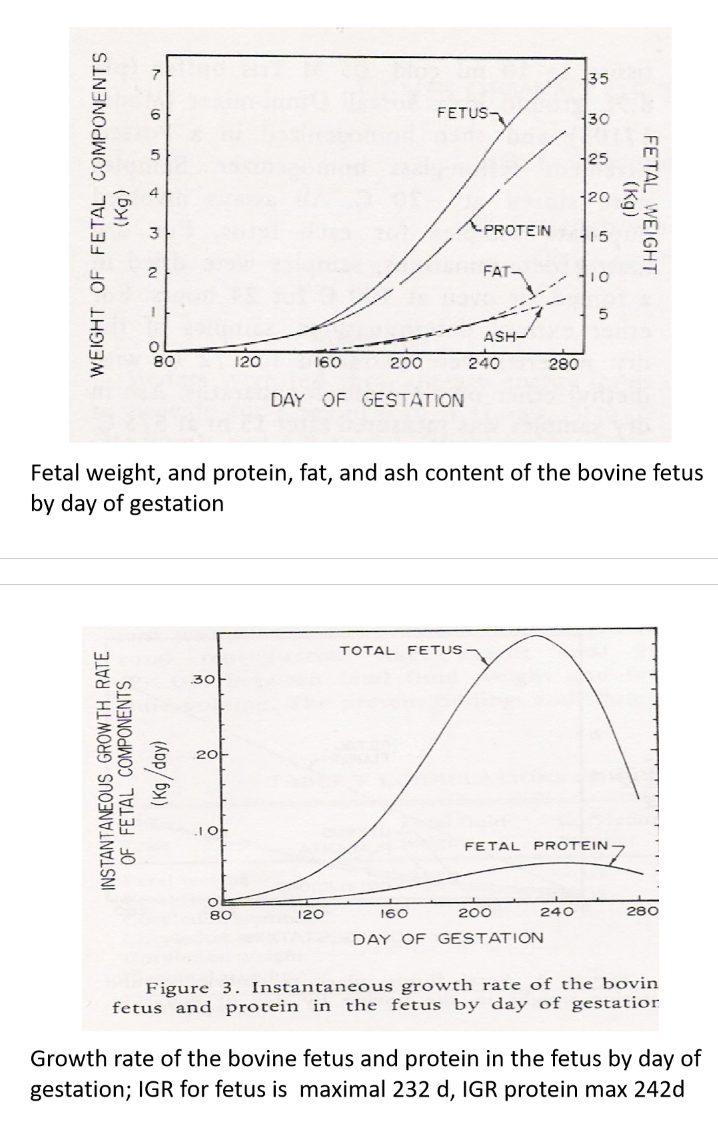
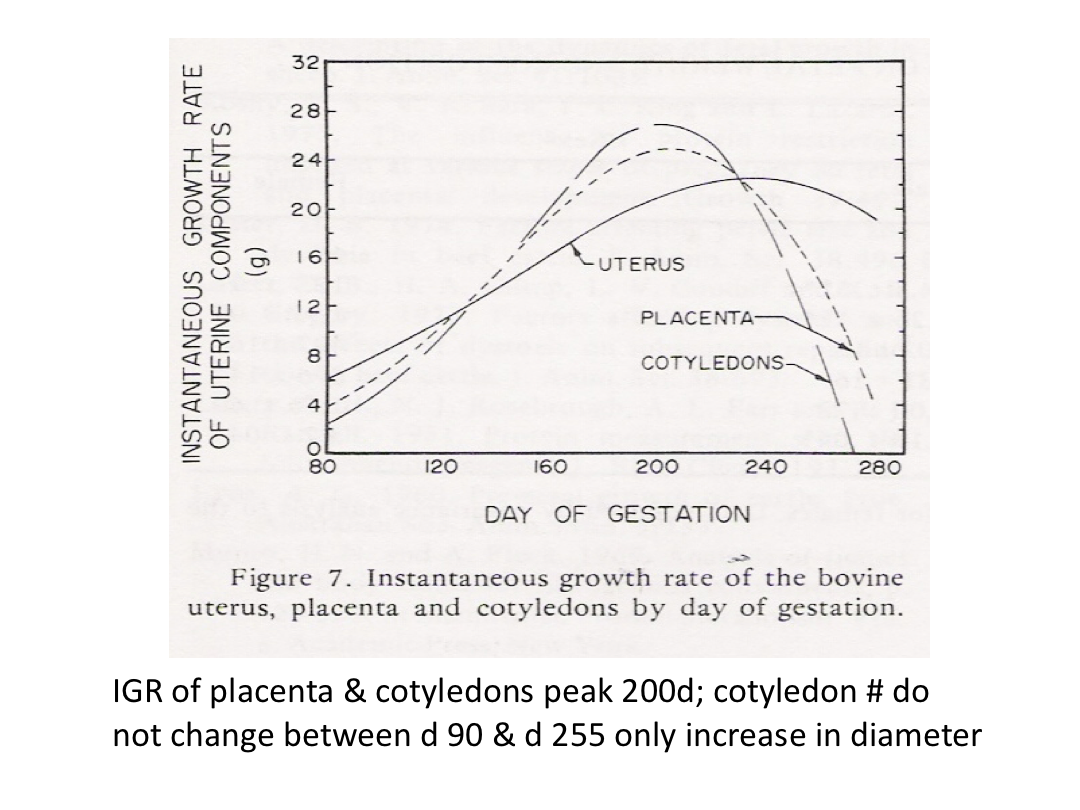
Rate of Prenatal Growth is Related to Postnatal Growth Rate
longer prenatal growth = more cells develop
results in:
additional mass at birth
greater postnatal growth rates
mature weights
human and cow = similar gestation times?
humans more advanced
longer gestation ~ small baby
significant losses can occur during any stage of embryonic/fetal development
factors contributing to growth and development
maternal and paternal genetics
intrauterine environment
intrauterine growth retardation (IUGR)
impaired or altered growth and development of an individual or its organs systems during the time of prenatal development
examples:
quadruplet lamb litter
birthweight varied
due to distribution of lambs in uterine horns and placenta size
calves vary in size at same age postweaning
due to high and low pasture availability during pregnancy and lactation
uterine capacity
production systems
mature versus immature
2/3rds of mature body weight
dam not full mature = insufficient uterine capacity
first calf heifer offspring 2/3rd of size of following calves
multiple pregnancies
location, location, location
maternal intuition
high, low, imbalanced
maternal intestinal malabsorption
toxic substances
environmental factors
temp., stress, etc
management
nutrition
intensive vs extensive production systems
intensive= pigs
extensive = cow
National Research Council Recommendations
temperature influence on maternal intake
effects on angiogenesis and vascularity
dysfunction of uterus
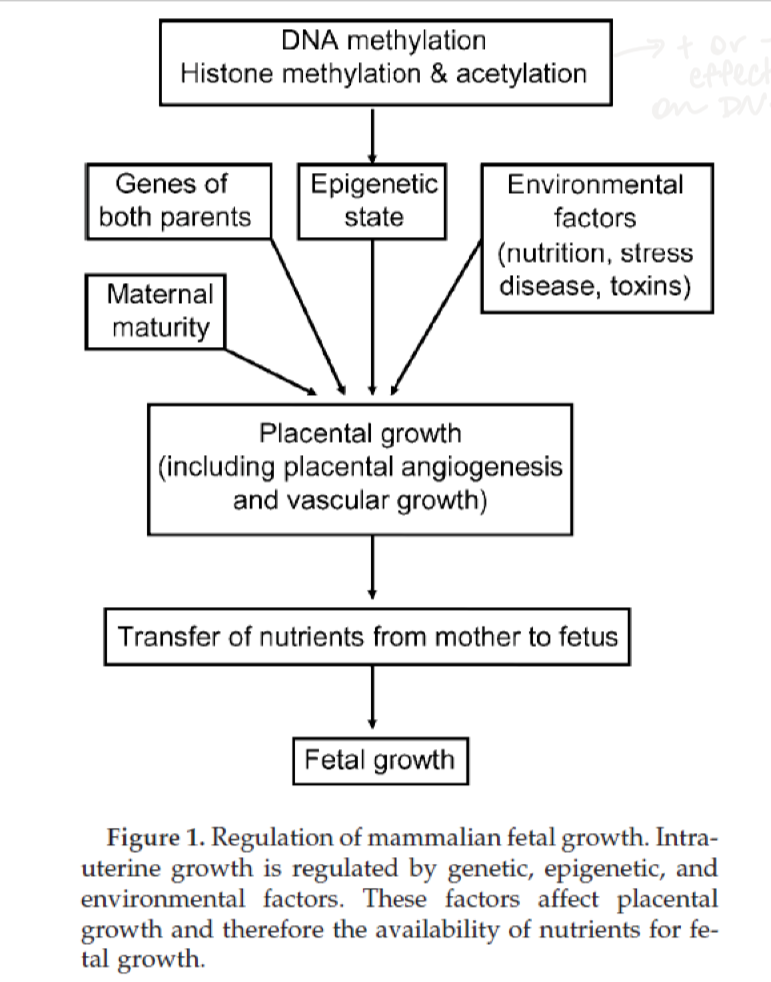
Postnatal Consequences of Intrauterine Growth Retardation in Domestic Animals
body composition and meat quality
cardiovascular disorders
growth performance
reduced athletic performance
hormonal imbalance
metabolic disorders
neonatal health and adjustment
organ dysfunction and abnormal development
Effect of Calving Period on ADG, Reproduction, and First Calf Characteristics of Heifer Progeny
traits of heifers from birth to breeding
higher weaning weight first calving period
progeny more fertile after first heat
calve early = more calves out of cow
traits of calving period on steer progeny
higher weaning BW
higher final BW
Parturition
Multistage Process
Endocrinology
General
Regulation of Body Functions
Cells must:
grow
reproduce
metabolize nutrients
process information
Is this true for whole organisms? Yes.
biochemical reactions regulate functions of the body
caused by reaction to the nervous and endocrine system
chemical messengers
Characteristics of Hormones
Hormones are meant to:
modify an existing process
act as a stimulus
not be secreted at a constant rate
secreted independently
be preset in very small amounts
Hormones
General:
chemical messenger produced by a specific gland
secreted into the blood or other fluid spaces
acts on distant tissue or cells called target cells
Receptors Allow for Tissue Specificity
usually a protein that binds to a specific hormone to cause the biological response
location
cell membrane
nucleus
cytosol
depending on type of hormone location of receptor will change
Categorized by Biochemical Structure
Peptide Hormones
specific amino acids arranged in a chain
short: peptides
long: proteins
Amines
derived from the AA tyrosine
hormones secreted from the thyroid and adrenal medulla
Steroid Hormones
neutral lipids derived from cholesterol
Modulation of Hormone Receptors
down or up regulation of receptor number within a given tissue by changing the number of functional receptors
upregulation vs downregulation
based on how much hormone is produced or needed
Mode of Action
Peptide and Amine Hormones
second messenger systems
a cell will release a second messenger in response to a first messenger
typically hydrophilic, first messenger cannot pass through phospholipid bilayer
gotta have a buddy and ATP
Steroid Hormones
free hormone enters cell by diffusion and binds to receptor
the hormone receptor can then bind to the chromatin of the cell and modulate the production of RNA within the cell
Hormone Glands and Their Functions
Hypothalamus - regulates the pituitary (direct connection)
Hypothalamic Hormones:
Thyrotropin-releasing hormone
paraventricular nucleus
stimulates thyroid stimulating hormone release from the anterior pituitary
Prolactin-releasing hormone
paraventricular nucleus
stimulates prolactin release from the anterior pituitary
Prolactin-inhibiting hormone
dopamine
arcuate nucleus
inhibits prolactin release from the anterior pituitary
Corticotropin-releasing hormone
paraventricular nucleus
stimulates adrenocorticotropic hormone (ACTH) release from the anterior pituitary
Gonadotropin-releasing hormone
preoptic area
stimulates FSH and LH from anterior pituitary
Growth hormone-releasing hormone
arcuate nucleus
stimulates growth hormone release from the anterior pituitary
Growth hormone-inhibiting hormone
somatostatin
periventricular nucleus
inhibits growth hormone release from the anterior pituitary
Pituitary
Double lobed gland located just below the hypothalamus
overall connection between hypothalamus and pituitary is the infundibulum
the release of hormones from the pituitary is directly controlled by the hypothalamus
Anterior Pituitary
linked to the hypothalamus by the portal blood system
formed embryonically from ectoderm budding off of the roof of the mouth
five different cell populations
synthesizes, stores, and releases six peptide hormones
thyroid-stimulating hormone (thyrotropin)
stimulates the secretion of thyroid hormone and growth of thyroid gland
hypothalamus → thyrotropin releasing hormone → anterior pituitary → thyroid stimulating hormone
adrenocorticotropic hormone (ACTH)
stimulates cortisol secretion by the adrenal cortex and growth of the adrenal cortex
precursor to cortisol
regulated by external stimuli
hypothalamus (corticotropin releasing hormone) → anterior pituitary (ACTH)
prolactin
overlapping functions with growth hormone
functions in osmoregulation, promotion of growth, support of metabolism and water drive
absence = no milk production
regulated by prolactin inhibiting hormone and prolactin releasing hormone
gonadotropins
Follicle Stimulating Hormone (FSH)
females
stimulates growth and development of ovarian follicles and promotes secretion of estrogen by ovaries
absence = no follicle growth
males
stimulates spermatogenesis
absence = sperm production ceases
Luteinizing Hormone (LH)
females
responsible for ovulation, luteinization and formation of a CL, and regulation of ovarian secretions of estrogen and progesterone
males
stimulates Leydig cells of testes to secrete testosterone
growth hormone (somatotropin)
secreted by somatotropes
somato = body
primary hormone responsible for regulation of growth (metabolic effects too)
direct effects:
reduced glucose transport and metabolism
increased lipolysis, IGF1 production, amino acid transport
indirect effects:
promotion of growth and endocrine effects
decrease in adipose tissue
grows and proliferates chondrocytes, osteoblasts, and adipocytes
biologic activity
fetuses produce GH
stimulates muscle tissue growth
stimulates bone growth
can we give exogenous GH and it be effective?
protein hormone = not orally active
can be injected but results are variable
increased BW, improved feed conversion, decreased feed intake
increase carcass muscling, decrease fat
negative consequences of too much GH
gigantism (“pituitary giants”)
lifespan = short
everything grows
dwarfism
lack of GH
infantilism
increased levels of GH
acromegaly
only effects certain parts of body
digits, certain joints, mandible and skull are large
tongue can’t it in mouth
fatter digits
extension of jaw
diabetic cats develop acromegaly
production of Insulin Growth-Like Factor-1
mediation of GH effects
helps regulate GH concentrations
High IGF1 =
inhibition of GHRH & GH and decrease IGF1
Low IGF1
stimulation of GHRH & GH and increase IGF1
Posterior Pituitary
linked to the hypothalamus by specialized nerves
Intermediate Pituitary
melanin production
Hypothalamic-Pituitary-Peripheral Gland Axis
Thyroid
bow-tie shaped gland overtop of the trachea
derived from tyrosine
have to have iodine selenium for proper functioning thyroid
produces thyroid hormone
thyroid hormone
tetraiodothyronine (T4)
more produced
tri-iodothyronine (T3)
numbers identify the iodine atoms attached
more biologically active
hypothalamus → thyrotropin releasing hormone → anterior pituitary → thyroid stimulating hormone → thyroid → thyroid hormone
hypothyroidism? overweight and bad skin
calcitonin
thyroid function
regulator of metabolism (hypo and hyper)
increase insulin action on carbohydrates
stimulate lipid metabolism
regulation of cyclicity in seasonal breeders
regulate blood calcium levels
Parathyroid Gland
small glands on the thyroid
produce parathyroid hormone
regulates body’s calcium and phosphate levels
allows for normal function of nervous and muscular systems
antagonistic function to calcitonin
Adrenal Gland
Adrenal cortex
makes up nearly 80% of the adrenal gland
hormone categories:
aldosterone
Sodium and potassium balance
dehydroepiandrosterone (DHEA)
functions as a metabolic intermediate for androgen and estrogen steroid hormones
glucocorticoids
cortisol and corticosterone
metabolism and coping with stress
increase blood glucose through gluconeogenesis during times of stress
suppress the immune system
Hypothalamus (CRH) → Anterior Pituitary (ACTH) → Adrenal Gland (Cortisol)
good for short term exposure for body to handle stress
not good long term
effects:
immune system = function suppressed
liver = gluconeogenesis
muscle = protein catabolism
adipose tissue = lipolysis
Adrenal medulla
modified part of the sympathetic nervous system
fight or flight response
instant response to short-term stress
hormones:
epinephrine “adrenaline”
norepinephrine
hormone effects:
vasoconstriction
blood vessels constrict = increased BP
gastrointestinal relaxation = poop
stimulation of heart = increased HR
dilation of bronchi = widen to increase O2
Short vs Long Term Stress Effects
Short
increased HR and BP
dilation of bronchioles
increased metabolic rate
Long
increased blood glucose
increased blood volume and blood pressure
suppression of immune system
Pancreas
an organ composed of both endocrine and exocrine tissues
endocrine - produces hormones
exocrine = digestive processes
acinar cells secrete digestive enzymes
duct cells secrete aqueous NaHCO3 solution
endocrine cells - islets of Langerhans
Alpha cells
secrete glucagon
increases blood glucose levels
by breaking down glycogen
Beta cells
secrete insulin
decreases blood glucose levels
by causing glucose to be stored as glycogen
stimulates amino acid uptake and protein synthesis
Delta cells
secrete somatostatin
inhibits the secretion of insulin and glucagon (negative feedback)
Adipose Tissue
newly recognized endocrine gland
produce leptin
provides signals to the hypothalamus
increase adipose tissue = increase adiposity and triglyceride content = increased leptin concentrations →
decrease feed intake, increase energy expenditure and modulate other hormones (insulin, cortisol, GH, etc)
decrease adipose tissue = decrease adiposity and triglyceride content = decreased leptin concentrations →
increase food intake, decrease energy expenditure
Testes
components:
seminiferous tubules
sperm production
Leydig (Interstitial) Cells
groups of endocrine cells between seminiferous tubules
produce androgens (testosterone) when stimulated by LH
Testosterone: primary male androgen
provides for development of male secondary sex characteristics and accessory sex glands
activates spermatogenesis
stimulates build up of muscle and bone
major physiological effect of testosterone
bone
increased deposition of osteoblast and matrix
larger cortical thickness
muscle
stimulated greatly in utero (high androgens in utero)
T2 shortens G1 phase → increased number of fibers
declines after birth until puberty
larger fibers due to protein accretion
T2 increase size of muscle fibers postnatally
Ovaries
reproductive organ of the female
responsible for the production and housing of oocytes
primary function
store and prepare for ovulation
regulation
ovaries produce hormones in cycles
controlled by FSH and LH
hormones
estrogens
estrone (E1), estradiol (E2), estriol (E3)
produced by follicles
levels increase as follicles grow
produced by ovary → enter bloodstream → targe tissues → causes reaction (what target tissues and associated reactions?)
functions:
positive and negative feedback function on gonadotropins
nervous system function
causes restlessness, phonation, willingness to be mounted, mounting
uterine contractions
allow for transport of sperm
growth and maturation of the reproductive tract
growth and development of secondary sex characteristics
increased blood flow to genital organs
bone and muscle development
induction of epiphyseal closure
ossify, site of hyperplasia ends
why female skeletons are shorter than males
facilitation of fat deposition
most effective in castrated male ruminants
progestins
cells of ruptured follicle develop into corpus luteum (CL)
granulosa cells and luteal cells produce progesterone
onset of puberty denoted by P4 concentrations over a threshold value
functions:
negative feedback function on gonadotropins
preparation of uterus for pregnancy
maintenance of pregnancy
inhibits uterine contractions and estrus
promotes uterine lining development
improve growth and feed efficiency of cyclic heifers
Postnatal Growth
Periods of Growth
early pregnancy
mostly placenta, fluids and hyperplasia of embryo
late pregnancy
primarily hypertrophy
post-natal
primarily hypertrophy
Growth Occurs from Birth Until Death
asdf
postnatal growth
asdf
asdf
bone
muscle
adipose
Age Stages of Growth
1st stage:
rapid growth:
organ
bone
muscle
slow growth:
fat
2nd stage:
reaching maturity:
organ weight
slowing:
bone
rapid:
muscle
increasing:
fat
3rd stage:
reaching/reaches maturity:
organ weight
bone
continuing:
muscle
rapid:
fat
4th stage:
slowing:
muscle
continuing:
fat
Specific Tissue Growth
Bone
lengthening of bone
ossification
once bone is fully ossified (cartilage hardened), bone stops growing
can continue to grow in width
growth plate (epiphyseal plate)
point at which bone will lengthen and grow
where hyperplasia occurs
post-natal bone development = bones lengthen
once complete with bone ossification…
all nutrients targeting bone growth go to muscle growth
hypertrophy of muscle
Muscle
no new fibers formed after birth
postnatal growth (fiber size) determined by:
increases in diameter
increase in myofibril number
increases in length
addition of new sarcomere units and new myofibrils
protein synthesis vs degradation
all muscles do not grow at the same rate
muscles of the leg are more developed at birth than loin muscles
generally large muscles have the greatest rate of postnatal growth
may be related to muscle function
up until where muscle plateaus is where requirements are met and fat growth is able to increase
Adipose
gradually develops into lobes and lobules
enclosed in collagenous fibers and supplied with capillary beds
adipoblasts
begin to accumulate lipid
starts with diameter of 1-2 micrometers
adipocytes
filled with lipid
have a diameter up to 120 micrometers
fibroblast → mesenchymal stem cell → adipoblast → preadipocyte → developing adipocyte → adipocyte (mature)
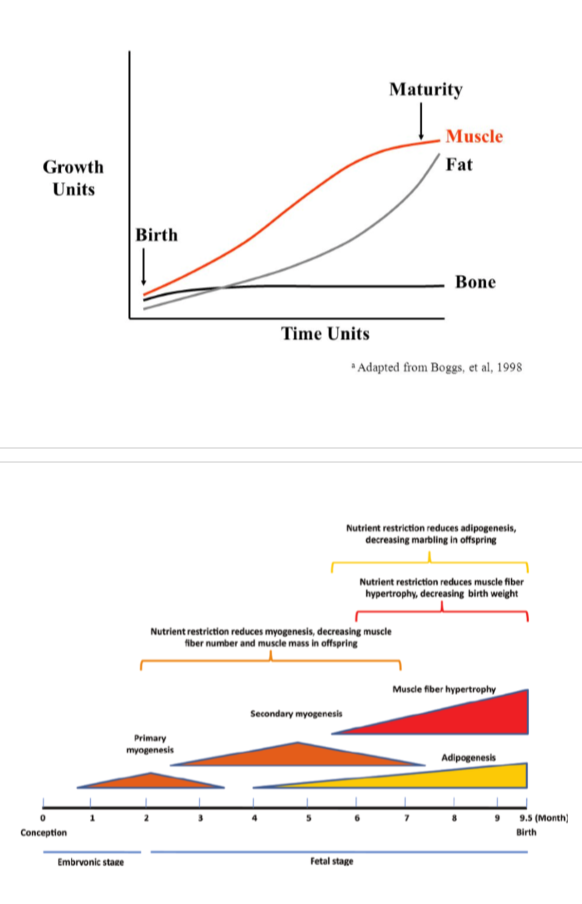
Typical Cattle Growth Curve (Rates)
Stage 1 (0-8m):
increases:
skeletal
muscle
increases:
organ
limited:
fat
Stage 2 (8-15m):
increases:
muscle
decreases:
organ
skeletal
Stage 3 (15-23m):
complete:
bone
organ
decreases:
muscle
increases:
fat
Stage 4 (23-30m):
limited:
muscle
increasing:
fat
generally harvested by month 24
Factors Affecting Postnatal Growth
Hormones
Genetics/Species
genetics or genetic type
animals of given breeds grow and develop in characteristic manners
genotype
determines potential for growth
phenotype
affected by environment
nutrition, disease, parasites, weather, etc.
compositional endpoint
irrelevant of weight
composition of muscle and fat
cattle and sheep
for animals fed until compositional end weights, what are we looking for in those animals?
external fat (physical look)
weight endpoint
irrelevant of composition
hogs
very similar genetically
housing/confinement/environment is the same across the board
Gender
effect of sex on cattle performance
ADG
bulls > steers > heifers
dressing
same age of animals
heifers > steers
heifers mature faster = put on fat earlier ~ have higher D%
same finish
heifers = steers
carcass grade with similar finish
bulls < steers = heifers
steers and heifers similar as long as genetics are similar
REA
bulls > steers > heifers
finish of the same weight
bulls < steers < heifers
cutability
bulls > steers > heifers
feed efficiency
bulls > steers > heifers
swine
litter mate gilts stay leaner longer than male counterparts
boar will be leanest
fat levels
boar < gilt < barrow
Implants and Promotants
Implants
a group of products used to increase rate and efficiency of growth
hormone implants have been used since the 1950’s
improve performance
lower cost of production
asdf
physiological responses similar to natural hormones
estrogenic or androgenic compounds
asdf
mimic the effects of estrogen
estradiol benzoate and estradiol 17-beta- zeranol
asdf
mimic the effects of testosterone
testosterone propionate and trenbalone acetate
Characteristics
asdf
formulated for different time
often pelleted
asdf
various potency
generally correlated to stage of production
When are cattle implanted?
asdf
between 2 and 4 months of age
1-2 implants
asdf
after weaning
1-2 implants
asdf
after entering feed yard
1-2 implants
increasing potency
what animals can be implanted with a hormone implant?
heifers
asdf
grade better with synthetic estrogen and androgens?
higher % of choice with no implant or androgen
steers
varying potencies
grade better with androgen implant?
higher % of choice with mild Estrogen
bulls
asdf
estrogen activity of common foods
highest
soybean oil
middle
eggs/milk
lowest
beef from implanted cattle
beef from non-implanted cattle
Beta-Adrenergic Agonists
phenethanolamine compounds
asdf
ex: epinephrine, norepinephrine & dopamine
direct agonist and indirect agonists
direct
interact with adrenergic receptors
indirect
stimulate the release of endogenous catecholamines
synthetic beta-adrenergic agonists
large group of drugs that mimic the actions of naturally occurring catchalamines
initially used for bronchodilation
acts in smooth muscle of the bronchial system and vascular tissue
ex: albuterol sulfate and terbutaline sulfate
physiological activity is dependent on:
activity at the receptor
absorption
rate of metabolism
rate of elimination
distribution of target tissues
asdf
asdf
no withdrawal time vs withdrawal time
specific receptors
determined by concentrations of beta-amino acids that will stimulate receptors
present in most tissues
B1 - AR
B2 - AR
B3 - AR
anticipated results:
adipose tissue
asdf
asdf
skeletal muscle
asdf
asdf
heart
increased contractility and rate
mode of action (synthetic? or general?)
asdf
increase protein synthesis
decrease protein degradation
asdf
constant DNA amount (nuclei number)
rapid increase of protein accumulation
use of free fatty acids instead of amino acids
reason for hypertrophy
commercially available (synthetic? or general?)
asdf
ractopamine hydrochloride
FDA approval: 2009
asdf
ractopamine hydrochloride
FDA approval: 2006
asdf
zilpaterol hydrocholride
FDA approval: 2006
illegal substances
asdf
most orally potent B-adrenergic agonists
present in liver tissues
caused acute poisoning in consumers of tainted liver
large reason for European ban
zilmax vs control
increases in:
final bodyweight
average daily gain
dry matter intake
gain:feed ratio
hot carcass weight
longissimus area
decrease in:
yield grade
marbling score stayed the same
paylean vs control
increases in:
final bodyweight
hot carcass weight
dressing %
loin eye area
average daily gain
Nutrition
use of ingested nutrients is partitioned among tissues and organs according to:
metabolic rate
the energy of energy expenditure per unit of time
physiological importance
holding animals
decreased feed efficiency
decreased average daily gain
compromises carcass value
increases:
internal, external and seam fat
possible decreases:
intramuscular
efficient production of meat animals
maximum muscle and minimum fat
fat is generally considered undesirable
fat and bone considered waste
although - fat is a component of all cells
vital role in metabolism
prevents carcass dehydration and discoloration
important for beef quality grade
marbling
composition of steer grading choice:
water: 53.5%
fat: 26%
protein: 17%
ash: 3.5%
compensatory gain
a recovery in growth when animals move from a low to high level of nutrition
explain
nutritional deprivation during early stages of postnatal development has long-lasting effects
produced the phrase “sucking the hind one”
explain
twin or triplet lambs
explain
adequate and continuous supply necessary for tissue growth and maintenance
essential amino acids
fats
dietary fats used for growth
certain fatty acids essential for growth
Immunity
Physiological Status
physiological age
asdf
body height and weight
body composition
puberty (early/late maturing)
pregnant vs non-pregnant vs lactating cows
total protein:
highest: lactating
middle: pregnant
lowest: non-pregnant
heifers calving in first 21d of first calving season…
greater average herd life
higher:
weaning weights, pregnancy rates, progeny (steer) carcass characteristics and final bodyweight
pineal gland
tiny, pinecone-shaped structure located in the center of the brain
melatonin
indoleamine hormone that affects moods and wake-sleep cycles
synthesized from serotonin
asdf
increases 10-fold when its dark
tryptophan→5-Hydroxy-tryptophan→serotonin→N-Acetyl-serotonin→melatonin
pathway:
light rays → eyes → suprachiasmatic nucleus of HYP (manages biological clock signals) → sympathetic neurons and ganglia → pineal gland → melatonin
effects:
increasing day length:
decrease neural stimulation of melatonin secretion
decreasing day length:
increase neural stimulation of melatonin secretion
melatonin inhibits GnRH secretions from hypothalamus
high levels of melatonin asleep
low levels of melatonin awake
asdf
roughly a 24 hour cycle in the physiological process of living beings
endogenously generated
can be manipulated
asdf
duration of melatonin each day is directly proportional to the length of the night
melatonin throughout life:
newborns: minimal production
early childhood: peaks
puberty: declines
middle age: continuing to decline
old age: negligible amounts
seasonal estrus
melatonin can be considered an anti-gonadotropic hormone
asdf
long-day breeders:
short-day breeders:
anestrus:
long photoperiods (spring/summer): low melatonin release at night
short photoperiods (fall/winter): high melatonin release at night
describe this ^^
Diseases and Parasite Status
Environment
factors affecting animal performance
sound
altitude
photoperiod
environmental contaminants
effective ambient temperature
humidity
wind speed
contact surfaces
thermal radiation
precipitation
performance & efficiency = functions of metabolizable energy and maintenance
intake is affected by the thermal environment
reduction in efficiency
factors influencing body temperature:
heat sources
body metabolism
heat losses
evaporative cooling
mode of heat loss depends on temp.:
low temp.: radiation
high temp.: vaporization
critical temperature changes on type of coat (heavy or light)
influence on growth:
temperature effects:
food and water intake
decrease dry matter appetite and consumption
reduced gut motility and rumination
increased gut fill with increased water
heat production
metabolism
panting alter alveolar ventilation
decreased CO2 loss and increased blood pH
management systems
continuous body heat generation or dissipation reduce growth efficiency
stress:
Pale, soft, exudative (PSE)
short term stress before slaughter
rapid, early use of glycolysis
low ultimate pH
Dark, firm and dry (DFD)
long term stress
depletion of glucose in the muscle
high final pH
Dark cutters
animal handling and movement
small - walmart ribeye
slight - select steak
traces - boot leather, nasty
table 2
heritability does not go over 60% in any trait, generally
swine lowish feed efficiency, already feed efficient as a species, genetics less important
Effect of Light on Livestock Health and Physiology
Circadian Rhythms
also known as the body clock
physical, mental, and behavioral changes that follow a roughly 24hr cycle responding to light and darkness in the organism
found in living things: plants, animals, tiny microbes
can be disrupted in two ways:
genetic
mutations in circadian genes
environmental
shift work, light at night, artificial light, diet
disruption can lead to:
cancer, metabolic syndromes, cardiovascular disease
Introduction to Biological Clocks
living organisms are governed by internal timers known as biological clocks
these clocks operate on a 24-hour cycle
influencing wakefulness and sleepiness
biological clocks are guided by natural light patterns
regulate various physiological functions and behaviors
play a pivotal role in regulating crucial bodily functions throughout an organism’s life
orchestrate synchronized activities
maintaining optimal performance and adaptability
light influence
natural light and dark cycles shape and synchronize biological clocks
excessive artificial light, especially at night can disrupt these cycles
impacting animal physiology and behavior
sunlight matters!
sunlight’s role
animals clocks work with the help of sunlight
finding the right balance
keeping the right amount of sunlight is super important for the clocks to work well
too much light trouble
too much light can cause problems and make animals stressed
fixing the light
we can help by making sure animals get the right amount of light
making sure animals have good light helps them feel better and less stressed
Circadian Rhythms in Livestock Production
adaptive responses
facilitating adaptive responses to environmental changes
synchronizing activities like metabolism to feeding
seasonal reproduction impact
influencing critical seasonal events, particularly reproduction, crucial to livestock production
genetic control at cellular level
central clock in the brain’s suprachiasmatic nucleus (SCN), governed by genes
peripheral tissue involvement
peripheral tissues (gut, liver) with internal clocks impact metabolic functions and communicate with the central clock
behavioral and health implications
dysfunction in clock-controlling genes can lead to…asdf
vulnerability to diseases
disruptions caused by intensive farming practices
economic impact
optimize production, mitigating health risks, improving economic outcomes in the industry
The Melatonin Rhythm
melatonin signal
livestock melatonin mirrors day-length changes
a crucial hormonal signal
sheep sensitivity
seasonal sheep breeding linked to heightened melatonin sensitivity
seasonal impact
winter brings prolonged melatonin signals in sheep
influencing circadian variations
critical melatonin window
neonates lack rhythmic melatonin
emphasizing a crucial occurrence window
caught in early exposure
early-life melatonin exposure may impact fetal to neonatal transition
warranting caution
hormonal understanding
understanding hormonal functions in domestic species is vital
molecular management insights
uncovering circadian gene and hormonal mechanisms provides targets for advanced livestock production
regulation of melatonin synthesis by the pineal gland to control circadian rhythms in the brain
light-induced activation of SCN prevents the production of melatonin by the pineal gland
Circadian Clocks in Pigs
lipid metabolism and diurnal variations
diurnal variations in polyunsaturated fatty acid metabolism crucially affect lipid levels in circulation and liver
impacting growth and meat quality in pigs
feeding patterns reshape metabolism
time-restricted feeding influences:
gene expression, liver weight, lipid profiles
improving growth performance and muscle quality in pigs
nutrient timing as a time giver
timing of feed administration significantly impacts:
metabolic responses, influencing energy management and obesity onset
peripheral clocks and nutrition regulation
peripheral circadian clocks in key metabolic tissues of pigs are influenced by feeding states
affecting clock gene expression and metabolic outcomes
clock genes influence reproductive health
clock genes play a critical role in hormone secretion and apoptosis in porcine granulosa cells
impacting oocyte maturation and follicular development
melatonin as a mediator of reproduction
melatonin is synchronized by circadian rhythm
contributes to fertility optimization by preventing:
oocyte senescence and enhancing gene expression related to fatty acid oxidation and mitochondrial biogenesis
urinary biomarkers for stress monitoring
circadian variations in urinary catecholamine concentrations serve as potential non-invasive biomarkers for stress monitoring in pregnant sows
Circadian Clocks in Sheep
sheep reproduction seasonality
sheep are short-day breeders
exhibiting reproductive activity in fall
contrasting with long-day responses in summer
clock gene response to photoperiod
long-day photoperiods induce increased expression of genes impacting estrus and reproductive activation in short-day breeder Soay sheep
photoperiod effects on kisspeptin
photoperiod shifts influence the crucial reproductive gene, Kisspeptin
with maximal expression in a 8:16 setting
newborn clock gene expression
clock genes in newborns show diurnal variations
melatonin rhythms and reproduction
influencing prolactin secretion and neuroendocrine gene expressions
photoperiod alternation effects
rapid photoperiod alternation impairs:
rhythmicity
glucose homeostasis
skeletal muscle clock gene expressions
diurnal variations in physiology
variations in liver glycogen, plasma leptin, locomotor activity, body temp., and glucose levels
Circadian Clocks in Cattle
cattle estrous cycle
circadian clock influences cattle estrus
impacting LH surge timing in heifers
clock genes in male reproduction
genes in bull semen
circadian patterns in lactating cows
7% of lactation genes exhibit circadian patterns
photoperiod and milk production
16h light, 8h dark enhances milk yield
impacting lactation and mammary cells
clock genes in milk synthesis
silencing genes in mammary cells reveals its role in regulating milk protein synthesis
milk yield and fat protein concentration were shifted by night-restricted feeding
endocrine changes and melatonin
long-day light induces endocrine changes:
melatonin affects serum prolactin, mammary growth and metabolism
feeding regime and metabolism
feeding regimes influence diurnal metabolic variations in cattle
impacting glucose, insulin and lipid profiles
circadian cardiovascular functions
cattle exhibit circadian variations in heart rate and blood pressure
influenced by day length
circadian gene expression in reproduction
key circadian genes impact reproductive performance in cattle
diurnal variations affecting oocytes and granulosa cells
Conclusion
significance of circadian rhythms in agriculture
feeding optimization
knowing how circadian rhythms impact feeding helps optimize strategies for animal growth and health
reproductive efficiency
manipulating light exposure is crucial for effective breeding
improving reproductive performance
metabolic health insights
understanding daily rhythms aids in designing nutrition for enhanced milk production, meat quality and overall animal health
future research directions
feeding strategies impact
explore feeding effects on lipid metabolism and growth
environmental interactions
investigate temperature and humidity effects on circadian rhythms
hormonal-reproductive links
explore hormone and circadian connections in seasonal reproduction
nutrient-gene optimization
uncover links between nutrients, feeding, and gene expressions for optimal health
Fetal Programming with Equine
What is Fetal Programming?
the effects of the fetus’ postnatal health and growth trajectories from factors the dam enquired
alters fetal DNA expression in response to maternal conditions
transgenerational:
some lasting effects on progeny of that particular generation has also been seen on the offspring of those progeny
Why do we Care About Fetal Programming in Horses?
health
longevity
athleticism
research done with effects of fetal programming in horses is very limited
can utilize research done in other species to correlate effects on horses
Factors Affecting Fetal Programming
Nutrition
most effects seen in adolescence and adulthood, rather than birth
can affect fetal programming in two different ways:
overnutrition
horses have become more obese in modern society
maternal obesity effect:
metabolic diseases
elevated blood pressures
cardiovascular dysfunctions
alters composition of fat and muscle
decreases skeletal muscle genes
elevated plasma levels
development of Type 2 diabetes and other metabolic diseases
undernutrition
quantity and/or quality of nutrient requirement is not being met
effects:
metabolic disorders
cardiovascular diseases
protein
adverse effects on neurodevelopment
study in mice correlated with short-term memory loss in adulthood offspring
transgenerational effects in mice:
short-term memory deficits in F2 generation
hereditary effect
Environment
many variable factors
cause stress to horse if environment is out of norm
contributed by:
extreme climate
physical or mental tauma
nutritional deficiencies
improper handling
herd conflicts
maternal stress
animals can become stressed if they are forced to make behavioral or physiological adjustments to cope with their environment for a certain amount of time
effects (human):
mental disorders (ADHD< schizophrenia, and depression)
how can this affect horses?
depression and/or behavioral problems
heat stress
when threshold of a horse’s heat tolerance is crossed
effects:
decrease feed intake
in cattle:
alters physiological process and causes cow to produce less internal heat and release more heat to the environment
indirect effects
horses are long day breeders
early to mid-gestation occurs in middle of summer heat
managing heat stress:
ad libitum fresh, cool water
adequate shade
specifically for horses:
rinsing body down with cool water
providing a fan to horses stalled to promote air flow
not all negative!
maintaining good health and a stress-free dam can have the opposite effects
in humans:
good mental health associated with increased cognitive behavior in offspring
Intactness of the Immune System
infection
two different types:
bacterial
viral
effects
deflect proper neurodevelopment
leads to issues with psychiatric diseases
injury to fetal lung
caused by an intra-amniotic infection
creates higher risk for Respiratory Distress Syndrome (RDS)
why do we care about horses’ lungs?
competition
long distances
Summary
why do we need to understand fetal programming?
management purposes
adjust nutrient intake
provide various housing situations
know the signs of problems
lower risk of effects
to get healthy babies on the ground who can be successful throughout adulthood
fetal programming has lasting effects on horses and other species
nutrition, environment, and dam’s immune system are all major factors affecting fetal programming
producers must understand fetal programming in order to manage their program efficiently