Ch. 8
Introduction
During early childhood (ages 3-6), children develop
A confident self-image
More effective emotion control
New social skills
The foundations of morality
A sense of gender identity
Erikson’s Theory: Initiative vs. Guilt
Initiative:
New sense of purposefulness
Eagerness to try new tasks, join activities with peers
Play permits trying out new skills.
Strides in conscience development
Guilt:
Overly strict conscience causes too much guilt
Related to parental threats, criticism, and punishment
Self-Conscious Emotions
Increasingly sensitive to praise and blame as self-concept develops:
Intense shame linked to maladjustment
Appropriate, moderate guilt supports good adjustment
Supportive parents focus on improving performance
Varies across cultures
The inverse power of praise
The worse thing you can do to a child (even though it’s well-meaning) is praise them due to ego inflating and creating a need to seek outside validation
The IPP is when you praise a child for a specific skill which can result in them shutting down/produce a identity crisis when they encounter challenges
It’s best to praise effort rather than their abilities as it encourages the child that practice makes better and encouraging them to keep pushing and explore
Emerging Sense of Self
Self-Concept
Observable characteristics:
appearance, possessions, behavior
Typical emotions and attitudes:
“I like/don’t like…”
Does not yet reference personality traits (“I’m shy”)
Self-Esteem
Positive self-evaluation
Social comparison
Child usually overrates ability, underestimates task difficulty
Supported by parent scaffolding and praise of effort
Emotional understanding
Caregivers:
Teach emotions
Scaffold emotional thought
Preschoolers correctly judge
Causes and consequences of emotions
Signs of emotions
Can interpret, predict, change others’ feelings
Gender: Cognitive Influences
Socioemotional differences
Differences in aggression
Gender schema theory: children gradually develop gender schemas of what is gender-appropriate and gender-inappropriate in their culture
Gender incongruency: baseline dissatisfaction with biological sex
Differential gender socialization
Gender-typed Play
Preschoolers prefer same-sex peers and gender-typed activities
Boys: active, competitive large-group play
Girls: quieter activities involving cooperative roles
Same-sex peers:
Positively reinforce one another’s gender-typed play
Gender dysphoria
Dissatisfaction with biological sex; strong identification as the other sex
High distress
Approx 1.5% of biological boys, 2% of biological girls
Emerges in early childhood; deepens in adolescence in 20-40%
Gender dysphoria:
Transgender identity
Efforts to suppress or deny = heightened distress
Professionals recommend therapies that:
Permit children to follow gender-identity inclinations
Help parents protect children from negative reactions
Make Believe Play:
Sociodramatic play helps children:
Understand others’ feelings and regulate their own
Negotiate roles and rules; compromise
Development of self-concept
Rough-and-Tumble Play
Characterized by vigorous physical activity
Boys engage more frequently
Associated with sociodramatic play
Both sexes can benefit from this style of play due to influencing the following:
Sensory experience
Physical touch
Imaginary Companions
Emergence of imaginary companions
Representations of real people
Early Childhood Friendships
A friend is someone who “likes you”, plays with you, shares toys
Friendships change frequently; concept not long-term
Child-Rearing (Parenting) Styles
Authorative
High demands/high expectations
High responsiveness/empathetic (discipline over punishment)
Authoritarian
High demands
Low responsiveness/punishment over discipline (focus on obedience)
Permissive
Low demands
High responsiveness
Uninvolved
Low demands
Low responsiveness
Outcomes of Child-Rearing Styles
Authoritative: self-control, social and moral maturity, high self esteem
Authoritarian: anxiety, unhappiness, low self-esteem, anger, defiance
Permissive: impulsivity, disobedience, poor school achievement
Uninvolved: depression, poor emotional regulation, school achievement difficulties, antisocial behavior (willingly harm others, disregard others’ rights, etc.)
Affiliation Motivation: Relatedness is just as basic as a core foundational need for humans in the same way water, food, and shelter is
Cultural Variations in Child-Rearing
Chinese:
Withholding praise in context of reasoning
More controlling in teaching and scheduling child’s time
Hispanic/Asian Pacific Islander/Caribbean:
Firm respect for parental authority
High parental warmth
African-American
Strict, “no-nonsense” discipline
Often paired with warmth and reasoning
Indian
Log Kya Kahenge (what will people say)
Parental control
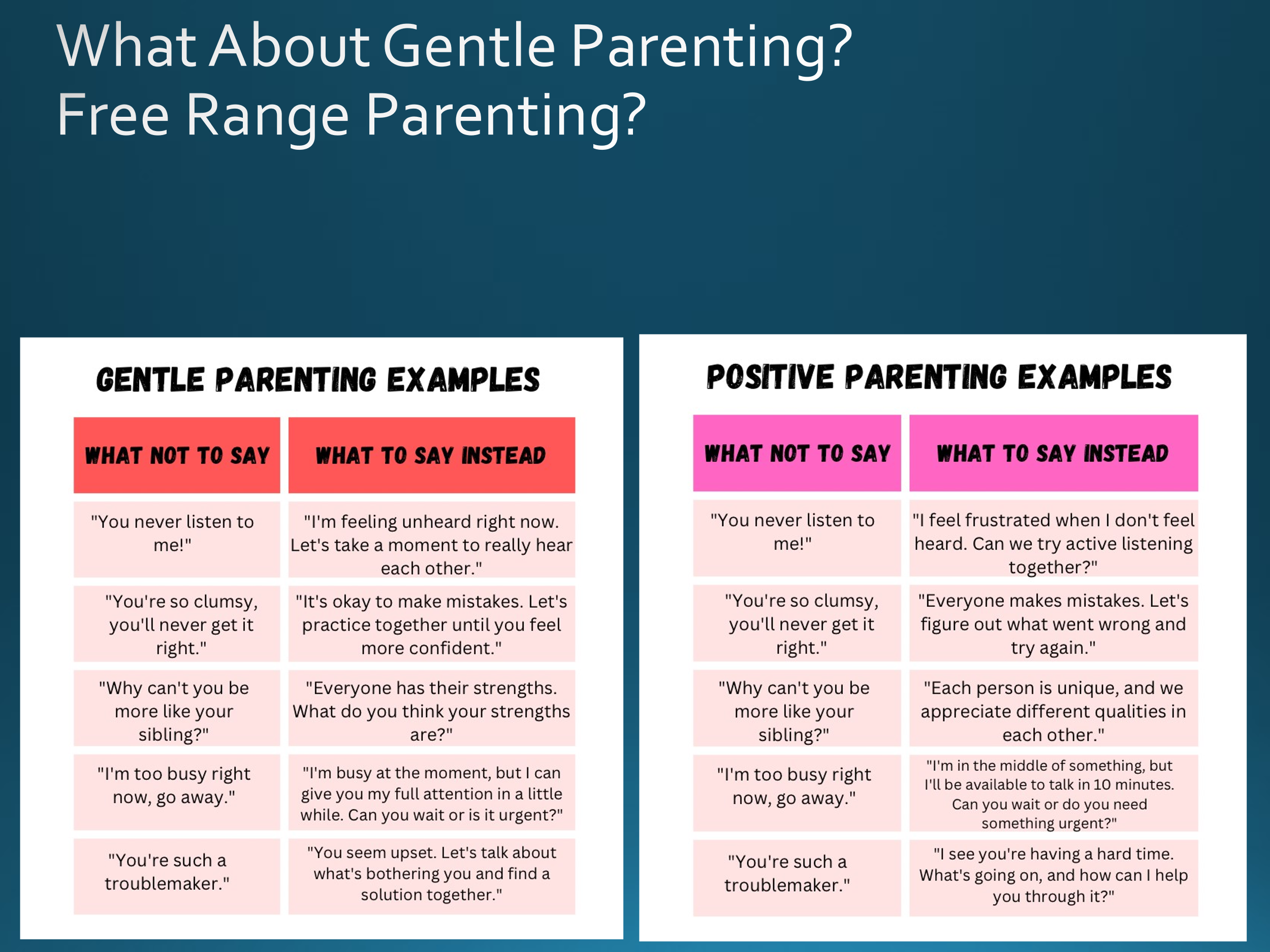
What about Gentle Parenting? Free Range Parenting?
Differential Parenting: When parents parent one child differently from another child
Differential gender socialization: Raising boys and girls differently
Parenting Styles Review
⭐ Shining Star:
Authoritative Parenting
High warmth + high structure
Responsive but maintains clear expectations
Best long-term outcomes (research-supported)
Gentle Parenting
Advocates say it’s basically authoritative.
Critics say it can become overly permissive.
Emphasizes emotional validation and negotiation.
⚠ Key limitation:
Some situations are not negotiable (e.g., public behavior, safety issues). Parenting must balance responsiveness with responsibility.
Adoption & Attachment
Important Clarification
Adoption ≠ inherently traumatic.
But adoption trauma is more common than people realize.
Key Concepts
1. Adoption Begins With Disruption
Even newborns show stress when separated from biological mothers.
Babies recognize voice, smell, and sensory patterns from in utero development.
2. Attachment & Stress Response
If born into chronic stress, a child’s nervous system develops around stress.
May become stuck in fight/flight/freeze patterns.
3. “The Body Never Forgets”
Trauma can be stored in the body (implicit memory).
Even if episodic memory fades, the nervous system response remains.
Explains phobias without conscious memory of the cause.
4. Disenfranchised Grief
Grieving someone or something you didn’t directly “have.”
Examples:
Celebrity deaths
Fictional characters
Biological family never known
Adopted individuals may grieve:
Biological parents
Unknown identity
“What could have been”