FW 453: 1/12-1/14: Introduction
FW 453: 1/12-1/14: Introduction
Alligators in NC
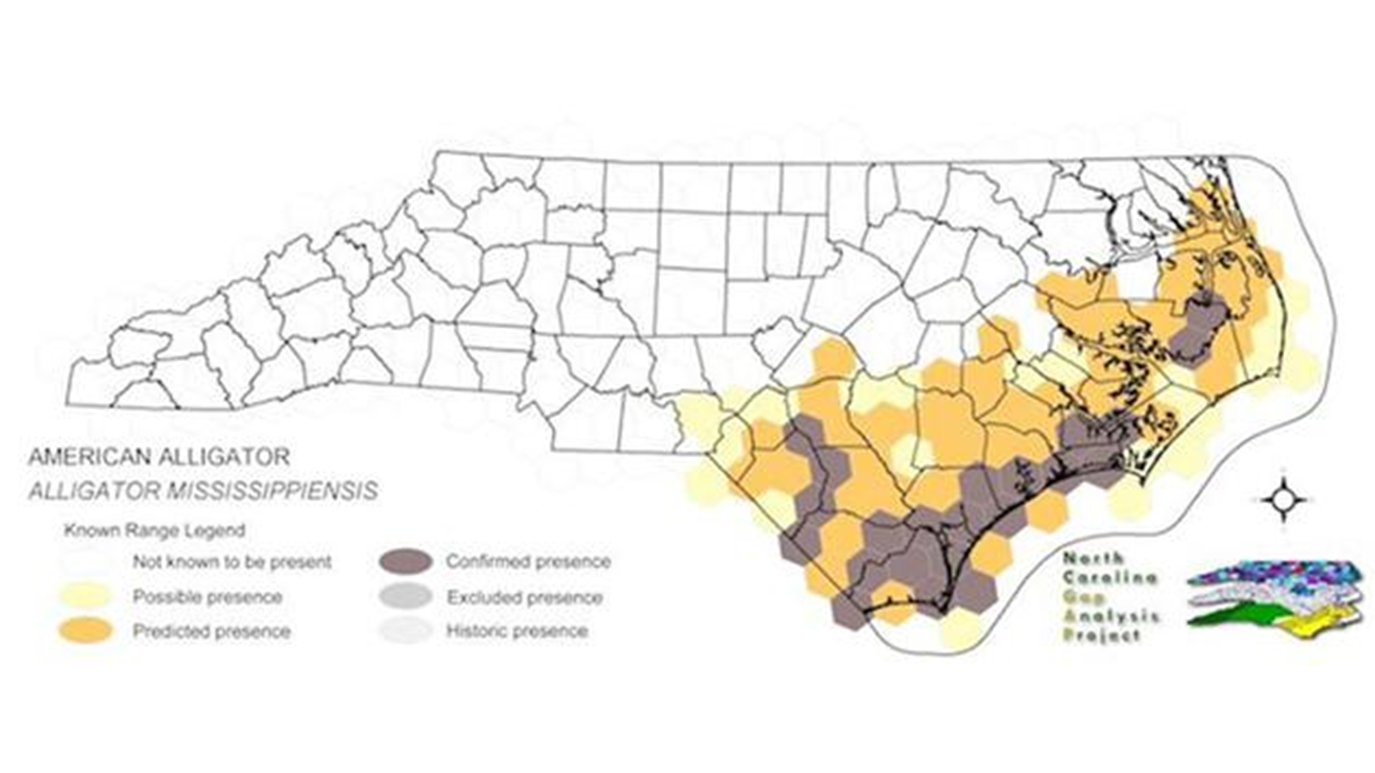
NC WRC approved NC Alligator Management plan in fall 2017
conservation
education
research
“provide opportunities for public enjoyment of alligators through hunting and wildlife viewing”
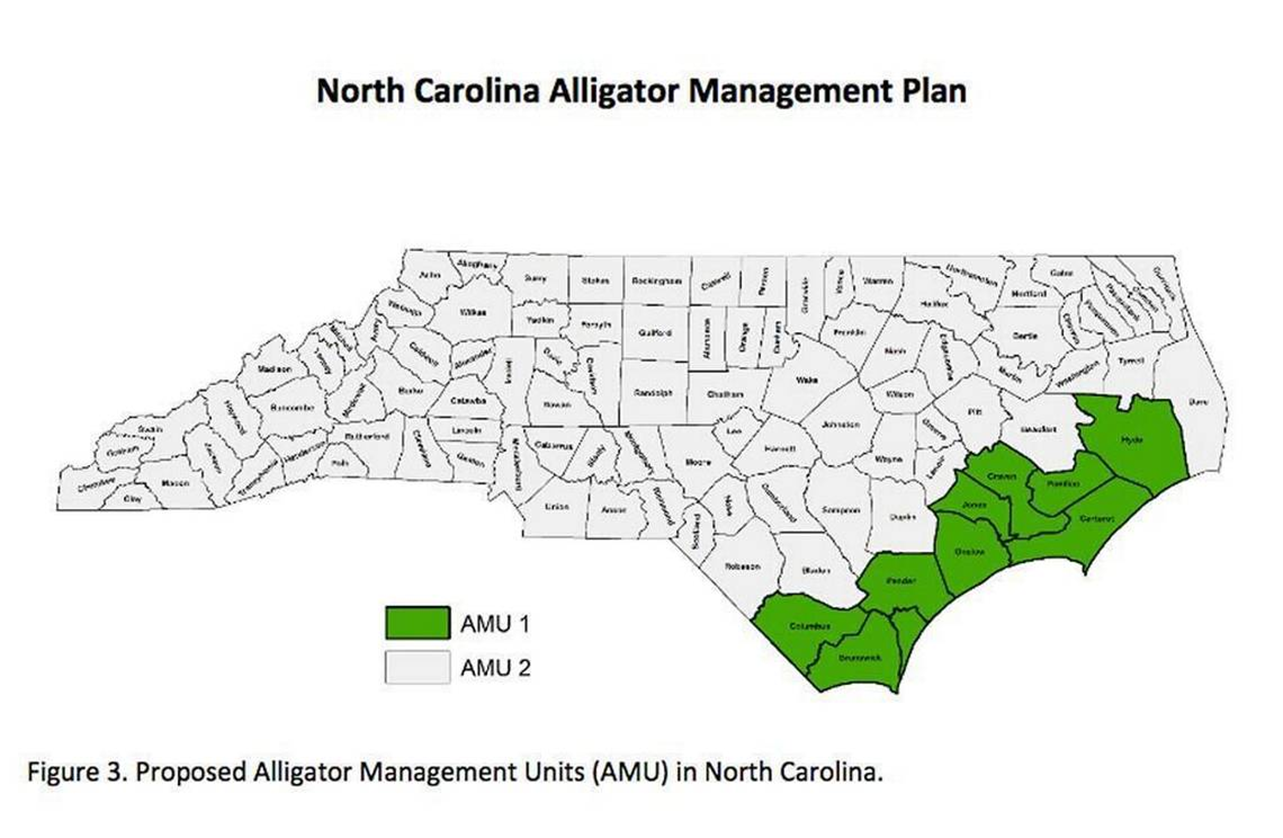
Historically hunting was illegal starting with ESA in 1973
populations rebounded and alligators were removed from ESA in 1987
legal harvest existed
not in NC
recent sightings have risen
populations thought to be increasing
public concerned about safety
Questions:
What should WRC do?
how should money be allocated?
research vs education vs management
nuisance individuals
public safety
public involvement
legal harvest
Goal: sustain viable populations
how do you do that
what info do you need
legal harvest
where and how many should be taken
Problem:
What kinds of methods do WRC need to use
how do these methods provide info to meet their objectives
what kind of research should they undertake
what kind of management needs to be done
how do they satisfy the public
who are the stakeholders
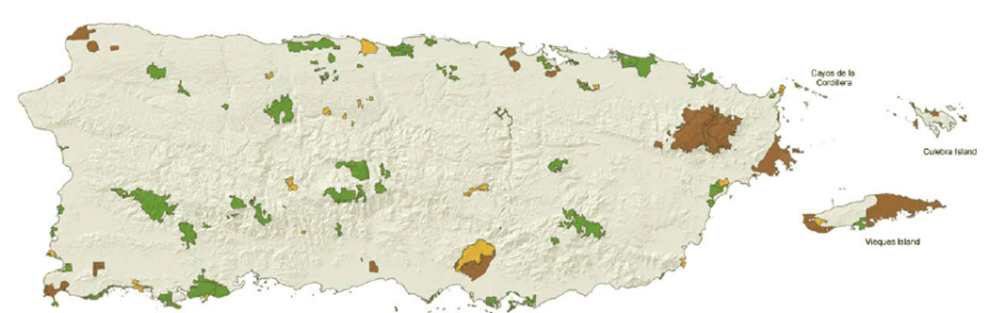
Problem II: Conservation Planning in Puerto Rico
Interest and Motivation
increase conservation areas
PR DRNA increase protected land
8% to 15%
species persistence
economical/ag persistence
Agencies
DNER
Department of Agriculture
US FWS
Tourism
US Forest Service
Planning Board
Municipalities
NGOs/Groups
Mesa de Café de Sombra Casa Pueblo
Arboles y Corales
Protectores de Cuenca
Landowners
Conservation oriented
Business oriented
Farmers
Coffee
Other products
Portfolio of Actions
Types of actions
Incentives
Legacy Funds (acquisition)
Easements, Auxiliary Forests
Individual landowner actions
Groups of actions
“Transform” the structure (trees)
“Modify” the structure (chemicals)
“Help change” the structure (labor)
Objectives
Quantify the landscape’s “ecological value”
Biodiversity
Frogs, birds, bees
Measure response to actions and stressors
How does the ecosystem respond to changes in landuse?
Economic/agricultural value
Coffee and production
Important part of community
Problem
What are the specific objectives/goals that need to be addressed?
What kinds of methods would need to be employed?
What kinds of monitoring/research should be done?
How would you address both the concerns of biologists and the coffee producers/farmers?
inteview/survey landowners
AM radio talks
Are there other stakeholders?
farmers/landowners
What information would be used to inform a decision?
How would you ultimately make a decision about which actions to take where?
Case Study: Conservation Planning in Puerto Rico
Interest and Motivation
Increase conservation areas
DR DRNA increase protected land 8% to 15%
Species persistence
Economical/ag persistence
Focal Area
bio diversity
existing reserves
multiple organizations with shared goals
public awareness
Conservation Design Project
develop decision framework to optimally allocate conservation efforts in a dynamic environment
decide where and when to implement actions to meet objectives under set of constraints
balance of competing objectives and associated costs
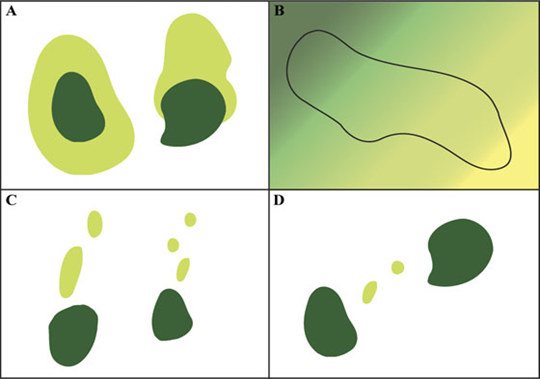
Why are decisions hard?
science vs politics
education methods
community beliefs
may not know all the possible actions
objectives may be complex or contradictory
or in dispute
system dynamics may be poorly known
we don’t know how species respond to habitat changes for example
solution may be difficult to figure out
optimization
many sources of uncertainty
Question
how do we make decisions in FWCB?
formal process?
no
same every time?
no
descriptive decision making
what is usually done in practice
considers tendencies, biases, limitations
“black box” approach
better option: prescriptive decision making
rational framework
more about PROCESS than DECISION/ANSWER
essential core steps
logical and transparent process
process can be controlled not ultimate outcome
assumptions explicitly stated and transparent
= STRUCTURED DECISION MAKING
Traditional ‘black box’ uses of wildlife monitoring info
let’s say we have info on habitat quality, breeding conditions, and population trends
Problems with this:
not explicit or transparent
many unidentified and unstated assumptions
one person can think a change is normal while another sees an issue
knowledge is not transferable
no formal learning component
What is Structured Decision Making?
Decision problem is broken into component elements
objectives (what we want it to do for us)
science and understanding (how the system works)
Structured Decision Making
deliberate
thorough
robust to uncertainty
more likely to achieve objectives
transparent
explicit
easily documented
replicable
When is SDM Appropriate?
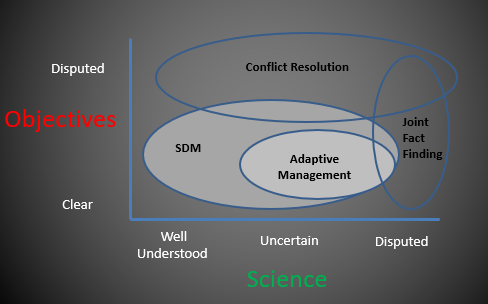
not relevant for every small problem
PROACT
Problem
Objectives
Alternatives
Consequences (models)
Tradeoffs
Problem Definition
Foundation of SDM
Hardest step in process
Values driven
Decision statements reflect societal values: scientific, economic, political…
May take multiple attempts
revisit the problem definition
Steps
defining problems as decisions
solving the right problem
careful framing of the problem
develop a problem statement
revise as needed
Objectives
What you really care about
values
Critical in order to:
create alternatives
compare alternatives
choose pertinent info
explain your decision to others
Recipe for good objectives
articulate concerns and wishes
convert concerns to objectives
structure objectives
classify objectives
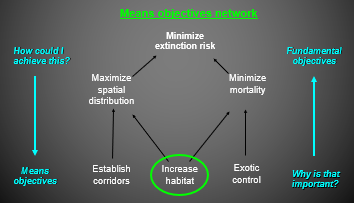
distinguish fundamental and means objectives
create objectives hierarchy
create measurable attributes for each objective
repeat as needed
Alternatives
human nature to want to focus first on alternatives when making decisions
tend to limit ourselves to a smaller set of alternatives
we may anchor on the first suggested alternative
should be created after you decide, where you’d like to go (what is important: objectives)
should be focused directly on achieving your objectives
Generating Alternatives
Focus on fundamental objectives
Address conflicting objectives
Challenge constraints
Visualize and/or use diagrams
Create groups of alternatives—portfolios and strategies
Revisit objectives
Consequences
Understand the consequences of different actions in terms of our objectives
consequences link objectives and actions
models are tools that help us predict consequences
Through modeling, we:
structure the analytical problem
lend transparency to the analysis
models are explicit
capture complex info/relationships
develop predictions of consequences
terms relevant to our objectives
incorporate uncertainty
Predicting Consequences
Consequence table
puts a lot of info in a concise and orderly format
easy to compare alternatives, objective by objective
initial framework for assessing tradeoffs
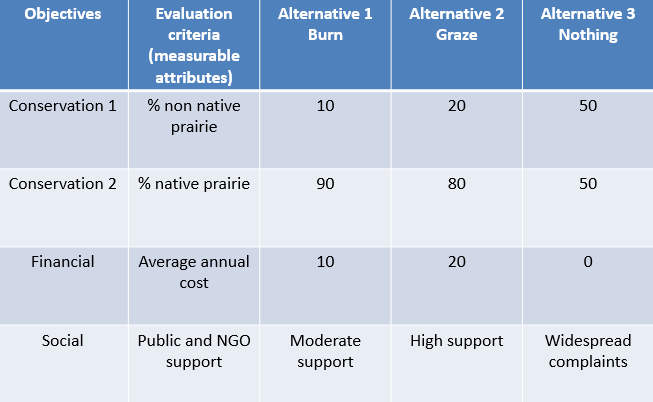
Consequences Summary
Data, expert opinion, literature
predictions from models
relationships linking components of model or system
when it doubt use expert opinion
lack of data should not stop process
helps to identify where monitoring/resources are needed
Trade-offs
Identify “best” (optimal) solution
tie together alternative actions, objective function, and system model
can be done for single or multiple objectives
increases complexity
can incorporate many different types of uncertainty
solution method depends on the structure of the problem
goal is to solve the problem
identify best alternative action, as measured by the objectives, using predictions from the models
wide variety of analytical tools exist to find action
need to know where to look in the toolbox
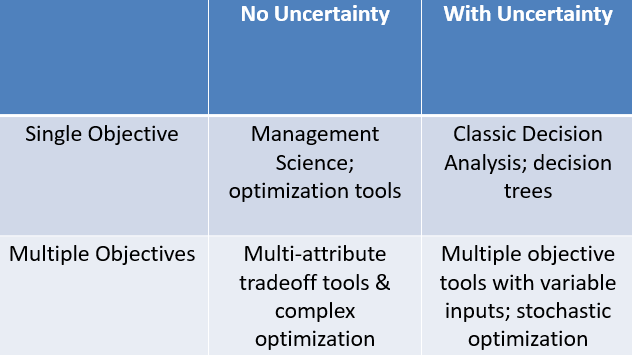
Decision Analysis Process
Identify the decision situation and objectives
Identify and separate fundamental and means objectives (essential)
Conservation Design Project
Develop decision framework to optimally allocate conservation