Historical Final Notes
What is the relationship between:
a) loss of Banded Iron Formations and the appearance of redbeds
The loss of Banded Iron Formations (BIFs) and the appearance of redbeds are both related to the increase in atmospheric oxygen. As oxygen levels rose, iron in the oceans oxidized and precipitated out, reducing BIFs and allowing iron to form redbeds on land.
b) chlorophyll and atmosphere
Chlorophyll in photosynthetic organisms produces oxygen as a byproduct, significantly altering the Earth's atmosphere. This process led to the Great Oxygenation Event, which transformed the atmosphere from anoxic to oxic.
c) heat flow and greenstone belts
Heat flow affects the formation and preservation of greenstone belts, which are ancient volcanic and sedimentary rocks. These belts formed in high-heat flow environments typical of early Earth's tectonic activity..
d) Mesosaurus and Gondwanaland
The presence of Mesosaurus fossils in both South America and Africa supports the theory of Gondwanaland. This distribution indicates that these continents were once connected, allowing the species to inhabit both regions.
e) coccolithophores and the Cliff’s of Dover
Coccolithophores contributed to the formation of the Cliffs of Dover by producing calcium carbonate, which accumulated as chalk deposits.
f) birds and dinosaurs
Birds are directly descended from theropod dinosaurs, sharing numerous anatomical features. This evolutionary relationship is supported by fossil evidence, such as the famous Archaeopteryx.
g) Glossopteris flora and the theory of plate tectonics
The distribution of Glossopteris flora across multiple continents supports the theory of plate tectonics. These plant fossils indicate that the continents were once connected as part of the supercontinent Gondwana.
h) Ring of Fire and subduction zones
The Ring of Fire is a result of active subduction zones that produce frequent volcanic and seismic activity.
i) Ophiolite suite and subduction zones
An ophiolite suite represents a section of oceanic crust and upper mantle that has been uplifted and exposed above sea level, typically in a subduction zone setting. Their presence on land provides direct evidence of past tectonic processes.
j) detrital uraninite and pyrite and the composition of the early atmosphere
The presence of detrital uraninite and pyrite in ancient sedimentary rocks indicates a lack of free oxygen in the early atmosphere. These minerals could only be transported in an anoxic environment, suggesting low oxygen levels during the Archean.
k) neoteny and human evolution
Neoteny, the retention of juvenile features into adulthood, is thought to have played a significant role in human evolution. This process may have led to traits such as a large brain and reduced facial projection, distinguishing modern humans from their ancestors.
-What is the evidence for the following (list and discuss):
a) the age of the Earth
The age of the Earth is estimated to be about 4.54 billion years, based on radiometric dating of meteorites, lunar rocks, and Earth's oldest minerals, such as zircon crystals. These dating methods rely on the known decay rates of radioactive isotopes, providing a consistent timeline. The oldest terrestrial rocks, found in the Canadian Shield, are around 4 billion years old, supporting this estimate.
b) anoxic atmosphere in the Archean
Evidence for an anoxic atmosphere in the Archean includes the presence of detrital uraninite and pyrite in ancient sedimentary rocks, which would have oxidized in an oxygen-rich environment. Additionally, the lack of redbeds, which form in the presence of oxygen, supports low oxygen levels. Sulfur isotope anomalies also indicate that atmospheric oxygen levels were extremely low, allowing sulfur compounds to cycle differently than they do in modern oxygen-rich conditions.
c) abiotic origin of life
The Miller-Urey experiment demonstrated that organic molecules, such as amino acids, could be synthesized from inorganic precursors under conditions simulating early Earth. Meteorites containing amino acids and other organic compounds suggest that these building blocks of life could form in space and be delivered to Earth. Hydrothermal vent theories propose that life could have originated in the chemically rich environments of deep-sea vents, where energy and raw materials for life were abundant.
d) rise of oxygen in Ediacarian time
The rise of oxygen in the Ediacaran time is evidenced by the appearance of redbeds and oxidized soils, indicating an increase in atmospheric oxygen. The disappearance of banded iron formations also suggests that oxygen levels were high enough to prevent the large-scale precipitation of iron from seawater. Additionally, biomarkers from Ediacaran rocks show an increase in organisms that require oxygen, reflecting higher oxygen levels in the environment.
-How and why are the planets beyond the asteroid belt different from those in board of the asteroid belt?
The planets beyond the asteroid belt, known as Jovian or gas giants, are primarily composed of hydrogen and helium, have thick atmospheres, and lack solid surfaces. In contrast, the terrestrial planets inboard of the asteroid belt are rocky, have thinner atmospheres, and are composed mainly of silicate minerals and metals, due to their formation closer to the Sun where it was too warm for volatile compounds to condense.
-Define Uniformitarianism and Actualism
-List and define Steno’s three principles
Principle of Superposition: In an undisturbed sequence of sedimentary rocks, each layer is older than the one above it and younger than the one below it.
Principle of Original Horizontality: Layers of sediment are originally deposited horizontally under the action of gravity.
Principle of Lateral Continuity: Layers of sediment initially extend laterally in all directions; they are continuous until they thin out or encounter a physical barrier.
-What differentiates the Phanerozoic from the pre-Cambrian?
The Phanerozoic Eon is marked by abundant fossil records and complex life forms, including most major animal phyla, while the pre-Cambrian is characterized by primitive life forms and a scarcity of fossils. The Phanerozoic Eon began approximately 541 million years ago with the Cambrian Explosion, a rapid diversification of life.
-How does oceanic crust differ from continental crust?
Oceanic crust is thinner, denser, and primarily composed of basalt, whereas continental crust is thicker, less dense, and mainly composed of granitic rocks. Oceanic crust is constantly being formed at mid-ocean ridges and recycled at subduction zones, whereas continental crust is much older and more permanent.
-Define and be able to identify the major types of unconformities
Angular Unconformity: Tilted or folded sedimentary rocks overlain by younger, more flat-lying strata.
Disconformity: A gap in the rock record between parallel layers of sedimentary rock.
Nonconformity: Sedimentary rocks overlying eroded igneous or metamorphic rocks.
-What criteria are needed for preservation of soft parts? How likely is this to occur?
The preservation of soft parts requires rapid burial, low oxygen environments, and fine-grained sediments to prevent decomposition and scavenging. This is relatively rare due to the rapid decay of organic material and the specific conditions needed, making such preservation exceptional in the fossil record.
-What types of unique conditions can Archaebacteria tolerate?
Archaebacteria can thrive in extreme environments, such as high temperatures (thermophiles), high salinity (halophiles), and acidic or alkaline conditions. They can also survive in anaerobic environments, making them versatile in habitats that are inhospitable to most other life forms.
-What are the criteria of an Index Fossil?
Distinctive: Has distinct characteristics that make it easy to identify
Globally widespread: Has a wide geographic range
Abundant: Is common
Limited to a particular geologic time: Only existed during a short period in Earth's history
Robust and preserves well: Preserves well in sedimentary rock layers
-Explain why Radiocarbon Dating has limited usefulness in geology
Radiocarbon dating is only effective for dating organic materials up to about 50,000 years old, beyond which the remaining carbon-14 is too minimal to measure accurately. This makes it unsuitable for dating most geological formations, which are often millions to billions of years old.
-Define and differentiate and give an example of group that represents the following terms:
-Horotely- Evolution at a standard rate, such as seen in many mammals.
-Tachytely - Rapid evolutionary change, exemplified by the diversification of flowering plants (angiosperms).
-Bradytely - Slow evolutionary change, as observed in living fossils like the horseshoe crab.
-What are the hypothesized steps in the differentiation of the Earth’s interior and exterior?
The differentiation of Earth's interior involved the sinking of denser materials like iron and nickel to form the core, while lighter silicate minerals rose to form the mantle and crust. This process was driven by heat from radioactive decay, gravitational settling, and impacts during the planet's early history.
-Explain how the Miller Experiment and how it helps us understand the beginning of Life on Earth. How does clay play a role in this process?
The Miller Experiment demonstrated that organic molecules, such as amino acids, could form from inorganic precursors under prebiotic conditions, suggesting a possible pathway for the origin of life. Clay minerals can catalyze the formation of more complex organic molecules and provide surfaces for these molecules to assemble into primitive cells.
-What do meteorites tell us about the composition of the solar system?
Meteorites contain a mix of elements and isotopes that reflect the primordial material from which the solar system formed, providing insights into its original composition. They often contain presolar grains, organic compounds, and clues about early solar system processes, such as differentiation and planetary formation.
-Using diagrams, explain the process of allopatric speciation
Allopatric speciation occurs when a population is geographically separated into isolated groups by a physical barrier, such as a mountain range or a river. Over time, genetic divergence occurs due to mutation, natural selection, and genetic drift, leading to the evolution of reproductive isolation. Eventually, even if the physical barrier is removed, the populations remain distinct species because they can no longer interbreed.
(Diagram: Show a population split by a geographic barrier, followed by genetic changes in each isolated group, leading to two distinct species.)
-What is a lagerstatten?
A lagerstätten is a sedimentary deposit that exhibits extraordinary fossil preservation, often including soft tissues. These deposits provide exceptional insights into the biodiversity, biology, and ecology of past life, offering a more complete picture of ancient ecosystems.
-Explain the difference between allopatric and sympatric speciation
Allopatric speciation occurs when populations are geographically separated, leading to speciation through physical isolation. Sympatric speciation happens within the same geographical area, often through genetic, behavioral, or ecological differences that reduce gene flow, such as polyploidy in plants or niche differentiation in animals.
-What drove the evolution of skeletons?
The evolution of skeletons was driven by the need for support, protection, and mobility in increasingly complex organisms. Environmental pressures, such as predation and the need for efficient movement, favored the development of hard parts, leading to the Cambrian Explosion where many skeletal forms appeared.
-What are the three major lagerstatten in the Cambrian and what important types of fossils do they preserve?
Burgess Shale (Canada): Preserves a diverse array of soft-bodied organisms, providing insight into early complex life.
Chengjiang (China): Contains well-preserved early arthropods, sponges, and other soft-bodied creatures.
Green River Fromation: Fossil Palm Trees
-What are biomeres?
Biomeres are intervals in the fossil record marked by abrupt changes in the dominant groups of marine organisms, usually associated with extinction events. They reflect significant ecological turnovers and provide valuable information about the dynamics of ancient ecosystems.
-What is the importance of the Wopmay Orogeny? When did it occur? What does it tell us about the size of continental landmasses at this time?
The Wopmay Orogeny, occurring around 1.9 billion years ago, is one of the earliest well-documented orogenic events, providing evidence of ancient plate tectonic processes. It indicates the existence of sizable continental landmasses and supports the theory that plate tectonics operated in the Proterozoic.
-Explain the evolution of Eukaryotes using diagrams
The evolution of eukaryotes is marked by the endosymbiotic theory, where a proto-eukaryotic cell engulfed aerobic bacteria, leading to the formation of mitochondria. Later, similar events with cyanobacteria gave rise to chloroplasts in photosynthetic eukaryotes. These endosymbiotic events led to complex cellular structures and the diversity of eukaryotic life.
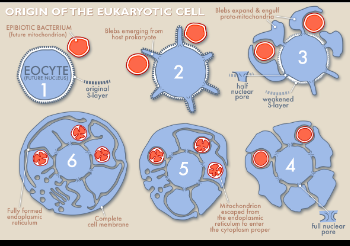
(Diagram: Show a proto-eukaryotic cell engulfing bacteria, forming mitochondria and chloroplasts, leading to modern eukaryotic cells.)
-What is the significance of complex trace fossils in the preCambrian Belt Group?
Complex trace fossils in the Precambrian Belt Group indicate the presence of multicellular, motile organisms before the Cambrian Explosion. These fossils provide evidence of early animal life and complex behaviors, such as burrowing, suggesting the evolutionary experimentation leading to more diverse life forms.
-What is the importance of the Ediacaran fauna?
The Ediacaran fauna represents some of the earliest known complex multicellular life forms, dating back to about 635-541 million years ago. These organisms provide crucial insights into the pre-Cambrian biota and the early evolution of complex life, showcasing a variety of unique body plans and ecological strategies. Including bilateral symmetry
List the major sea level cycles (Sloss cycles) of the Paleozoic and during what periods they existed:
Sauk Sequence: Cambrian to Early Ordovician.
Tippecanoe Sequence: Middle Ordovician to Early Devonian.
Kaskaskia Sequence: Middle Devonian to Early Mississippian.
Absaroka Sequence: Late Mississippian to Permian.
- Explain the difference between the Flysch and Molasse phases of sedimentation during orogenies.
The Flysch phase consists of deep-water, turbidite deposits formed in foreland basins during the early stages of orogeny.
The Molasse phase follows, characterized by shallow-water and continental deposits, including conglomerates and sandstones, formed as the basin fills and the orogeny wanes.
- Explain how trilobites prove the accretion of exotic terrains to the eastern margin of North America. Name the genus of trilobite.
The genus Paradoxides, native to western Europe, were found in an area of Boston, providing evidence that part of the European landmass got stuck to North America during a collision.
- What type of orogeny is the Taconic Orogeny?
The Taconic Orogeny is a type of collisional orogeny caused by the convergence of the Laurentian and Avalonian plates during the Paleozoic era.
- What is the difference between Stromatolites and Stromatoporoids?
Stromatoporoids are body fossils from a once living animal, whereas stromatolites are sedimentary structures left behind by a microbial mat.
Stromatoporoids are reef building sponges. Stromatolites are mats of accumulated sediment, cemented together by organisms.
- What are Ostracoderms?
A group of small fishes of early and middle Paleozoic time with paired eyes, bony armor, bony skin, and small mouths, but no jaws (jawless fishes).
- What are Sepkoski’s three evolutionary faunas? What taxa compose the Paleozoic Fauna?
Sepkoski's three evolutionary faunas are the Cambrian Fauna,
the Paleozoic Fauna - including taxa such as trilobites, brachiopods, and ammonites. the Modern Fauna, with the Paleozoic Fauna
- Explain the hypothesized causes for the two steps of the end Ordovician Mass Extinction.
1) Major glaciation occurred during the end of the Ordovician period. This was likely caused by falling carbon dioxide levels in Earth's atmosphere. This eliminated most tropical and warm-water adapted fauna.
2) When the glaciation period began to end and Earth's temperature warmed up, most cool-water adapted fauna died off.
- Explain why the Michigan Basin contains large amounts of evaporates during the Silurian.
The Michigan Basin contains large evaporites during the Silurian due to restricted circulation and high evaporation rates in a semi-enclosed basin.
- What was the dominant predator of the Silurian?
Eurypterids.
- Why do we see a wedge-shaped package of sediment thickest in the east that formed during the Devonian in New York State?
The Acadian Orogeny formed a clastic wedge deposited in a retro-arc foreland basin, which eroded towards the west. The formation of the Catskill Wedge was created by eroded sediments from Acadian Mountains (which were collected in the east, hence why thickest in this area) and gave rise to a vast alluvial coastal plain that sloped gently westward (known as the Catskill Delta). The Acadian Orogeny formed a clastic wedge deposited in a retro-arc foreland basin, known as the Catskill Delta
- List and describe two possible reasons for widespread black shale deposits during the Devonian.
(1) Deep sea deposits: dying of reefs, below photic zone and stagnant water
(2) Worldwide increase of salinity by evaporation condition 🡪 petroleum source
(3) Development of Forests (there now exists a lot more organic matter to contribute to creation of black shales)
- What type of basin formed during the Acadian Orogeny?
retro-arc foreland basin was formed.
- How do the White Mountains of New Hampshire relate to the Acadian Orogeny?
The White Mountains formed as the pate moved West over the Hostpot in England The White Mountains are igneous intrusions, mostly granitic.
- What type of basin formed during the Antler Orogeny?
A proarc foreland basin formed on the western margin of North America during the Antler Orogeny. The Antler Orogeny occurred from the Late Devonian to the Early Mississippian.
- When was the time period on Earth with the largest reefs ever?
Devonian
- What types of brachiopods were dominant during the Ordovician? Silurian? Devonian? Carboniferous?
Ordovician – Strophomenid
Silurian – Pentamerid
Devonian – Spirifierid
Carboniferous – Productid
- When did amonoids first appear?
Devonian time period
- What interesting patterns do we see with trilobite morphology during the Devonian? What might have been driving these patterns?
the development of spikes and spines on their bodies, which was driven by the aspect that these would have protected them from predators.
- Explain the evolution of jaws in fish.
Evolved from bars that supported the gills of primitive fishes. Primitive teeth along the jaws were produced by enlarging the denticles in the skin that overlay the ancestral gill bars. The gradual modification of 3rd and 4th gill arch supports.
- What different types of fish were around during the Devonian?
Placoderms, Sharks, Ray-finned fish, lobe-finned fish
- What is the importance of the Gilboa Forest?
First forests to be well preserved and earliest terrestrial ecosystem of trees
- What major changes occur in the terrestrial environment during the Devonian?
Plants begin to grow on land
Rooted plants keep soil intact
Tall tree and forest ecosystems begin to form
Plants become food for the expansion of land dweller fauna
- What is the importance of the recently discovered fossil Tiktallik?
A transitionary organism from lobe-finned fish to amphibian. It serves as the missing link between lobe-finned fish and amphibians.
- List and explain the differences between the major orogenies the formed the Appalachian Mountains.
Taconic – peripheral foreland basin, Ordovician. Destruction of the Ordovician-Cambrian carbonate platform and development of a peripheral foreland basin with a flysch and molasse deposition. No Collision (collides with island arc, but not a continent).
Acadian – retro-arc foreland basin, Devonian. Destruction of the Siberian-Devonian carbonate platform and development of a foreland basin with a flysch and molasse deposition. Collision Laurentia with Baltica and North America with Avalonia.
Alleghenian – retro-arc foreland basin, mainly just consisted of molasse (above sea level when depositing sediment), Pennsylvanian – Permian. Continued molasse deposition. Collision Euramerica with Africa.
- Be able to explain a diagram of a cyclothem, specifically what types of sediment occur where in the cycle and what causes the observed patterns in sedimentation.
- Explain the process of coal formation.
Burial by marine sediments
Compaction
Removal of the water held within the peat between the plant fragments
Ongoing compaction: removal of water from the intra-cellular structure of fossilized plants
Heat and compaction: removal of molecular water
Methanogenesis: production of methane which removes hydrogen, some carbon and some further oxygen (as water)
Dehydrogenation: remove of hydroxyl groups from the cellulose and other plant molecules, resulting in the production of hydrogen-reduced coals
+/- 1 m thick coal requires 10 to 30 m of peat
Peat 🡪 lignite 🡪 bituminous coal 🡪 anthracite + graphite
- What major taxonomic group dominated the sea floor during the Mississippian?
Crinoids and Blastoids
- Explain the ecological variation seen in Carboniferous plants (what types of plants lived in what environments, i.e. wet vs. dry).
Wet Env. - wetlands, cola swaps, = Ferns, Lycopsids, Spore Spreading Plants
Dry Env = Conifers, Gymnosperms, Canids, Seeded Ferns, Gilboa Forests, Tall Tress, Seed Spreading Plants
- Why could insect attain such great sizes during the Carboniferous?
More O2 in atmosphere. More efficient respiration and increase surcaae area.
- What is the age of the oldest reptiles?
Carboniferous
- What evidence is there for a cool climate in the Lower Permian?
- What major group of arthropods went extinct at the end of the Permian?
Trilobites
- What are the three major Floras of the Permian? How are they related to latitude?
Euramerican flora
Tropical climate
Equatorial region
Glossopteris flora
Southern Hemisphere (southern latitudes)
Temperate climate
Siberian (Asian) flora
Northern hemisphere (northern latitudes)
Temperate climate
- What percentage of marine taxa went extinct at the end Permian mass extinction?
90-95% of marine taxa went extinct at the end Permian
- What caused the two separate pulses of extinction at the end Permian?
Climate Chag shut off ocean circulation and lead to anoxic water conditions
Siberian Trapps eruption of basaltic magma drove up CO2 and caused global climate change
- When did Pangaea begin to break up?
The Jurrasic
- What types of deposits are preserved along the East Coast of North America associated with the early stages of the formation of the Atlantic Ocean?
- What two major orogenies occurred in the Triassic on the western margins of North and South America?
the Nevadan Orogeny and the Sonoma Orogeny.
- What type of ammonoid was dominant in the Triassic?
Ceratitids
- What do we know about the feeding habits of Placodonts? How do we know this?
They ate hard-shelled fauna due to tablet-shaped teeth for chewing.
- What are the two main groups of Dinosaurs? What is used to differentiate between the groups?
Ornithischia (Bird Hipped) = herbivores
Saurisschia (Lizard Hipped) Herbivours and carnivores,
- What are the major Sloss sea level sequences and when did they occur?
Sauk Sequence: Cambrian to Early Ordovician.
Tippecanoe Sequence: Ordovician to Devonian.
Kaskaskia Sequence: Mississippian.
Absaroka Sequence: Carboniferous
- What evidence is there for aridity during the early Jurassic in North America?
- What is special about Archaeopteryx?
Bird-like dinosaur with feathers and wing-like features. Weak breastbone and didn't have beaks. Not the first birds nor could they fly
- From which major group of Dinosaurs did Birds evolve?
Theropods
- What are gastroliths?
Stones are ingested to aid in digestion
- When were Ichthyosaurs dominant?
Jurassic
- What type of animals built large reefs during the Cretaceous? (this animal normally doesn’t build reefs)
rudist bivalves built large reefs
- Know the styles and dates of the major orogenies that affected North America.
- When did the largest turtles live? When did the largest flying animals ever live?
Giant Turtles - Cretaceous, Largest flying animal Cretaceous
- When did flowering plants radiate?
Angiosperms radiated during the Cretaceous
- List at least four lines of evidence for a major collision of an extra terrestrial body with the Earth at the end of the Cretaceous.
the Chicxulub impact crater in the Yucatan Peninsula,
Elevated levels of iridium, an element rare on Earth but common in asteroids and comets, are found in sediment layers corresponding to the Cretaceous-Paleogene boundary.
Shocked quartz and microtektites, which are impact-related materials, are found in sediments worldwide around the same geological time frame.
Evidence of global wildfires and tsunamis in sedimentary layers
- What element is found in great abundance at the Cretaceous-Tertiary boundary? How does this element support the theory of an extra terrestrial impact?
Iridium Anomaly: A global layer rich in iridium, a rare element in Earth's crust but abundant in asteroids and comets, is found in sediments deposited at the end of the Cretaceous.
- What major groups went extinct at the Cretaceous-Tertiary boundary?
non-avian dinosaurs, pterosaurs, ammonites, and many marine reptiles.
- What evidence is there for a warm early Paleogene?
the presence of tropical flora and fauna in higher latitudes
isotopic data from fossils indicating warmer temperatures compared to the present day.
- When did the largest sharks ever live?
Megalodon, Miocene epoch
- What happened to the number of toes on horses as they evolved?
They decreased down to one hoof, a digit reduction.
- What types of animals replaced raptorial dinosaurs as one of the top land predators in the Paleogene?
mammals, particularly carnivorous mammals like creodonts and early carnivores related to modern cats and dogs,
- When did the uplift of the Colorado Plateau occur? What type of tectonic activity was associated with this uplift?
Uplift Colorado Plateau occurred during the Laramide orogeny in the late Cretaceous to early Cenozoic,
associated with compressional tectonic activity and the formation of the Rocky Mountains.
- What was the Great American Interchange?
Exchange of mammals across the Ismuth of Panama.
North American Fauna outcomplete S American fauna and led to the extinction of Native S. American fauna.
- What major factor led to the build-up of glaciers in Antarctica?
The isolation of Antarctica from other continents
- What are the 6 lines of evidence for major glaciation at the end of the Neogene?
Erratic Boulders
Glacial till and basin associated with glaciers
Depression of Land, Hudson Bay
Glacial Scouring of low parts of mountain chains
Lowering of sea level: glacial expansion caused a drop
Migration of Specia across the Bering Strait on land corriors, Changing vegetation in response to climate change
- How does the modern day distribution of Gorillas in Africa support climate change during the late Neogene?
The global extent of gorillas in modern day are in central Afrca. They are restricted because during the last glaciation the Sahara expanded and isolated them. They have not been able to expand since due to human expansion..
- What are Prairie Potholes?
Depressions formed from buried blocks of ice. (kettles)
- What are the two hypotheses for the mega-faunal extinction during the Holocene?
Overkill hypothesis: Human hunting may have led to a mass extinction of large mammals such as American elephants and giant ground sloths.
Climate Change Hypothesis: Rapid shifts in climate (younger Dryas) influenced by glacial retreat lead to warming and fluxations. Grasslands changed to prairies.