Week 2
Enzymes and Energy
learning goal: Appreciate how the laws of thermodynamics relate to the function of cells and how
enzymes modulate the rate of chemical reaction to regulate cellular processes.
cells needs to be able to acquire, transform, and use enrgy to power up cellular processes
metabolism in cells: refers to all the chemical reactions happening in a cell
chemical reactions in cells: involve either the forming or breaking of chemical bonds
arrows will provide insight on the type of chemical reaction that is happening
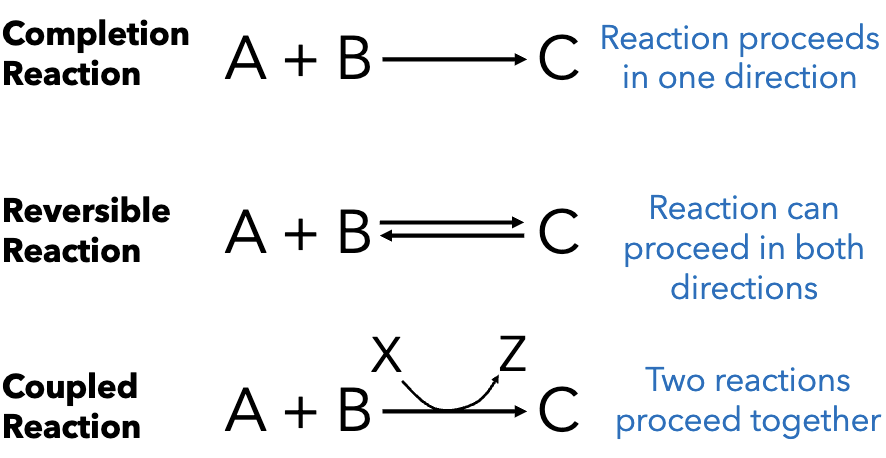
all chemical reactions will involve energy that is being transformed
this will allow us to understand the conditions that need to be met in order for the reaction to occur in the first place
energy definition": is defined as the capacity to do work
there are different forms of energy
thermal (heat)
chemical
radiant light energy
mechanical energy
work definitioN: work in biology can be defined as the the ability to move or change things, the ability to do something
interpretting the signs to see if energy is going to be released or required for the reaction to proceed
If the delta g standard sign is negative → then the reaction is losing energy/ energy released to its environment
this means that the reaction is exergonic
IF the delta g sign is postive then the reaction is going to require energy
this means that the reaction is endergonic
Gibbs Free Energy Equation
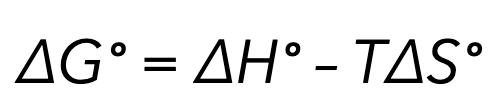
the triangle symbol is going to indicate that there is change in something (final state-initial state)
delta h is refereding to the change in enthalpy
the change in the potential energy of bonds
will help us understand the strength of the bonds that we are breaking or forming
t is refering to temperature in units kelvin
delta s is referring the change in entropy
the change in the disorder of a system
what is enthalpy
referrring to the potential energy that is associated is bonds
when bonds are at a higher potential energy → the system is going to be less stable
this able this as a relationship, when you meet someone the potential you have with that person is going to be higher…
when a system has lower potential energy the system is more stable
provide an example where we are counting the total potential energy from each component in the products and reactants to find the delta h value

realtive energy/stability
understanding entropy
higher disorder = higher entropy
systems will naturally tend to be more disordered since it requires more energy to keep a space maintained
Free Energy and Metabolic Pathways
anabolic pathways are endergonic
anabolic pathways will transfer energy from atp to build complex molecules and will rele
catabolic pathways will be exergonic and release energy
When we form bonds we are released heat
When we breaks bonds we are requiring heat
entropy decreases in anaboic reactions
when the delta s value is negative the reaction will become more endergonic, there is going to be a larger energy input required
atp hydrolysis is referring to the use of atp
we are able to manipulate the delta g value by changing the conditions of the reaction such as
if we are given just the delta g value, we are unable to tell the rate at which a reaction is occurring at, it will just provide us information regarding the change in free energy in the system and will tell us whether a reaction will require or release energy
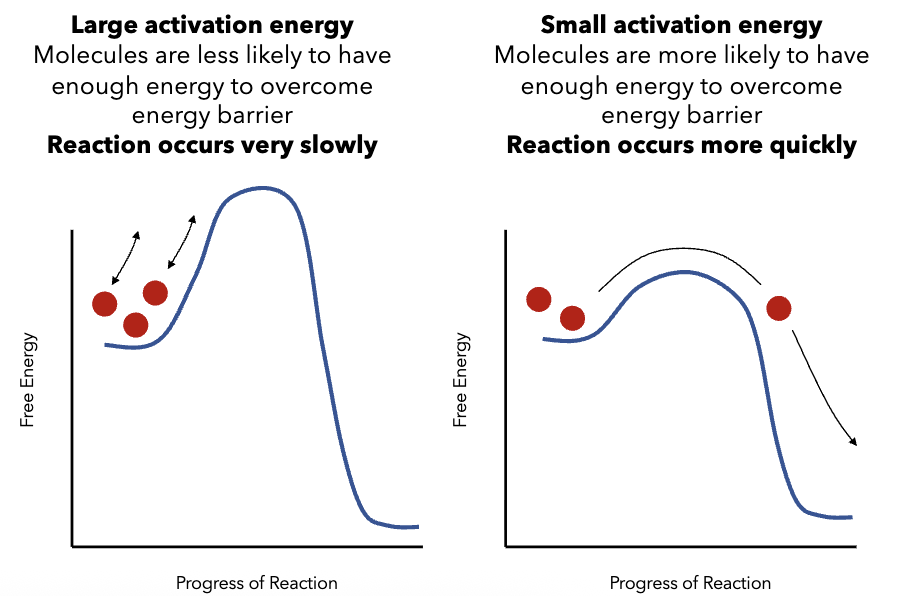
activation energy
this is what is going to determine the rate of a reaction
if something has large activation energy the reaction is going to occur slowly since the energy barrier is going to be higher to reach and harder to overcome
if something has lower activation energy then the energy needed for the reaction to occur is lower and the reaction is going to occur more quickly
Enzymes
are a type of protein
they will help with catalyzing chemical reactions
they can help with coupled reactions
can help in speeding or slowing down reactions
can work in forward and reversible reactions
functions by forming noncovalent interaction with the substrate (find the defintiion for this term) and allows it to go to a lower transitions state to require less energy
the activation site for an enzyme is important and altering this shape can change the function
an enzyme will have optimal temperature and pH conditions that it will function in
defining what pH is
a measure of protion (h+) concentration
if pH value is lower that will indicate higher h+ concentration
a higher pH value will indicate lower h+ concentration
regulation of enzymatic activity happens through a feedback chain of inhibition and activaition