Cell Cycle
Cell Cycle
2 distinct phases
Interphase—prepares the cell for mitosis (division)
Cells spend the majority of the cell cycle in interphase
By the end of interphase, a cell has two full sets of DNA(chromosomes) and is large enough to begin the division process.
There are checkpoints happening before starting mitosis to prevent a cancer cell from spreading.
Stages of Interphase
G1—Cell grows and replicates organelles.
G0—The cell goes into a state in which it will never divide.
Neurological cells
Cardiac cells
S—DNA Synthesis (duplicates DNA)
23 pairs of chromosomes, 46 in total
46 pairs of chromosomes at one point to replicate the cell
Duplicates a microtubule—organizing structure called the centrosome, the centrosomes help separate DNA during the M phase
G2—Additional growth, excessive and detailed expansion (in order to hold replicated organelles)
Mitosis—the act of cell division; mitosis results in two daughter cells each having the same number and kind of chromosomes as the parent nucleus.
Each cell has its own organelles, DNA, etc etc
The Chromosome strands break from two to four strands (two per chromatid)
Cytokinesis—the cytoplasmic division of a cell at the end of mitosis or meiosis bringing about the separation into two daughter cells.
Phases of Mitosis (PMAT)
Prophase
Chromosomes condense, becoming visible
Nuclear membrane disappears--The membrane protects the DNA (in the nucleus) You need to move the chromosomes, therefore the need for the removal of the membrane
Centrioles separate by residing on opposite poles of the cell.
Spindle fibers form and radiate toward the center of the cell (spindle fibers created in prophase)
Metaphase
Chromosomes line up across the middle of the cell
Spindle fibers connect the centromeres of each chromosome to the poles of the cell
Anaphase
The Centromeres that join the sister chromatids split, taking the chromatids apart
The Sister chromatids separate and biome individual chromosomes
Separated chromatids will then move to the opposite poles of the cell
Telophase
Chromosomes (each consisting of a single chromatid) uncoil.
A nuclear envelope forms around the chromosomes at each pole of the cell
Spindle fibers break down and dissolve.
Cytokinesis begins
Cytokinesis
Division of the cytoplasm into two individual cells.
Process is different between plant and animal cells.
In animal cells, the cell membrane forms a cleavage furrow that eventually pinches the cell into two nearly equal parts, each containing its own nucleus and cytoplasmic organelles.
Plant cell cytokinesis
In animal cells, the membrane pinches closed.
In plant cells, a cell plate forms
Diploid Cell—somatic cells
A somatic cell-body cells or any non-sex cell
A cell that contains 2 sets of chromosomes
The number 2n where n represents the represented as 2n(n= the number of chromosomes
Haploid Cell—sex cells (half)
Sex cells—egg and sperm
Cells that have 1 copy of the chromosome
Contain 23 chromosomes
Haploid(sex cells) is 23, diploid(somatic cells) is 46
The number in a single set is represented as n.
So, n=23
Zygote- fertilized egg(reproduction has occurred)
Karyotype
Number and appearance of chromosomes
A karyotype allows you to see size, centromere, telomere, sex number and gender
The chromosomes are in homologous pairs because there are two parents
Pair 23 of the chromosomes assign the sex of person
XX→female
XY→male
Rate of cell division
The rate of cell division varies with the need for those types of cells. Some cells are unlikely to divide. (G0)
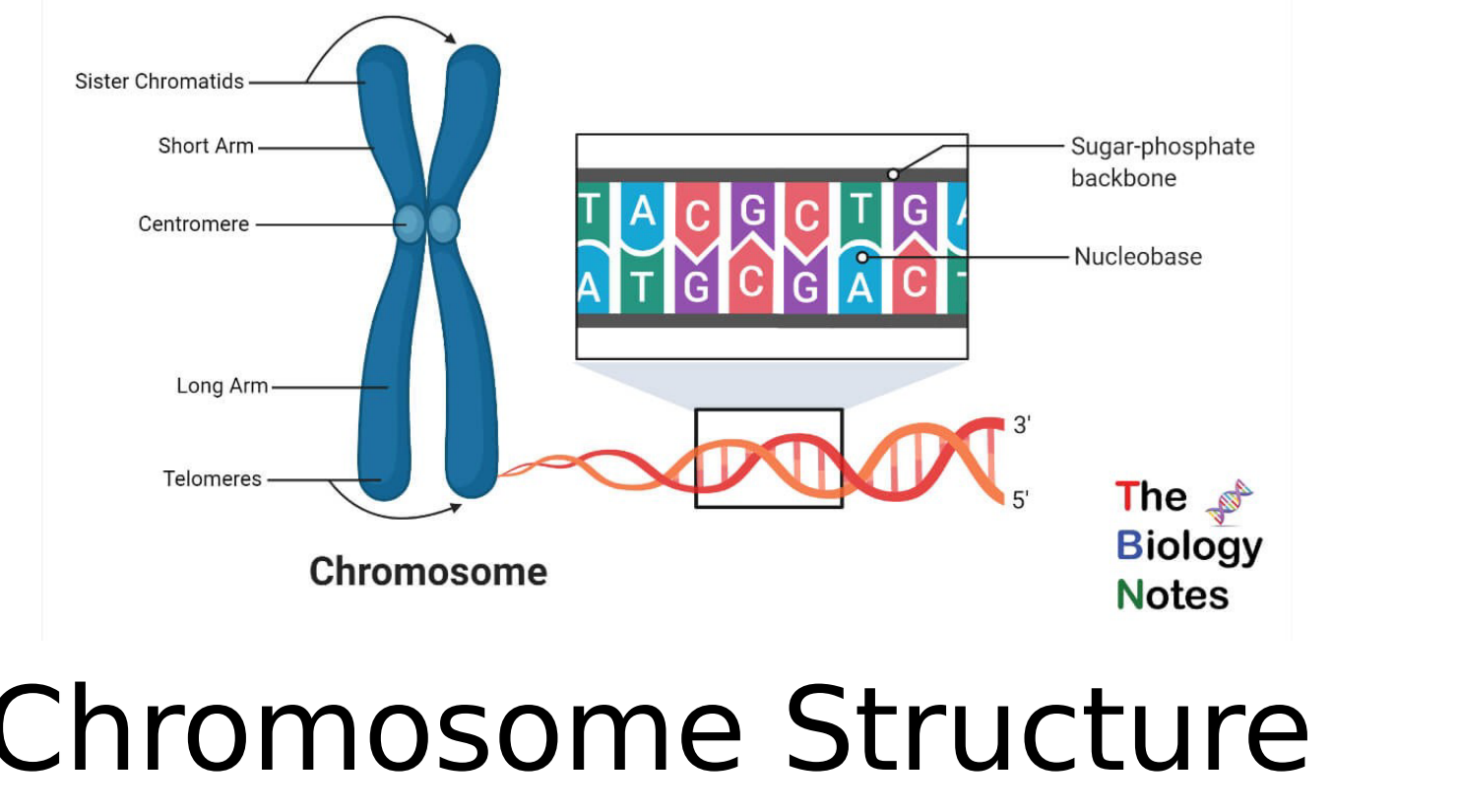
Chromosome Structure
Chromosomes condense at the beginning of mitosis by wrapping around a histone—Chromatin is DNA in its compact form.
Around 6.5 feet of DNA in a human cell
Telomeres protect condensed DNA.
A chromatid is one half of a duplicated chromosome.
Centromeres hold together sister chromatids in the middle.
Homologous pairs (same pair)
Homologous chromosomes are two chromosomes that are the same.
This happens because diploid organisms have two of each chromosome. Each of the pairs is a homologous pair.
One of the homologous pairs was inherited from the individual’s mother and the other one was inherited from the individual’s father.
For example, the two chromosomes #1 are homologous. However a chromosome #1 and a chromosome #2 are not homologous because they are different.
Asexual reproduction
These are genetically identical to the parent
No joining of gametes
Pros vs Cons
Pros | Cons |
|---|---|
|
|
4 types
Binary Fission
Happens in prokaryotic cells (bacteria)
2 daughter cells genetically identical to the parent cell
Bacterial chromosomes are copied
Just like in mitosis, the chromosomes move away from each other
When the cell doubles in size it undergoes cytokinesis
End result: 2 new daughter cells
Example: Bacteria
Budding
Happens in Eukaryotic cells
Budding occurs when a small projection that grows on the surface of the parent organism that forms a new individual
Example: Hydra: aquatic species,
Fragmentation
Happens in Eukaryotic cells
Splits in two, each growing into individual organisms
Example: Sea star
Vegetative Reproduction
Happens in Eukaryotic cells
Modification of stem or underground structures of the parent organism
The “runners” branch out and offspring branch out, line plants with vines
Example: Strawberries, Watermelon
Sexual reproduction
Involves the joining of gametes together
Has a genetic mixture of both parents
Sexual and Asexual Reproduction
Some species can reproduce sexually and asexually such as a sea Anemone
Budding
Creates sperm and eggs
Broadcast spawning
Female releases eggs into water column, male releases sperm into water column after sensing the female
Cancer
Characterized by uncontrolled cell division
Divide more often than healthy cells
Arises when the cell cycle is disrupted
Result of failure in the checkpoints, damage to the cell/DNA: mutations, failure to carry out a phase
Divide when surrounded by neighboring cells, and in the absence of growth factors required for division
Divide much more than healthy cells
Cancer cells will build up on each other, signified by cancerous tumors that protrude
Two forms of Tumors
Benign Tumor
Remains clustered and can be removed
Malignant tumor
Malignant tumors metastasize (broken away and continuing to replicate in other parts of the body)
What does Cancer do?
Body cannot differentiate cancer cells
Continues to supply them with blood and nourishment
Cancer cells do not carry out necessary functions
Cancer cells come from normal cells with damage to genes involved in cell-cycle regulation
Why is Cancer harmful?
Cancer cells do not perform specialized functions needed in specific areas
This means the body has large clamps of useless Cells that require food and blood supply
Stores large clumps of useless cells
If tumors grow too large, that can put pressure on the surrounding organs
If cancer cells are left unchecked, the organism will eventually die
Cancer cell origin
Come from normal cells that have suffered damage to genes that are involved in protein production for cell cycle regulation
Mutations
Most cancer cells have errors in one of two types of genes
Oncogenes—accelerate the cell cycle
Genes that contribute to the cell cycle checkpoints
CHECKPOINTS
G1 Checkpoint
Checks for:
Cell Size
Nutrients
Growth factors
DNA damage
This is important because after G1, it goes to G2 to replicate DNA
G2 Checkpoint
Checks for DNA Damage and DNA replication
Two options for defective cells:
Lysosomes institute apoptosis
Or enters G0
Spindle Checkpoint
Checks for the chromosome attachment at the metaphase plate
Cell scans itself, if a chromosome is outside the area, the cell will be paused. The spindle will then reel back the chromosome to continue
Cancer inheritance/Acquisition
Breast cancer be inherited from specific genes with error codes
Radiation or chemical exposure
UV Radiation-causes damage to the cell’s DNA
Air pollutants
Carcinogens, tobacco/air pollutants, promotes cancer in lungs
Treatment
Radiation—used to kill cancer cells and shrink tumors (for benign tumors
Damages a cell’s DNA so the cell cannot divide
Chemotherapy—uses drugs, often in combination, to kill actively dividing cells. Kills both cancerous and healthy cells, as does radiation. Chemotherapy is systemic as opposed to radiation (for malignant tumor
Surgery—cuts that 2