Lecture 4 - Transport across cell membranes
🧠 VERY DETAILED MULTI-PARAGRAPH SUMMARY
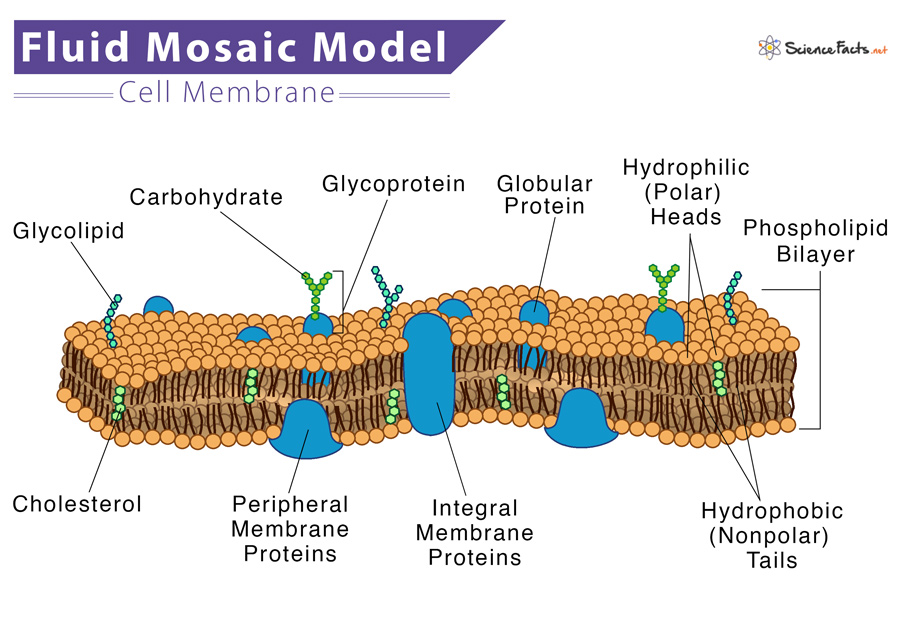
Cellular transport across membranes is a fundamental principle underpinning all physiology, particularly in excitable tissues like neurons and muscle. At its core lies the phospholipid bilayer, a dynamic “fluid mosaic” composed of hydrophilic heads and hydrophobic tails. This structural arrangement creates a selectively permeable barrier, meaning that not all substances can freely pass through. Small nonpolar molecules such as oxygen and carbon dioxide diffuse easily, whereas charged ions and large polar molecules require specialised transport systems.
Transport mechanisms are broadly divided into passive and active processes. Passive transport, including simple diffusion and facilitated diffusion, moves substances down their concentration gradient without energy expenditure. Facilitated diffusion relies on carrier proteins or channels, making it faster but saturable. In contrast, active transport requires ATP to move substances against their concentration gradient. A key example is the sodium-potassium pump, which maintains ionic gradients by exporting sodium and importing potassium, creating an essential electrochemical imbalance that enables electrical signalling.
Ion channels are the central players in rapid physiological signalling. These transmembrane proteins can open or close in response to stimuli such as voltage changes (ions), ligand (neurotransmitter, hormone, substrates and inhibitors) binding, or mechanical stretch. When open, they allow ions to flow rapidly across the membrane, generating electrical signals within milliseconds. This rapid ion movement is what enables neuronal communication and action potentials, distinguishing it from slower processes like hormone signalling or protein synthesis.
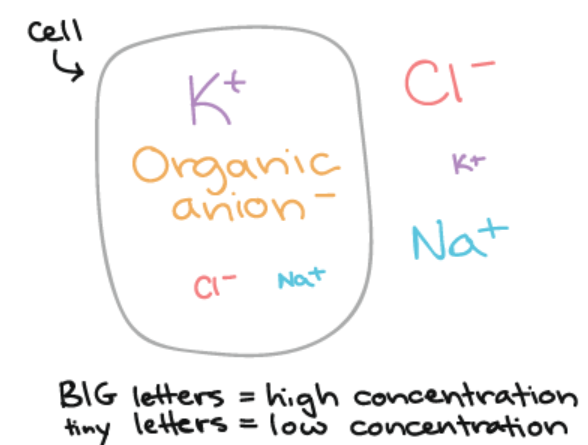
The electrochemical gradient, combining both concentration and electrical forces, governs ion movement. For example, sodium is highly concentrated outside the cell, while potassium is higher inside. This imbalance is critical for generating the resting membrane potential and subsequent action potentials. Without these gradients, excitable cells would lose their ability to transmit signals.
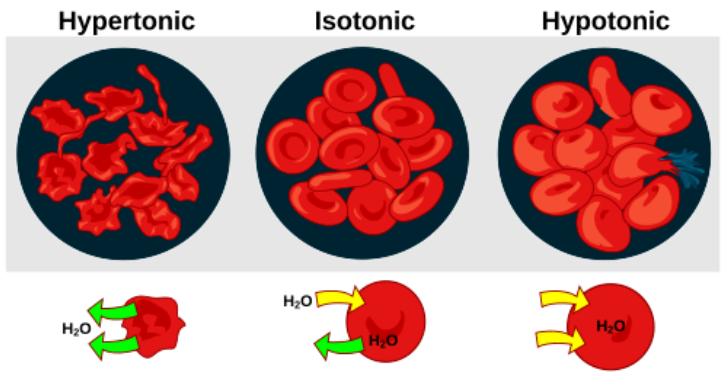
Water movement across membranes, or osmosis, is equally vital. Water travels across semipermeable membranes to balance solute concentrations, often via specialised channels called aquaporins. Maintaining isotonic conditions is crucial; otherwise, cells may shrink (hypertonic environment) or swell and burst (hypotonic environment). This is especially important in the brain, where extracellular fluid composition must remain tightly regulated.
The blood-brain barrier adds another layer of complexity. It restricts the entry of substances into the brain, requiring molecules to pass through endothelial cells and astrocytes. This barrier protects neural tissue but also complicates drug delivery.
Ion channel function is highly specific and tightly regulated. Channels selectively permit certain ions based on size and charge, often requiring ions to shed hydration shells before passing through. Malfunction of these channels leads to channelopathies, such as myotonia congenita (chloride channel defect causing muscle hyperexcitability- goat video) or certain forms of epilepsy and pain disorders linked to sodium channel mutations.
Overall, cellular transport mechanisms form the foundation of neuronal excitability, signaling speed, and physiological homeostasis. Without controlled ion movement and membrane permeability, processes such as cognition, muscle contraction, and synaptic transmission would not be possible.
📌 BULLET POINT SUMMARY
Membrane Structure
Phospholipid bilayer: hydrophilic heads + hydrophobic tails
Fluid mosaic model: dynamic with embedded proteins
Selectively permeable barrier
Types of Transport
Passive transport
Simple diffusion (no proteins)
Facilitated diffusion (via carriers/channels)
Active transport
Requires ATP
Moves substances against gradient
Example: Na⁺/K⁺ ATPase (3 Na⁺ out, 2 K⁺ in)
Ion Channels
Highly selective (Na⁺, K⁺, Ca²⁺, Cl⁻)
Can be:
Voltage-gated
Ligand-gated
Mechanically gated
Enable rapid signaling (milliseconds)
Electrochemical Gradient
Combines:
Concentration gradient
Electrical gradient
Essential for action potentials
Osmosis
Water moves from high → low water concentration
Controlled by aquaporins
Tonicity:
Hypertonic → cell shrinks
Hypotonic → cell swells
Isotonic → stable
Brain Environment
Extracellular space ≈ 20% of brain volume
Blood-brain barrier regulates entry of substances
Channelopathies
Ion channel defects cause disease:
Myotonia congenita (Cl⁻ channel)
Epilepsy (Na⁺ channels)
Pain disorders (NaV1.7 mutations)
✏ FILL-IN-THE-BLANK SUMMARY
Section A: Basics
The cell membrane is primarily composed of a __phospho________ bilayer.
Hydrophilic regions face ___aqua_______ environments.
Hydrophobic regions prevent passage of ___charged______ molecules.
Section B: Transport
Movement down a concentration gradient without energy is called ___passive______ transport.
Movement against a gradient requires __energy___ATP_____.
The sodium-potassium pump moves _3_ Na⁺ out and __2_ K⁺ in.
Section C: Ion Channels
Ion channels allow rapid movement of ___ions_______ across membranes.
Channels that open in response to neurotransmitters are called ___ligand_______ gated channels.
Electrical changes open _voltage___ gated channels.
Section D: Osmosis
Water movement across membranes is called __osmosis________.
Channels for water are called ___auqaporin_______.
Cells in a hypotonic solution will ___burst_______.
Section E: Physiology
Sodium concentration is higher ___outside_______ the cell.
Potassium concentration is higher __inside________ the cell.
The electrochemical gradient combines electrical and ____chemical______ forces.
✅ ANSWERS
Phospholipid
Aqueous (intracellular/extracellular)
Charged (or polar ions)
Passive
ATP (energy)
3, 2
Ions
Ligand
Voltage
Osmosis
Aquaporins
Swell (and possibly burst)
Outside
Inside
Chemical
🧪 40 HARD EXAM-STYLE MCQs
Q1
Which component primarily forms the hydrophobic core of the membrane?
a) Cholesterol
b) Phospholipid heads
c) Fatty acid tails
d) Proteins
e) Carbohydrates
Q2
Which transport type requires ATP?
a) Diffusion
b) Facilitated diffusion
c) Osmosis
d) Active transport
e) Filtration
Q3
Which ion is highest inside cells?
a) Na⁺
b) Cl⁻
c) K⁺
d) Ca²⁺
e) H⁺
Q4
Which of the following is NOT passive transport?
a) Diffusion
b) Facilitated diffusion
c) Osmosis
d) Active transport
e) Channel-mediated transport
Q5
Aquaporins transport:
a) Sodium
b) Potassium
c) Water
d) Glucose
e) Calcium
Q6
Which process maintains resting membrane potential?
a) Diffusion
b) Na⁺/K⁺ ATPase
c) Osmosis
d) Filtration
e) Exocytosis
Q7
Ion channels open in response to:
a) Temperature only
b) Light only
c) Voltage or ligands
d) DNA replication
e) Protein synthesis
Q8
Which ion triggers neurotransmitter release?
a) Na⁺
b) K⁺
c) Ca²⁺
d) Cl⁻
e) Mg²⁺
Q9
Facilitated diffusion differs from simple diffusion because it:
a) Uses ATP
b) Requires transport proteins
c) Moves against gradient
d) Is slower
e) Uses vesicles
Q10
Which environment causes cell shrinkage?
a) Hypotonic
b) Isotonic
c) Hypertonic
d) Neutral
e) Acidic
Q11–40 (FULL MCQs)
Q11
Which structure forms the blood-brain barrier?
a) Neurons
b) Astrocytes and endothelial cells
c) Microglia
d) Oligodendrocytes
e) Synapses
Q12
Which ion cannot freely diffuse across the membrane?
a) O₂
b) CO₂
c) Na⁺
d) Benzene
e) Ethanol
Q13
The driving force for ion movement is:
a) Osmotic pressure only
b) ATP only
c) Electrochemical gradient
d) Temperature
e) pH only
Q14
Which transporter moves two substances in the same direction?
a) Antiporter
b) Uniporter
c) Symporter
d) Channel
e) Pump
Q15
Which is NOT a gating mechanism of ion channels?
a) Voltage
b) Ligand
c) Mechanical
d) DNA binding
e) Phosphorylation
Q16
Which best describes facilitated diffusion?
a) Energy dependent
b) Non-specific
c) Carrier mediated
d) Moves uphill
e) Uses vesicles
Q17
Na⁺/K⁺ ATPase is:
a) Passive
b) Secondary active
c) Primary active
d) Diffusion
e) Osmotic
Q18
What happens when Na⁺ enters a neuron?
a) Hyperpolarization
b) Depolarization
c) No change
d) Repolarization
e) Inhibition
Q19
Which ion typically causes inhibition?
a) Na⁺
b) K⁺
c) Ca²⁺
d) Cl⁻
e) Mg²⁺
Q20
Which structure allows rapid ion flow?
a) Carrier
b) Channel
c) Vesicle
d) Receptor
e) Enzyme
Q21
Which is a secondary active transport example?
a) Na⁺/K⁺ ATPase
b) Na⁺-glucose cotransport
c) Diffusion
d) Osmosis
e) Ion channel
Q22
Which is TRUE of cholesterol?
a) Makes membrane rigid only
b) Regulates fluidity
c) Forms channels
d) Pumps ions
e) Stores energy
Q23
Which molecule diffuses most easily?
a) Glucose
b) Na⁺
c) O₂
d) Amino acids
e) Proteins
Q24
Which condition causes cell swelling?
a) Hypertonic
b) Hypotonic
c) Isotonic
d) Neutral
e) Acidic
Q25
Which protein transports glucose in neurons?
a) GLUT1
b) GLUT2
c) GLUT3
d) GLUT4
e) SGLT
Q26
Which ion channel defect causes myotonia congenita?
a) Na⁺
b) K⁺
c) Ca²⁺
d) Cl⁻
e) Mg²⁺
Q27
Which is NOT part of membrane proteins?
a) Ion channels
b) Carriers
c) Receptors
d) DNA
e) Enzymes
Q28
Which ion is highest extracellularly?
a) K⁺
b) Na⁺
c) Ca²⁺
d) Mg²⁺
e) H⁺
Q29
Which process uses vesicles?
a) Diffusion
b) Active transport
c) Endocytosis
d) Osmosis
e) Filtration
Q30
Which defines osmolarity?
a) Ion charge
b) Number of particles
c) Size
d) Shape
e) Weight
Q31
Which is fastest signaling?
a) Hormones
b) Protein synthesis
c) Neural transmission
d) DNA replication
e) Cell division
Q32
Which channel opens during depolarization?
a) K⁺
b) Cl⁻
c) Na⁺
d) Ca²⁺
e) Mg²⁺
Q33
Which gradient moves ions?
a) Thermal
b) Electrical only
c) Chemical only
d) Electrochemical
e) Mechanical
Q34
Which ion exits during repolarization?
a) Na⁺
b) K⁺
c) Ca²⁺
d) Cl⁻
e) H⁺
Q35
Which is NOT a feature of ion channels?
a) Selectivity
b) Speed
c) Saturation
d) Gating
e) Specificity
Q36
Which structure clears debris in brain?
a) Astrocytes
b) Microglia
c) Neurons
d) Axons
e) Dendrites
Q37
Which allows synaptic transmission?
a) Osmosis
b) Ion channels
c) Diffusion only
d) DNA
e) ATP only
Q38
Which ion channel mutation causes pain loss?
a) NaV1.1
b) NaV1.5
c) NaV1.7
d) NaV1.2
e) NaV1.3
Q39
Which ion channel toxin blocks Na⁺ channels?
a) Insulin
b) Dopamine
c) Tetrodotoxin
d) Glucose
e) ATP
Q40
Which is NOT a function of membranes?
a) Barrier
b) Transport
c) Communication
d) DNA replication
e) Signal transduction
✅ ANSWERS (MCQs)
c
d
c
d
c
b
c
c
b
c
b
c
c
c
d
c
c
b
d
b
b
b
c
b
c
d
d
b
c
b
c
c
d
b
c
b
b
c
c
d