3.5.3 Wage determination in competitive and non-competitive markets
Wage Determination in a competitive market
Assumptions:
Homogenous labour
Perfect information for both labour and firms
Many potential workers
No barriers to entry or exit
Firms are wage takers
In a perfectly competitive market there would be no wage differentials as it is assumed that workers are homogenous and there is no immobility of labour

In the above diagram the labour market equilibrium is shown in a perfectly competitive market as well as the individual firm in that market. As labour market is perfectly competitive, the firm is a wage taker and therefore they have to take the wage in which the labour market sets. The demand for labour and the supply of labour dictate the labour market equilibrium. This gives a wage of W1 for workers within the given occupation and a quantity of Q1. The individual firm takes this wage rate and hires up to the point where MRP is equal to MCL, giving a quantity level of Q1. As shown on the diagram, the shape of the marginal revenue product curve is based upon the theory of diminishing marginal productivity.
Why do wage differentials occur?
Labour is not homogenous i.e. differing MRP, discrimination
Non monetary considerations when taking a job i.e. holidays, pension schemes
Labour is not perfectly mobile i.e. occupational and geographical immobility - lack of perfect knowledge
Trade unions and supply restrictions - collective bargaining - distorts perfectly competitive market outcomes
Monopsony and wage setting power
Non Competitive markets:
Monopsony employers
Barriers to entry
Asymmetric info
NMW
Trade unions and collective bargaining
Labour immobility
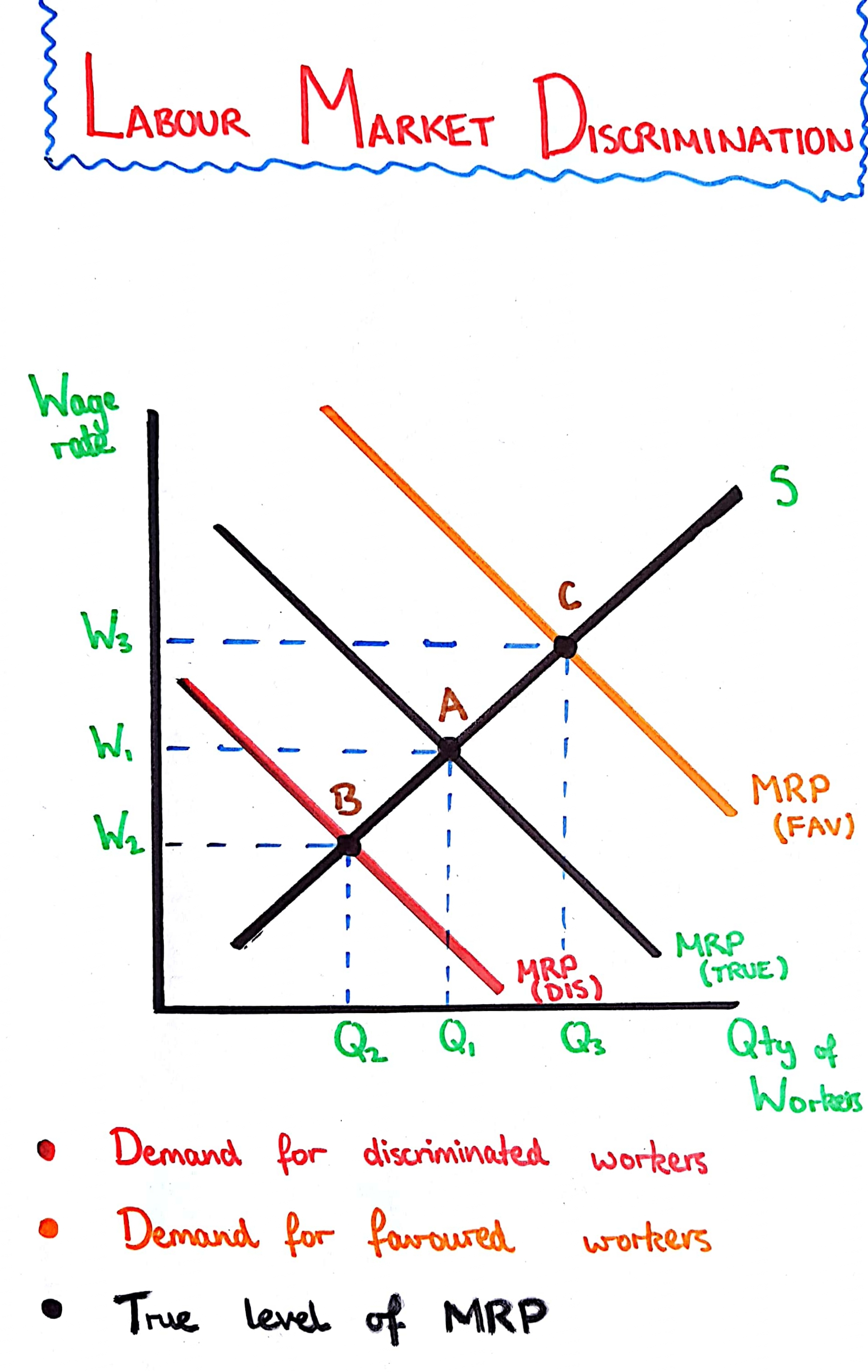
Discrimination
Employment laws/regulations
Definitions:
Wage differential: The difference in wages between workers with different skills in the same industry or comparable skills in different industries or localities
Compensating wage differentials: Rewards for risk taking, working in poor conditions - usually a higher wage i.e. oil rig workers
Difference in productivity and revenue generation: Workers with high productivity who bring in a lot of revenue often have higher pay
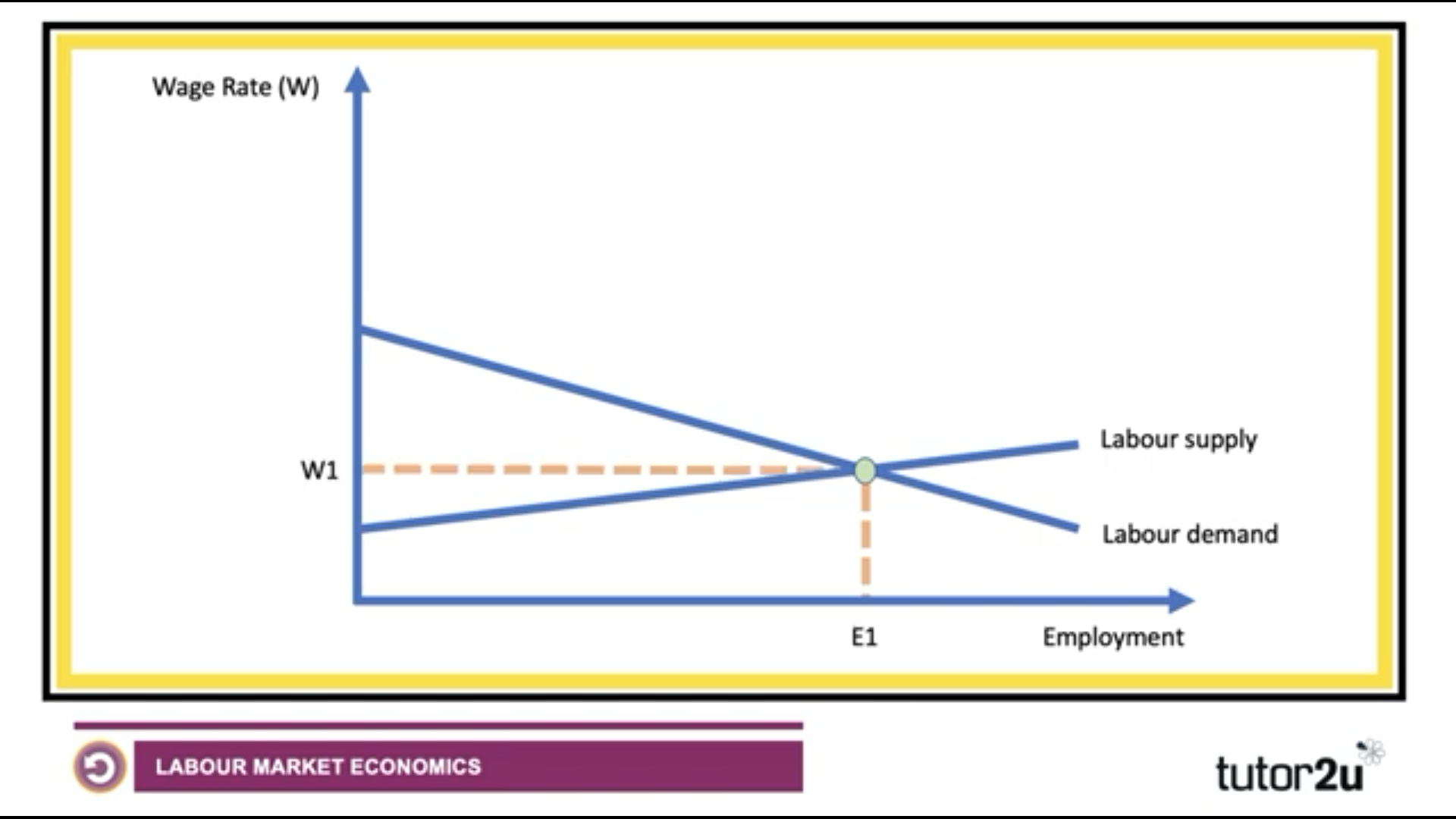
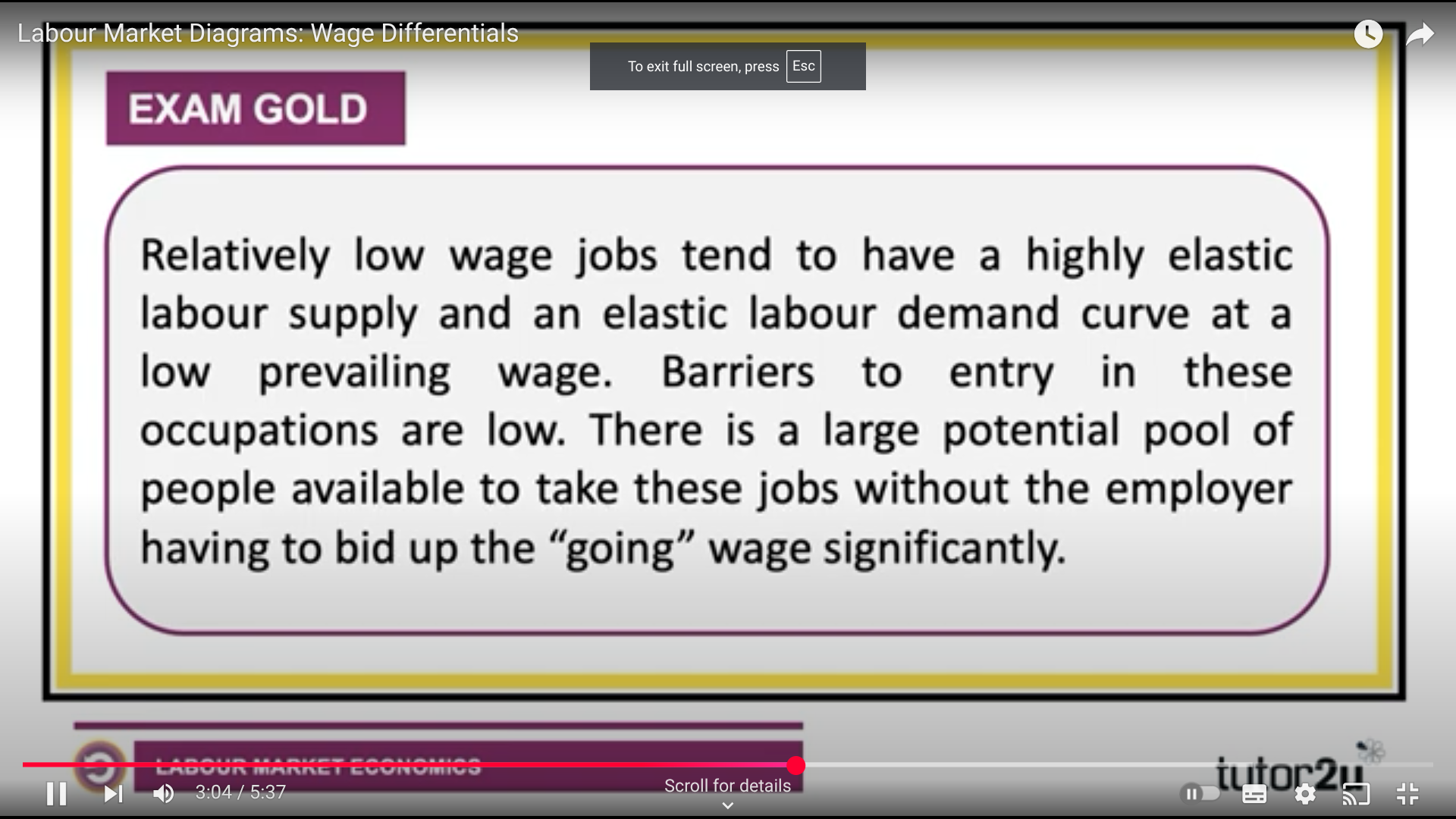
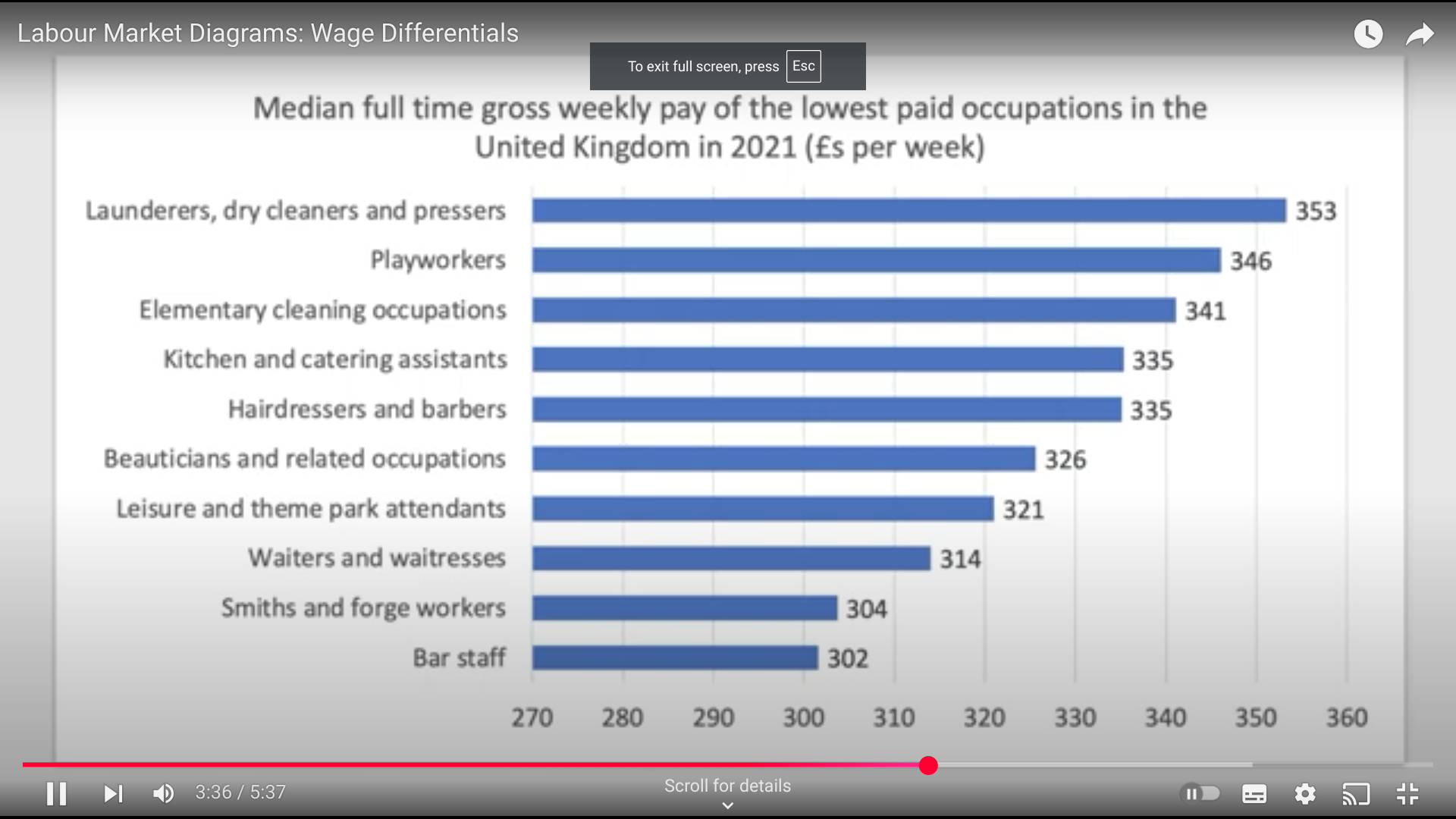
Low skilled, elastic demand, elastic supply
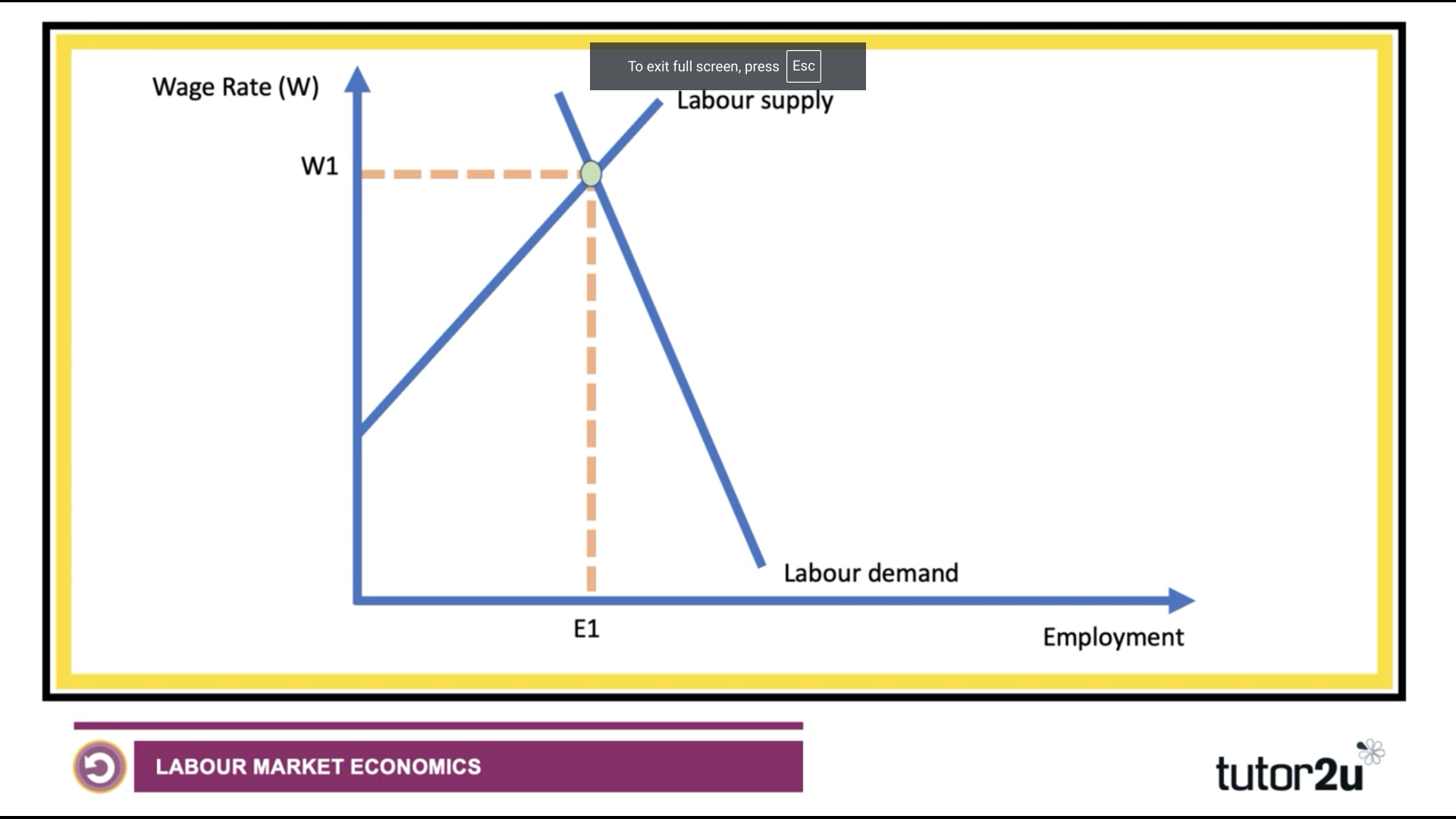
Skilled workers, Inelastic demand, inelastic supply - they add value to the output of goods and services
Causes of pay gaps:
Gender pay gap : The difference between average hourly earnings of men and women as a proportion of average hourly earnings of mens earnings ( excluding over time )
Context - According to the Office for National Statistics (ONS), median hourly pay for full-time employees was 7.0% less for women than for men in April 2024
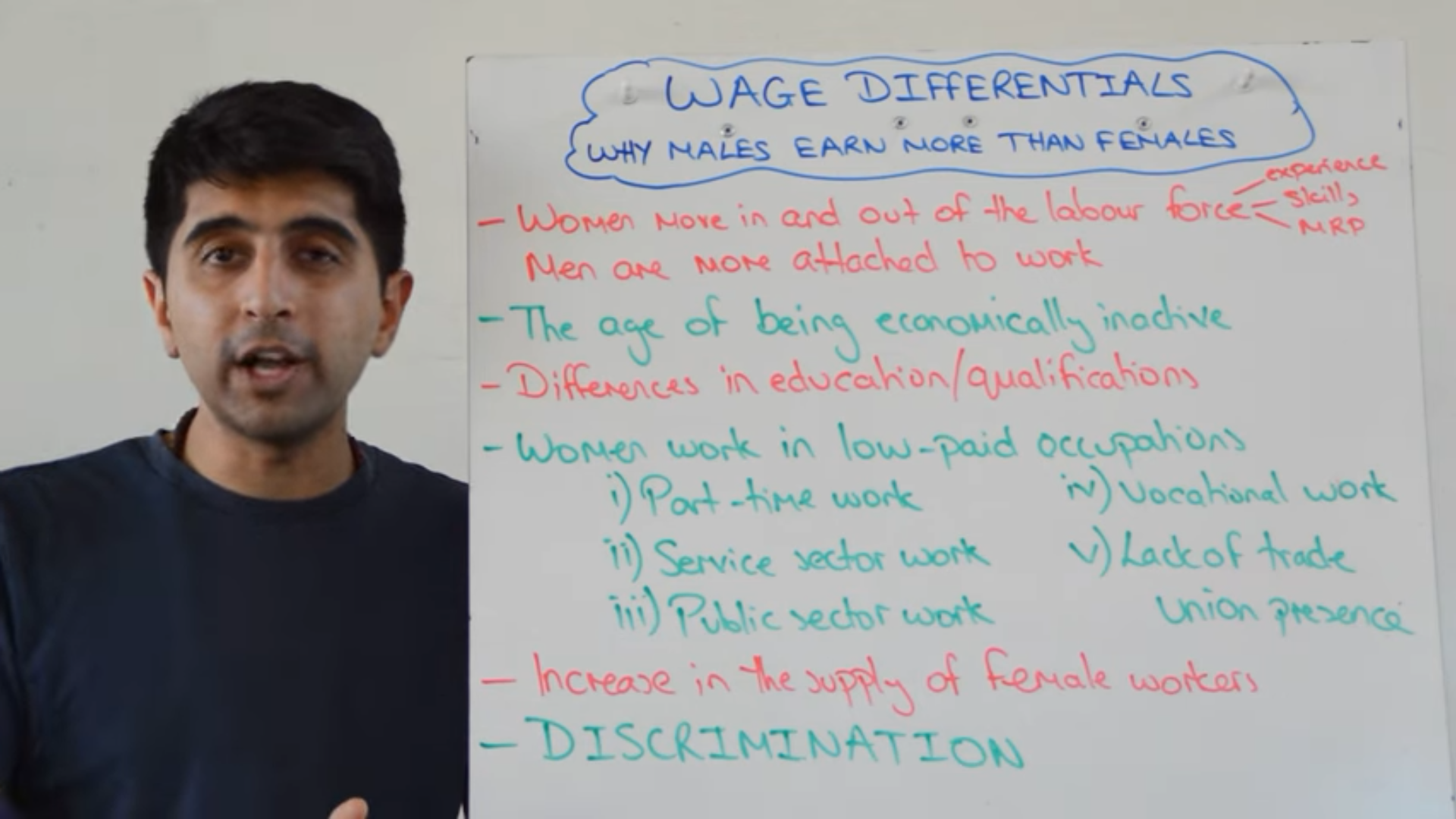
Discrimination: Due to race, age, sexual orientation, socioeconomic group
More causes:
Occupational segregation
Educational and occupational choices
Work experience and seniority
Negotiation and salary transparancy
Unconscious bias
Parental and care giving responsibilities
Wage setting in the public sector:
The govt. can impact the labour market
I.e. if wages are increased in the public sector this can increase pressure for private sector firms to increase their wage rates
Governments can also freeze public sector pay or increase it in line with inflation - or perhaps reduce it to put downwards pressure on inflation
Public sector workers who are unhappy with a real pay cut may take industrial action i.e. junior doctors in 2023/24 and bin men in Birmingham in 2025
Minimum and maximum wages:
Context:
U18’s minimum wage increased from £6.40 - £7.55
Living wage for over 25’s is £12.21 compared to £8.72 in 2020
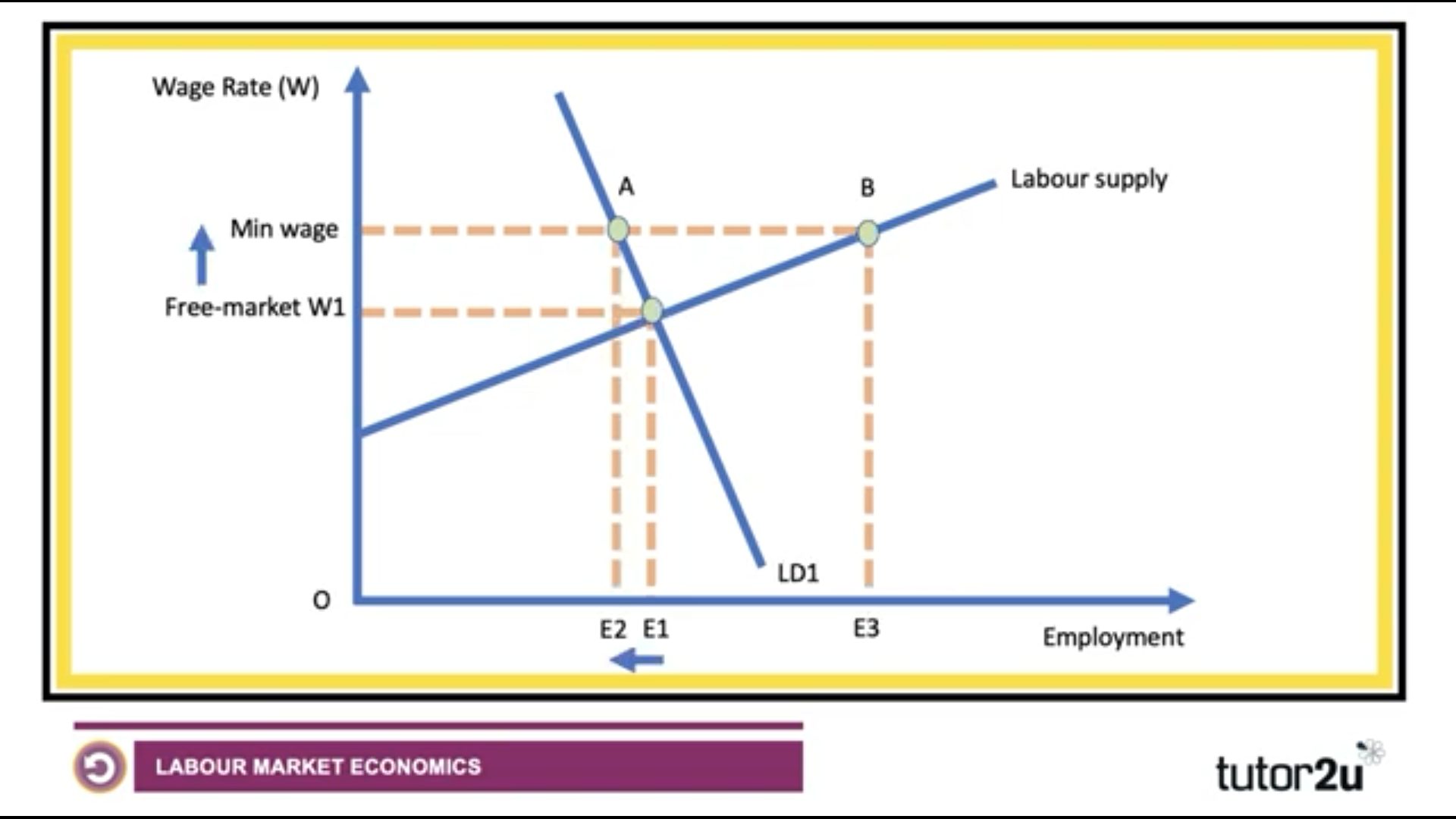
This is where demand for labour is more inelastic
Therefore, there is less of a fall in employment
And those still in work will be acheieving a higher wage
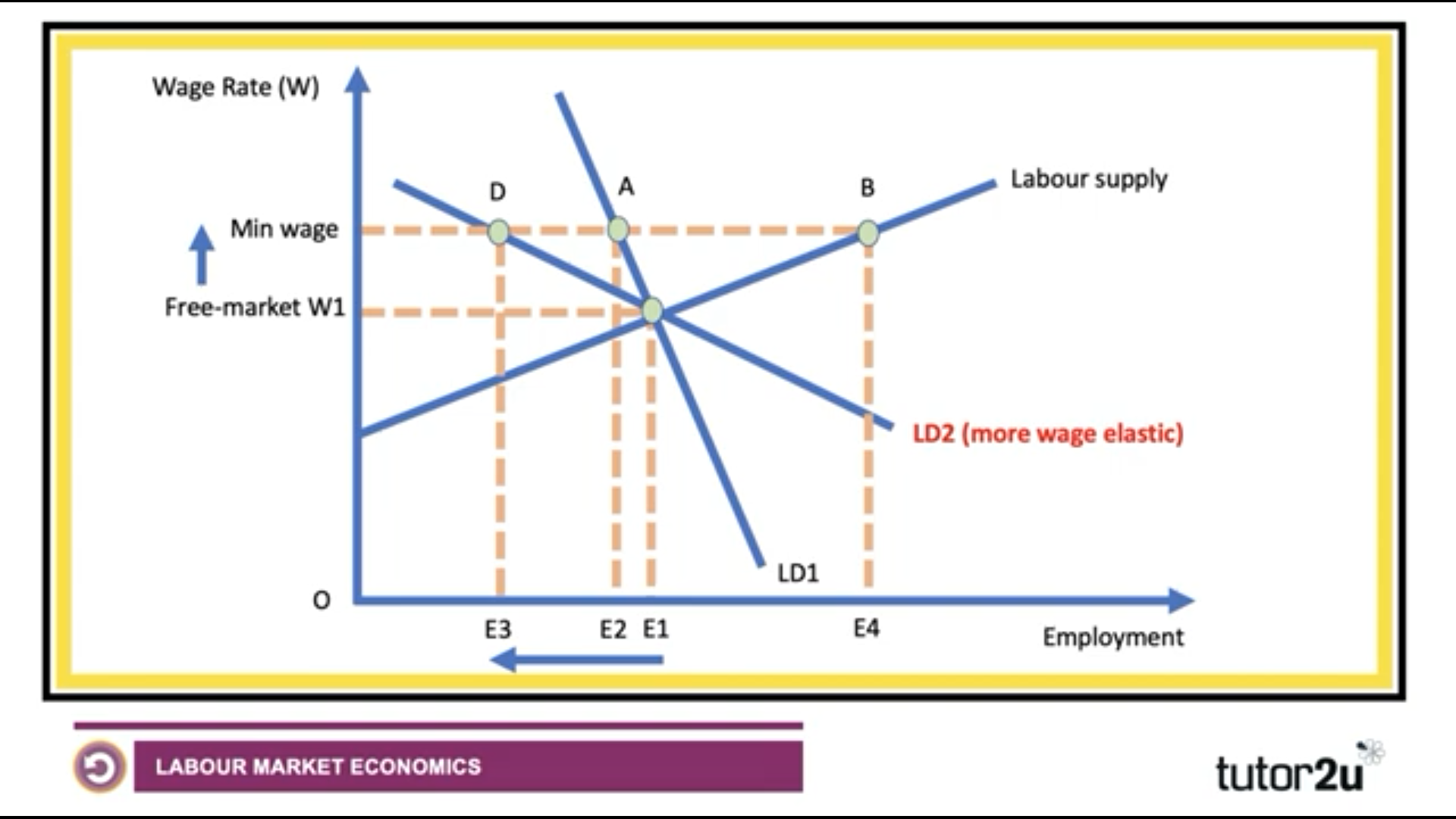
However, when demand is more wage elastic
A minimum wage will have a larger impact on employment
I.e. low skilled, low pay jobs
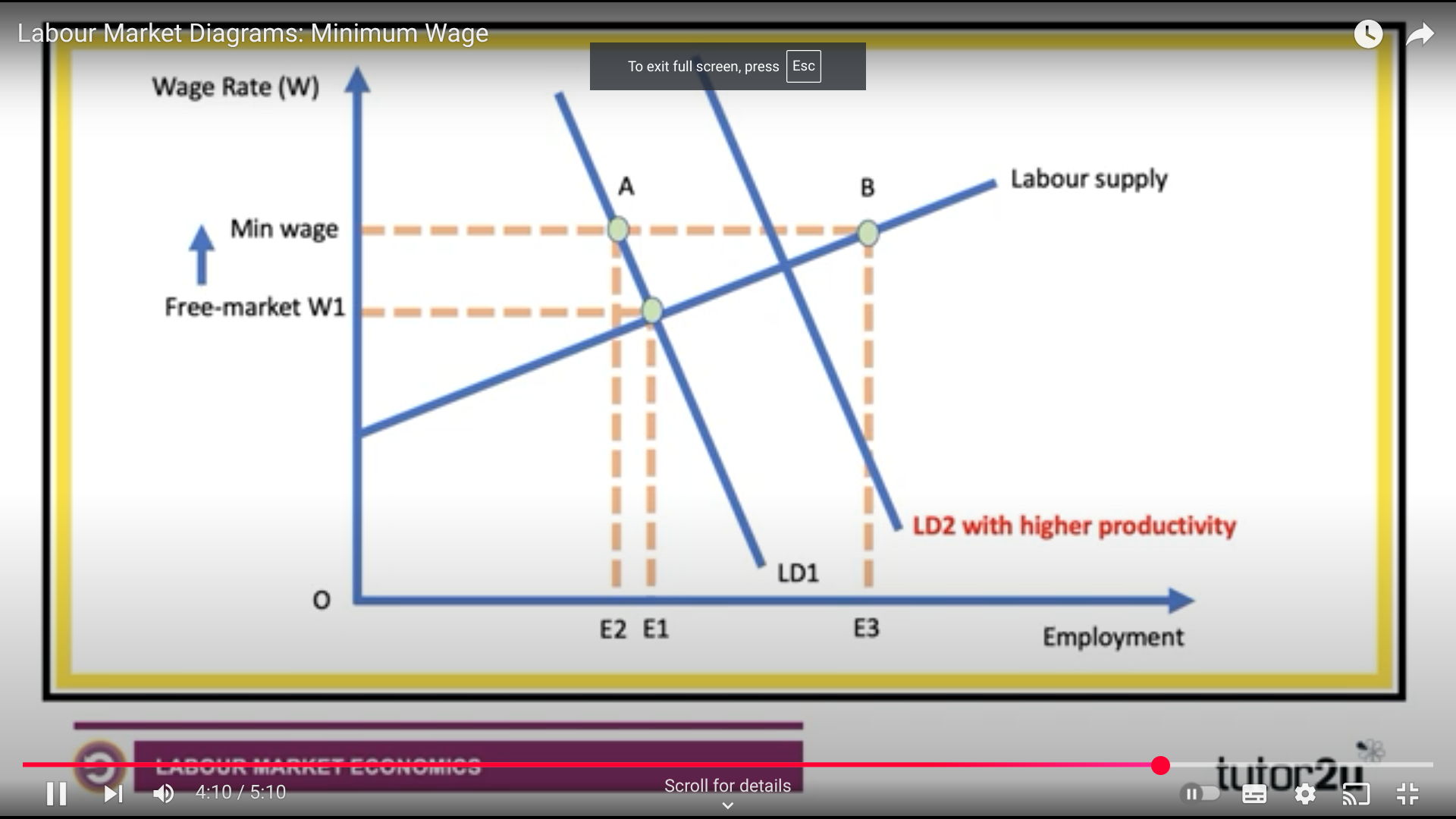
However, if productivity improves as a result of an increase in minimum wage - employment may actually have a positive effect on employment at E3
Benefits of MW:
Fairer pay, less discrimination - so, less poverty, less worker exploitation
If higher pay improve productivity then this will have a positive effect on employment
May have a positive effect on the economy due to lower payed people having a higher MPC - in turn higher AD may result in high demand for labour
Help reduce inequality
Incentivises workers to actively look for work and get off of unemployment benefits and join the labour market which puts less pressure on the welfare state and reduces opportunity cost
Costs of MW:
Real wage unemployment
Only covers employees - self employed may be receiving less which doesn’t combat inequality - 3 million people in the UK
Increases costs to businesses - may result in technological unemployment because of AI
Could become inflationary if other workers try to maintain wage differentials with lower paid workers
Less international competitiveness due to higher LRAC - decrease in net exports - decrease in AD - reduced demand for labour
Trade Unions
Use collective bargaining over wages i.e. stronger together than apart
In 2023, UK trade union membership increased to 6.4 million, representing a 89,000 increase from the previous year,
Whereas In the 1970s, trade union membership in the UK was high, reaching a peak of around 13.5 million members in 1979, representing about 50% of the workforce.
Analysis:
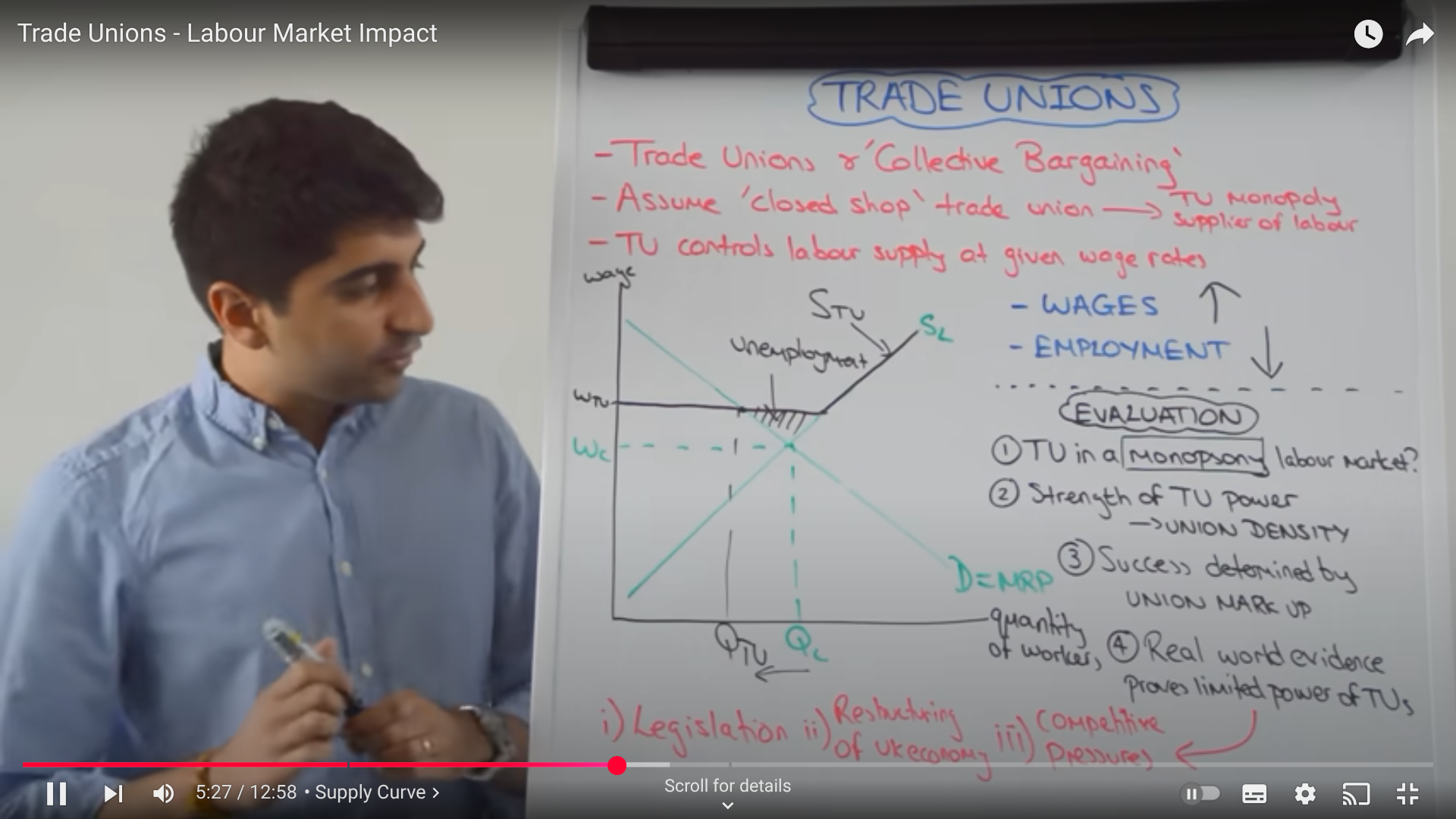
Trade unions use collective bargaining to increase wages to WTU
This created the ‘trade unions’ supply at STU
At thus wage rate only QTU of labour is demanded, reduced from Q2
Therefore, causing unemployment
So, wages increase for workers until QTU but there is an excess supply of labour leading to unemployment increasing
Distorting efficient labour market efficiencies
Raising costs for a firm - may cause bankrupcy - long term wages may reduce further
Evaluation:
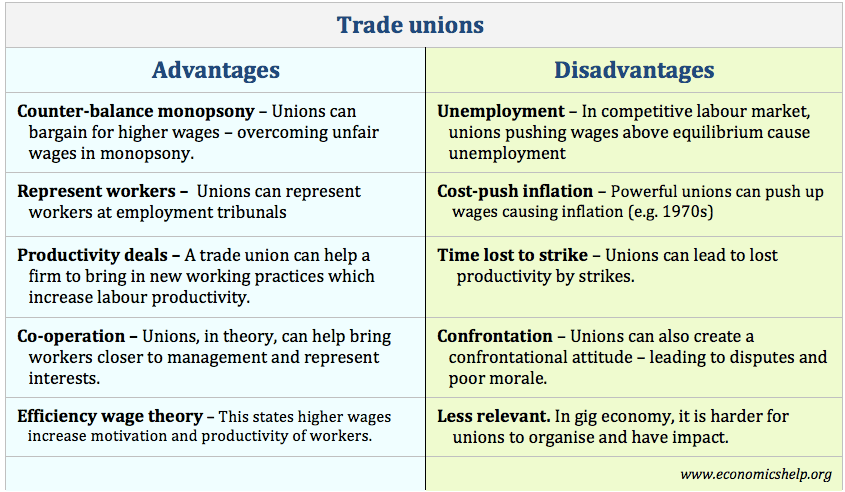
Trade unions may be beneficial in a monopsony as they have the power to set wages far below then market equilibrium - so by demanding higher wages here the TU may actually be benefitting more than harming workers and improving efficiency
Strength of TU power - depends on how powerful these trade unions actually are - if they’re illegal then they won’y have as much impact - the DENISTY - the greater the density, the greater bargaining power the TU has
Success determined by UNION MARK UP - this is the differences between workers in the same profession who are apart of a trade union and those who aren’t - the greater the union mark up then the greater success of the union
Real world evidence shows that the success of trade unions is limited - this is in part due to legislation - i.e. closed shop TU are no illegal, now harder to strike - 75% of union members have to agree, can only strike against your own employer - LIMITING strike action
Factors making it easier for trade unions to be effective ( pay increase with minimal job loss ):
Labour is a small % of total costs
Impossible to substitute labour with other factors of production
Demand for final product is inelastic - costs can be passed on to consumer
Trade unions control the supply of labour - closed shop
Firm is making SNP or substantial profits
Pay claim is accompanied by a productivity rise - therefore labour demand may also shift right
Monopsony power of labour
A sole employer of labour i.e. NHS
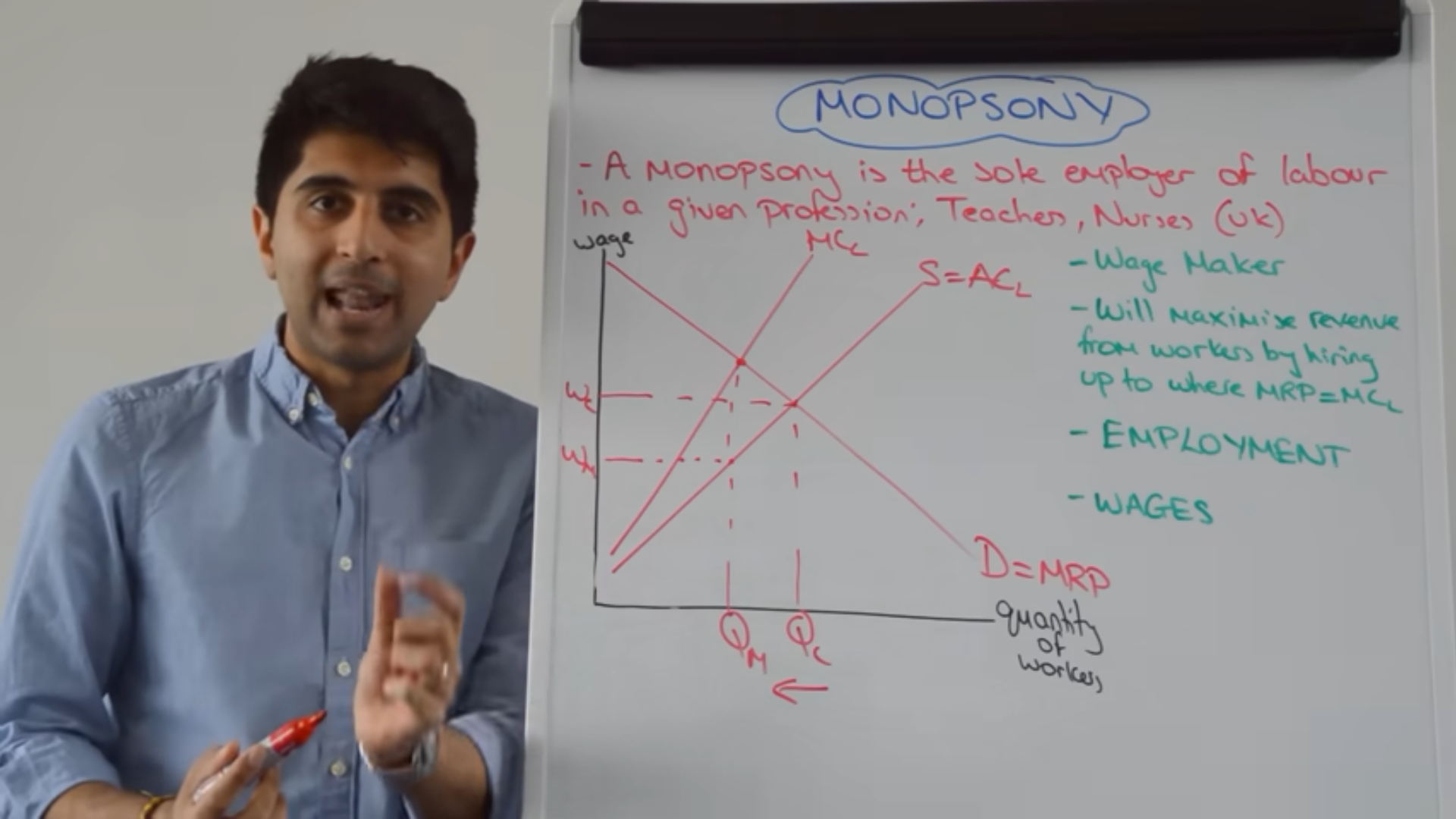
Wage maker
Will max revenue from workers by employing at MRP=MC
Analysis:
Monopsony will set wages at MC=MRP = QM = WM - much lower than their mrp
The lower the wages are than MRP the greater the monopsony power is - a measure of monopsony power
Compared to a competitive marker where wages would be at AC=MRP - wages and quantity are lower
Therefore, monopsonies cause lower wages and higher unemployment
Trade Unions effect on Monopsonies
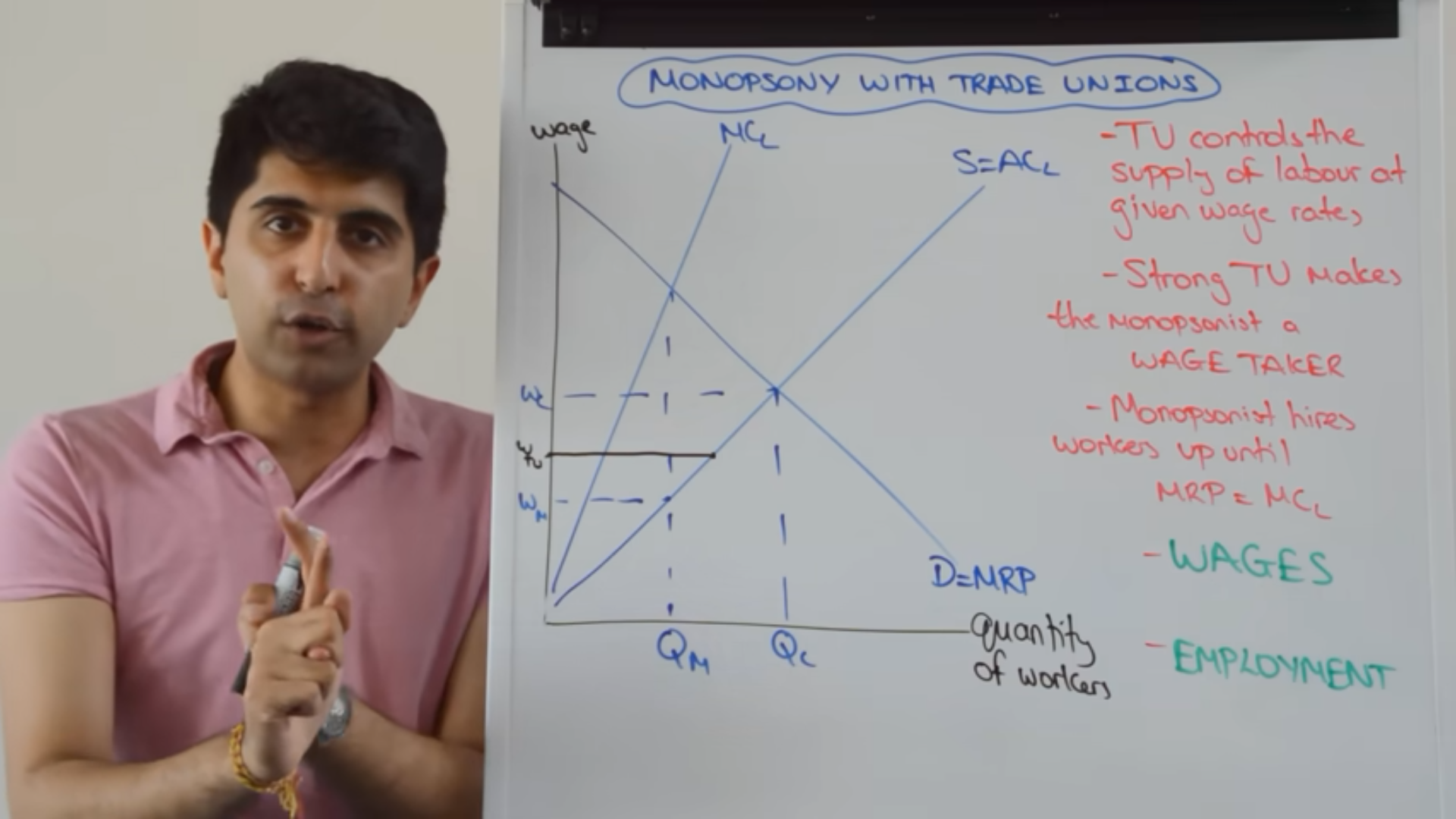
We know that the monopsony wage and quantity level is at WM QM
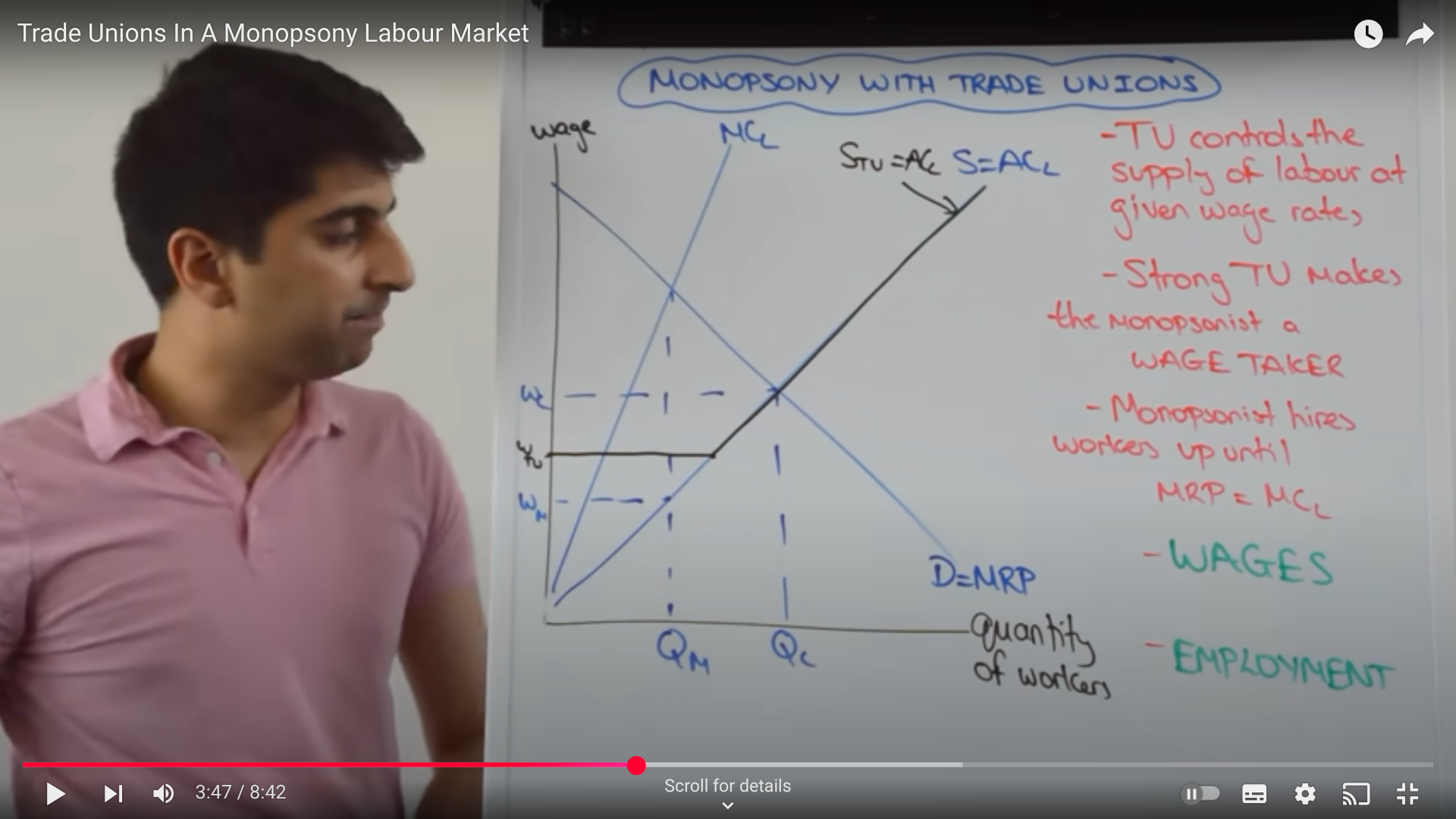
Trade unions then - dependent on their union density - demand WTU
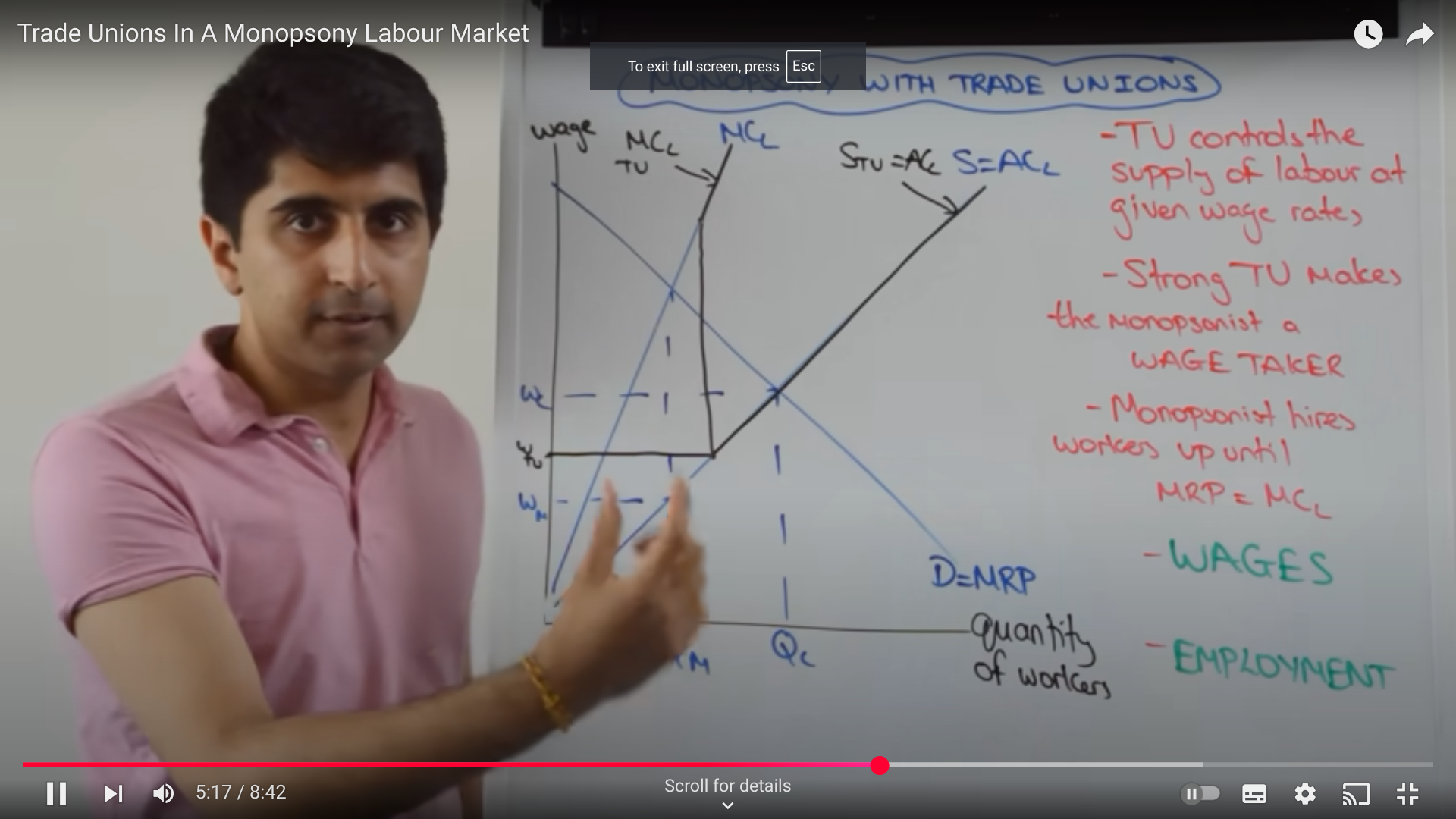
WTU then becomes the new AC and MC curve - as the monopsony becomes a wage taker - as all labour will now cost the same
But beyond that black dot, firms have to offer higher wages to attract new workers
And then the MC returns back to normal as all costs of labour equalise
Labour immobility and policies to prevent
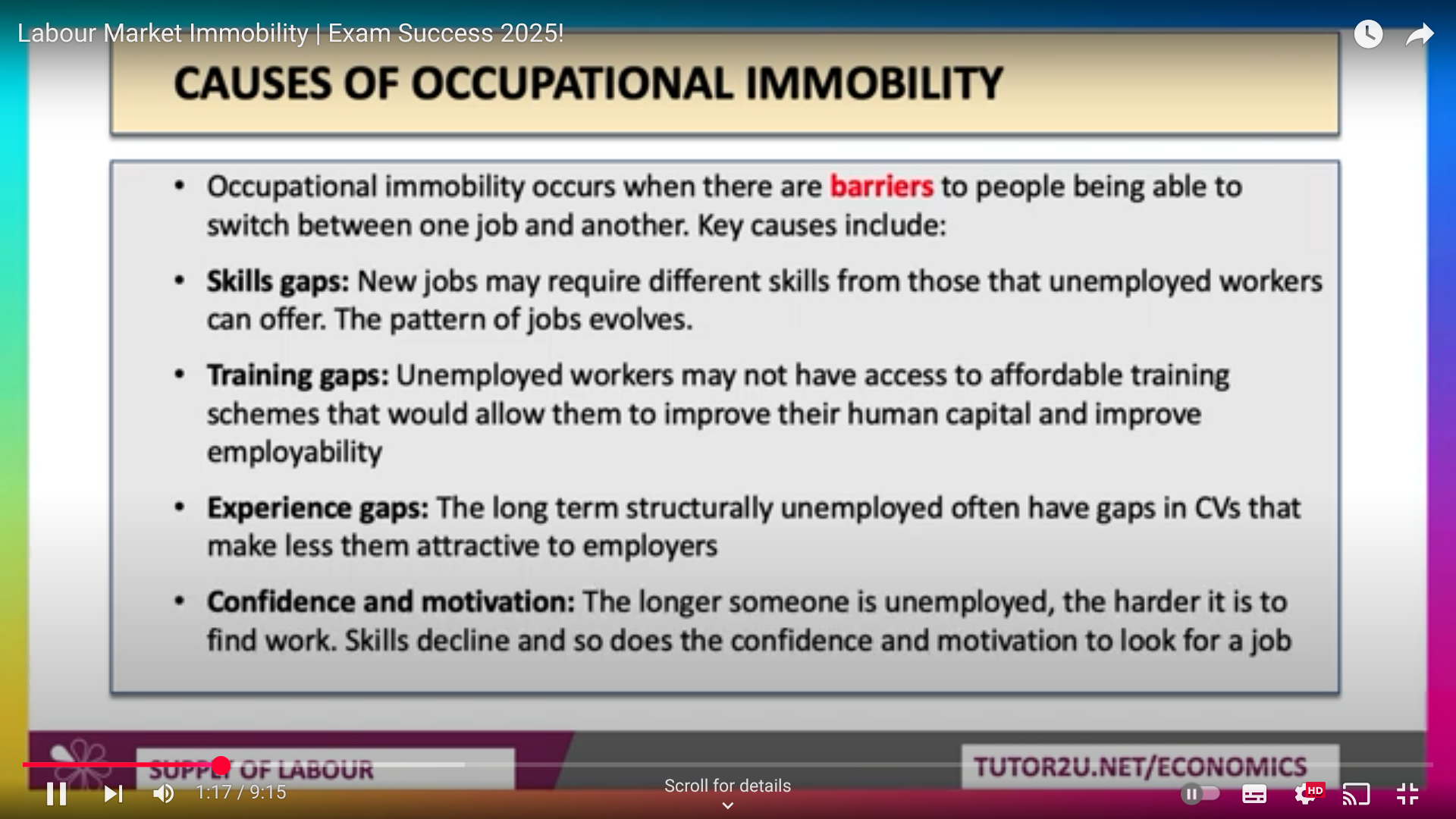
Causes of occupational immobility

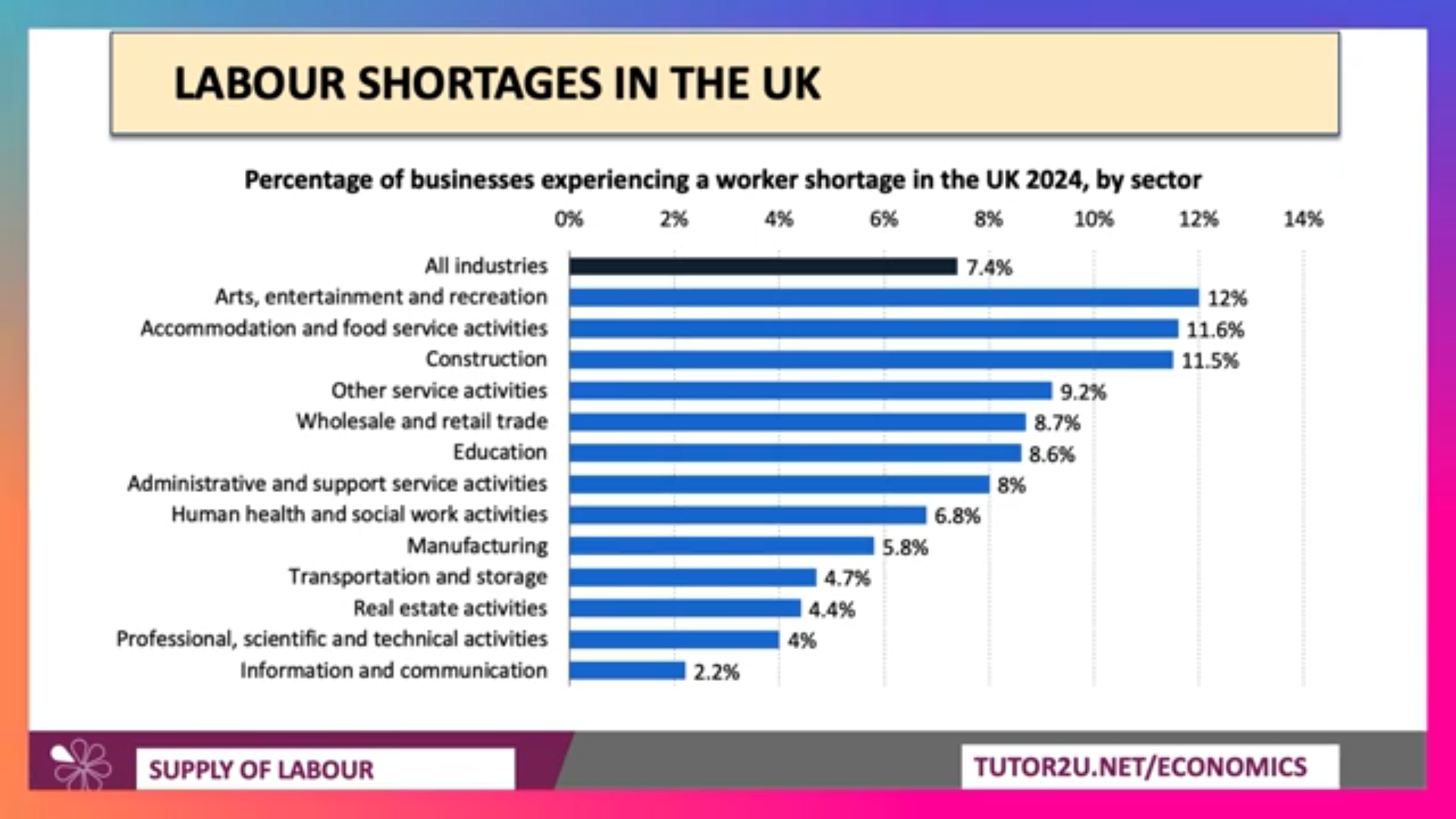
7.4% of worker shortages across all industries in 2022
52% skill shortage in construction - skills gap
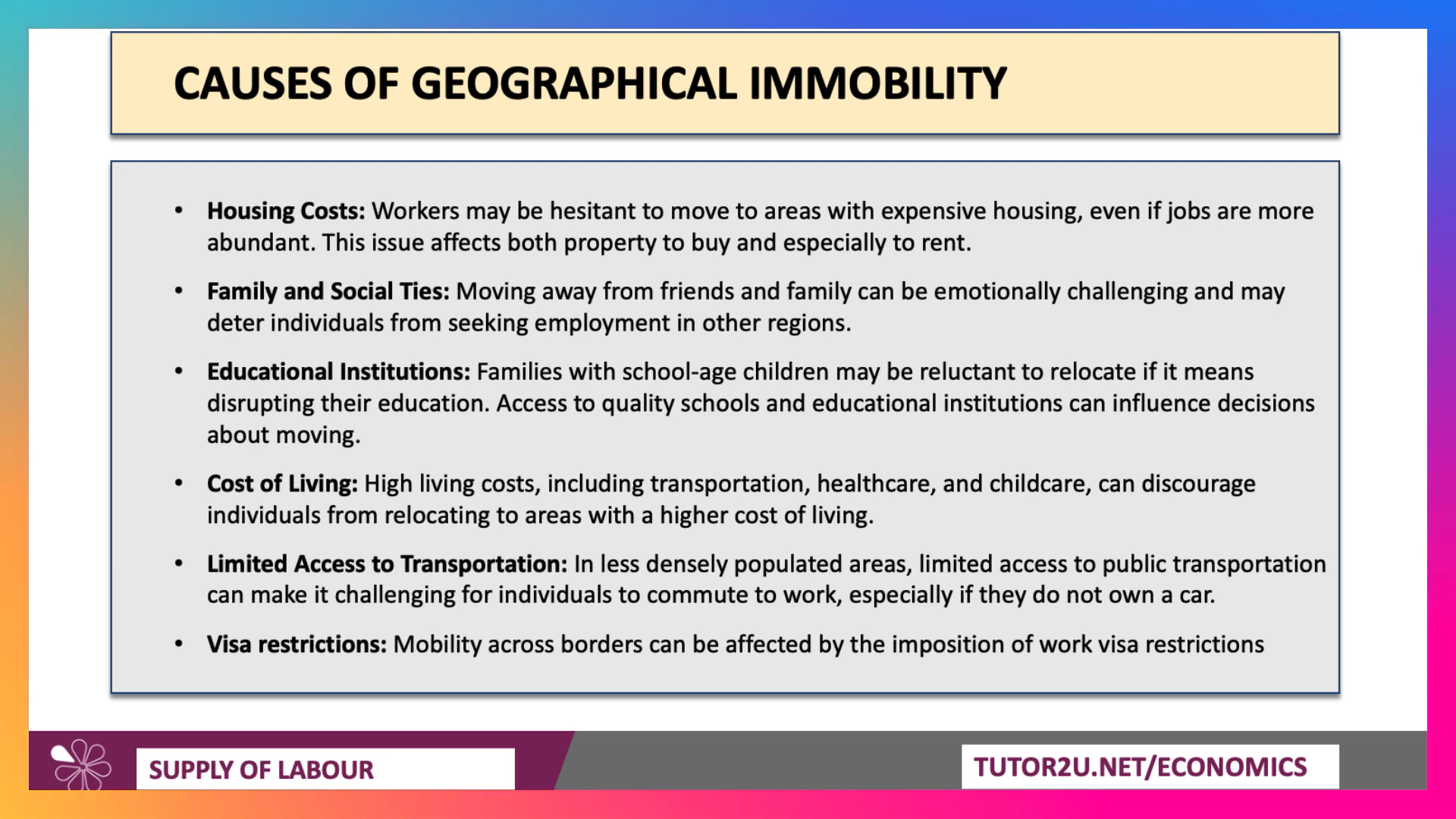
Causes of occupational immobility
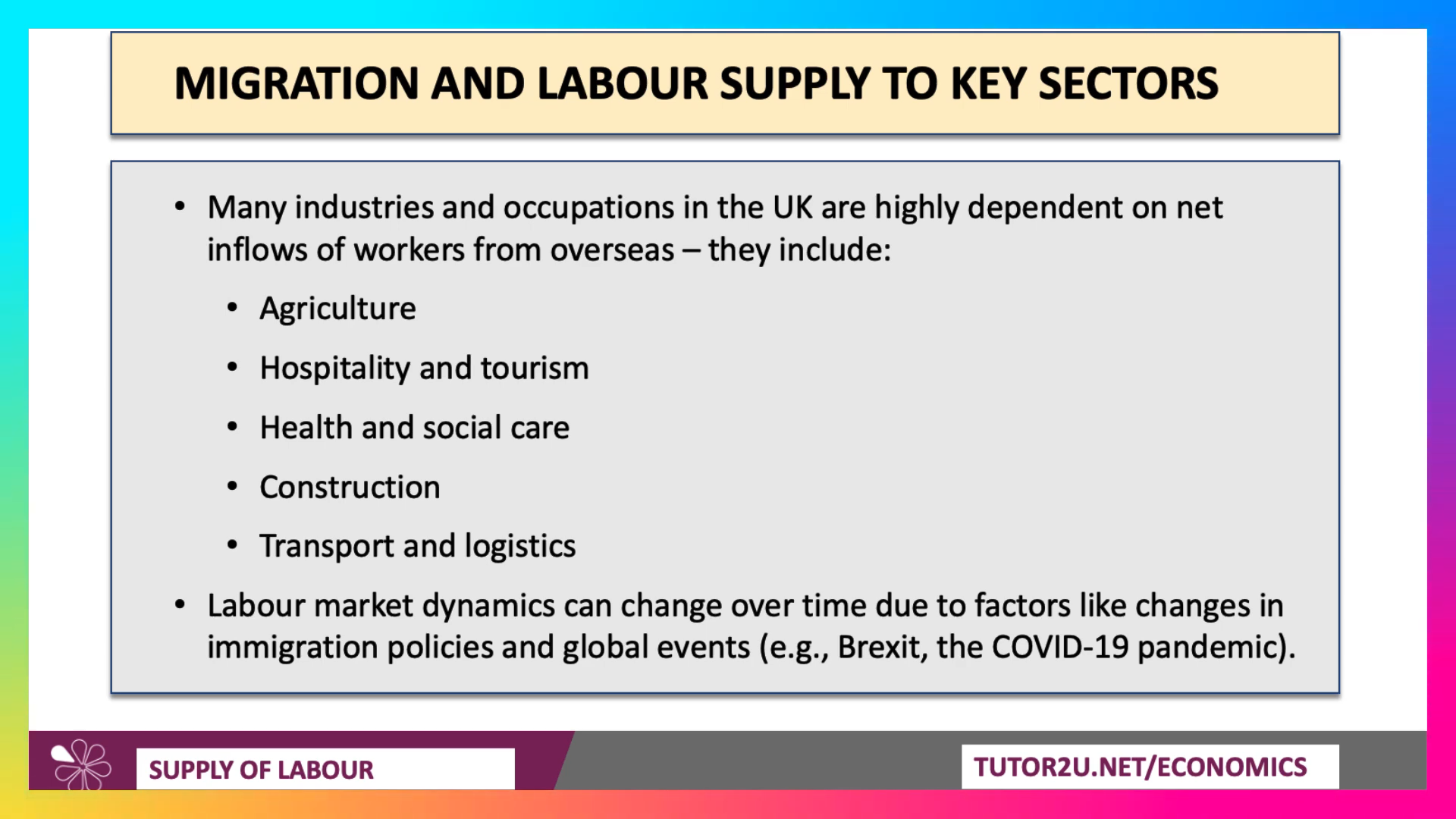

Work Visa’s can be used to reduce labour immobility

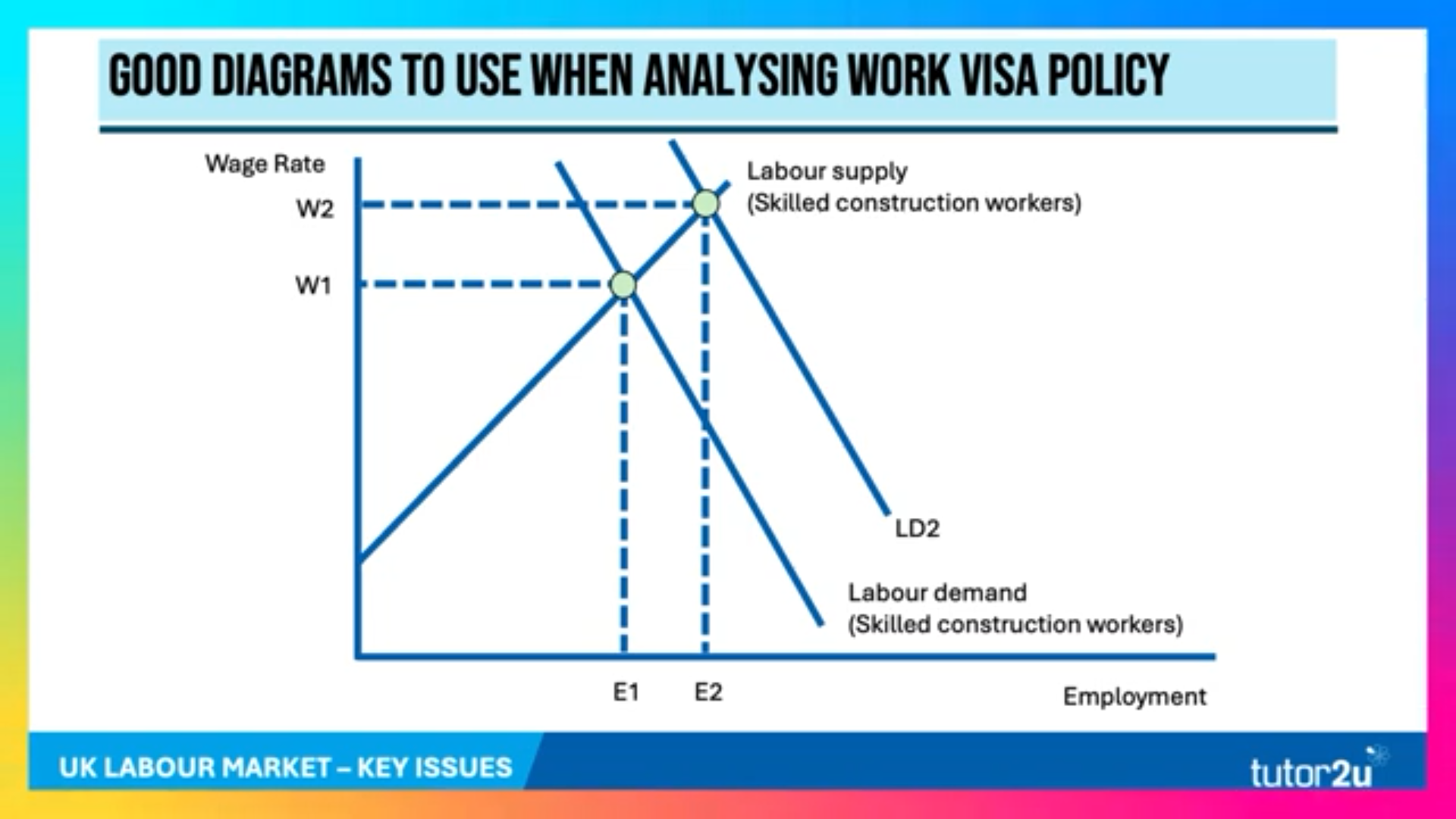
Another policy is increasing the size of the housing market
I.e. Labour aim to build 1.5 million homes in the next 5 years
Public Sector Wage Setting
As the government employ hundreds of thousands of people across the UK, pay legislation that they set such as the minimum wage can also have an effect on their expenditure in addition to that of private companies. For example, if the government employ a large amount of people on minimum wage, then an increase in minimum wage would see a large labour cost increase for them.
One of the main talking points at the moment is the wage increase public sector workers have received in comparison to inflation (as measured by CPI). Although, public sector workers have seen a wage rise, in real terms many of them are experiencing a decrease in their salary. As such, this has resulted in a squeeze on public sector workers as they see their disposable incomes decrease in real terms. However, due to the large number of employees that the government employ, increasing public sector wages by just 1% comes at a cost of around £2 billion. That being said, it can be argued that most of this money is earned back through increased income tax and the increase in consumer expenditure that a wage rise would result in, thus boosting the economic performance of the economy.