Chapter 11: Child Language Disorders
Language
- Comprehension/Expression
- Spoken language expression: talking
- Spoken language comprehension: listening
Language Impairment in Children
- Some children experience difficulty learning and using language
- Start talking late (after 12 months)
- When late talkers start putting word together, the sentences are shorter and less complex
- If problems persist into early school years, they are at risk for: social impairment, academic failure, behavior problems, vocational disadvantages
What is Language Impairment?
- Language Impairment:
- Significant delays in the development of: language comprehension
- Significant delays in the production of : language related to vocabulary (semantics) and sentence structure (syntax)
- Problems connecting sentences in order to: explain, describe, tell a story, or carry on a conversation
- Common for young speakers to make errors while learning to speak
- Language impairment is diagnosed when a child’s language skills are significantly worse then other children his/her age
Patterns of Language Impairment
- Language
- Form: structure of the language (syntax (grammar and order), morphology (morpheme - smallest part of a word… pre and suffixes), phonology (rules))
- Content: semantics (meaning of language)
- Use: social aspects of language (pragmatics)
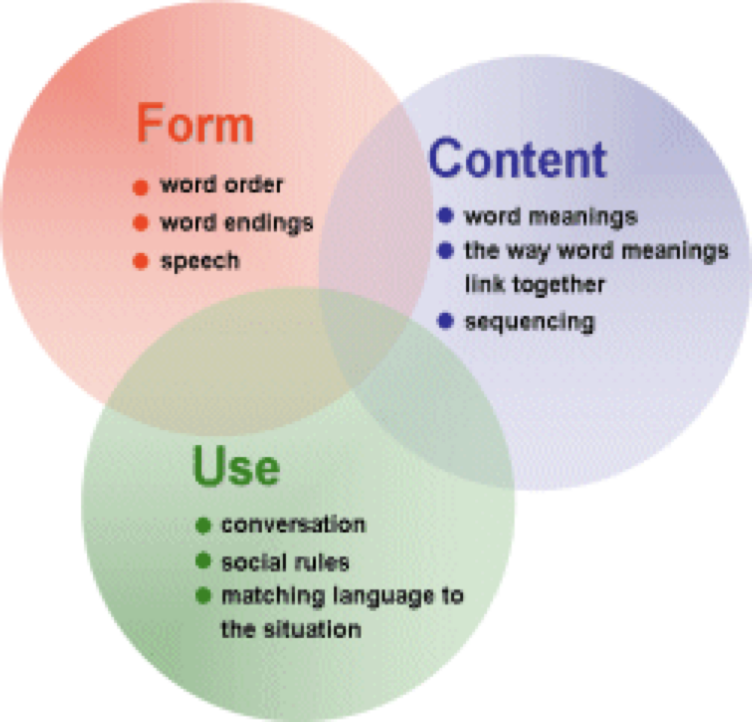
What Constitutes a Problem with Language Form
- B-24 months: children with LI may not combine words until after 2 years
- Preschoolers with a language disorder: use a limited number of morphemes, difficulty understanding and producing complex sentences, make more grammatical errors
- Approximately 70% of sentences produced by typical 3-year old's should be grammatically correct
- School age children with a language disorder: likely to use fewer complex sentences, smaller variety of complex sentence forms, difficulty developing phonological awareness skills needed for decoding (read)
What Constitutes a Language Problem in the Areas of Content?
- Birth-24 months: 24 months have <50 words, not putting 2 words together
- Preschoolers: trouble comprehending basic concepts, limited semantic relationships (possession), learn words slowly
- School Age: children with LI continue to have difficulty learning and using words (both easy/complex words), difficulty with figurative language (idioms, humor)
What Constitutes a Language Problem in the Area of Language Use?
- Infants and Toddlers: restricted range of communicative functions and lack of communicative initiative
- Request, social closeness, social etiquette, transfer of information
- Preschoolers
- Initiate/respond during conversations
- Children with LI interrupt often
- Fail to initiate or respond appropriately to questions or comments
- Proficient in talking about a limited range of topics
- School Age Children:
- difficulty understanding and creating narratives
- omit important details in discourse
- difficulty understanding cause-effect relationships
- trouble answering literal and inferential questions
- difficulty understanding expository texts (explain)
- difficulty writing book reports/essays
Diagnostic Conditions That Are Characterized By Language Impairment (LI)
- LI may result from Neurodevelopmental Disorders
- Deficits in the growth and development of the brain
- LI may result from neurocognitive disorders
- TBI, sensory issues
- LI may be related to abuse/neglect
Specific Language Impairment (SLI)
- SLI is indicated by significant delays or deficits in
- comprehension or production of language form, content, or use
- that cannot be attributed to hearing, intellectual, emotional, or acquired neurological impairments
- Also called language disorder and developmental language disorder
- Cause unidentified
- SLI believed to result from subtle genetic, neurological, and environmental factor that lead to difficulties in learning and using language
Intellectual Disability (ID)
- ID: severe deficits in
- intellectual functions (reasoning, problem solving) <70 IQ
- adaptive behaviors (communication, ADL)
- appear during childhood (before 2 years of age)
- Possible Causes
- genetic conditions
- maternal infections during pregnancy
- complications during delivery
- diseases
- Almost always have deficits in the area of language (content & form)
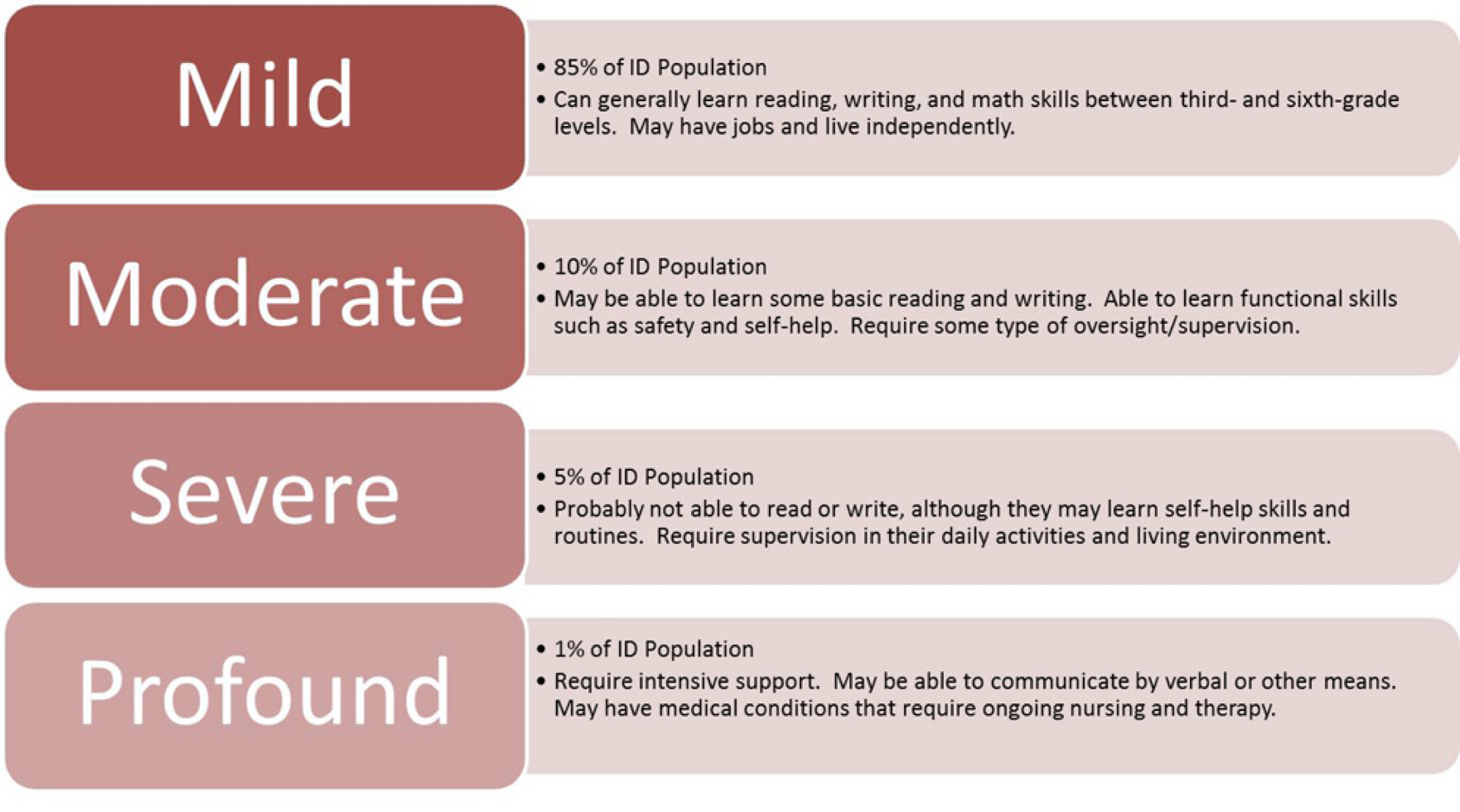
- Significant impact on the ability of individuals with ID to live, work, recreate, and learn successfully in community environments typical of their same-age peers
- 1-3% worldwide
Autism Spectrum Disorder
- ASD must have pervasive and sustained difficulties with social interaction
- Examples include severe problems with
- participating in conversations
- sharing interests or emotions
- initiating or responding
- Interfere with daily activities and the ability to learn through socialization
- Raising a child with autism spectrum disorder:
- Restricted or repetitive patterns of behavior, insistence on sameness
- Diagnosed between 18 months - 2 years; 1 in 68 live births; increasing in #
- Result from a combination of genetic, biological, perinatal, and environmental factors
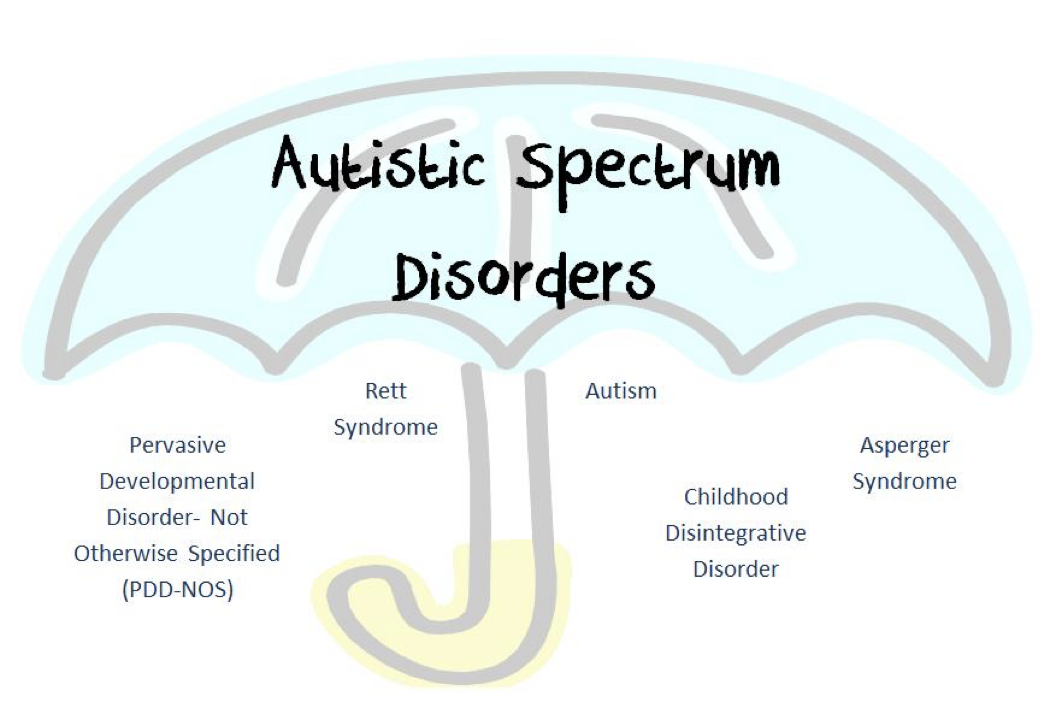
- Rett syndrome is a rare genetic neurological and developmental disorder that affects the way the brain develops, causing a progressive inability to use muscles for eye and body movements and speech. It occurs almost exclusively in girls
- The childhood disintegrative disorder (CDD), also known as Heller's syndrome and disintegrative psychosis, is a rare condition characterized by late onset of developmental delays in language, social function, and motor skills.
- Characteristics:
- Core symptoms that are diagnostic “red flags”
- No big smiles or warm expressions by 6 months
- No back and forth sharing of sounds, smiles, or other facial expressions by 9 months
- No babbling by 12 months
- No gestures, pointing, showing, reaching, or waving by 12 months
- No words by 16 months
- No 2 word meaningful phrases (without imitating or repeating ) by 24 months
- Any loss of speech or babbling or social skills at any age
- Most people with ASD have:
- Decreased receptive/expressive language
- Visuospatial/visual memory skills that far surpass their apparent abilities in the language area
- Work puzzles and build with blocks
- 40% of individuals with ASD also have an intellectual disability
Specific Learning Disorder
- Learning Disability - Is characterized by persistent difficulties learning academic skills
- Problems with:
- Word decoding (reading out loud)
- Reading comprehension
- Spelling
- Writing
- Number facts
- Mathematical reasoning
- Regardless of the etiology, conduct intervention
- that is appropriate for the child’s developmental level
- that matches his/her interests
- that provides the language needed to function well in his environment
Assessment
- Evaluate the child’s language development and determine if a language impairment is present
- Chronological age: is the amount of time that has elapsed since a child’s birth
- Determine a child’s age and to compare him to other children of the “same age”
- Subtract the child’s date of birth from the date of the assessment
- 2015/08/21 (Date of assessment: August 8, 2015)
- 2004/03/20 (Date of birth: March 20, 2004)
- 11 years, 5 months (chronological age)
- Days greater than 15 add them, days less than 15 don’t add them
- Norm referenced tests are administered to compare a child’s skill in a given area (i.e. vocabulary development) with that of other children who are the same chronological age
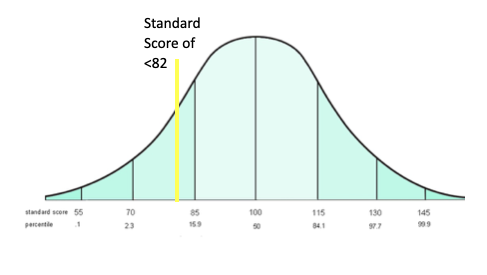
- mean 100, SD 15
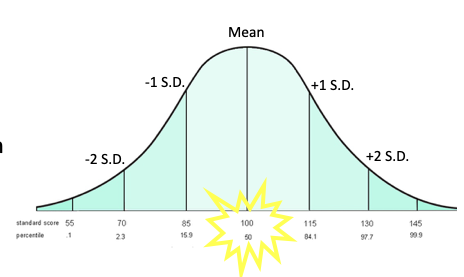
- Children who earn index scores below 82 on two different measures of language are likely to have a language impairment
- Also, take language sample, case history, talk with teachers
Assessing Children’s Language
Infants and Toddlers
- The most severely involved infants and toddlers with known etiologies are the easiest to diagnose
- Test instruments and analyses used for infants and toddlers may be broad based:
- communication skills
- developmental milestones related to motor, cognitive, sensory, and social-emotional skills
Rossetti Infant-Toddler Language Scale
- Popular, criterion-referenced
- B-3
- English and Spanish
- Assesses:
- interaction-attachment
- pragmatics
- gesture
- play (connects to cognition)
- language
- Administered using a combination of:
- observation
- elicitation
- parent report
- Results are displayed on a graph; highlighting strengths and concerns
- Severity ranges
- Re-administered periodically to chart progress over time
- Parent report may be the best way to explore vocabulary knowledge in infants and toddlers
- Have parents circle “words used” and “words understood”
Preschoolers
- Norm-referenced tests
- Language sample:
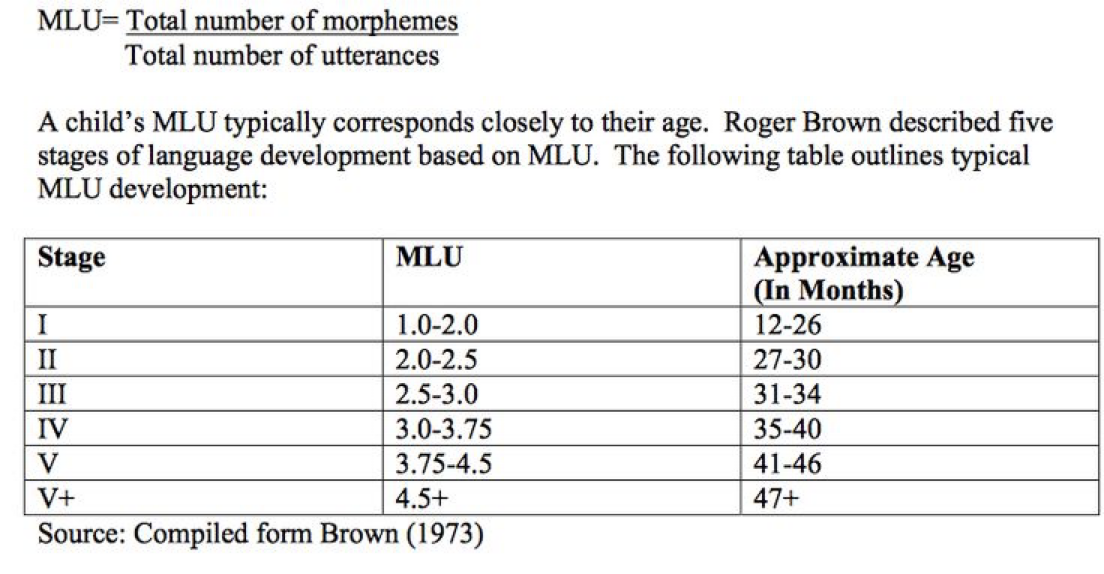
- determine Mean Length of Utterance (MLU)
- Average number of morphemes in each utterance
- Probe for specific language forms
- Mommy kissed my daddy = 5
- Me first = 2
School-Age Children
- Strategies for teachers to use to facilitate language development in the classroom
- Simplify teacher question/directions
- Require the child to restate teacher directions
- Give the child extra time
- Give cues to assist the child in word retrieval
- Repeat the child’s statements, adding grammatical markers that make them complete
- Ask questions that encourage the child to make connections between new and previously taught information
- Ask questions that encourage child to explain his/her answers in more detail
- Respond positively to any verbal output from the child
- Provide a buddy to assist the child when he/she is confused
- Use pictures and objects while you are giving directions or explaining concepts
- Show the child how to ask for assistance for clarification
- Teacher can refer a child for an assessment
- Child’s parents must be informed and give permission
- Language Assessment:
- review of the records
- observations
- administration of 1-2 standardized tests
- collection/analysis of a language sample
Nonbiased Assessment
- Assessment must be culturally and linguistically appropriate
- Assessments conducted in a child’s second language can lead to misdiagnoses of LI or CI
Language Intervention
- Section 504 (passed in 1973) prohibits any agency receiving federal funds from discriminating against individuals with disabilities
- A child is a subject of discrimination if as a result of a disability he/she cannot benefit from the same kind of educational experience that are routinely available for nondisabled students
- Individuals with Disabilities Education Act (IDEA; PL 105-17) requires states to offer a range of identification and intervention services for children from birth to 19 years of age
- Congress must reauthorize funding yearly
- Free Appropriate Public Education
- Least Restrictive Environment
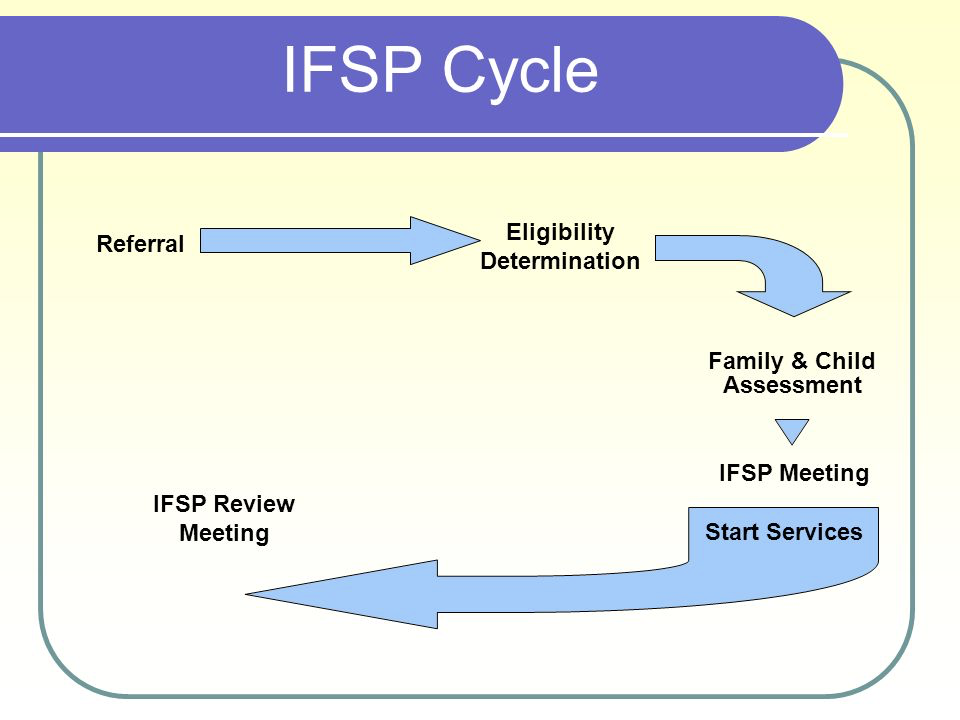
- Part C of IDEA
- Birth-3 years
- Individual Family Service Plan (IFSP)
- Age 4-school age
- Individualized Education Plan (IEP)
Requirements of IDEA
- Parent Notification
- Comprehensive Evaluation
- Determination of Disability
- Individualized Education Program
- Review of Placement and Services
- Due Process
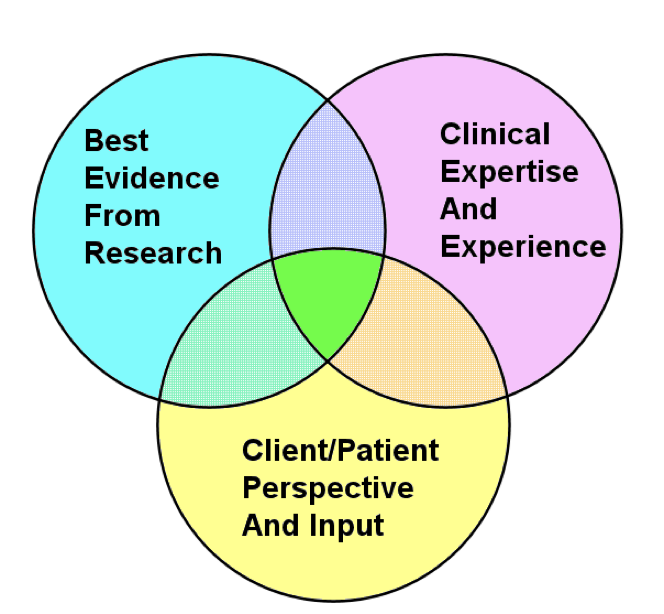
- Requires clinicians to use evidence-based practice (EBP)
- Clinicians should review the best available evidence about assessment and intervention procedures
- Integrate information from current studies, own experience, parents/teachers
Approaches to Language Therapy
- Child centered
- Clinician centered
- Hybrid
Early Intervention with Infants, Toddlers, and Preschoolers
- Early intervention makes a difference
- Approaches
- Child centered
- Play (normal activities)
- Self-talk
- Self-Talk is a strategy in which the adult describes what he or she is doing. The adult provides the words to describe her actions, without expecting the child to respond
- Parallel talk
- Parallel Talk is a technique in which the adult describes what the child is doing or seeing.
- Expansions
- Expansions are comments that add sematic and syntactic details to incomplete phrases. Expand your child’s comments. Use words that the child has already said; add missing words
- Extensions
- Extensions add more information to your child’s utterance. Acknowledge what the child has said; add more information to it
- Approaches (continued)
- Clinician-centered
- Models based on behavioral principles of learning
- Clinician input is designed to produce a correct response (child output)
- Advantage: lots of practice on a specific target,
- Disadvantage: unnatural, does not carry over
- Hybrid
- Combination
- Child may select the toys/activities
- Clinician identifies 1-2 goals
Language Intervention with School-Age Children
- Focus on social interactive and academic uses of language in pragmatically relevant situations
- Strategies include
- Modeling (provide an example)
- Practice and role-playing
- Discussion of behaviors
- Caregiver training
Literature-Based Language Intervention
- Literature-based language intervention approach
- Centered on a common theme that is introduced in a story
- Activities facilitate
- Semantics
- Syntax
- Morphology
- Narration
- Phonological awareness
- Pre-reading discussions, reading and rereading, retelling the story, mini lessons
Classroom Collaboration
- Many SLPs who work in public school settings conduct language intervention in the regular classroom
- Classroom Collaboration approach to language intervention is helpful when clinicians want to integrate their language learning goals with the expectations of the academic curriculum
What If? Scenarios
- Students will be divided into groups of 2-3 and the following problem will be discussed in small groups.
- Each student is expected to contribute to the group discussion.
- Each student is expected to listen and attend when other students are sharing their ideas and thoughts.
- Please incorporate what you learned during the reading/lecture with your discussion.
- Your discussion should take between 5-7 minutes
- One member of the team needs to prepare a 3-sentence summary of your discussion to share with the class.
- Think about what you would do in the following situations:
- Your supervisor is 30-years older than you. He constantly looks over your shoulder to make sure you’re doing things correctly. If he would just give you the chance, you could download some new software to improve your office’s financial records and make things quicker and easier to report
- One of your patients scheduled for speech therapy this morning has just informed you that she refuses to have the treatment
- As a speech-language pathologist an elementary student that you treat for stuttering arrives at your office in tears. He tells you that other students in his class were making fun of his stutter during recess. What do you say / do?
- As a school SLP, you are trying to develop your schedule for the semester. In order to best group your clients together, one of the students is going to miss their language arts class 1X/week. This is not typically allowed, but you think it is worth talking to his classroom teacher about this possibility. What do you say / do?