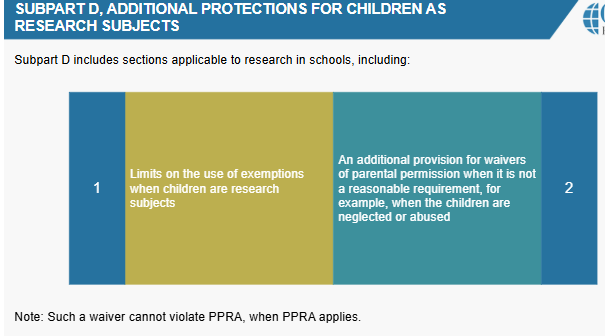
Research With Children
they have more protections than adults, to protect thier welfare
parental permission and child assent processes

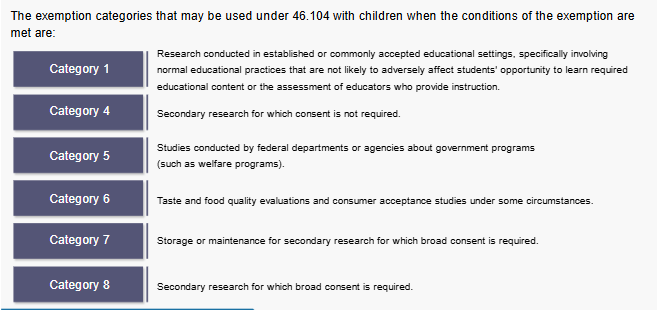

Categories to expedite the review process (areas with minimal harm):
Parental Consent
process for child assent should be explained with bkg data or experience-based evidence
this is required for each age group if multiple are involved
should be designed similar to the process for adults when working with teens

Can revise the assent process such as reaffirming, or making it more detailed as they get older for longitudinal studies then sign a consent form when they turn the age of majority
Subpart D has more requirements for studies with higher levels of risk


documentation of assent and Consent
IRB determines what is best based on level of literacy or to record for state that assent took place
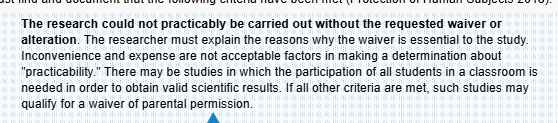
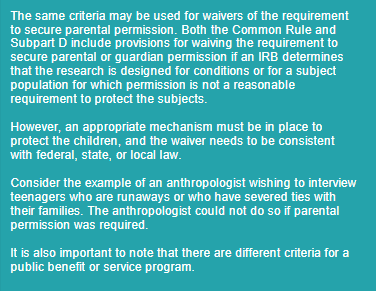
Parental consent is required unless waived for this reason:

Research in Public Elementary and Secondary Schools

Laws outside of FERPA:
The Protection of Pupil Rights Amendment (PPRA)
stemmed from the NCLBA
provides parental control over the content of surveys, instructional materials, research program and projects, and evaluations of minor students with 2 levels of control based on how the research is funded


senstive topics
political affiliations
mental and pyschological problems potentially embarassing to the student or their family
sex behavior and attitudes
illegal, anti-social, self-incriminating, and demeaning behavior
critical apprasials of others with whom respondents have close family realtionships
religious practices, affiliations, or beliefs of the students or their parents
income than other than that required by law to determine elgibility for participation in a program or for receving finacial aid under such a program
and:

any research on these topics must be reviewed by parents, including the instruments, and parental permission cannot be waived