Lecture 16: The Innate Immune System
Overview of the Immune System
What does the Immune system do?
immune system function: Protects against pathogens and damaged cells
Cells
Key Components:
Leukocytes (White Blood Cells): Produced in bone marrow
Thymus: where a specific type of white blood cell matures.
Lymphatic System: Comprising lymph vessels and lymph node
transports lymph fluid (derived from extracellular fluid) and contains white blood cells that check for pathogens.
Divisions of the Immune System
Innate Immune System
Innate Immune System: less-specific; blocks against anything foreign
innate - present from birth, always have it
Includes:
Surface defenses: keep foreign things out
examples: skin, tears, coughing generally eject and wash away foreign item
White blood cells and chemicals that attach broad classes of foreign things
examples: phagocytes, defensin proteins attack many broad classes of pathogens (bacteria, viruses, fungi, etc)
Adaptive Immune System
Adaptive Immune System: more specific; recognizing specific pathogens
white blood cells and antibodies that recognize and attack very specific pathogens
examples: lymphocytes attack specific pathogens
acquired - developed upon exposure to a particular pathogen
Includes memory of prior infection or vaccination
Innate Immunity: Physical, Chemical, and Cellular Defenses
Physical Defenses in Innate Immunity
Surface Barrier: Skin
held together by tight junctions
act as a tight barrier against pathogens.
ALSO PART OF CHEMICAL DEFENSE
Surface Barrier: Mucous Membranes
contain mucus that traps pathogens
Found in areas such as:
mouth
nose
lungs
respiratory tract
digestive tract
urinary tract
reproductive tract
Mechanical Defenses:
shedding skin
urine
tears
eye and eyelashes
mucocilliary escalator: cilia on cells lining airways that push microbes upward out of airway to be swallowed by digestive system and killed by stomach acid
Microbiome
Microbiome: full set of microbes present in a particular environment
Occupies space and uses resources to prevent pathogen colonization, makes it harder for microbes to grow
Human Microbiome: full set of microbes present in and on a human
ALSO PART OF CHEMICAL DEFENSE
Chemical Defenses in Innate Immunity
Skin
skin produces:
fats
acid
salt
Microbiome
microbiome produces chemicals that hurt pathogens.
Digestive Tract
saliva: antimicrobial enzymes
stomach: acid
intestines: antimicrobial enzymes, bile, antimicrobial peptides
Vagina
glycogen converted to lactic acid by Lactobacilli
Vaginal produces glycogen that lactobacilli eat and ferment into acid
maintains acidic pH in vagina that protects from pathogens
Antimicrobial Peptides:
Antimicrobial Peptides: short proteins that can damage microbes
Example: Defensins insert into microbial membranes, causing cell lysis.
Complement Proteins:
Complement Proteins: found in blood
Functions include:
Opsonization: complement proteins stick to pathogens and make them more recognizable to white blood cells to be engulfed. (phagocytosis)
Inflammation: complement proteins make factors to signal and alert for white blood cells by causing inflammation
Lysis: complement proteins form holes in microbial cells to make cells leak and burst
Nemonic to remember: favorite “complement” is you look “oil” today
Interferon:
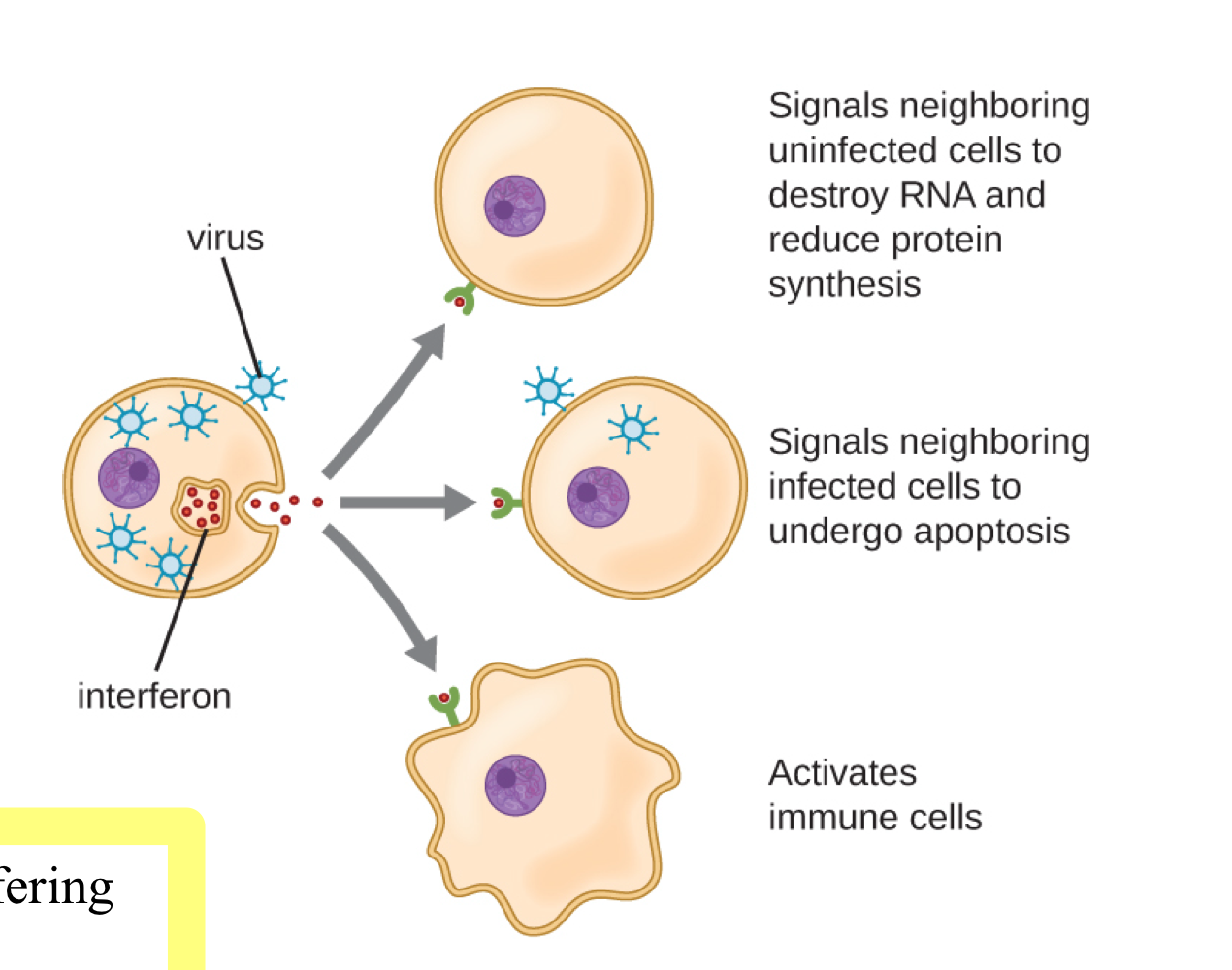
Interferon: protein made by virus infected cells
cells make interferon as cry for help
interferon is sent out of cell for chemical signaling to other cells
Neighboring cells receive interferon’s message and respond by:
neighboring uninfected cells destroy RNA and reduce protein synthesis
shut down transcription and translation
prevents virus from being able to replicate inside of them
neighboring infected cells undergo apoptosis (kill themselves)
activates immune cells
Analogy: Interferon functions like a neighborhood watch alerting neighbors of infection.
How immune cells recognize pathogens:
3 types of Innate Immune Cells:
natural killer cells
granulocytes
phagocytes
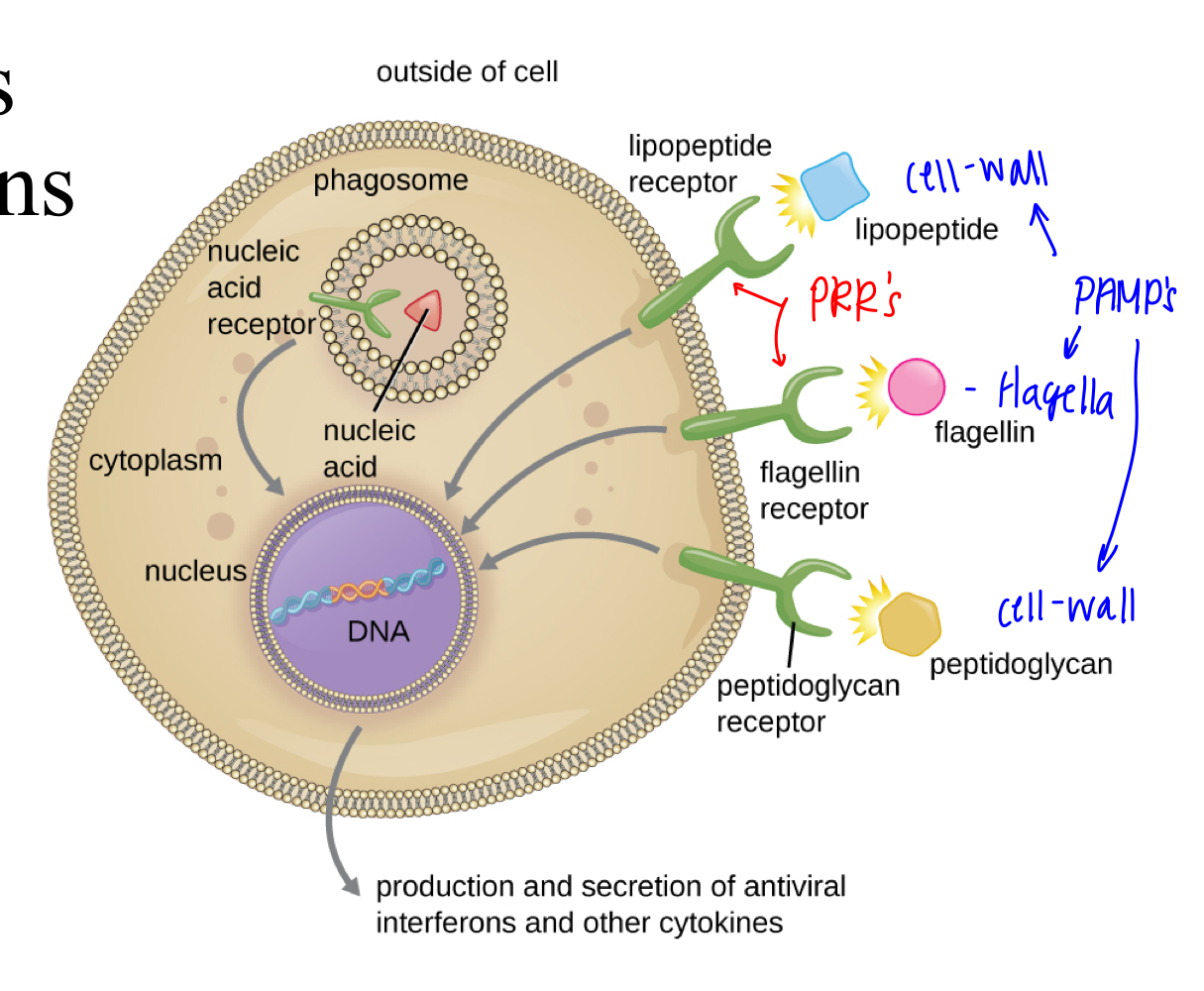
granulocytes and phagocytes both recognize pathogens chemically:
pathogen recognition receptors (PRRs): receptors that allow them to recognize pathogens
PRRs bind to molecules called pathogen-associated molecular patterns (PAMPs) and respond to fight pathogen
pathogen-associated molecular patterns (PAMPs): foreign molecules, found in microbes
examples of PAMPs:
lipopepetide on cell walls
flagellin in flagella
peptidoglycan on cell walls
Natural Killer Cells (NKC’s)
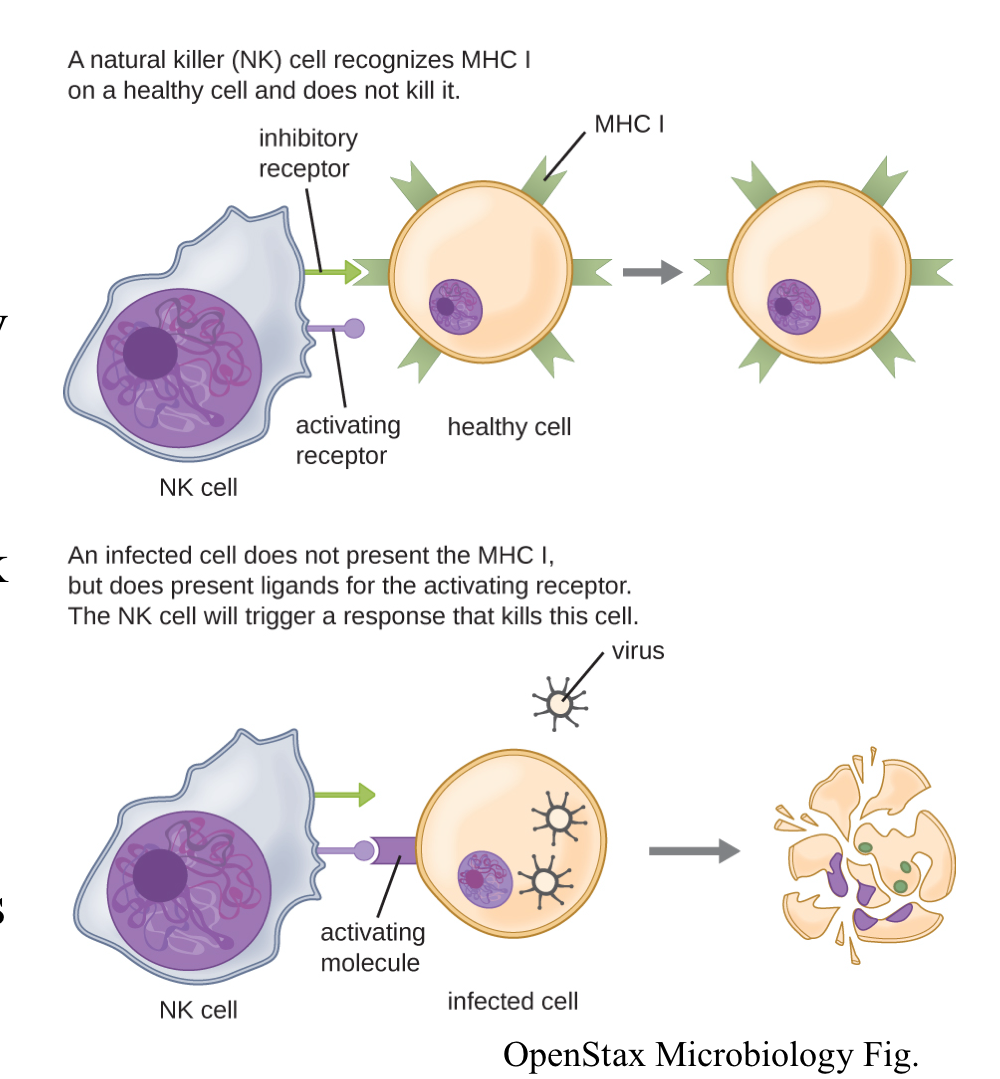
Natural Killer Cells (NKC’s): detect infected cells that do not have MHC I and kill them
MCH 1 (major histocompatability complex 1): found on nearly all cells, displaying samples of molecules found inside cell so pathogen can check for pathogens
some intracellular pathogens remove MHC I from cell they are infecting
Natural Killer Cells recognize infected cells that are missing the MHC I and destroy them
Cellular Defenses in Innate Immunity
Granulocytes
Granulocytes: contain granules filled with chemicals that hurt microbes
Basophils, eosinophils, and neutrophils are granulocytes
Nemonic to remember: Granulocytes = BEN with pockets full of poison
Basophils and Mast cells:
Basophils are found in blood
mast cells are present in most tissues
both basophils and mast cells contain granules release histamine (don’t directly attack microbes)
involved in allergic response and inflammation
Eosinophils:
found mainly in tissues below mucous membranes
attack parasitic worms
involved in allergic responses
Neutrophils:
granules contain antimicrobial substances
can release intracellularly or extracellularly
if bump into pathogen, can dump granules to kill pathogen OR can engulf microbe and kill it when inside cell
Phagocytes
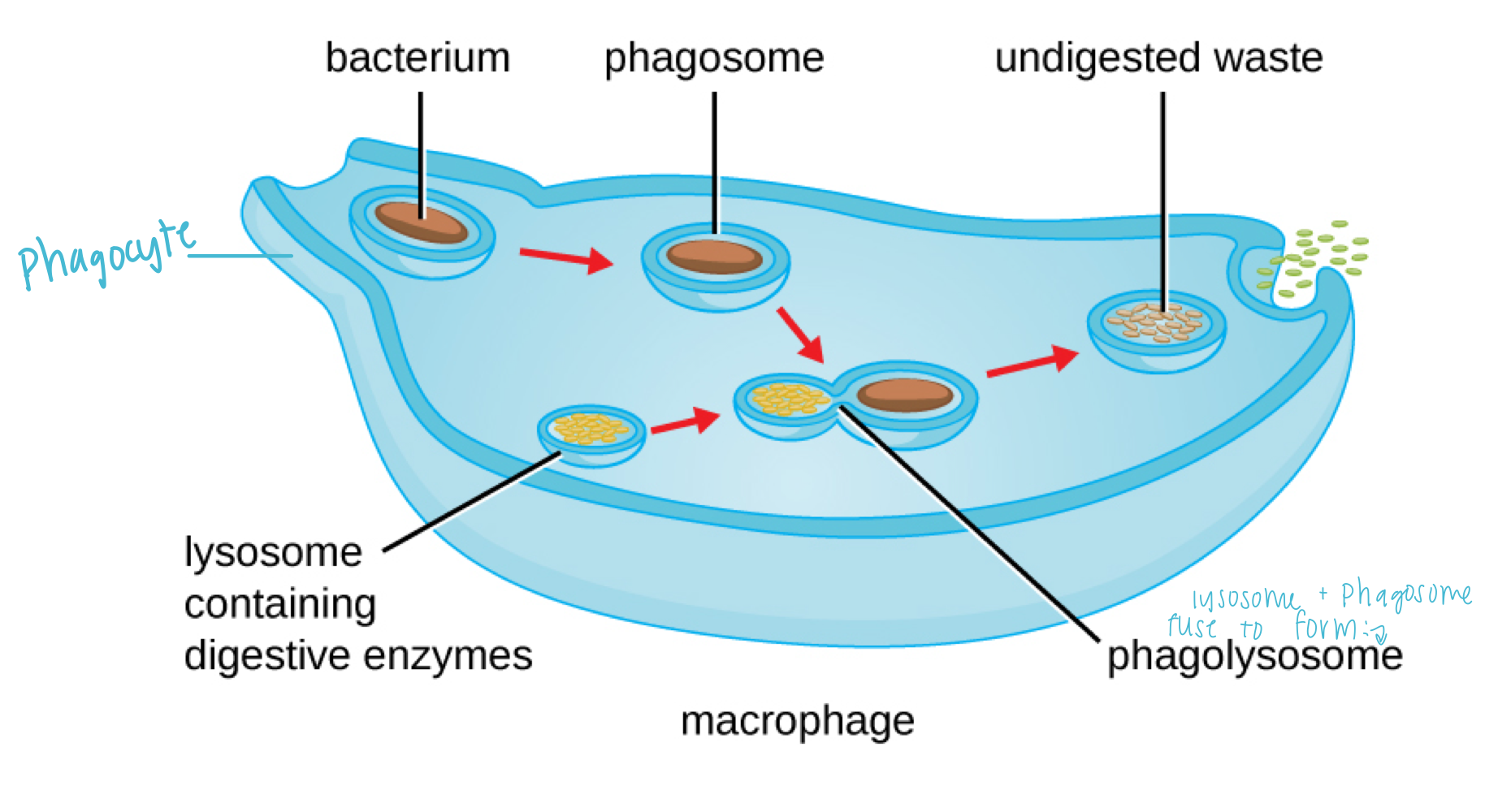
Phagocytes: cells that eat microbes
incude:
macrophages
neutrophils
Neutrophils are BOTH granulocytes and phagocytes
Nemonic to remember: Phagocyte = NoM (Neutrophil OR Macrophage)
STEPS:
phagyocyte engulf bacterium
forms phagosome (vesicle of membrane)
phagosome fuse with lysosome containing digestive enzymes
digest bacteria into little pieces and kill it
cell can use some pieces
unused pieces are released from cell as waste
Innate Immune Processes:
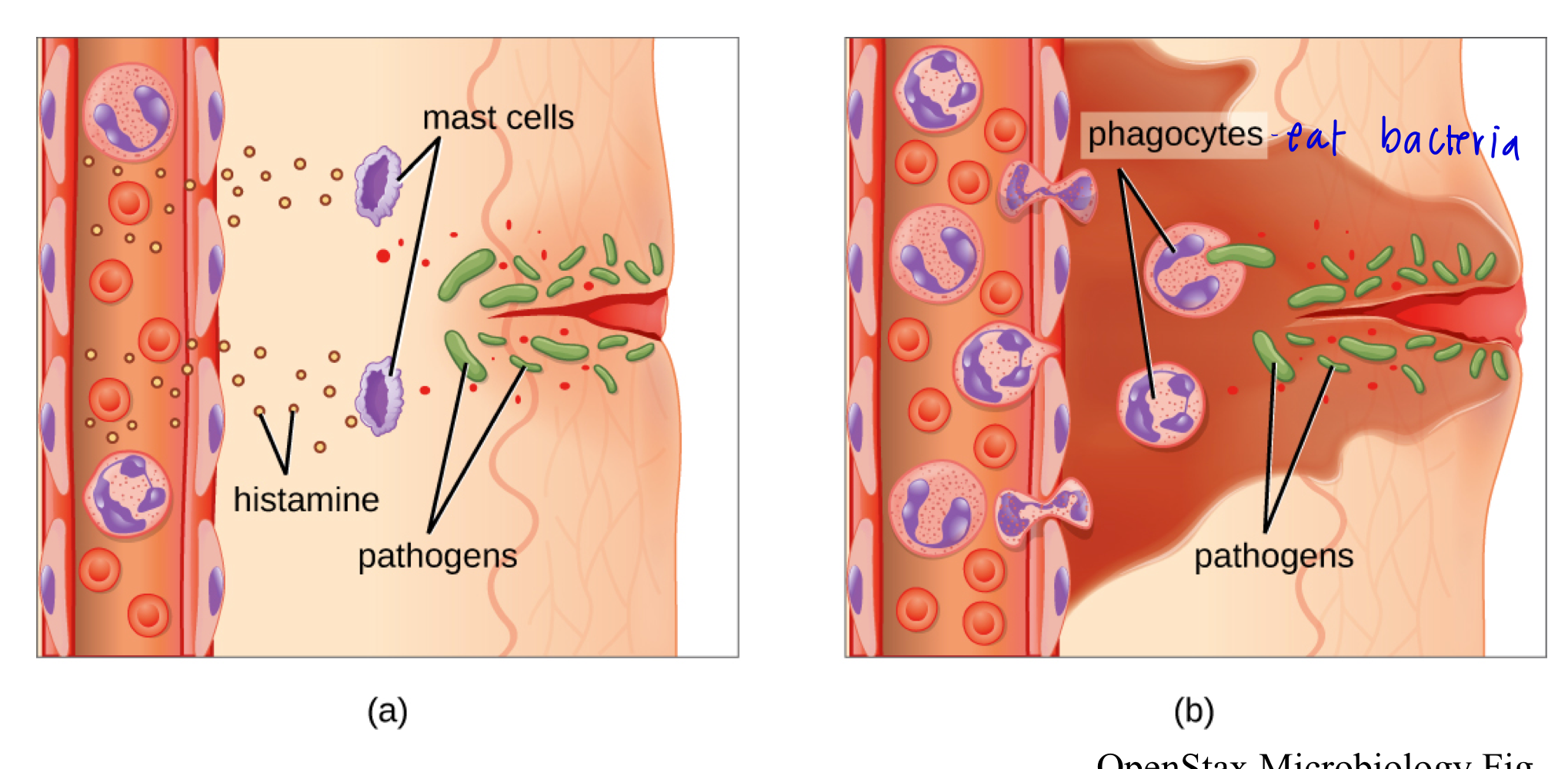
Inflammation:
Inflammation: innate immune response to infection or injury
blood vessels become leaky, delivering blood and WBCs to specific area
Signs of Inflammation: (acronym: SHARP)
Swelling
heat
altered function
redness
pain
Acute vs. Chronic Inflammation:
Acute inflammation - short-term
resolves within days as infection clears and damage is repaired
helpful
Chronic inflammation - long term
two cases:
infection doesn’t clear and inflammation continues for months or years
causes damage healthy tissues as well as fight infection
inflammation is inappropriate - white blood cells damage own tissue if inflammation continues for too long
example: auto-immune response, allergy
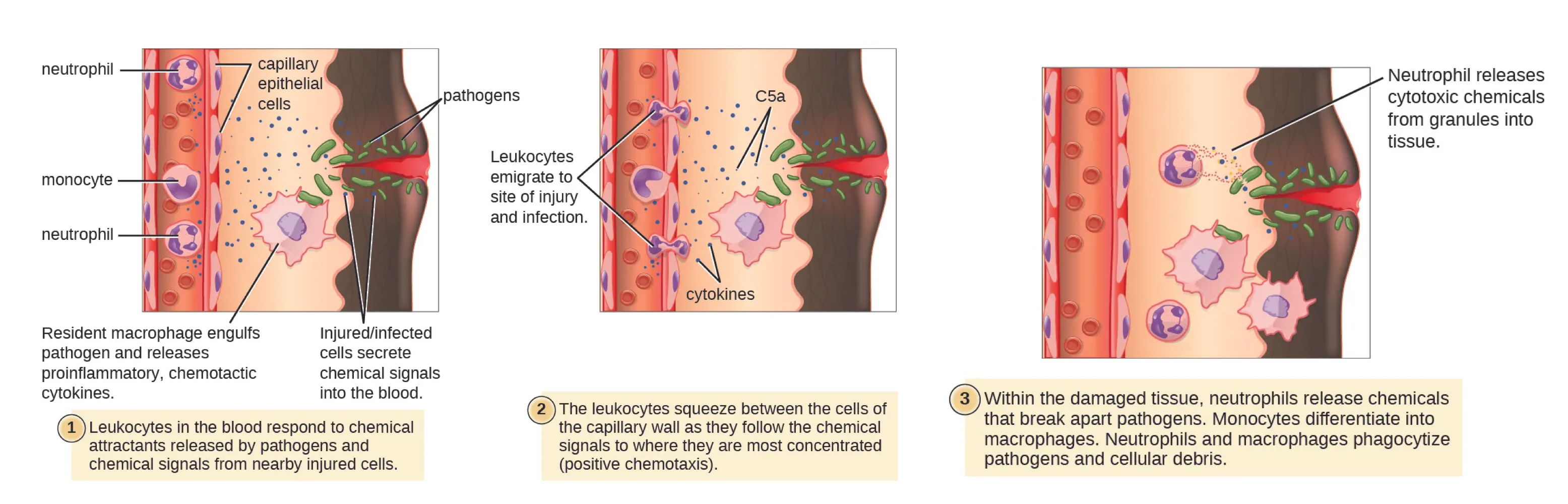
Response Mechanism:
pathogen enters the body
macrophage and mast cells detect pathogen and release chemicals into bloodstream (into blood vessels)
phagocytes are attracted to chemical released, and squeeze between capillary walls, following chemical signals to where they are most concentrated
extravasation: phagocytes move outside blood vessels to where chemical signal is most concentrated
“extra-” means outside
“vasa” means vessel
outside vessel
within damaged tissue, neutrophils release chemicals that break apart pathogens
macrophages and neutrophils phagocytize pathogens and cellular debris
Fever:
Fever: Indicates an increase in body temperature above 37.8°C/101°F (normal: 37°C)
fever is caused by pyrogens
pyrogens: chemical messengers that cause hypothalamus to increase temperature, causing a fever
hypothalamus receives signals (pyrogens) from body and increases temperature
chemicals come from:
microbes infecting cells
white blood cells that detect infection
Benefits of Fever:
Prevents some microbial growth
enhances immune system function (increased enzymatic activity rate)
Risks:
Extremely high fever (42°C) can be life threatening
lead to enzyme denaturation and cell death.