Human Endocrine System
The human endocrine system is composed of glands which secrete chemicals called hormones directly into the bloodstream
The blood carries the hormone around the body, and when it reaches a target cell/organ it produces an effect
Compared to the nervous system the effects of hormones are slower but they act for longer
Important structures in the endocrine system are:
Pituitary gland: a ‘master gland’ making hormones such as FSH and LH
Pancreas: produces insulin which regulate the blood glucose level
Thyroid: produces thyroxine which controls metabolic rate and affects growth
Adrenal glands: produces adrenaline
Ovaries (females): produce oestrogen
Testes (males): produce testosterone
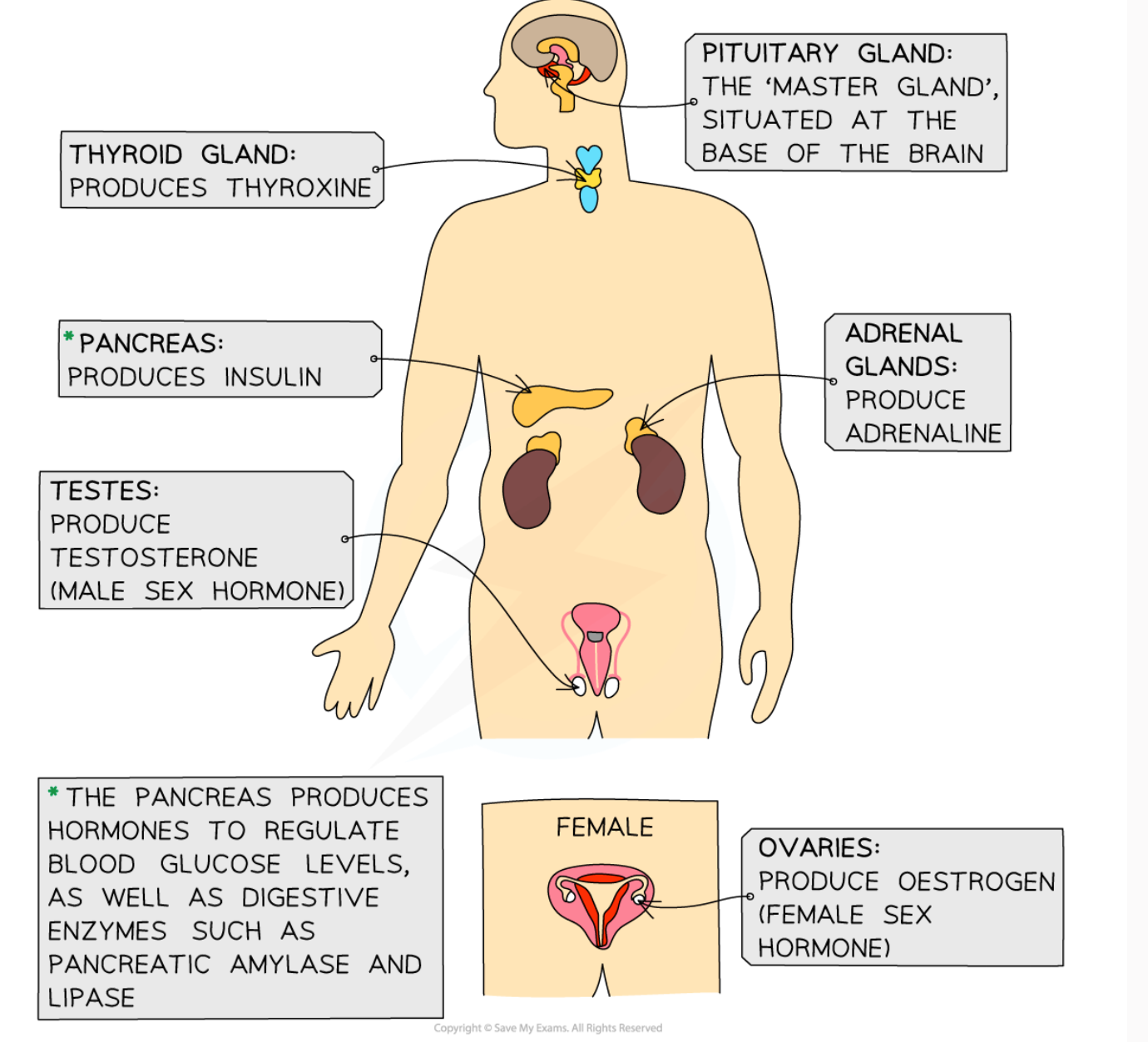
Pituitary Gland
The pituitary gland in the brain is a ‘master gland’ which secretes several hormones into the blood in response to body conditions
These hormones in turn act on other glands to stimulate other hormones to be released to bring about effects
For example, in certain conditions, the pituitary gland makes and secretes thyroid - stimulating hormone (TSH) which stimulates the thyroid to release thyroxine
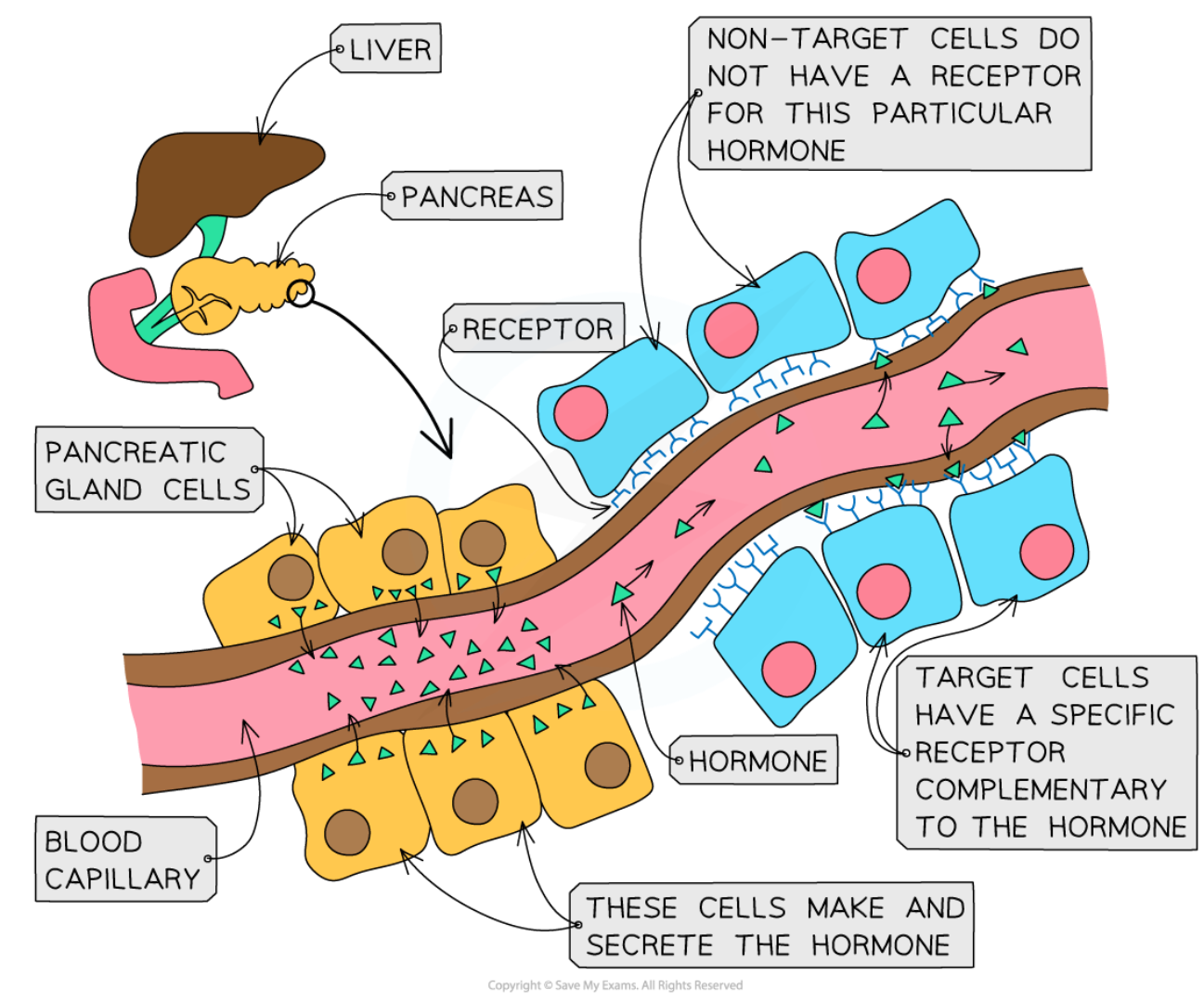
Hormones are synthesized and released into the bloodstream from a gland (such as the pituitary gland) and circulate in the bloodstream, having an effect on target cells