Geometry
Complementary angles: Two angles are called complementary when their measures add to 90 degrees.
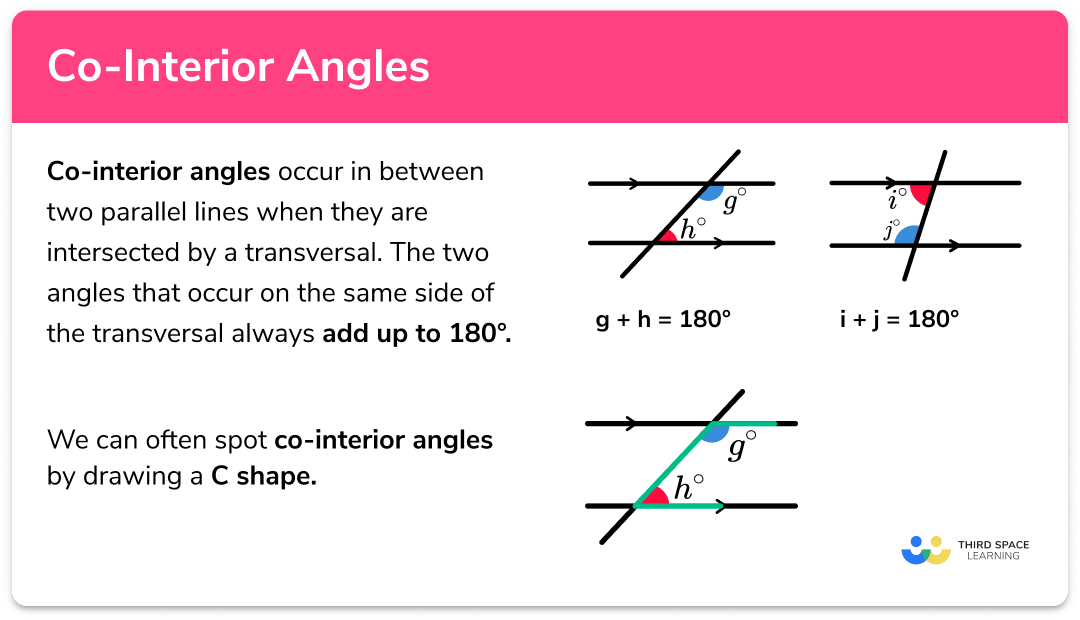
Supplementary angles: Two angles are called supplementary when their measures add up to 180 degrees.
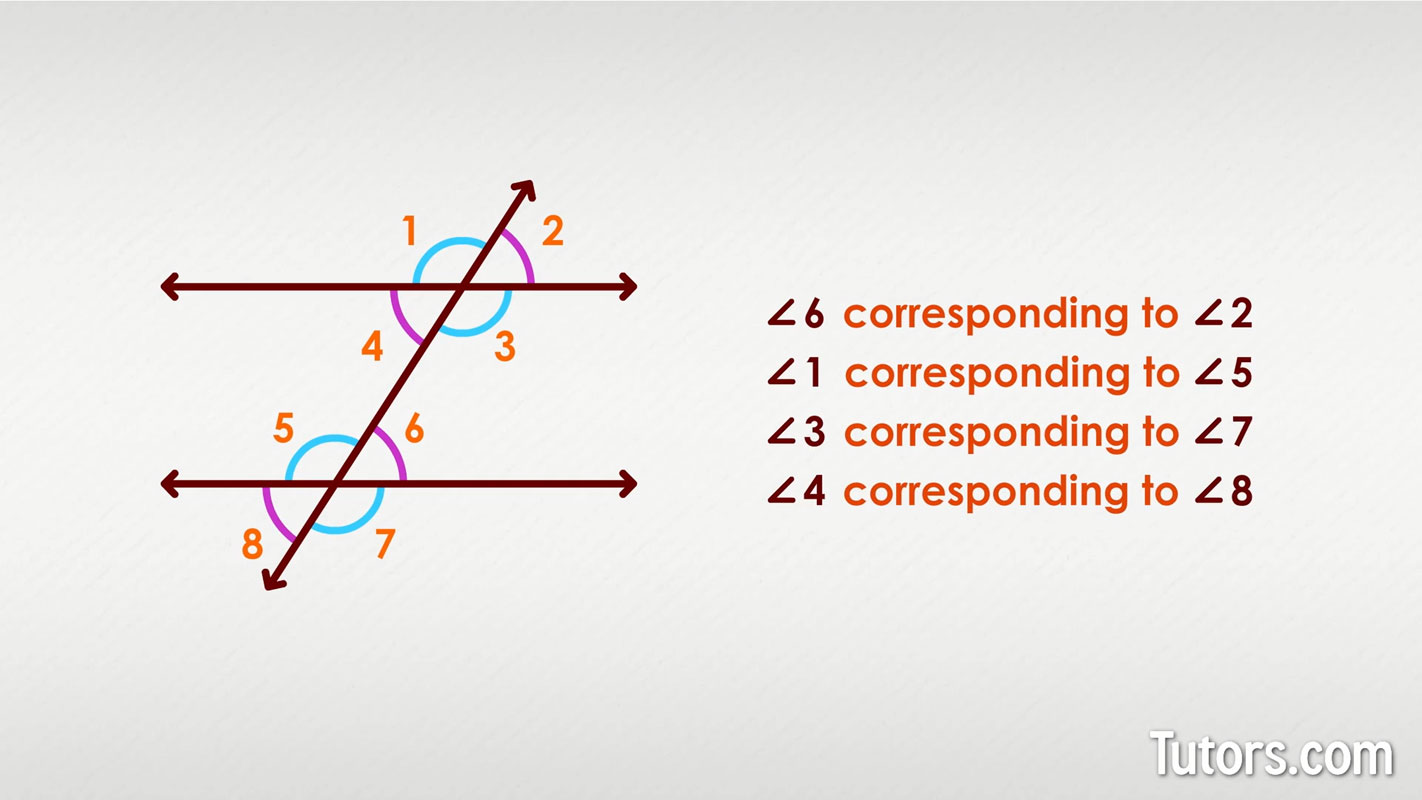
Corresponding angles: Corresponding angles are formed when a transversal intersects two parallel lines. These angles are located on the same side of the transversal in corresponding positions. Corresponding angles are always formed in pairs and are congruent.
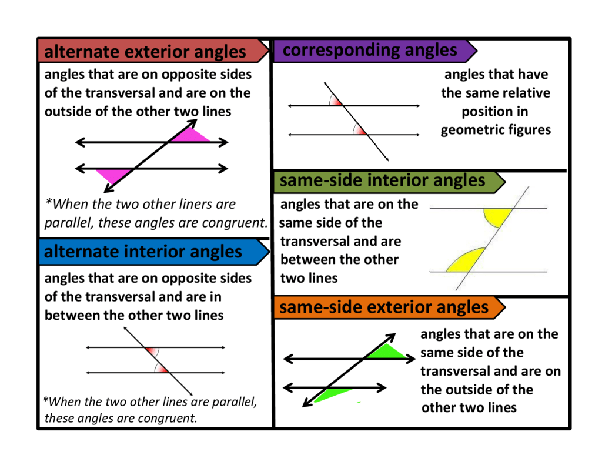
Alternate angles: Alternate angles are angles that occur on opposite sides of the transversal line and have the same size.
-alternate interior angles
-alternate exterior angles
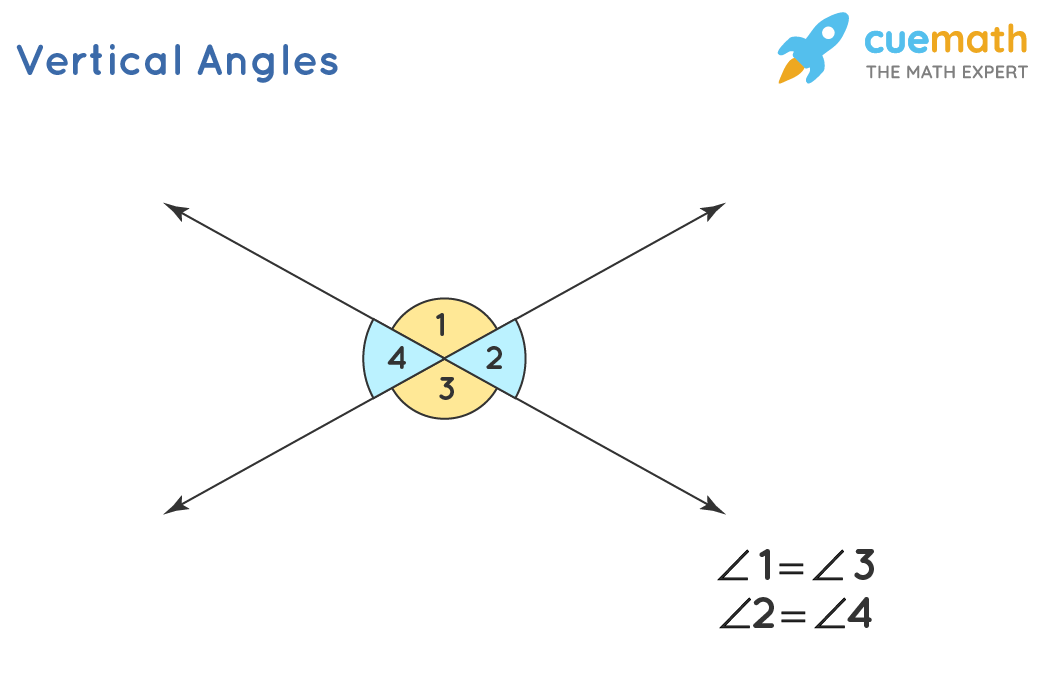
Vertically opposite angles: Vertically opposite angles are angles that are opposite one another at a specific vertex and are created by two straight intersecting lines
Two points determine a line. Any three or more points that are on the same line are called colinear points.
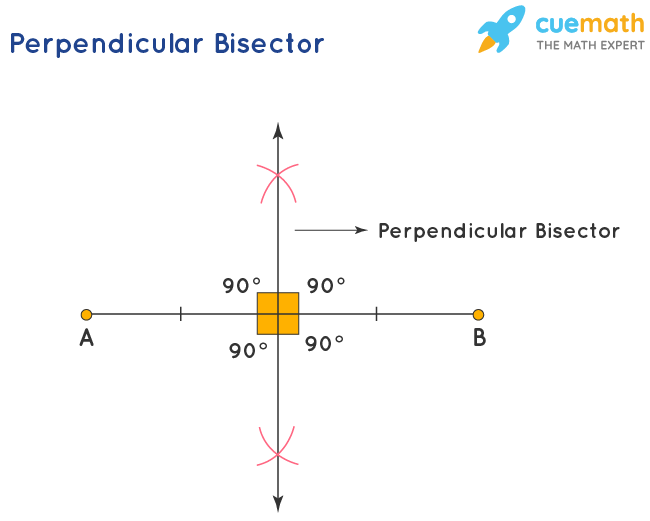
What is a Perpendicular Bisector? A perpendicular bisector is a line that bisects another line segment at a right angle, through the intersection point.