BAR Summary
B1
Supply and Demand curve: supply goes up with quantity & price, demand goes down with price.
:max_bytes(150000):strip_icc()/ChangeInDemand2-bd35cddf1c084aa781398d1af6a6d754.png)
B2
M1 - Capital Structure (CS)
debt vs equity, how company funds itself
WACC - Weighted Average Cost of Capital
LOWEST WACC = BEST Value for firm & best CS
WACC Formula: (A)* (B) *(C)
A. ((Cost of Stock %) * Proportion of CS that is Stock )
B. ((Cost of Preferred Stock%) * Proportion of CS that is Preferred Stock )
C. ((Cost of Debt %) * Proportion of CS that is Debt)
Cost of Retained Earnings
How much a firm should grow to keep stockholders happy (otherwise stockholders = mad and take money away)
Market risk premium = market return rate - risk free rate
3 Methods to calculate “Expected Return of Investment” (for investor) or “Cost of Retained Earnings” (for company):
#1. CAPM - Capital asset pricing model
Cost of equity = Risk-free rate + Beta * Market Risk Premium
Beta of investments = % change in price / % change in market
:max_bytes(150000):strip_icc()/dotdash_INV_final_Calculating_CAPM_in_Excel_Know_the_Formula_Jan_2021-01-547b1f61b3ae45d7a4908a551c7e7bbd.jpg)
#2. DCF: Discounted Cash Flow
[Cash flow / Market value price per stock] x Growth Rate
#3. BYRP: Bond Yield plus Risk Premium
Market Risk Premium + Pretax cost of long term debt.
Analyzing Capital Structure
Loan covenant - requirements from lenders to secure debt. Positive debt covenants ensure you maintain certain levels or ratios. Negative debt covenants restrict you from doing things.
Retention - Increase in RE / Net Income. AKA- portion of income not paid out in dividends.
Growth Rate - (Return on Assets x Retention) / [1 - (Return on Assets x Retention)]
High Financial leverage - when there’s less owners so existing owners get more profits → less equity + more debt CS = more EBIT to cover interest
Operating Leverage - when company has less variable costs → higher contribution margin.
Levered firm - company that has debt in its CS. unlevered = all equity no debt. levered firm can deduct interest on debt from taxes = good.
M2 - Working Capital
How businesses use cash, collect cash, and manage payments to get the most return on capital.
Net working capital = current liabilities - current assets
AR Management
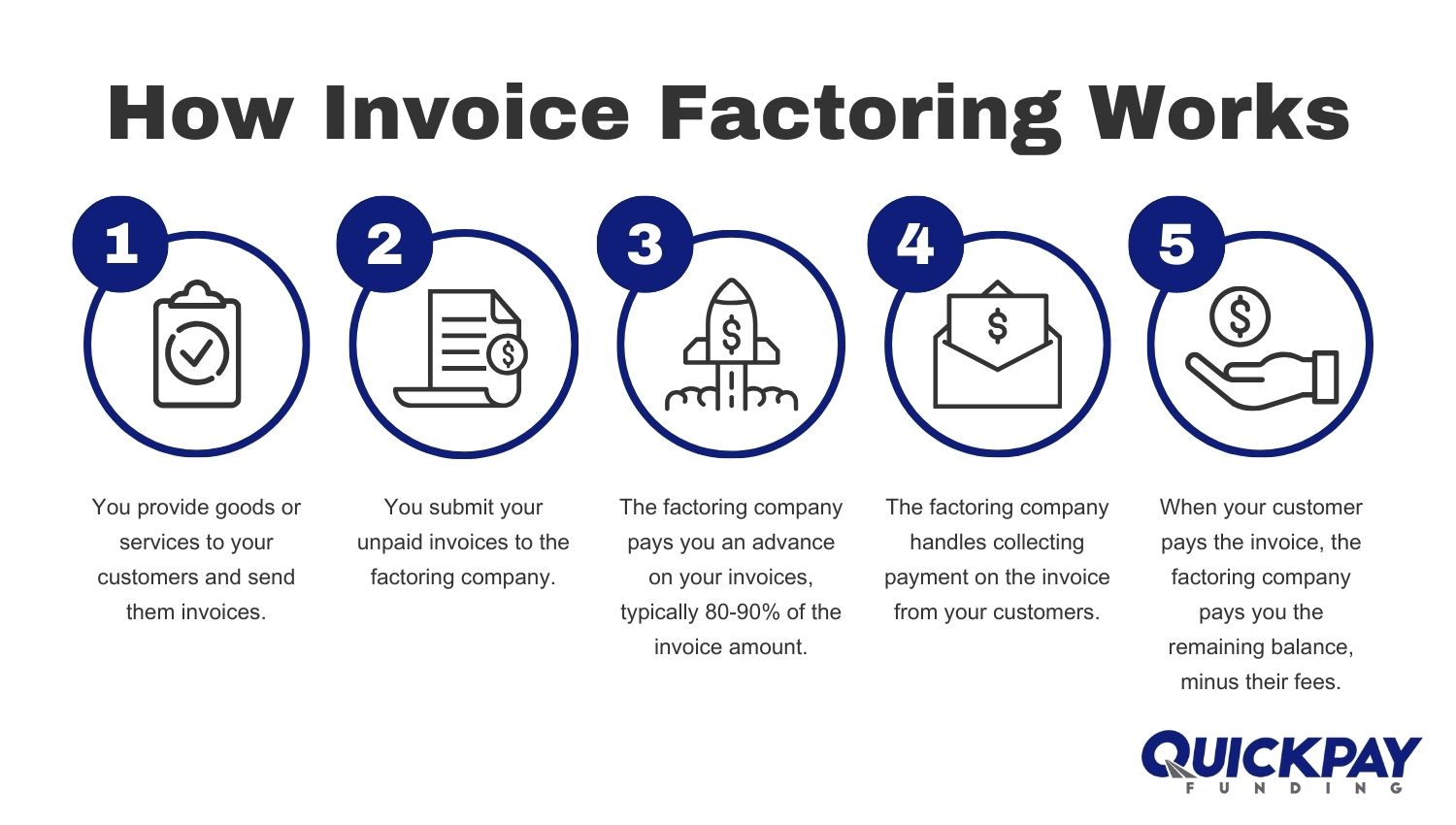
Factoring - a company gives you a % of your AR $$ now in exchange for a fee and interest payments. You get benefit of money now instead of waiting and less administrative work. Con = expensive.
Inventory Management
Reorder point = safety stock + (sales during lead time)
Economic Order Quantity = SQUARE ROOT of [(2 * Annual Sales * Cost to place each order)/ Annual carrying cost per unit]
Make sure that the time measure (like annual/quarterly/weekly all match up).
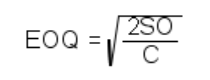
Order size gets larger as "S" or "O" gets bigger (numerator) or as "C" gets smaller (denominator).
EOQ | = | Order size |
S | = | Annual Sales quantity in units |
O | = | Cost per purchase Order |
C | = | Annual cost of Carrying one unit in stock for one year |
SCOR - Supply Chain Operations Reference Model. Plan, Source, Make, Deliver.
3 types of Inventory Management Issues:
Just in time - order gets placed → manufacture starts → gets to customer = less lag & more efficient
JIT is a pull-through inventory system, as the customer's order drives the need for inventory.
Push systems begin with forecasting customer demand.
Kanban - “hit me over the head with a can” → OOPS we ran out = order more.
Computerized - computer tells when to order more when stock is running low.
AP Management
Annual Cost of NOT taking a cash payment discount =
Effective Interest on Missed Discount Rate x Cycles of days of delayed payment per year
another way to look at it is…
[Forgone discount % / (100% - Foregone Discount %)] x [360 / (Pay period - Discount period)]

Short-term financing - debt that matures <1 yr
Pros: faster conversion of operating cycle, lower interest rates.
Cons: higher interest rate risk from fluctuating market/economy, credit worthiness can be affected impacting future funding for capital.
Long-term financing - debt that matures >1 yr. pros and cons are opposite of short term financing.
M3 - Valuation
Methods to value stocks & equity
Absolute Value Models: Assigns an intrinsic value to an investment by calculating the PV of the cash flow.
Relative Valuation Model: Uses price multiples, (financial ratios) to determine if the stock is undervalued, fairly valued, or overvalued.
Types of absolute value calculations:
Annuities: same cash flow each period for certain time period.
Annuity Due = beginning of period
Ordinary annuity = end of period
Perpetuities (aka Zero Growth Stock): same cash flow forever = like a dividend.
Present value of a perpetuity = the stock price.
Stock price = Dividends / Required Rate of Return %
Constant (Gordon) Growth Dividend Discount Model (DDM): assumes dividend will grow at same rate every year.
Present value (aka: price at specified period)

Get the required rate of return from the CAPM
higher dividends → higher value
Discounted Cash Flow Analysis:
Dividend discount model (DDM) - expected dividends = basis for PV of future CF
Free cash flow model (FCFF) - available cash after covering working capital needs = basis for PV of future CF
Types of relative valuation calculations:
Price Earnings (P/E) Ratio = Stock Price / Earnings per Share for 1 Fiscal Year
PE Ratio x Earnings for 1 year = Current stock price
Forward vs Trailing P/E Ratio:
Forward = future earnings & future EPS.
Trailing = past earnings & past EPS
high P/E → growth expectations
low P/E → undervalued or risky
PEG Ratio: P/E/G → the lower the better
Price-to-Sales Ratio: more stables than PE Ratios
Price-to-Cash-Flow Ratio: price per share / cash flow per common shares outstanding
A metric showing how much the market pays for each $1 of projected cash flow. A P/CF of 15 means each $1 of next year’s cash flow is valued at 15 times.
Price-to-Book Ratio: price per share / common stockholders’ equity per common shares outstanding
Options
Option: contract where a person can buy or sell a stock (or other asset) at a specific price within a certain period of time. American option → exercised any time. European option → exercised at maturity.
Buy → call option (the stock sings: “call me maybe!”)
Sell → put option (the stock says: “put me down!”)
The Black-Scholes Model: option value now; price, time, volatility, interest rate. Assumes a constant risk-free interest rate over the option's term in the calculation
Binomial (Cox-Ross-Rubinstein) Model: option value over time; price, steps, up/down, probabilities
Debt
Bonds pay interest (coupons) each period
Then return principal at the end
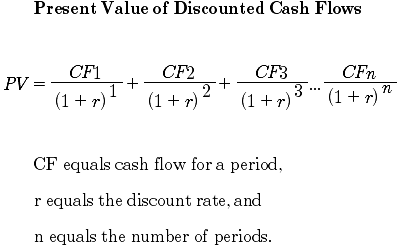
To calculate price of a bond:
Discount each coupon payment
Discount the final principal
Add them all up
Fair Value
Hierarchy of inputs: ranking of valuation inputs by reliability (Level 1–3).
Level 1 = quoted price for item.
Level 2 = comparable item’s price.
Level 3 = estimates, not observable price.
Fair value measurement: if principal market exists (market where most units is sold), then FV = value in principal market. if no principal market, then FV = most advantageous.
Market, income, cost approach: ways to value asset.
Market = comparables
Income = present value cash flows
Cost= replacement cost
M4 - Financial Decision Models
Cash Flows: Direct = actual cash; Indirect = adjusts NI → cash; both → same net CF
Asset Disposal: Sell old asset → gain/loss affects taxes → impacts CF → use after-tax proceeds = SP – tax on gain
Depreciation: non-cash but saves taxes → tax shield = Dep × tax rate → treat as cash inflow
NPV steps: PV cash savings/inflows = PV net cash outflows
Initial Investment (first yr when buying t=0): purchase + install + WC → always negative
Operating CF: savings/revenues are taxable → use after-tax CF = inflow × (1 – tax rate)
Salvage value: after tax gain/loss from last yr
NPV: Initial investment (which is negative) - PV inflows → NPV > 0 accept, < 0 reject
Ask:
👉 “Is this ONE payment or MANY?”Pick:
one payment → “PV of $1”
many → annuity
THEN multiply
Discounting: PV factor = FV / (1+r)^n; time=0 = no discount
Profitability Index: PI = PV inflows / initial → >1 accept
IRR (internal rate of return): rate where NPV = 0 → IRR > hurdle → accept
tells us “related interest rate”
Payback method: initial investment / annual CF → liquidity focus, ignores time value
Discounted Payback (BET): same but uses PV
EVA (economic value added): after-tax income (excluding interest expense) – (Required return)
Required return = Investment * WACC.
positive = accept
M5 - Marginal Analysis
Marginal analysis = only include costs/revenues that change; ignore sunk costs, include opportunity costs.
Opportunity cost is the potential benefit lost by selecting a particular course of action. If the land is developed rather than sold, the potential selling price foregone is an opportunity cost.
the next best use of productive capacity.
Sunk costs are costs incurred in the past that will not change as a result of any decision made in the future. These costs are considered irrelevant in marginal analysis decisions because they do not change.
Special order: if extra capacity → accept if price > variable cost; if full → include opportunity cost.
Make vs buy: choose lower relevant (avoidable) cost.
Sell or process further: process if incremental revenue > incremental cost.
Keep or drop: keep if lost contribution margin > avoidable fixed costs.
B3
M1 - Cost Accounting
Prime cost = Direct materials + Direct labor
Conversion cost = Direct labor + Manufacturing overhead
Overhead cost: all indirect costs to manufacturing a product. there is fixed overhead which is going to be there regardless and there is variable overhead which can increase your indirect costs based on how much you produce.
Relevant range = range where cost behavior assumptions hold
→ Outside it, fixed costs may change and cost formulas break

Job order costing = customized products/projects (each job tracked separately)
Ex: building a custom house
Process costing = mass production (use averages across units)
Ex: making identical bottles of soda
Equivalent units = % complete units expressed as full units
Used to allocate costs between completed units & ending WIP
Ex: 100 units at 50% completion = 50 full units
FIFO vs Weighted Avg
FIFO = current period costs only. Ex: only this year’s production costs
WA = mix of beginning + current costs. Ex: blends last year’s + this year’s (like mixing batches)
ABC (Activity-Based Costing)
Allocates overhead based on actual activities (cost drivers)
More accurate than traditional because it matches cost → cause
Ex: if product uses more machine setups → gets more overhead
Direct vs Step-down (support allocation)
Direct = ignores support-to-support services
Ex: HR costs production only (ignores any IT costs helping HR)
Step-down = partially accounts (one-way allocation)
Ex: IT → HR → production (one direction)
Joint product costing
Costs incurred before split-off point
Allocate joint costs based on relative sales value (usually)