Introduction to Human Resources
People are the vital resource that ‘makes or breaks’ a business.
Human resources
The people of an organisations including their knowledge, skills and abilities
Human resource management
Human resources are the living breathing aspect of the business.
Consequently, the beliefs, values. and lifestyle factors of the people influence the workplace as a whole
Human Resource Management (HRM)
The process of acquiring, developing and maintaining an organisation’s human resources for the purpose of achieving organisational goals and objectives.
Role of HRM in small business
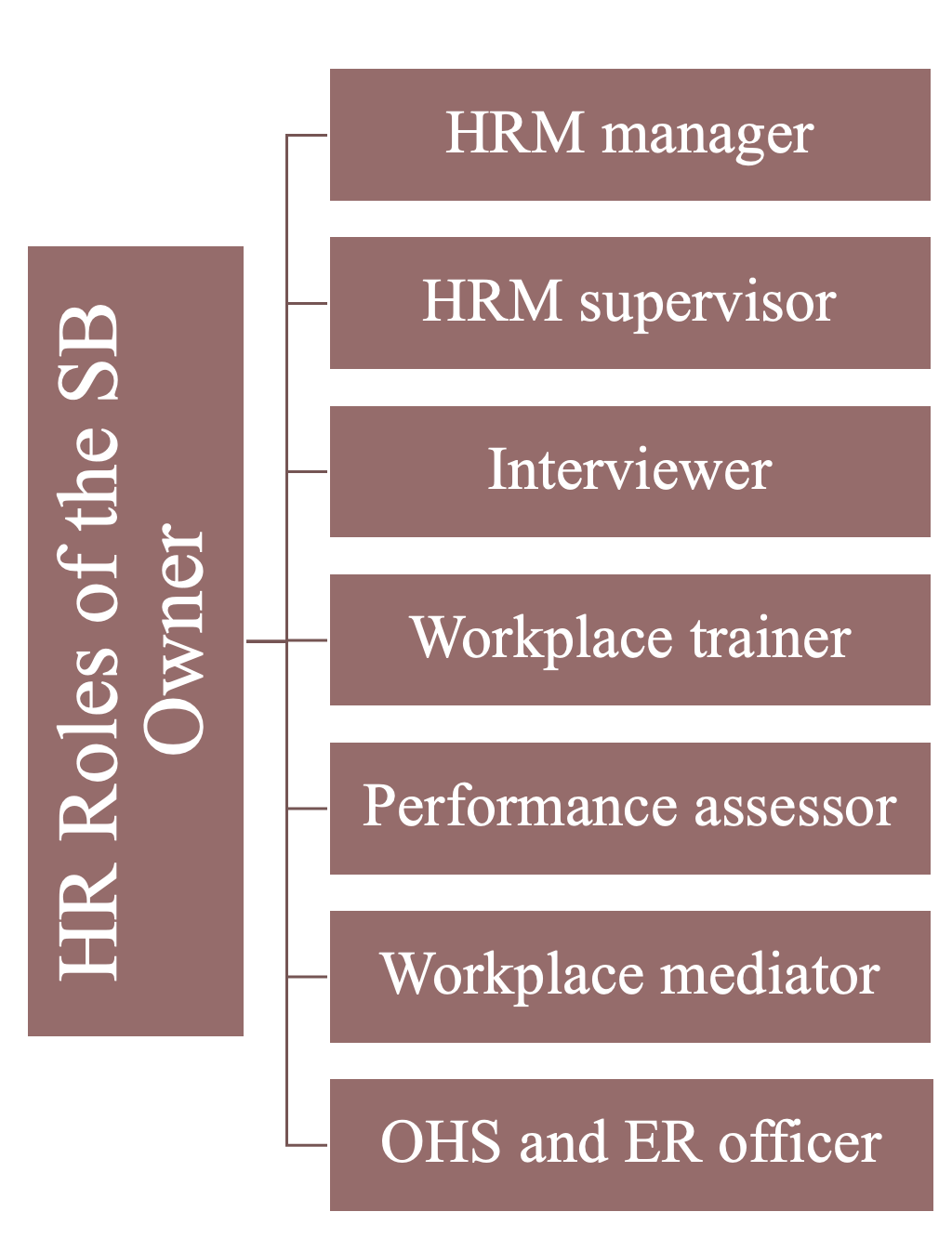
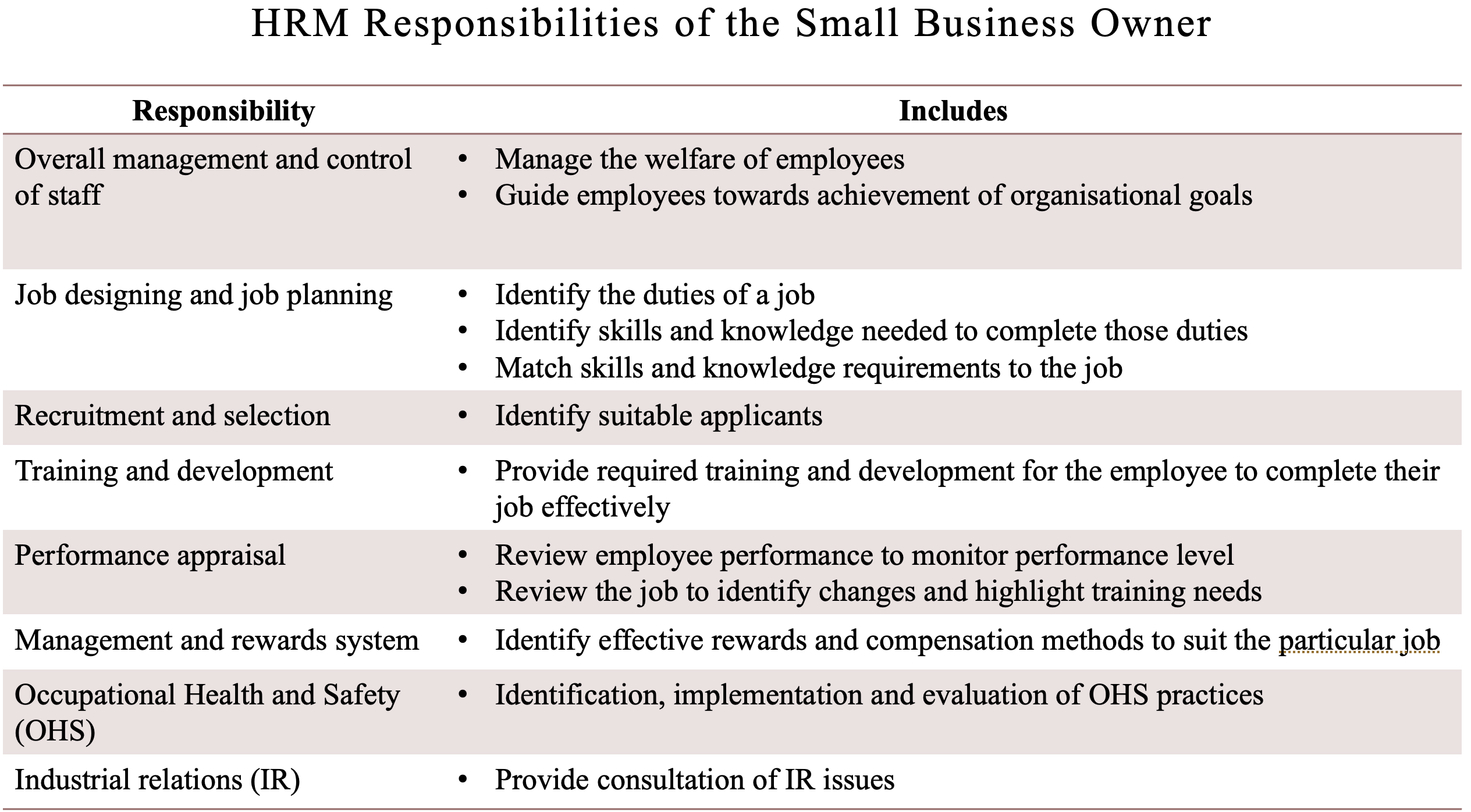
In a small business environment where there is no capacity to host large departmentalised operations, the role of a HR department is absorbed by the business owner themselves
Human Resources Guidelines
Employees need to feel valued in the business as well as understanding what is expected of them and how their contribution is expected to influence the future of the business.
Human Resource Guidelines
A set of rules and expectations that assist in helping employees understand their obligations and produce a clear avenue for the small business owner to communicate their expectations
Human resource guidelines assist small businesses keep track of their employee management and ensure they are operating within legal expectations – need to address the following:
Equal Employment Opportunity
•Policies and practices adopted by organisations due to legislation and the value the community had places on anti-discriminatory work practices
Employee Relations
•Skills and practices related to the maintenance of employer-to-employee relationship that contribute to satisfactory productivity, motivation and moral
Under Australian law, all businesses are liable for the rightful management and treatment of their employees – guidelines help a business operate in a transparent way.
Employee Workplace Rules and Procedures
Employee workplace procedures are a set of quick reference guides the workplace uses to provide information to employees.
These contain information regarding the daily duties, process of work practices and standards, expectations of behaviour and dress, leave and disciplinary procedures
Summary
The purpose of human resource management is to assist both employers and employees in understanding the following:
•The importance of working within the requirements of the business
•The role of position descriptions and significance of performing appraisals
•The importance of developing effective strategies for working effectively in the workplace