Sociocultural Approach to Understanding Behavior
Social psychology - the study of how the presence of others influence our thoughts, feelings and behaviors
Social groups - a group of people with a shared purpose
the social group is usually seen as a group by other or the people in the group
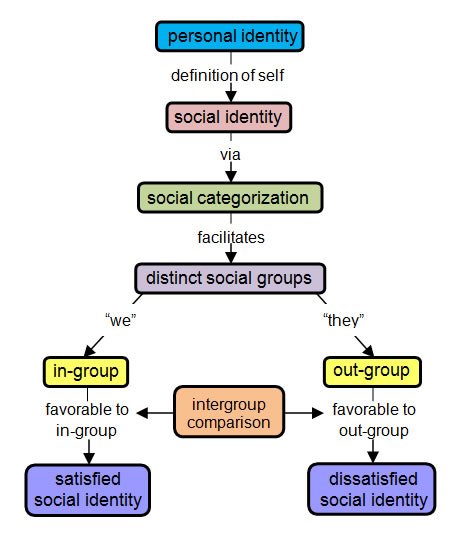
Social identity theory - made by Tajfel and Turner (1979) to analyze intergroup relationships
Personal identity - who am I?
Social identity - where do I belong?
We exaggerate the character traits of our social group to enhance our self image
 Zimbardo (1971)
Stanford prison experiment
24 students were given the role of prisoner or guard
cancelled after 6 days due to the weird behavior presented by both prisoners and guards
Social cognitive theory - we learn behavior through the art of observing
Vicarious learning - learning from the success and mistakes others make
Ex: Watching a video
Vicarious reinforcement - reinforcement of behavior by seeing other peoples consequences from their actions
Ex: a student sees their friend get an A+ on the test, and starts to copy their study strategy to get an A+ too
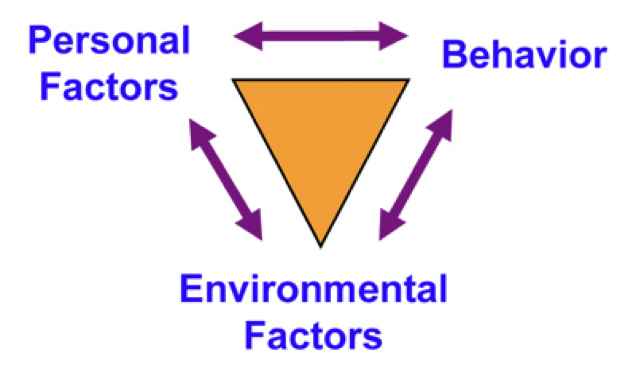
Reciprocal determinism - individuals are shaped by their social environment, but they also influence it
 Socialization - the process of becoming apart of a social group
primary socialization usually happens during childhood. the individual finds and builds their core identity and personality
gender socialization is when kids learn about the social, and behavior expectations set for their own gender
cultural socialization is when kids learn about a culture and develop a sense of belonging that culture
secondary socialization is when kids learn about values, beliefs, and attitudes of their own culture from people outside their family
group socialization is when an individual starts to interact with a group he/she might consider joining
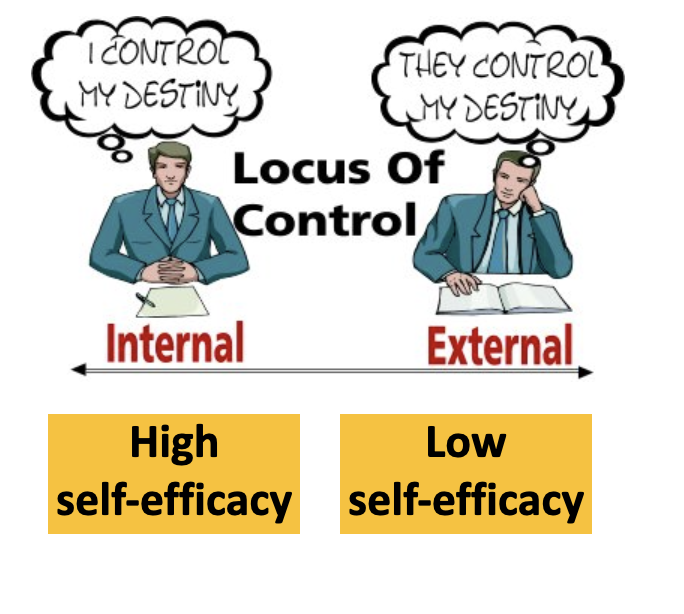
Self-efficacy - the belief in yourself to carry out actions to achieve a goal
Learned helplessness - the belief that your own efforts do make a difference in pursuing a goal
 Social cognition - How individual process information about the social world based on attributions, stereotypes, and schemas
Attribution - interpretation on why people behave the way they do
situational factors are known as external impacts
EX: She’s tired from soccer practice
dispositional factors are known as internal/personal impacts '
EX: He is super lazy
Fundemental attribution error - the habit of overestimating dispositional factors and undermine situational factors when interpreting others behavior
Self-serving bias - your own success if attributed to dispositional factors and own faliures to situational factors
Stereotypes - mental representations by which people categorize groups and their members
EX: every natural blonde haired person is dumb
A self-fulfilling prophecy is when a stereotypic schemas influences a persons behavior in a way that makes the stereotype true
EX: believing you will fail an exam and then failing it
 Sterotype threat is when a person believes in a negative sterotype that can harm the outcome of the group
EX: white colored students are told that asian students do better on academics which then makes the white colored students think they are dumb
Conformity - when someone matches another persons attitudes, feelings, or behavior to match the group by which they belong to or want to belong to
EX: getting an iPhone like everyone else
Informative conformity - when someone changes their opinion because of the influence of someone we believe is accurate
EX: scientists, doctors, politicians
Normative conformity - When a person changes their public beliefs but not private beliefs
Sherif (1936)
An experiment to figure out if people conform in ambiguous situations
people sat in dark room and researchers asked them to look at the light in the room and estimate how far the light moved
The light did not actually move
When they were alone the estimates were varied
When they were in groups the estimates were very similar
Compliance - the result of direct pressure to respond to a favor/command
Minority influence - a social influence where the monitory group influences other people to accept their beliefs and behaviors
EX: civil rights movement in the US
Groupthink - a phenomenon in which members of a group make irrational decisions
Risky shift - when an individual in a group changes their decision to a more extreme decision
people in groups tend to make riskier decisions
Obedience - yielding to direct orders or instructions from an authority figure
Cultural norms - attitudes, beliefs, and behavior patterns that are associated with a specific cultural group
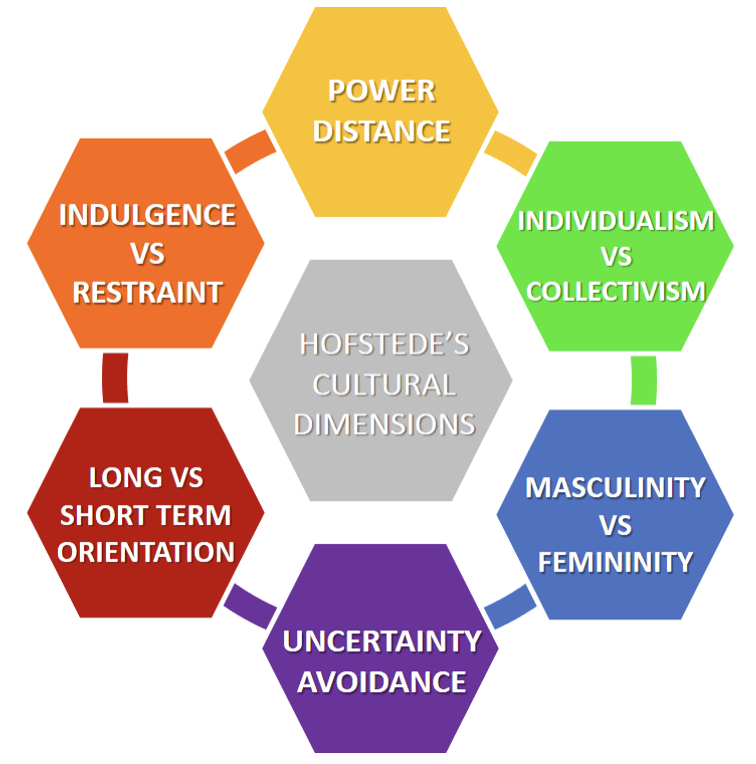
Geert Hofstedes model of cultural dimensions shows universal features of all cultures
 Enculturation - the process by which people learn about their culture in order to fully function inside it
Acculturation - the process of psychological and cultural change due to contact and interaction between cultures