COVID - 19 Transmission
Opening Remarks
Discussion of the COVID-19 pandemic and its uncertainties.
Current state: Uncertainty whether the pandemic is over, still a live area of ongoing research.
Connection to lived experiences and memories related to the pandemic.
University resources for support: Students encouraged to approach Student Support or tutors.
Disclaimer: Views are personal and do not reflect Welsh Government policy.
Overview of Coronaviruses
Different types of human coronaviruses:
Human coronavirus 229E (HCoV-229E)
Human coronavirus OC43 (HCoV-OC43)
Human coronavirus NL63 (HCoV-NL63)
Human coronavirus HKU1 (HCoV-HKU1)
Middle East respiratory syndrome-related coronavirus (MERS-CoV)
Severe acute respiratory syndrome coronavirus 1 (SARS-CoV-1)
Severe acute respiratory syndrome coronavirus 2 (SARS-CoV-2 or CoV2)
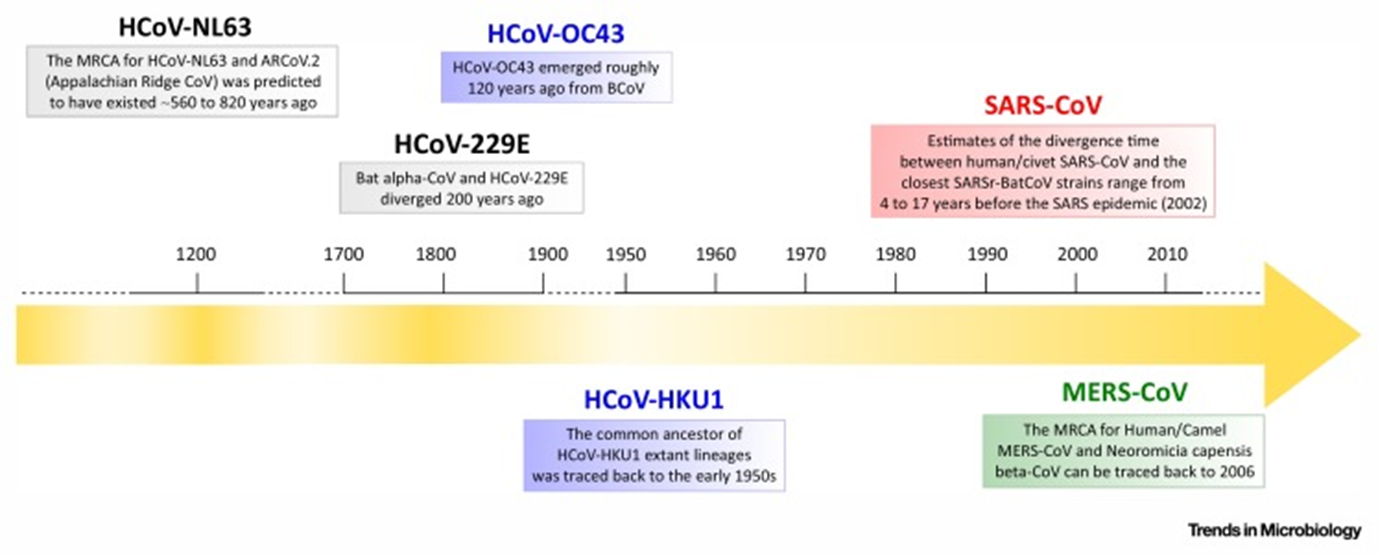
Transmission of COVID-19
Transmission Pathways
Short-range transmission:
Droplet transmission: Larger droplets fall quickly to the ground.
Aerosol transmission: Smaller particles can linger in the air longer.
Direct contact: Infected person to another through physical touch.
Indirect contact (fomite transmission): Virus transfer through contaminated surfaces.
Long-range transmission:
Aerosols: Can travel farther distances (>1 μm).
Indirect contact (fomite): Risk of transmission also exists.
Key Concepts in COVID-19 Transmission
Superspreading Events
Definition: Superspreading events significantly define the COVID-19 pandemic.
Statistics: Just 2% of SARS-CoV-2 positive individuals are responsible for 90% of virus spread in communities (Yang et al).
Condition for superspreading: High viral load, crowded environments, and poor ventilation.
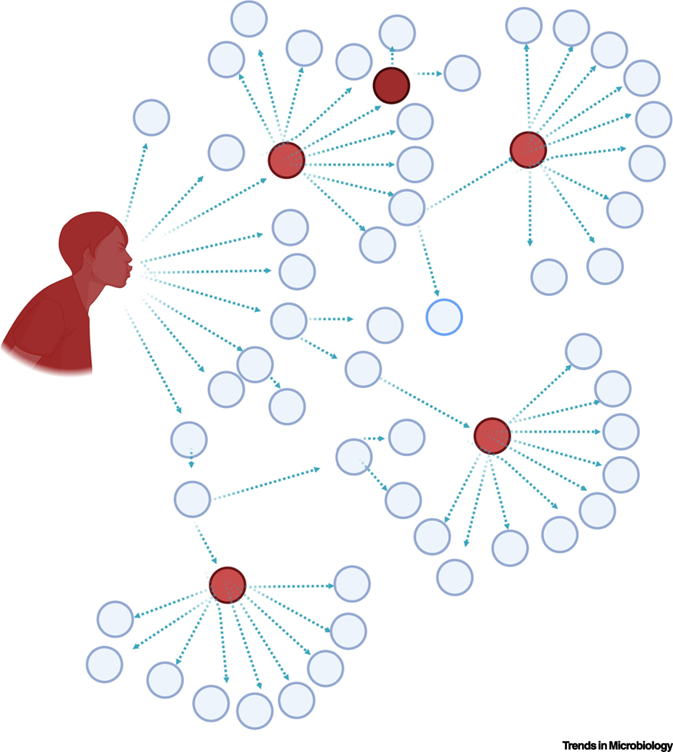
Basic Reproduction Number (R)
R: Represents the average number of secondary infections produced by one infected individual.
Example: R = 3 indicating three new infections per case.
Importance of k: Refers to overdispersion in case clusters, illustrating variability in spread.
Due to super spreaders, means some where more likely to spread the droplets do to airway anatomy differences, covid was described as an overspread virus with no consistent R number
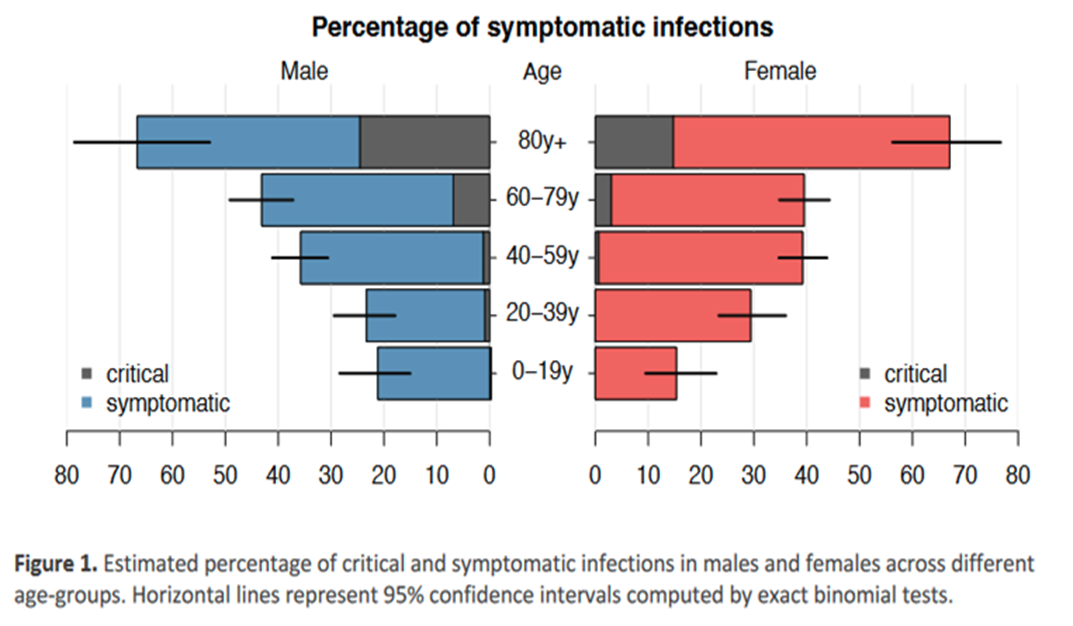
Asymptomatic Spread
Findings from studies (Poletti et al. 2020):
80% of people <20 years and 74% <40 years showed no symptoms.
40%-45% of all ages infected individuals may remain asymptomatic.
Asymptomatic individuals can still spread the virus (40-83% of cases are 'silent').
Viral load is typically highest around the time of symptom onset.
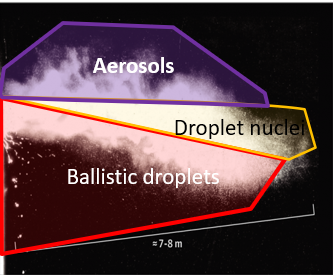
Transmission Mechanisms and Definitions
Terminology:
Ballistic droplets: Settle quickly, do not travel far.
Droplet nuclei: Smaller droplets that dry and become aerosols.
Aerosols: Suspensions of particles in gas, can float and travel distances longer than droplets.
Virus Dynamics in Aerosols
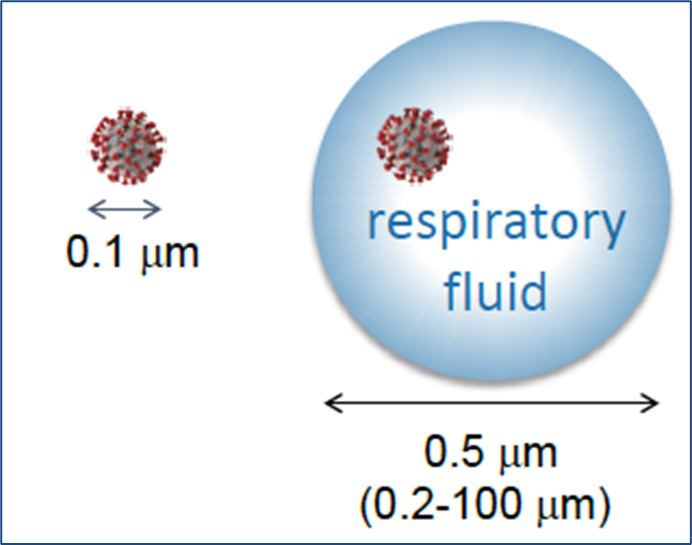
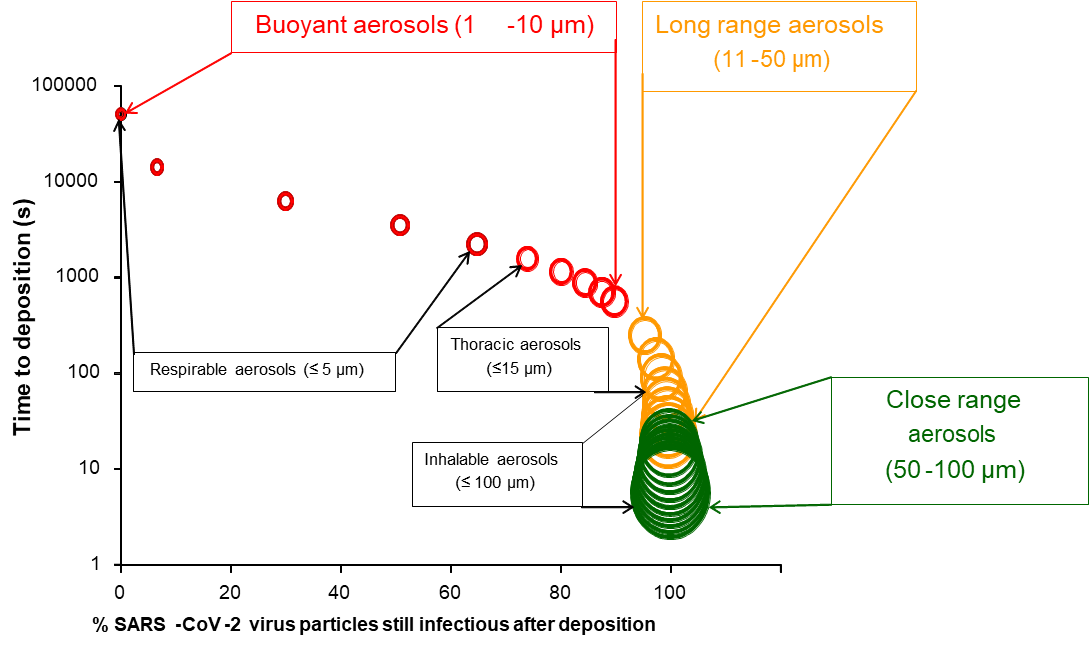
Respiratory secretions can carry virus particles which are affected by physical forces once outside of the host:
Evaporation and gravity impact virus survival outdoors.
Infectiousness of particles after disposition
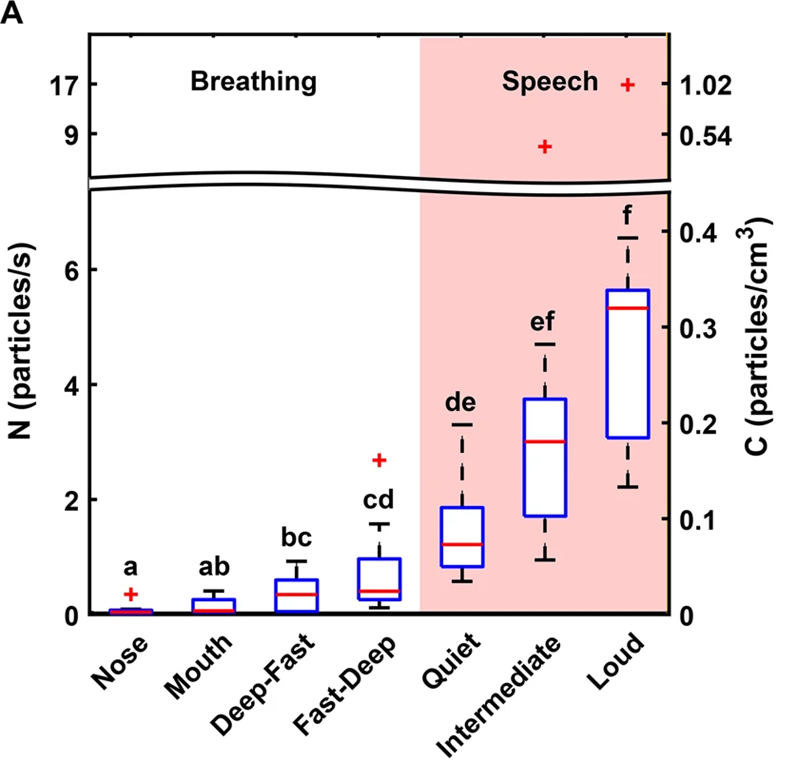
Different activities will affect transmission of the virus
Individual anatomy affects the transmission of the virus
Mitigating Transmission Risks
Strategies to Reduce Close Range Aerosol Transmission
Distancing: Reduces exposure and dilutes aerosol concentration.
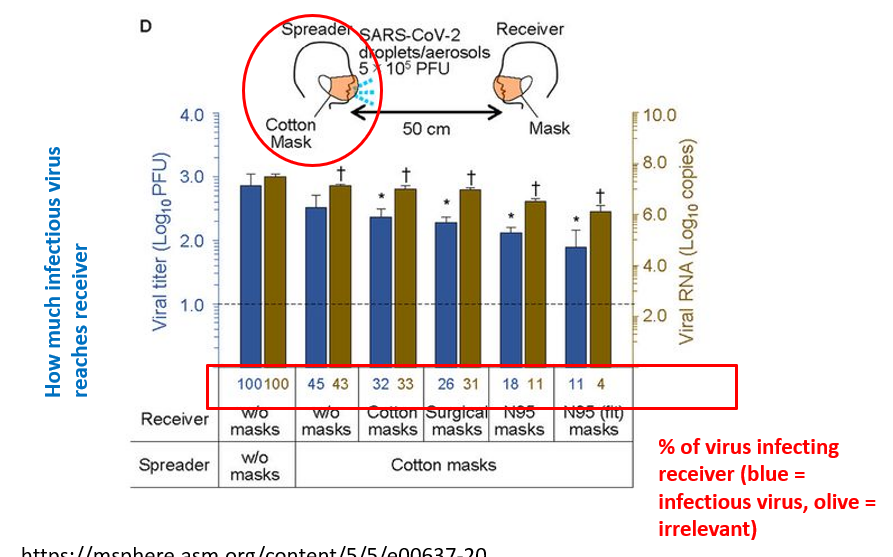
Masks: Critical for source control, especially in crowded settings.
Research on Masks
Masks proven to have a population-level effect on reducing transmission.
Importance of fit and performance:
High-performance masks like FFP2/N95 recommended for better source control.
Personal Space and Ventilation
Environmental Controls
Importance of ventilation to dilute aerosols and reduce transmission risk.
Practical advice: Open windows periodically to improve airflow.
Empirical Data on Air Quality and Transmissions
Use of CO2 levels as proxy metrics for evaluating infection risk indoors to estimate second hand air in a room :
Estimated rebreathed fraction critical for understanding indoor air quality.
Take Home Messages
Key factors in understanding COVID-19 transmission:
Transmission is driven by outliers rather than the average individual.
Superspreading events have a high association with viral load and crowded settings.
Both close-range and long-range aerosol transmission exist and are critical.
Masks, ventilation, and hand hygiene interact to lower transmission rates.
Understanding and navigating COVID-19 now requires practical adaptations in behavior.