WEEK 5 (Utopia & Dystopia)
what is the fun palace?
it’s an experiment architecture
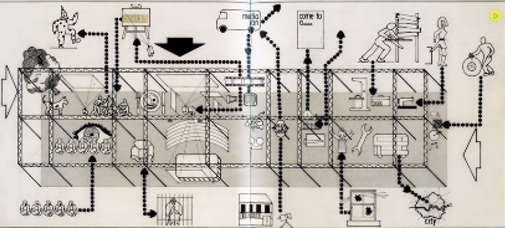
What is utopia?
A possible community or society that possesses a highly perfect qualities for its citizens
It focuses on equality in (economics + Government + Justice) based on ideology
The name of Utopia is taken from the imaginary island by (Thomas More) which was a perfect island politically and Socially
It has contractionary nature (might be dangerous if used wrongly)
Something that can break the bond
what is Dystopia?
A community that’s under desirable or frightening
Famous for dehumanization + environmental disaster
These societies usually appear in fictional work set in the future
What are the examples of Utopia designs turning in Dystopia?
Invisible cities book by Italo Calvino
Garden city by Ebenezer Howard
Radiant City by Le Corbusier
Broadacre City by Frank Lloyd Wright
Plug in city + Walking city + Instant city by Archigram
What’s the Invisible cities book by Italo Calvino?
It’s a series of travel notes talks about impossible perfect fictional cities he named each one of them a woman and each chapter provide a clue of the concept of the city in general
Ex (microscopic city transforms into many concentric cities+ 2 dimensional city like the spider web city or Mariana)
What’s the Garden city by Ebenezer Howard?
It talks about the living conditions of the poor in late 19th century and how the villages were declining by new towns built
Creating self sufficient small towns
The right to have plans belonged only to the planner
Was encircled with (agriculture, school, housing, greens and in the center, there was commercial club + cultural places)
The public authority was preventing it from ever becoming a city
It was inspiring Le Corbusier to start (la Ville Radieuse)
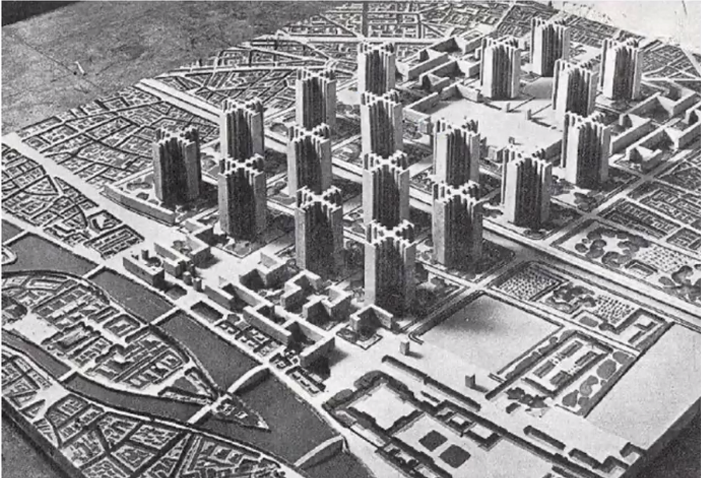
What’s the Radiant City by Le Corbusier?
Based on decentralization with lands suburban in nature
Unlike Howard he made a (vertical garden city with high rise blocks)
Tried adapt existing cities to the conditions of the age and aims to design new
cities based on the harmony of nature and people
(new city project) has a totalitarian structure + symmetrical + orderly + standardized + used grid system sitting on a green area)
City turned into a big living machine
City had (planning of automobile + luxury houses with courts + skyscrapers within a park + big arterials + social utopia + pedestrians off the street + underground streets + vertical garden city)
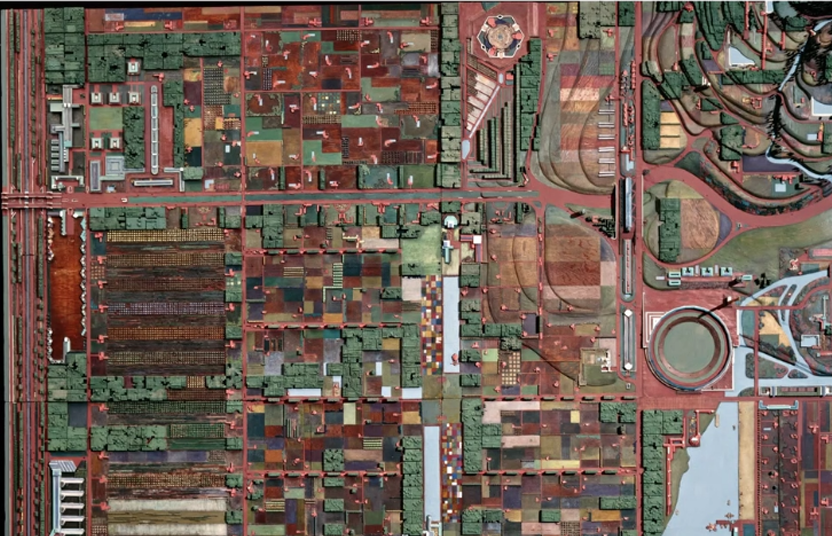
What’s the Broadacre City by Frank Lloyd Wright?
He published it in the same year as the (Radiant city)
Used the grid system on it too
It’s a low-density neighborhood that consist of plot of lands and prevent the vibe of an (industrial city)
Bringing the positive social change
Nature is very important here CUZ the plots of lands will make the families to grow their own food and eat it
Spreading houses concept along the landscape
“Usonian” word been created which refers to (the utopian vision of USA’s landscape)
What’s the Archigram?
It’s an (Avant-gard group) that drew inspiration from technology to create new realities and they created many collages
Their (pamphlet) is holding all their ideas of high technology
They did (Plug in city by peter cook + walking city by Ren Herron + Instant City)
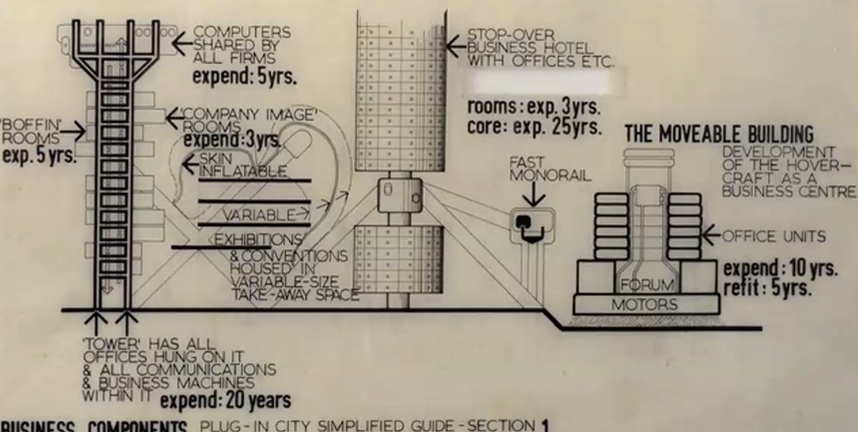
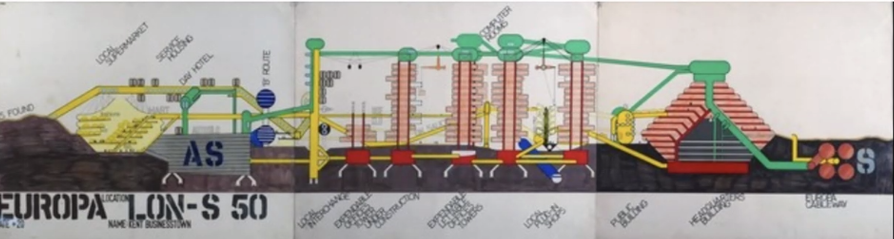
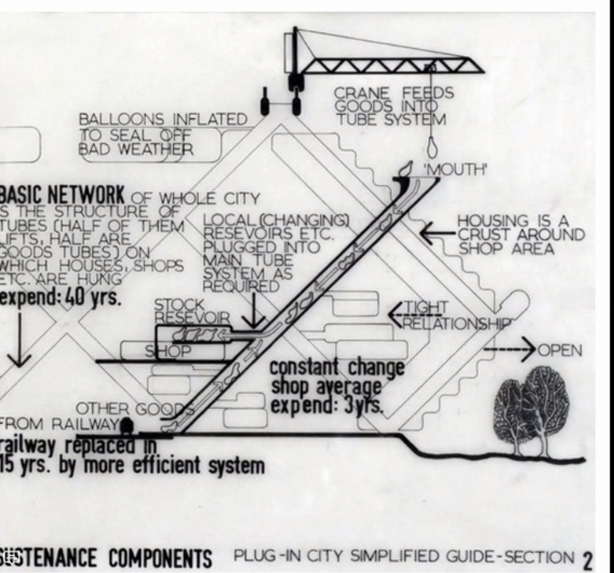
What’s the Archigram Plug in City by Peter Cook?
It’s a Hypothetical fantasy city containing modular residential units that block in to a central infrastructural mega machine
Offered new approach to (Urbanism) of infrastructure tole in the city
Suggested a Nomadic way of life
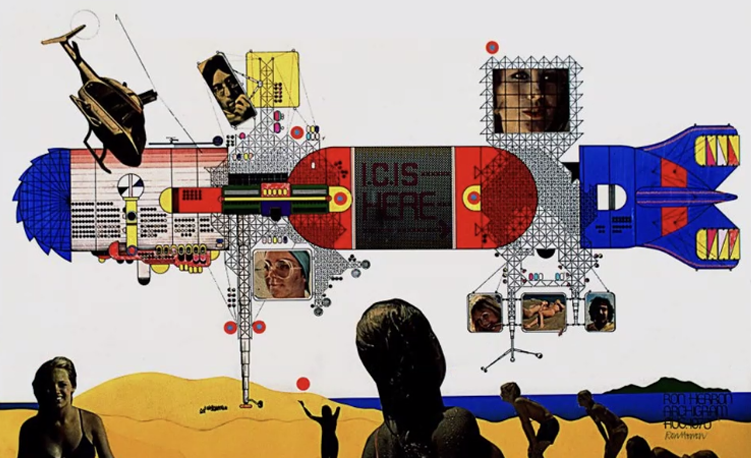
What’s the Walking city by Ron Herron?
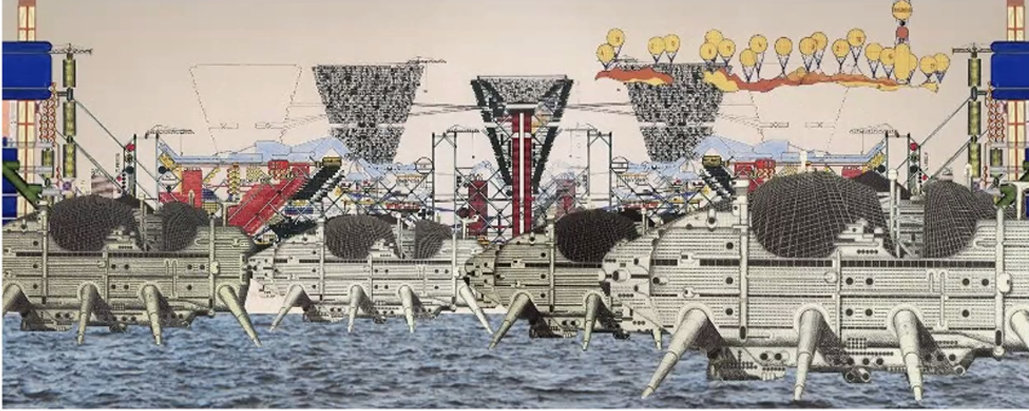
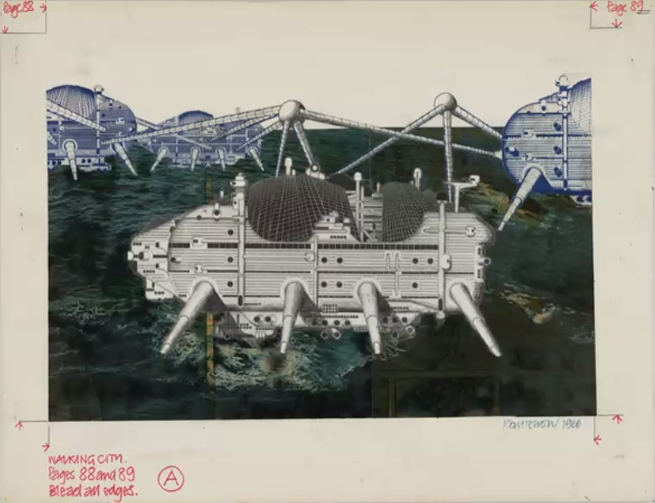
Set in Dystopian NY city It was as if giant robots would walk over water and land to whatever they were required to and create one big hub just like a city
Creating moving cities
The inspiration of robots came from insects combined with revolutionary machinery
He captures that the future would be ravaged by a nuclear war where the citizens need a refuge to avoid the nuclear damage
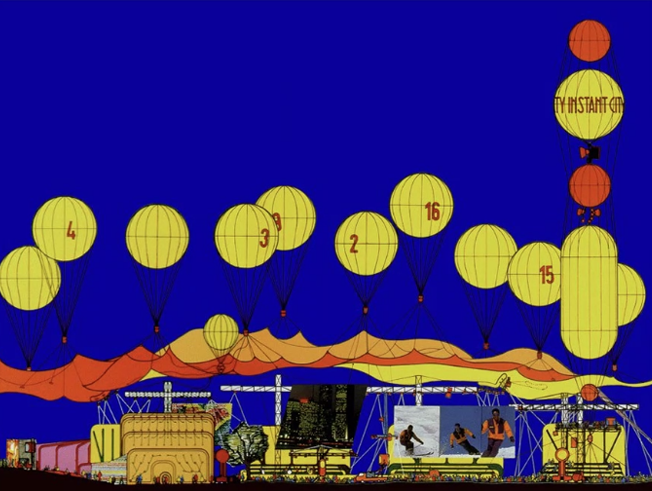
What’s the Instant city?
It enables a village to become a kind of city for a week
The concept of it is a transportable kit of parts that can be quickly assembled to provide small towns with access to resources culture attractions and large metropolis
The city works as a cultural circus
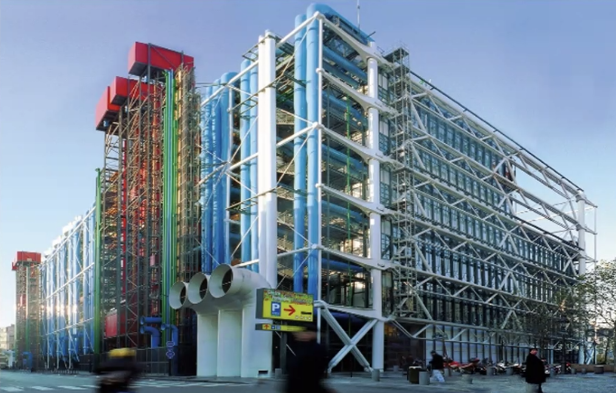
What’s the Centre Pompidou?
Was designed by Renzo Piano and Richard Rogers who won the compettion of it
It’s a museum that Exposes the (infrastructure) of the building and the skeleton itself engulfs the building from its exterior showing all the mechanical system and to maximize the interior space without interruptions
It’s flexible and functional
Different infrastructural systems are colored with different colors to differentiate function
Large components were white
Stairs + elevators were silver
ventilation was blue
plumbing and fire control was green
Electrical elements are yellow and orange
movement elements like the escalator
what are the shared traits between all of them?
Architecture as Social Engineering
All projects assume design can reshape society — whether through communal interaction (Fun Palace, Centre Pompidou), rational order (Radiant City, Garden City), or futuristic adaptability (Plug-in City, Walking City).
This reflects the utopian belief in architecture as a tool for progress, but also the dystopian risk of over-determining human life.
Technological Optimism vs. Alienation
Fun Palace, Plug-in City, Walking City, and Centre Pompidou celebrate technology as liberating, flexible, and democratic.
Yet the same reliance on machines and infrastructure risks creating alienating, mechanical environments — dystopian if human needs are overshadowed.
Collective vs. Individual Freedom
Garden City and Radiant City emphasize collective order, zoning, and rational planning (utopian harmony).
Broadacre City emphasizes individual autonomy and decentralization (utopian freedom).
Both extremes risk dystopia: over-control in Radiant City, fragmentation in Broadacre.
Symbolic Urban Futures
Each project is a manifesto of how cities should be — idealized visions that critique existing urban conditions.
But their radicalism often exposes dystopian potential: isolation, surveillance, or impracticality.
Historic Break + Cultural Continuity
They all reject the existing city as flawed and propose radical alternatives.
Yet they differ in whether they erase history (Radiant City, Walking City) or reinterpret it (Centre Pompidou as a “machine for culture”).