Plant Biotechnology
Basic parts of a plant
Roots - underground section of plants
Absorb nutrients
Anchor plants
Store food
Transport water & nutrients

Stems
Support for leaves
Transport fluids
Production of new tissue
Nodes - where leaves attach to stems
Buds - The growing area of a stem
Vascular tissue - Xylem and Phloem
Leaves
Photosynthesis, makes sugar
Respiration makes energy from sugar
Photosynthesis
(I just stole this from my AP Bio Unit 3 Notes)
6CO2 + 6H2O + Energy → C6H12O6 + 6O2
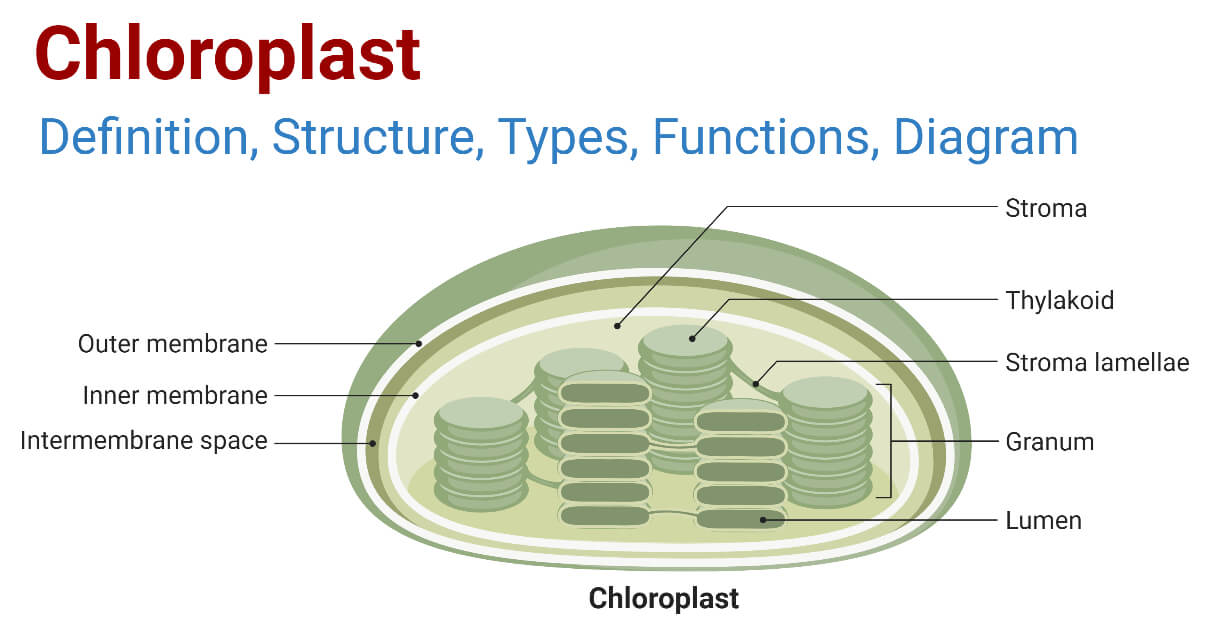
Photosynthesis has Two Steps:
Light Dependent Reactions
Photolysis
In the thylakoid membrane
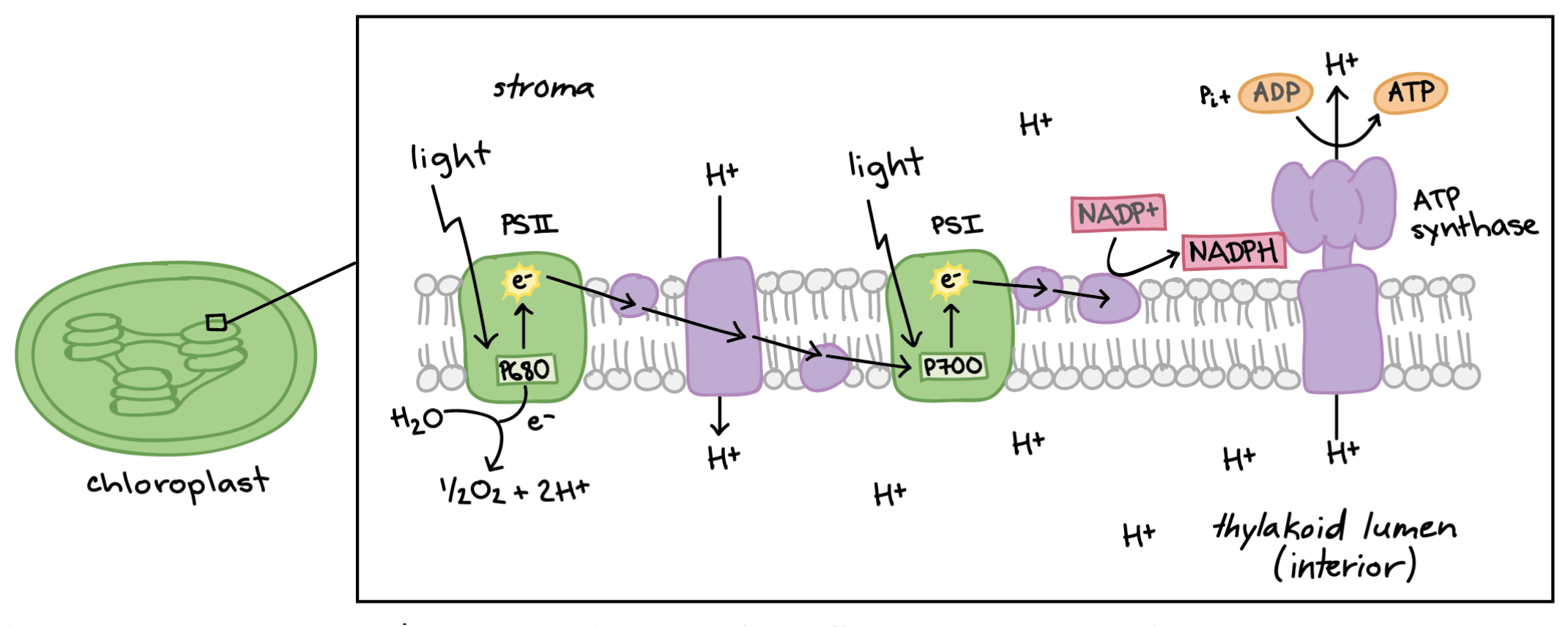
Photophosphorylation
Electron transport chain
In the thylakoid membrane
Photophosphorylation
Light Independent Reactions
The Calvin cycle
In the Stroma
Chlorophyll is the pigment in chloroplast that makes plants green. They do not absorb green light as if they absorbed all colors they would overheat and denature,
Photolysis in the thylakoid membrane is where water is split into 2 H+ ions, an electron, and an O atom (½ O2) using sunlight. Photosystems are the proteins within the thylakoid membrane which store chlorophyll. They are shaped like a flower. Electrons enter the photosystem from hydrolysis which releases heat and fluorescence. It “hops” to the top of the photosystem and is passed through the electron transport chain. The electron transport chain pumps the H+ into the stroma, which takes energy from the electron to do this. The sun shines into the electrons when they enter photosystem I, re-energizing them. They can then turn NAD+ into NADH. There is ATP synthase which makes ATP for the Calvin cycle using the H+ ions pumped into the stroma by the electron transport chain.
H2O + Light + NAD+ → O2 + ATP (For Calvin cycle) + NADPH (For Calvin cycle)
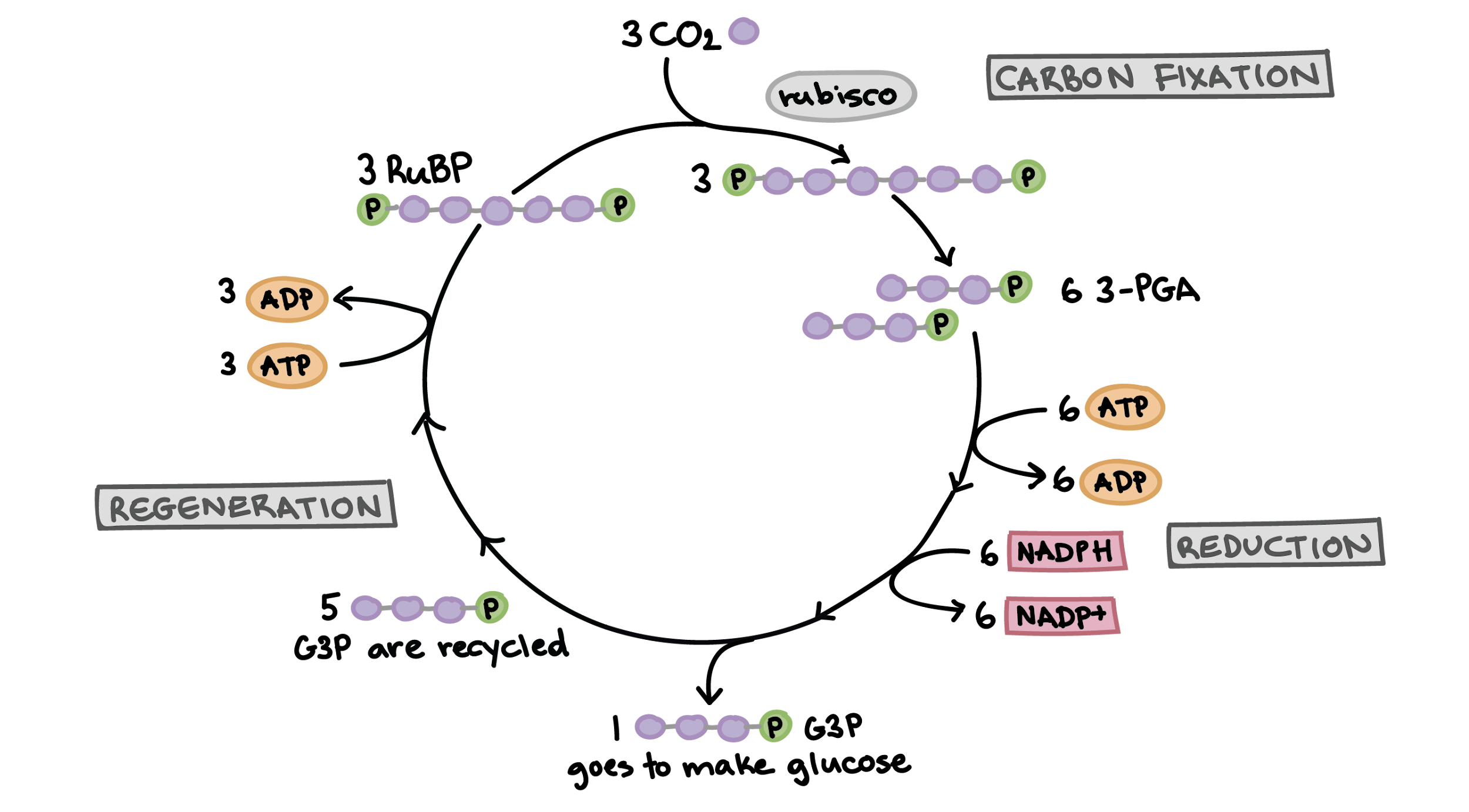
3 Molecules of CO2 is taken in the Calvin cycle. This combines with RUBP sugar with the help of RuBisCO. ATP and NADPH (turned into NADP) is consumed to make 6 groups of 3 carbon. 1 is removed to make glucose, and the other 6 are recycled using more ATP to make RUBP sugar so the cycle can repeat.
Once the cycle has gone through twice, the 2 product G3P carbons are combined in the cytosol, making glucose.
Transforming Plants
Plant Transgenesis
Transformation of plants has allowed agriculture to keep up with the world’s growing population.
Ex: classical breeding has increased the strength of cotton fibers by about 1.5% a year. Biotech has accelerated that increase to 60% in one strain of cotton simply by inserting a new gene.
Selective breeding and hybridization
Gregor Mendel
Breed plants with desirable traits
Backcross generations to get more of the desirable trait
Current Cloning Methods:
Protoplast fusion - Putting together two protoplasts forming a hybrid plant.
When a plant is injured, a mass of cells called a callus may grow over the wound.
Callus cells have the ability to grow into another plant (think stem cell).
Callus cells are surrounded by a thick wall of cellulose that prevents the callus cells from picking up any new DNA.
The callus cells can be digested by enzymes. After digestion, a protoplast is left.
Ex: broccoli and cauliflower.
Leaf fragment technique
Small discs are cut out of a leaf. When they start to regenerate they are cultured briefly in a medium containing genetically modified Agrobacter
Agrobacters contain tumor-inducing (Ti) plasmids that is taken in by the plant cells. The result is a tumor in the plant (crown gall) that contains whatever other DNA was in the Ti plasmid.
The leaf discs (with Ti) are treated with plant hormones to stimulate shoot and root development before the new plants are planted in soil.
Gene guns
Gene guns can insert Agrobacter plasmid in plants that are resistant to it
Blast tiny beads coated with DNA into embryonic plant cell
Process is kinda hit or miss
Can “shoot” DNA into nucleus or chloroplast
Chloroplast engineering
Chloroplasts can accept several new genes at once.
A high percentage of genes inserted into chloroplast will remain active when the plant matures.
When chloroplasts are genetically modified, there is no chance that transformed genes will be carried on the wind to distant crops.
Antisense Technology
Genetic engineering has improved the shelf life of tomatoes!
Ripe tomatoes produce polygalacturonase (PG) which digests pectin in the cell walls of plants normal plant decay
The gene for PG was identified and a complementary copy of the gene was introduced (using Agrobacter).
The complementary gene coded for complementary mRNA (antisense molecule) that can bind with the original PG mRNA inactivating the mRNA
Applications of Transgenic Plants
Vaccines for plants
Plant vaccines are made from dead or weakened virus and turns on the plant’s immune response
Vaccinating a whole field of plants against a virus is difficult instead of injecting the vaccine, the vaccine can be coded for in the plant’s DNA
Ex: insertion of a gene from the tobacco mosaic virus (TMV) into tobacco plants. The gene produces a protein from the virus. The protein turns on the plant’s immune response (just like a vaccine)
Genetic pesticides
Old pesticide: Bt from Bacillus thuringiensis. Bt (coded for by a gene called Cry) kills insects and larvae by causing the lining of their digestive tract to break down (autodigestion). Spores from Bt were spread on fields for insect control.
Transgenic: put Bt toxin into plant genomes.
Used in tobacco, corn, tomato, cotton
Research indicated Bt was deadly to monarch butterflies
Few butterflies in the real world would be exposed to enough pollen to cause any harm (more fear and hype than actual harm to Monarchs)
Herbicide resistance
Herbicides kill weeds and desired plants.
Crops can be genetically engineered to be resistant to common herbicides.
Ex: glyphosphate. Glyphosphate blocks an enzyme required for photosynthesis. Transgenic plants have been engineered to make an alternate enzyme that isn’t affected by glyphosphate.
This has allowed farmers to control weeds with milder and fewer chemicals.
Enhanced nutrition
Help stop malnutrition
Golden Rice - rice that has been genetically modified to produce large amounts of beta carotene (beta carotene is converted into Vitamin A in your body).
500k kids in the world will eventually become blind because of vitamin A deficiency.
Unfortunately, the beta carotene in Golden Rice must dissolve in fat before it can be used in the body, so its not that useful in areas w/o fat in diets
Pharmaceuticals
Plants can be protein-producing machines!
Plants could produce proteins needed for many things like vaccines.
Edible vaccines (elicits an immune response when digested and reaches bloodstream).
Inexpensive and don’t require refrigeration
Ex: tomatoes and bananas produce a vaccine for hepatitis B
Plants can someday replace cell cultures (cheaper and easier to maintain)
Biofuels
Inefficient: currently, bioethanol has been researched and attempted, but today it takes 7 gallons of gasoline to produce 10 gallons of kernel corn ethanol.
Biofuels from plant waste
Plant cell walls store energy from photosynthesis. Scientists are trying to find ways to utilize that energy.
Biofuels from algae
Algae naturally produce and store lipids.
Health and Environmental Concerns
Concerns about human health
All plants have DNA, the concern over GM plants isn’t digesting DNA, but digesting foreign DNA
Allergies: allergic reaction occurred when someone with a nut allergy ate GM soybeans containing a gene from Brazil nuts.
Antibiotic-resistance genes: the resistance from the GM plant could create antibiotic resistant bacteria in humans (pick up the GM plant’s resistance genes).
Concerns about the environment
Genes for herbicide resistance could be transferred to weeds
Esp. with crops that are closely related to weeds and can crossbreed with weeds (squash, sunflowers, canola)
Regulations
FDA- regulates the foods on the market
U.S. Dept. of Agriculture- oversees growing practices
EPA- controls pesticides, environmental concerns