SPECIAL TOPIC IN FM.notes.docx
SPECIAL TOPIC IN FM
This module delves into specialized areas of financial management, going beyond the fundamental concepts of budgeting, investing, and risk management. It explores the complexities of modern finance, including emerging trends, advananced techniques, and innovative instruments developed to navigate ever-changing economic landscapes
Kinds of Risk in financial management
- Credit risk, liquidity risk, operational risk, inflation, marketing risk, and strategic risk.
Behavioral economic - depends on how, what and when to buy.
What is financial management?
- the practice of handling a company’s finances in a way that allows it to be successful and compliant with regulations.
- Strategic planning - involves strategic planning, organizing, directing and controlling an organizations financial resources to achieve its financial goals and objectives.
- Resources allocation - involves making informed decisions about how to allocate, invest, and manage funds to maximize the value of the organization and to ensure the long term health of organization.
- Financial health - is crucial for ensuring the smooth operations of business.
KEY ASPECT OF FM
- Financial planning - setting financial goals and creating a road map to achieve them, including forecasting future financial needs, estimating revenues and expenses and developing budget.
- Capital budgeting - evaluating and selecting investment project that are expected to generate positive returns, allocating resources to projects that will add value to the organization.
- Capital structure management - deciding how the finance, organization operation and investment deter-mining the right mix of equity and debt financing to optimize the cost of capital.
- Working capital management - managing the day to day operational liquidity of the organization is crucial. It involves managing cash, accounts receivable, account payable and inventory to ensure the smooth running of business operations.
- Risk management - identifying, assessing and mitigating financial risk is essential. Financial managers need to make decisions that balanced risk and return ensuring the organization can handle unforeseen events without significant negative impact.
- Financial analysis and reporting - analyzing financial statement and reports helps assessing the financial health of organization. Financial managers use this insight to make good decisions and to communicate the organization financial performance to stakeholders.
- Profitability and cost management - analyzing cost and identifying opportunities to reduce expenses while maintaining or increasing revenue is a key aspect of financial management.
- Dividend policy - deciding whether to distribute profits to shareholders as dividends or reinvest them in the business is an important consideration that impacts the organization financial structure and shareholders expectation.
- Financial control - monitoring actual financial performance against budgets and plans is crucial for identifying deviations and taking corrective actions when necessary.
- Corporate finance - deals with mergers acquisations, divestiture and other corporate finance transaction that impacts the organizations structure and financial position.
What Is Special Topics In Financial Management?
1 Advanced Concepts
Special topics in financial management refer to advanced or specialized areas within the field of financial management that require a deeper understanding and expertise.
2 Specialized Techniques
These topics often go beyond the fundamental concepts of finance and delve into specific areas of interest or concern for businesses, investors, and financial professionals.
3 Evolving Trends
The content covered in special topics courses can vary widely based on the focus of the course and the current trends in the financial industry
The Importance of Special Topics in Financial Management
- In today's complex and dynamic financial landscape, mastering the core principles of financial management is no longer enough. Financial professionals are increasingly facing challenges that require specialized knowledge and advanced skills. To excel in this competitive environment, staying current with emerging trends and developing expertise in specialized areas is essential. Special topics in financial management offer a pathway to enhance your skills, expand your knowledge, and gain a competitive edge in the financial world.
Adapting to a Constantly Evolving Environment
1 Regulatory Changes
Financial regulations are constantly evolving, requiring professionals to adapt their practices and comply with new rules. Special topics can keep you updated on the latest regulations and help you navigate the complex legal landscape.
2 Economic Fluctuations
Understanding economic cycles, inflation, interest rates, and other macroeconomic factors is crucial for making sound financial decisions. Special topics delve into economic analysis, forecasting, and risk management strategies in a dynamic environment.
3 Technological Advancements
The financial industry is rapidly adopting new technologies such as artificial intelligence, blockchain, and big data analytics. Special topics equip professionals with the skills and knowledge to leverage these technologies for better decision-making.
Gaining In-Depth Understanding
- Derivatives
- Derivatives are complex financial instruments that can be used for hedging, speculation, and arbitrage. Understanding derivatives is crucial for managing risk, optimizing investments, and taking advantage of market opportunities.
- Risk Management
- Financial risks are inherent in all business activities. Special topics in risk management cover various types of risks, risk assessment techniques, and mitigation strategies to safeguard an organization's financial health.
- Alternative Investments
- Alternative investments, such as private equity, hedge funds, and real estate, offer unique opportunities for diversification and higher returns but also involve higher risks. Special topics provide insights into the intricacies of these investment classes.
Mastering Advanced Techniques
1 Quantitative Techniques
Quantitative techniques, such as statistical analysis, econometrics, and financial modeling, are essential for making data-driven decisions, forecasting future trends, and managing risk effectively.
2 Data Analysis Methods
With the explosion of data in finance, it's crucial to have the skills to extract valuable insights from large datasets. Special topics introduce advanced data analysis methods for identifying patterns, trends, and anomalies.
3 Financial Modeling
Financial models are used to simulate various financial scenarios, project future outcomes, and evaluate investment opportunities. Mastering financial modeling techniques enhances decision-making and risk assessment capabilities.
4 Valuation Techniques
Valuation techniques are used to determine the fair market value of assets, companies, and projects. Special topics cover different valuation methods, including discounted cash flow analysis, comparable company analysis, and precedent transactions.
Driving Strategic Decision-Making
- Mergers & Acquisitions
Special topics on mergers and acquisitions cover the intricacies of deal structuring, valuation, due diligence, integration, and postmerger management.
- Capital Budgeting
Capital budgeting involves making investment decisions related to long-term assets. Special topics provide frameworks for evaluating investment proposals, managing capital expenditure, and maximizing returns.
- Corporate Restructuring
Corporate restructuring involves reorganizing a company's operations, capital structure, or ownership to improve financial performance, reduce debt, or adapt to changing market conditions.
- Financial Planning & Forecasting
Financial planning involves developing longterm strategies for managing a company's finances, while forecasting involves predicting future financial performance based on historical data and market trends
Developing Sector-Specific Expertise
- Healthcare Finance
Healthcare finance involves managing the financial aspects of healthcare organizations, including insurance reimbursement, cost containment, and investment strategies.
- Real Estate Finance
Real estate finance focuses on the financial aspects of real estate investments, including mortgage financing, property valuation, and development projects.
- Energy Finance
Energy finance involves managing the financial aspects of the energy industry, including oil and gas exploration, power generation, and renewable energy projects.
- Technology Finance
Building Effective Communication Skills
- Investor Relations
Special topics in investor relations teach professionals how to effectively communicate with investors, manage shareholder expectations, and build trust.
- Financial Reporting
Understanding financial reporting standards and best practices is crucial for preparing accurate and transparent financial statements.
- Communication Skills
Special topics on communication skills train professionals to clearly communicate complex financial information to various stakeholders, including investors, analysts, and regulators.
Expanding Your Global Perspective
- International Finance
Special topics in international finance cover the complexities of global financial markets, exchange rates, foreign investment, and cross-border transactions.
- Foreign Exchange Markets
Understanding foreign exchange markets is crucial for managing currency risk, hedging against currency fluctuations, and optimizing international investments.
- Cross-border Investments
Special topics on crossborder investments provide insights into the legal, regulatory, and tax implications of investing in foreign markets.
Career Advancement: Specialized Expertise is the Key
1 Become a Highly Valued Asset
Specialization provides you with in-depth knowledge and skills that are highly sought after in the industry.
2 Unlock Specialized Roles
Mastering a special topic can qualify you for specialized roles within finance departments or consulting firms.
3 Gain a Competitive Advantage
Your expertise will set you apart from other professionals and make you a valuable asset to any organization.
4 Advancement Opportunities
Specialized knowledge can open doors to leadership positions and executive roles within your company
Research & Innovation: Shaping the Future of Finance
- Contribute to Industry Advancements
Special topics often involve cutting cutting-edge research in areas like like fintech, sustainable finance, and and behavioral finance.You can actively participate in shaping the future of the industry by contributing to new trends and solutions.
- Drive Innovation within Your Your Organization
Your knowledge of specialized topics can help your organization organization develop innovative innovative strategies and solutions solutions to complex financial challenges. You can become a thought leader and influence decisionmaking through your expertise.
- Stay Ahead of the Curve
Continuously learning about new new advancements in your area of expertise will keep you ahead of the curve and make you a you a valuable resource for your organization.You can become a go-to expert in in your field and contribute to a culture of innovation within your organization
Holistic Financial Management: A Comprehensive
1 Strategic Financial Planning
Develop comprehensive strategies that align with your organization's overall goals and objectives.
2 Risk Management and Mitigation
Identify potential risks and develop strategies to mitigate their impact on your organization's financial health.
3 Performance Optimization and Growth
Implement measures to improve efficiency.and drive profitable growth, while staying within ethical and regulatory guidelines.
4 Financial Reporting and Transparency
TransparencyEnsure accurate and transparent financial reporting to stakeholders, maintaining accountability and trust.
5 Sustainable Finance
Incorporate environmental, social, and governance factors into financial decision making for long-term value creation.
Specialized Topics in Finance: Exploring the Landscape
- Fintech and Digital Finance
Leverage cutting-edge technologies like artificial intelligence, blockchain, and big data to transform financial services.
- Sustainable Finance and ESG Investing
Integrate environmental, social, and governance factors into investment decision-making, promoting ethical and responsible finance.
- Behavioral Finance and Investor Psychology
Understand the psychological factors that influence investor behavior and decision-making, providing insights into market dynamics.
- Corporate Finance and Mergers & Acquisitions
Develop expertise in financial analysis, valuation, and deal structuring to facilitate strategic mergers and acquisitions
Gaining Specialized Knowledge: Pathways to Expertise
- Professional Certifications
Earn industry-recognized certifications like CFA, CAIA, or FRM to validate your specialized knowledge.
- Specialized Courses and Programs
Enroll in courses or degree programs that focus on specific areas of finance, deepening your expertise.
- Mentorship and Networking
Connect with experienced professionals in your field, seeking guidance and learning from their insights.
Building Your Portfolio: Demonstrating Your Expertise
- Case Studies Showcase your skills by applying specialized knowledge to real-world financial financial problems.
- Research Papers Contribute to the field by conducting indepth research and publishing your findings. depth findings.
- Presentations and Workshops Share your expertise by delivering presentations presentations or leading workshops on specialized topics.
- Industry Involvement Join professional organizations, participate in industry events, and contribute to relevant publications.
Unlock Your Potential: Embrace the Future of Finance
- Launch Your Career
Mastering special topics can set you on a trajectory for career advancement and leadership roles.
- Expand Your Knowledge
Embrace continuous learning and stay ahead of the curve in the rapidly evolving financial landscape.
- Achieve Success
Your specialized expertise will make you a highly sought-after professional and open doors to new opportunities.
- Embrace Growth
Summary
Financial management is the strategic planning, organization, direction, and control of a company's financial resources to fulfill its objectives. It involves financial planning, capital budgeting, capital structure management, working capital management, risk management, financial analysis, profitability management, and other important elements.
It necessitates a thorough understanding of financial concepts and industry specifics, as well as the ability to connect decisions with strategic goals. Special topics in financial management are advanced or specialized areas within the profession that go further into specific concerns. They deal with intricacies, evolving trends, and one-of-a-kind difficulties. M&A, international finance, derivatives, behavioral finance, real estate finance, and other areas are examples.
These subjects improve knowledge, adaptability, strategic decision-making, risk management, and communication abilities. They also provide information on compliance, worldwide finance, career progression, research, and comprehensive financial management.
To summarize, special topics in financial management give specialized tools, techniques, and insights to address complex financial issues, bridging the gap between theory and practice in an ever-changing financial landscape.
MODULE 2
SOCIAL ENTREPRENEURSHIP
Motives for starting a business
- Creation of wealth - being profitable is an inherent motive of an entrepreneur. Most business owners wants to earn profit. Few professions generate the wealth that a succesful business can generate.
- Vision to transform society - not everyone who becomes an entrepreneur is driven solely by a profit motive. Some have a strong desire to improve the lives of people living in their neighborhoods and local communities.
- Autonomy and flexibility - autonomy is a personality trait characterized by independence and self governance. Entrepreneurs enjoy autonomy by creating their own rules and guidelines, they don’t have bosses to monitor their day to day activities.
- Sense of achievement - upon establishing a new business, entrepreneurs work towards achieving their own goals.
ENTREPRENEUR
- An entrepreneur is an individual who creates a new business, bearing most of the risk and enjoying most of the rewards. The process of setting up a business is known as entrepreneurship
- The entrepreneur is commonly seen as an innovator, a source of new ideas, goods, services, and business or procedure.
WHAT IS AN ENTREPRENEURSHIP?
- The process of setting up a business is known as entrepreneurship.
- entrepreneurship is highly risky but also can be highly rewarding, as it serves to generate economic wealth, growth and innovation.
- entrepreneurship is the process of discovering new ways of combining resources.
FUNCTIONS OF ENTREPRENEURSHIP
- Innovation and creativity - creativity and innovation have always been recognized as a sure path to success. Entrepreneurs think outside of the box and explore new areas for cost-effective business solutions.
- Risk taking and achievements - entrepreneurship is a process in which the entrepreneur establishes new jobs and firms, new creative and growing organization which is associated with risk, new opportunities and achievement.
- Organization and management - the entrepreneurial organization is a simple organizational form that includes, one large operational unit, with one or a few individuals in top management.
- Research - an entrepreneur is a practical dreamer and does a lot of ground-work before taking a leap in his/her venture.
- Overcoming resistance to change - new innovations are generally opposed by people because it makes them change their existing behaviour patterns. His/her will power enthusiasm and energy help him/her in overcoming the society's resistance to change.
What is social entrepreneurship and social entrepreneurs?
- The language of social entrepreneurship maybe looks new to you, but the phenomenon is not at all.
- We have always had social entrepreneurs, even if we did not call them on that way
“Social Entrepreneurship is the use of the techniques by start-up companies and other entrepreneurs to develop, fund and implement solutions to social, cultural, or environmental issues” - ashoka foundation
Bill Drayton, founder of ashoka: “ social entrepreneurs are the essential corrective force. They are system-changing entrepreneurs. And from deep within, they, and therefore their work, are committed to the good of all.”
BRIEF HISTORY of social entrepreneurship
- In for profit businesses, profit measured by financial return.
- In most nonprofits, return is measured by social value/public good and bottom line.
- In entrepreneurial nonprofit or social enterprises, return is measured by both
- financial return and social value or public goods.
- Social entrepreneurship concept is centered not just on some mission, but on entrepreneurship.
- It makes a social benefits-focused organization become more like a business.
- The idea is that non profits can benefit from the focus of for profit businesses - customer focus, sound strategy, effective planning, efficient operations and financial discipline.
- The term “entrepreneur” originated in french economics as early as the 17th and 18th centuries
- It means someone who “undertakes” a project or activity
- The term social entrepreneur and social entrepreneurship were first used in the literature on social change in the 1960s and 70s
- It came into widespread use in the 1980s and 90s
- Promoted by Rosabeth Moss Kanter, Bill Drayton the founder of ashoka, and others such as Charles Lead beater.
- Michael Young (1950s - 1990s) was a leading promoter of social enterprise.
- Professor Daniel Bell (1980s) of Harvard desctibed as “ the worlds most successful entrepreneur of socail enterprises” because of his role in creating over 60 new organizations worlwide, including a series of schools for social entrepreneurs in the UK.
- Entrepreneurship is the capacity and willingness to develop, organize and manage a business ventures along with any of its risks in order to make profit.
- It started to be used because of the identification of the venture some individuals who can stimulates the economic progress by finding new and better ways of doing things
- During the 19th and 20th centuries some of the most successful social entrepreneurs successfully straddled the civic, governmental and business worlds, promoting ideas that were taken up by mainstream public services in welfare, schools and healthcare.
- Innovative individuals and enterprising groups have been addressing social issues for centuries, as is demonstrated by the activities of extraordinary public innovators such as Florence Nightingale, Susan B. Anthony, and Mahatma Gandhi, etc
WHAT IS SOCIAL ENTREPRENEURSHIP?
- social entrepreneurship create innovative solutions to immediate social problems and mobilizes the ideas, capacities, resources and social arrangement required for sustainable social transformation
- it identifies a stable but inherently and just equilibrium that causes the exclusion, marginalization, or suffering of a segment of humanity that lacks the financial means or political clout to achieve any transformative benefits on its own
- identifying an opportunity in this unjust equilibrium, developing a social value proposition and bringing to bear inspiration, creativity, direct action, courage and fortitude thereby challenging the stable states a hegemony.
- forging a new, stable equilibrium that releases trapped potential or alleviates the suffering of the target group and through imitation and the creation of a stable ecosystem around the new equilibrium ensuring a better future for the targeted group and even society at large.
- combines the fashion of social mission with the discipline and determination of a business venture.
- social entrepreneurship is the use of startup companies and other entrepreneurs to develop, fund, and implement solutions to social, cultural, or environmental issues.
- social entrepreneurship in modern society offers an altruistic form of entrepreneurship that focuses on the benefits that society may reap.
- Social entrepreneurship is a millennial business model approach that businesses entrepreneurs in social enterprises used to solve environmental, cultural and social problems in their communities.
- the main difference between social and other types of entrepreneurship is developing a business around an entrepreneurial venture that addresses social issues.
SOCIAL ENTREPRENEURS AS CHANGE AGENTS IN THE SOCIAL SECTOR
- adapting a mission to create and sustain social value not just private value
- recognizing and relentlessly pursuing new opportunities to serve that mission
- engaging in a process of continuous innovation adaptation and learning
- acting boldly without being limited by resources currently in hand
- exhibiting a heightened sense of accountability to the constituencies serve and for the outcomes created
BOUNDARIES OF SOCIAL ENTREPRENEURSHIP
To Primary Form Of Socially Valuable Activity
- social service provision - they are millions of such organizations who are composed by brave and committed individual who sets up for example a school program for children in africa or other poverty regions ensuring that the children are educated and well-cared but they should not be confused with social entrepreneurship.
- Social activism - the motivator of the activity is the same an unfortunate and stable equilibrium but instead of taking direct action as the social entrepreneur would, the social activist attempts to create change through indirect action by influencing others government NGO consumers workers to take action. social activist may or may not create ventures or organization to advance the changes they seek.
Social Entrepreneurs Also Operate Within The Boundaries Of Two Business Strategies
- non-profit with earned income strategies - a social enterprise performing hybrid social and commercial entrepreneurial activity to achieve self sufficiency.
- for profit with mission driven strategies - a social purpose business performing social and commercial entrepreneurial activities simultaneously to achieve sustainability.
CHARACTERISTIC OF A SOCIAL ENTREPRENEUR
- Innovator
- High Achiever
- Arbitrageur
- Organizer
- Strategic Thinker
- Value Creator
- Leader
- Mission Leader
- Emotionally Charged
- Change Agent
- Opinion Leader
- Manager
- Visionary
SOCIAL ENTERPRENEURSHIP
- Application of entrepreneurial attitudes to social sector
- Change is the norm
ORGANIZATIONAL MODELS
Leverage Non-Profit Ventures
- The entrepreneur sets up a non-profit organization to drive the adoption of an innovation that addresses a market or government failure
- In doing so the entrepreneur engage a cross section of society including private and public organizations to drive forward innovation through a multiplier effect
- LEVERAGE NON-PROFIT VENTURES continuously depend on outside philanthropic fundings but their longer term sustainability is often enhanced given that the partners have a vested interest in a continuation of the venture.
Hybrid Non-Profit Ventures
- The entrepreneur sets up a non-profit organization but the model includes some degree of cost recovery through the sale of goods and services to a cross section of institution public and private as well as to target population groups
- often the entrepreneur sets up several legal entities to accommodate the earning of an income and the charitable expenditures in an optimal structure
- to be able to sustain the transformation activities in full and address the needs of clients for often poor or marginalized in society the entrepreneur must mobilized other source of funding from the public and or philanthropic sectors. such funds can be in the form of glands or loans and even quasi equity
Social Business Ventures
- The entrepreneur sets up a4 profit entity or business to provide a social or ecological product or services
- while profits are ideally generated, the main aim is not to maximize financial return for shareholders but to grow the social venture and reach more people in need
- wealth accumulation is not a priority and profits are reinvested in the enterprise to fund expansion
- the entrepreneur of a social business venture seeks investors who are interested in combining financial and social returns on their investment
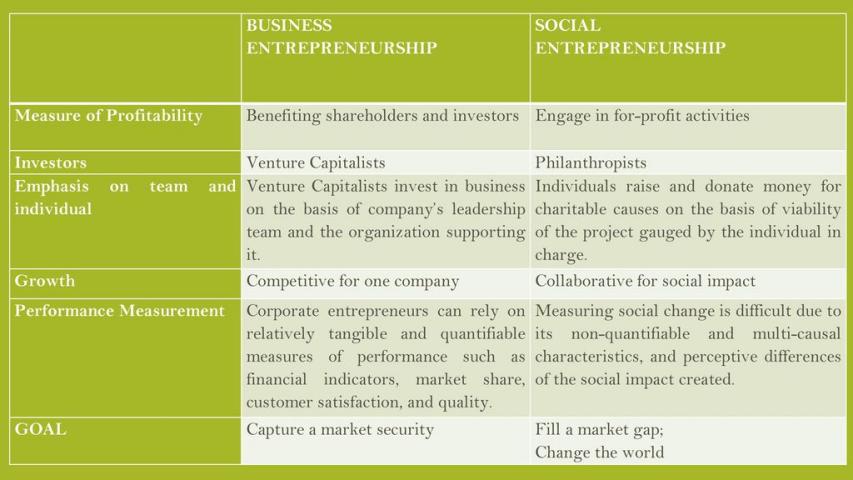
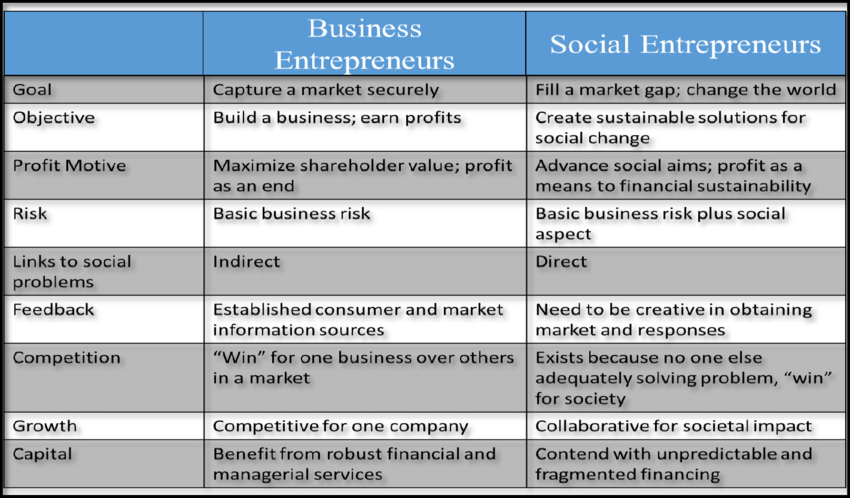
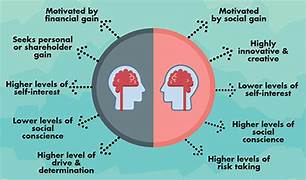
DIFFERENCE BETWEEN SOCIAL AND BUSINESS ENTREPRENEURSHIP
SOCIAL ENTREPRENEURSHIP focus beyond simply generating a profit and measures its performance on a positive impact the business may on society whether social cultural or environmental
TYPICAL ENTREPRENEURSHIP improve commercial market social entrepreneurs improve social conditions
Social entrepreneurs play a pivotal role in providing products and services with the primitive of creating social well-being operating from a 3 tier bottom line perspective benefiting people, planet, and profit
BUSINESS AND SOCIAL ENTREPRENEUR SHARE COMMON TRAITS
- STRATEGIC THINKERS: like business entrepreneurs social entrepreneurs act upon what other miss
- MISSION DRIVEN: work hard to generate value
- FOCUSED: both entrepreneurs are intensively focused and hard driven in their pursuit of a social vision
- RESOURCEFUL: they are skilled at mobilizing demotivating resources
- RESULTS ORIENTED: driven to produce tangible results
- CHALLENGE SEEKERS: tackle major issues opportunities or challenges
- PERSEVERANCE: continue effort despite obstacle
FIVE INCREDIBLE CHARACTERISTIC OF SOCIAL ENTREPRENEURS
- They Focus On Social Problems
- They Create Change
- They Combine Charitable Consciousness With Business Strategy
- Every Problem Represents a Resource
- Everyone Can Be a Social Entrepreneur

ISSUES
- Fear of loss of control
- Resource financial and human
- Risk averse culture
- Conflicting ends
- Lack of structure and governance for success
ORGANIZATIONAL READINESS
- Strategy
- Governance
- Human resources
- Finances
- Operations products and services
- Market perspective
MAPPING THE FUTURE
- formulate dreams that are worth believing in and fighting for by meeting three challenges
- Vision Statement
- Mission Statement
- Core Values
IDEAL FUTURE VISION
answers all or any of the following questions
- What will put you out of business?
- What is your ultimate vision of success?
- What is your ideal community vision?
answers may be end of homelessness hunger etc
MISSION
what is your organization's part in achieving the vision?
- What do we produce?
- Who do we produce?
- How do we do it?
VALUES
what do board members and employees stand for and embrace? what are the rules?
- May Include Integrity, Transparency, Entrepreneurship, Innovation Etc
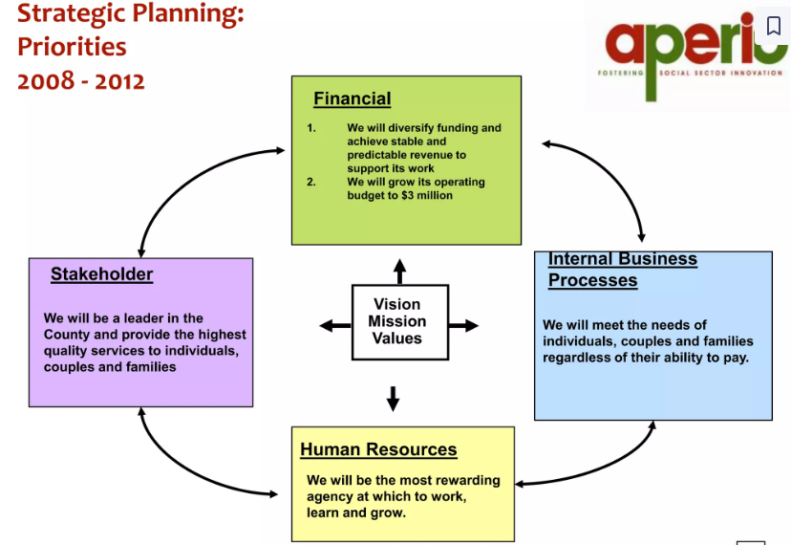
STRATEGIC PRIORITY DEVELOPMENT
Balance Scorecard Format
consider organizational success for more than one perspective for example:
- Internal Business Processes
- Client
- Financial
- Human Resources
SOCIAL ENTREPRENEURS IN ACTION
- BILL DRAYTON - founder of Ashoka Foundation
- MUSCOHAMMAD YUNUS - expert in MicroFinace, founder of Grameen Bank
- BLAKE MYCOSKIE - founder of TOMS, (shoes)
- SCOTT HARRISON - accessible drinking water
- XAVIER HELGESEN, CHRIS FUCHS & JEFF KURTZMAN - Better World Book (to maximize the value of every book and to promote literacy around the world)
- WILLIE SMITS - forester who found orangutan survival foundation
In the PHILIPPINES
- TONY MELOTO - Gawad kalinga and GK enchanted farm
- CAMILLE & ANNA MELOTO - Human Nature (beauty and personal care product)
- KRIE LOPEZ - HOuSE Messy Bessy (household cleaner)
- LEN CABILI - FILIP+ANNA tribes clothes to formal dress
- BEA MISA-CRISOSTOMO - RITUAL (bath and beauty products & cooking ingredients
CHALLENGES FACED BY SOCIAL ENTREPRENEURSHIP
- Social entrepreneurs are trying to predict address and creatively respond to future problems
- The lack of eager investors leads to the second problem in social entrepreneurship the pay gap
- Social entrepreneurs are often unsuccessful because they typically offer help to the least able to pay for it
SOCIOCULTURAL FORCES
Describe what CULTURE is.
- One way to gain strategic advantage on cultural
differences.
- To understand a basic concept:
- OUR WAY is not the ONLY WAY or even the BEST WAY.
What is CULTURE and WHY is it important?
- Culture, according to most anthropologists, whose function it to study culture, view it as the sum of the total of the beliefs, rules, techniques, institutions, and artifacts that characterized human populations.
- Culture can be also be understood from the individual level as the “individual worldviews, social rules and interpersonal dynamics characterizing a group of people set in a particular time and place.
WHAT ANTHROPOLOGISTS BELIEVE?
- Culture is learned; we are not born with a culture.
- The various aspects of Culture are interrelated.
- Culture is shared, patterned, and mutually constructed through social interaction.
- Culture defines the boundaries of different groups.
- ETHNOCENTRICITY
- The belief that your own culture is superior to other cultures.
- When outsiders attempt to introduce their home culture’s approach in a business environment, the stubborn resistance they are likely to meet is a sign of Ethnocentricity.
Challenges by international business managers
1st : To accept that other cultures are different.
2nd: To learn the characteristics of those cultures in order to adapt to them.
Steps to accept the difference of cultures according to anthropologist E.T. Hall
(1) spend a lifetime in a culture
(2) undergo an extensive training programs that covers the main characteristics of a culture, including the language.
IDENTIFY THE WAYS CULTURE AFFECTS ALL BUSINESS ACTIVITY.
MARKETING
- To build effective marketing campaigns, the marketer has to understand the foreign market beyond its surface.
HUMAN RESOURCES
- Cultural values play key role in motivating and evaluating employees.
- In some cultures, individual effort is rewarded, while in others, group effort is more highly valued.
- In some cultures, policies regarding how employees are to be treated are expected to be applied consistently to everyone, while in other cultures the expectation may be that applicable policies may depend on the individual and the situation.
PRODUCTION and PROCUREMENT
- Production managers have found that cultural values around attitudes toward change can seriously influence the acceptance of new production methods.
ACCOUNTING and FINANCE
• A culture’s accounting controls directly relate to it assumptions about people’s basic nature.
- Are the controls tight throughout the organization, suggesting low levels of trust, or loose.
- Are the controls administered by formal institutions in a command-and-control approach, gaining compliance through rules and sanctions, or do they rely instead on social norms, that is the customary rules of behavior?
PREFERRED LEADERSHIP STYLES
- Is it usual relationship between leader and followers hierarchical or lateral?
- Is the leadership model paternalistic? Heroic?
- Does the ideal leader come up through the ranks? Or is someone placed in the leadership position due to family or status?
- When communicating and addressing issues facing the company, does an ideal leader get straight to the point or instead use indirect language and metaphors?
- Should a leader be comfortable with publicly disagreeing with others during a discussion, or instead avoid confrontation and focus on harmony and “save face”?
Describe how CULTURE shows itself? HOW CULTURE SHOWS ITSELF?
AESTHETICS
- The area of philosophy that deals with beauty, so a culture’s aesthetics
describes its sense of beauty and taste.
- A culture’s sense of beauty and good taste.
- The word’s origin is the Greek aisthetikos, meaning perceptible by the senses.
- A culture’s aesthetics is expressed in areas like:
- Art , Drama , Music , Folklore , Dance
ART
- Art, including color and form, can convey a lot about culture to international managers because it contains symbolic meanings that are clues to values.
- Aesthetics applies to our ideas about our bodies and physical beauty.
- Tattoos represent another aspect of aesthetic value differences across cultures. In some cultures, they are seen as beauty-enhancing, while in others they are desecration
MUSIC and FOLKLORE
- A culture’s folklore can disclose much about a society’s way of life.
- The incorrect use of folklore can sometimes cost the firm its share of the market.
- Folklore is powerful because it conveys a package of emotions and connotations, often efficiently, even with one image
RELIGION
- Religion is an important component of culture and responsible for many attitudes and beliefs that influence human behavior.
- Knowledge of the basic tenets of the religions in your business markets will be useful s you build your understanding of these cultures.
- Religion is also an area of personal belief in which ethnocentric tendencies can be quite strong
MATERIAL CULTURE
- Material culture are all the human-made objects of a culture; people who study material culture are concerned with how people make things (technology) and who makes what and why (economics)
LANGUAGE
- The most obvious a distancing cultural distinction for newcomers to international business, spoken or unspoken.
- An important key to a culture, and without understanding it, people find themselves locked out of all but a culture’s perimeter.
- NONVERBAL COMMUNICATION(Unspoken Language)
- In cultures known as high context (HC) such as Middle Eastern and Asian cultures, meaning is conveyed through context rather than the words themselves.
- Advanced abilities to read unspoken language: body language and facial expressions (eye contact, posture, and subtle expressions.
- NONVERBAL COMMUNICATION
- It includes:
- Gestures
- Spatial
- Relationships
- Conversational
- Distance
SOCIETAL ORGANIZATION
Two kinds of social groups or institutions:
1. Kinship
- The family is the basic unit of institutions based on kinship.
- Local HR managers may fill the best jobs with family members regardless of their qualifications.
2. Free association
- Free associations are the second class of social institution.
- Not based on kinship, these are groups may be formed by age, gender, or common interest.
- International managers need to understand these associations because they influence behavior at a fundamental level, and their rules and organization are likely
SPECIAL FOCUS: GIFT GIVING IN BUSINESS
- Gift giving in the business contact is an important and often confusing aspect of every international manager’s life.
- Marcel Mauss, an anthropologist, studied the role of gifts in early societies, theorizes that gift giving as a way to acknowledge interrelationships and obligations.
- Mauss argued that individual, family and communal interests combined to make a social system.
- A gift has a magic life quality, he pointed out, because it carries with it more than the item itself; it carries some of the giver, which confers on the receiver an obligation to reciprocate.
- The ritual of gift giving in international business is important because it creates a social bond that requires you to be a giver, a receiver, and a holder of an obligation to the other person in the exchange.