Biogeochemical Cycles - Lecture
Rock Cycle: 3 rock types are igneous, sedimentary, metamorphic
igneous: crystallizes magma or lava
sedimentary: lithified sediments
metamorphic: metamorphized rocks
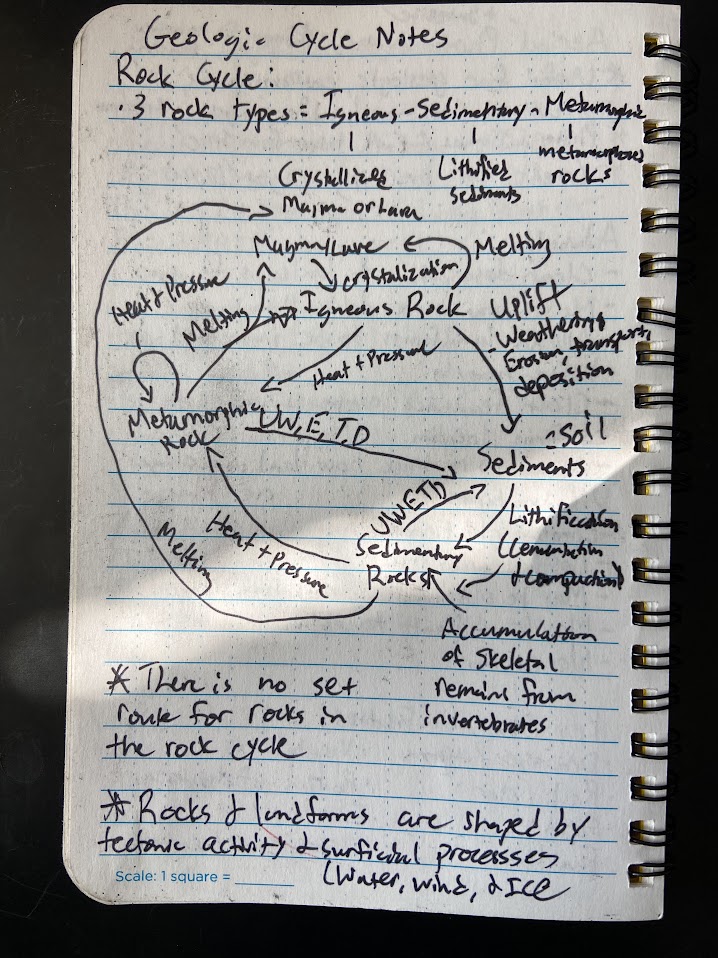
No set route for rocks in rock cycle
Rocks and landforms are shaped by tectonic activity and surficial processes (water, wind and ice)
Water, wind, and ice are responsible for weathering, erosion, transportation and deposition of sediment
Plate tectonics: responsible for uplift, melting, heat, and pressure
Plate Tectonics
Earth’s Interior
crust: thin, brittle rock
asthenosphere: soft, ductile rock
mantle: solid, elastic rock
outer core: molten iron and nickel
inner core: solid iron
Earth’s surface is broken into plates called lithospheric plates
average thickness is 100 km
Plate tectonics: movement of lithospheric plates
evidence: sea floor spreading, deep drilling, paleomagnetism, hot spots
produces: ocean basin,
Types of Plate Boundaries
Convergent: plates collide or subduct, destroys lithosphere
ocean-continental: volcano chutes
ocean-ocean: volcanic island chains
continent-continent: mountains
Divergent: plates pull apart which creates new lithosphere
ocean-ocean: mid ocean ridges
continental-continental: rift valleys
Transform: lithospheric plates move past each other
no creation or destruction of lithosphere
earthquakes
Everything on this planet is affected by plate tectonics
create new zones of resources
volcanoes and earthquakes
determine properties of rock and soil which we depend on for construction and agriculture
modifies flow patterns in oceans, influencing climate change
Wind, Water, and Ice
Modify and create landforms
Ice
glaciers
permafrost
abrade, pluck, deposit
Glaciers: mass of moving ice (snow and
two types: continental ice sheets and alplane (mountains)
10% cover land surface
Greenland, Alaska, Antarctica, Norway, Canada, Cascades, Rocky Mountains
glacial surge: rapid advance of ice - can radically change environment
Glacial Deposits: sediments deposited by glaciers
sediments: sand, silt, clay, gravel
till: unconsolidated, poorly sorted directly deposited by glaciers
moraine: hill of till
outwash: poorly sorted deposited by glacial meltwater
eranatios: boulders of different bedrock (exotic)
Glacial Erosion
valleys: u-shaped
cirques
horns
fiords
lakes
Careful evolution of recently glaciated area for planning and building
Permafrost: permanently frozen ground
special engineering problems are associated with design, construction, and maintenance of roads, railroads, cornfield, pipelines, and buildings in permafrost areas
hazards: when melted can lead to unstacked materials, subsidence (sinking at surface), landslides,
Wind
wind blown deposits
loess: blown silt
sand: dunes
sand dunes: constructed under the influence of wind from sand moving close to the ground
potential problem: dune —
problem with construction of land in railroads and —
Loess: windblown silt
can travel high and far (1000 m high) - derived from glacial outwash
can lead to dust storms: dust bowl of 1830s
most found along Mississippi River and PNW
Water Cycle
summarizes how water, water vapor, ice flow through environment
powered by sun and gravity
most water that falls on surface runs off into river structures, lake, ocean
causes erosion
transports sediment and nutrients between ecosystems
components: evaporation, transpiration, condensation, precipitation, infiltration, percolation, runoff, interception
sources of sinks: oceans, rivers, lakes, groundwater, glaciers
dependent on precipitation and evaporation rates
source: a pool that releases more nutrients than it accepts
sink: a pool that accepts more nutrients than it releases
Carbon Cycle
Source: plants, deforestation, burning of fossil fuels
Sinks: sedimentary rocks, oceans, atmosphere, forests, living organisms
shift of carbon from ground to air due to burning fossil fuels and cutting forests and burning vegetation
Nitrogen Cycle
Specialized bacteria
Nitrogen gas cannot be used by most organisms (78% of atmosphere)
Processes involved:
nitrogen fixation: bacteria combines: nitrogen and hydrogen
nitrification: bacteria covert to nitrate - ammonification used by plants
assimilation
ammonification
denitrification
Phosphorus Cycle
Most found in rocks and released by weathering (very slow)
Sulfur Cycle
Sulfur moves between rocks, water, systems
Source: volcanoes, weathering, (not sulfide, minerals)
Sink: oceans