W1 L2: Hormone synthesis, secretion and signalling
Synthesis of Amine Hormones
- Adrenal amines (adrenaline and noradrenaline)
- Synthesised from tyrosine
- Stored in cytoplasmic vesicles
- Thyroid amines (T3 and T4)
- Synthesised via a multi-component pathway involving the protein thryoglobulin (Tg)
- Stored as a large precursor → colloid
Synthesis of Steroids
- Most are synthesised from cholesterol
- Cells that produce steroid hormones typically contain multiple lipid droplets in their cytoplasm
- Little storage in endocrine cells
- de novo synthesis follows cell stimulus
- (But,) stores of cholesterol present in the cells can be rapidly metabolised
Peptide Hormone Synthesis:
Post-Translational Modifications:
- To become fully functional, many proteins require further processing after translation.
- Peptide hormones subject to variety of such modifications
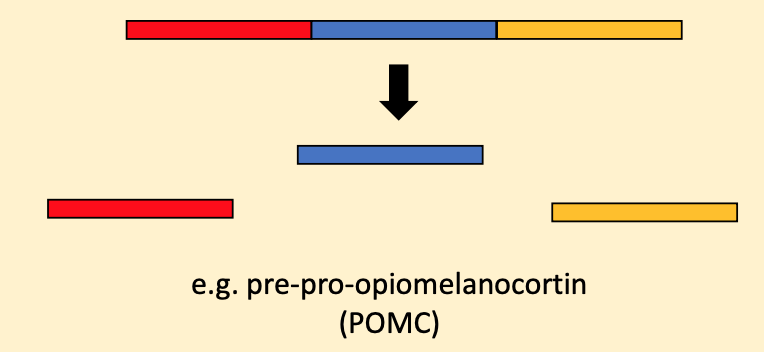
- Preprohormones:
- Inactive precursor from single gene
- Cleaved → active components
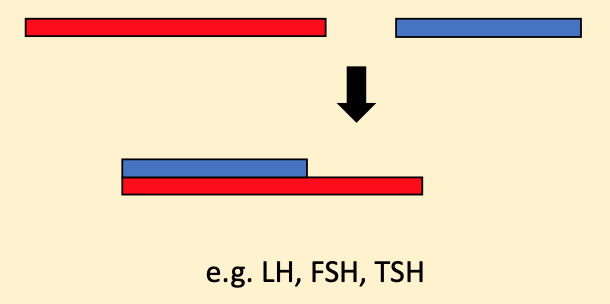
- Dimerisation:
- Subunits from different genes
- Combine → active product
Secretion of Thyroid Amines and Steroids
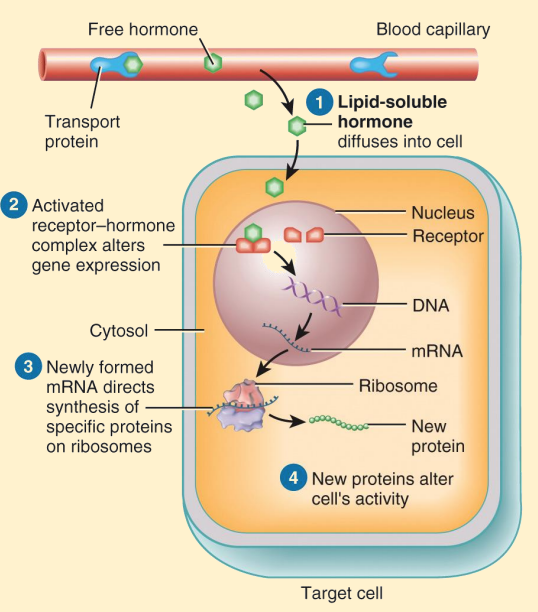
- Thyroid amines and steroids are lipophilic
- Diffuse across the cell membrane into the blood, so no active secretory mechanism
- Once in hydrophilic blood, they are transported bound to plasma proteins
- Steroids are released immediately after their de novo synthesis
- Thyroid hormones are only released after they dissociate from their colloid precursor
Secretion of Adrenal Amine and Peptide Hormones: Exocytosis
- Secretory process for adrenal amines and peptide hormones – Endocrine and neuroendocrine
- Vesicle contents are released by fusing of the vesicle to the cell membrane
- Triggered by influx of Ca2+ in many cases; other triggers include cAMP
Hormone Signalling: Introduction to Receptors
- Inter-cellular signalling molecules regulate target cells by binding to specific proteins →receptors
- Therefore, hormone receptors are essential for the function of the endocrine system
- There are many types of receptor, but can be loosely categorised as:
- membrane-bound receptors (expressed on the external plasma membrane)
- intracellular receptors (expressed in the cytoplasm)
Membrane-Bound Receptors
- Mechanism of action for hydrophilic peptide and amine hormones
- Proteins present in the plasma membrane
- Many different types, but all have 3 basic domains:
- Extracellular (binds hormone)
- Transmembrane
- Intracellular (often necessary for effects in target cell, e.g. change in enzyme activity)
- Typically, responses are rapid & cause a change in:
- membrane permeability (e.g. adrenaline)
- enzyme activity (e.g. insulin)
Intracellular Receptors
- Mechanism of action for steroid and thyroid hormones
- Stimulate gene expression → delayed & prolonged response