hunger and the chemical senses
HUNGER AND SATIETY
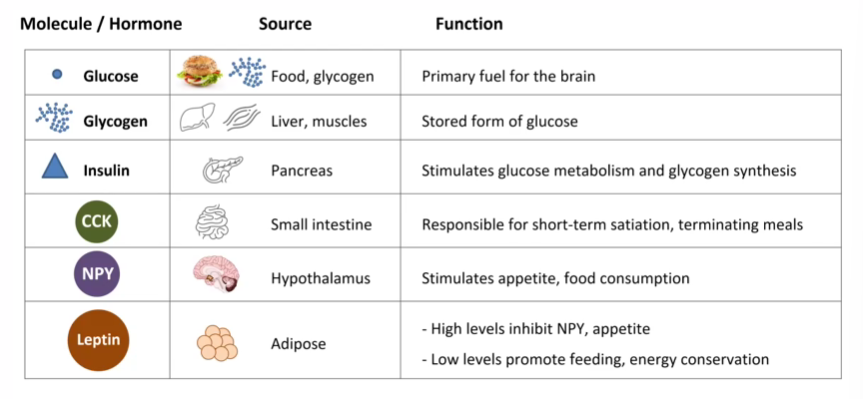
glucose :: primary energy source for the brain
glycogen :: how the body stores glucose. some stored in muscles, but main supply in liver. can easily be converted to glucose when needed. insulin regulates glucose levels
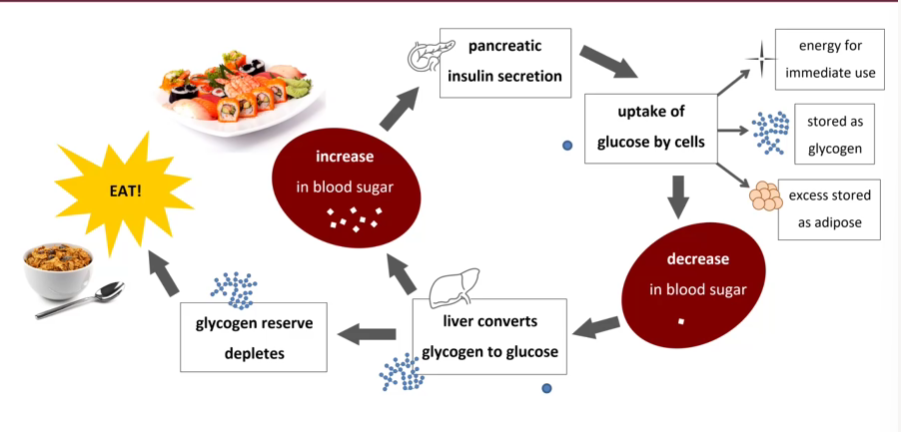
pancreas :: secretes insulin
liver :: breaks down glycogen into glucose
the liver and pancreas help to buffer extreme swings in blood glucose levels and regulate ingestive behaviours
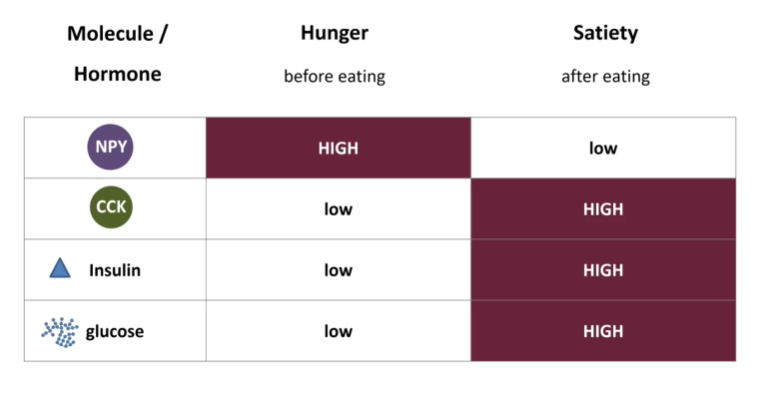
NPY :: neuropeptide Y. found in hypothalamus. causes hunger cue
how we feel full :: 1. stretch receptors in the stomach are activated as it fillw with food or water which signal the brain directly through the vagus nerve that connects gut and brainstem. 2. brain also receives a series of signals from digestive hormones secreted by the gastrointestinal tract/liver. 3. small intestine releases CCK
low blood glucose / low glycogen = hunger
high blood glucose / high glycogen = satiety
CCK :: cholecystokinin. hormone released by small intestine, responsible for feelings of satiety. tested by injected into rats. injected rats ate for shorter duration but more frequently (in the end still ate the same amount of calories as the control group) = CCK regulates short-term satiety
LONG-TERM WEIGHT REGULATION
fat :: fat has more than twice the energy density than carbohydrates. long term its a good choice. endocrine organ
1g fat = 9 units of kilocalories; 1g carbs = 4 kilocalories
leptin :: secreted by adipose tissue. long-term energy balance. inc leptin = dec appetite + food consumption. inhibits the actions of NPY. evolutionarily prob was supposed to indicate low energy stores. when injected into obese mice it caused them to eat less = return to a normal weight
OB gene :: what controls leptin production. in mice, no OB gene = no appetite regulator = obese
leptin resistance :: beyond a certain level, effect of leptin on appetite is reduced. inject leptin into a obese mouse w normal leptin levels, they will nOT become less obese
together, leptin and NPY interact to regulate your weight to optimal levels
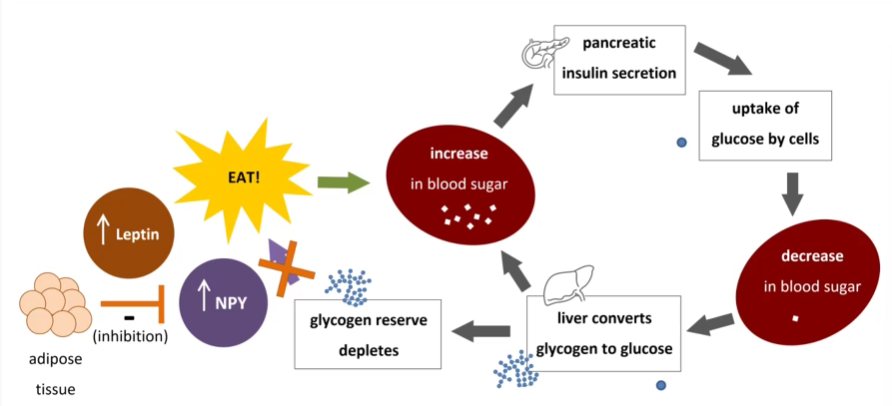
when glycogen reserves get low and NPY levels incerase to signal a need for food, leptin can be secreted from the fatty tissue to inhibit that drive to indicate that the need for food is not urgent. glycogen dec = NPY inc = leptin says hunger not urgent. eventually the drive to eat will win out
when NPY was injected directly into the brains of rats :: results suggest that NPY action promotes unconditional and conditional behaviours that specifically lead to inc carbohydrate consumption
- inc intake of sucrose
- rats will begin to work harder for a cue associated with sucrose
- inc consumption of saccharin (similar to taste to sucrose but without calories)
endogenous opioids :: natural occuring chemical substances that have morphine-like analgesic actions in the body. contributes to palatability & reward-driven feeding. naloxone reduces intake of saccharine, sucrose, and saline. some researchers have speculated that overeating in some people may be reflective of a maladaptive opioid-mediated reward-driven feeding mechanism
TASTE PREFERENCES AND FOOD SELECTION
evolutionarily sweet = :: energy-rich foods like fruit
evolutionarily bitter/sour = :: poisonous, spoiled or toxic foods
evolutionarily salty = :: electrolytes
evolutionarily umami = :: amino acid rich food
taste preferences are universal :: particular tastes will ellicit the same facial reactions all across the world. both healthy + babies w brain damage exhibit the same characteristics
the foods you enjoy as an adult are learned by experience, but like any other trait, there are individual differences in taste sensitivity
high sensitive tasters :: have many more taste buds than the average person = more sensitive + bitter tastes. Pregnant women > Women > Men
HOW TASTE IS PROCESSED IN THE BRAIN
taste buds :: have 50-150 taste receptors cells. 2/3 on tongue, rest on soft palate + opening of the throat
tastes :: sweet, salty, bitter, sour, umami