Renal system
The renal/urinary system consists of kidneys, ureters (carry urine from kidneys to bladder), a bladder and a urethra (carry urine from bladder to outside).
Functions
regulate water and inorganic ion balance in the body
removes metabolic waste from blood excreted into urine
produce hormones
gluconeogenesis (glucose production from non carbohydrate source)
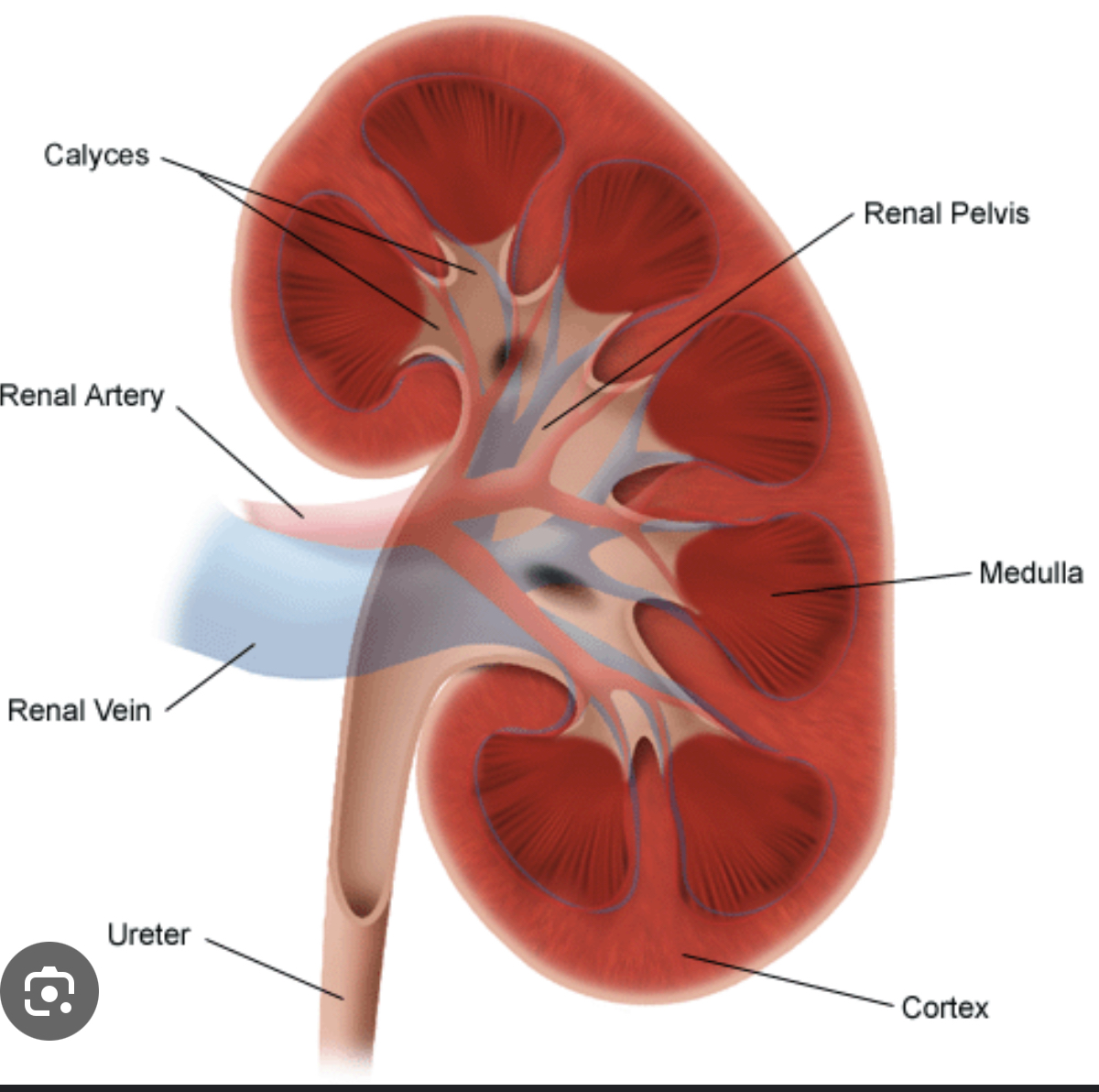
Kidneys filter the blood, they are located at the back of the abdominal wall. due to the position of the liver, the kidney on the right side is slightly higher than the left.
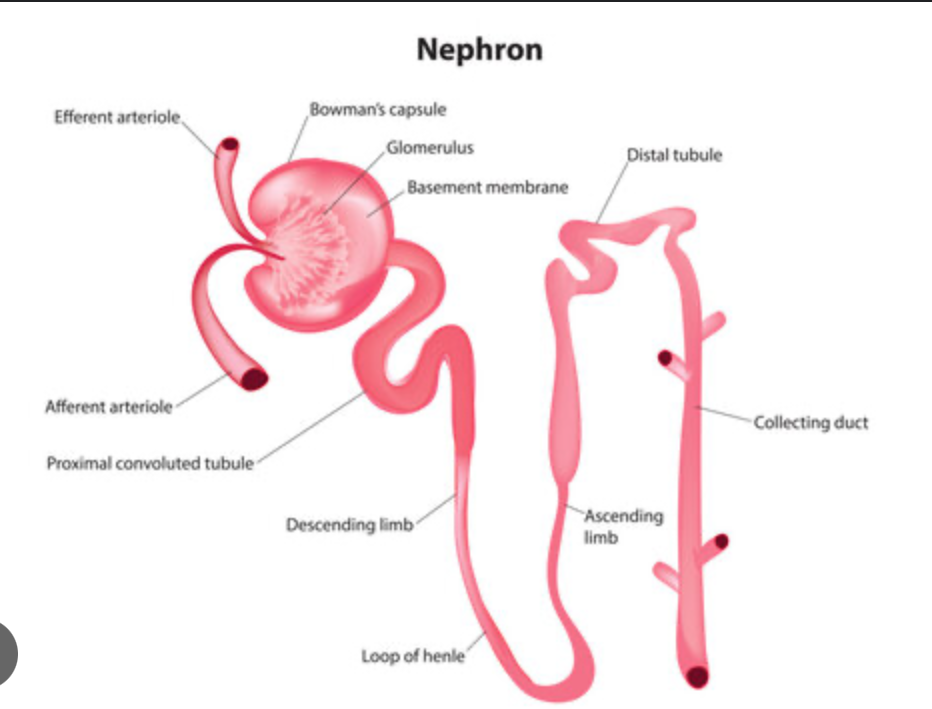
the cortex and medulla contain tiny blood filtration units called nephrons. there are over 1 million in each kidney. there are three processes that happen:
filtration - blood enters kidneys via the renal artery which splits into a network of capillaries called glomeruli.
the afferent arterioles bring blood to the glomerulus and efferent take blood away.
selective reabsorption - filtered liquid continues through the convoluted tubules which are surrounded by capillaries. substances contained in the waste like glucose, amino acid and vitamins are reabsorbed back into the bloodstream. This process is selective as it depends on the level already present in the bloodstream.
Filtered blood leaves the kidneys through the renal vein.
secretion and collection - this involves the excretion of water, hydrogen, ions, creatinine, drugs and urea from the blood into the collecting duct. Passes into the ureter to be passed to the bladder and urethra.