Almond Sponge
Joconde Sponge Cake
This type of cake is a light and airy sponge made with ground almonds, giving it a rich and soft texture. It's commonly used in French desserts like the Opera cake and for decorative purposes in various pastries
Ingredients
Almond Sponge Batter
When you mix eggs and sugar together, you typically get a thick, pale, foam-like batter known as the ribbon stage. This stage is achieved by beating the eggs and sugar until the mixture becomes light and falls in ribbons when lifted from the bowl
This process incorporates air into the mixture, which helps to create a light and fluffy texture in baked goods.
Ingredients | Quantity |
Eggs | 250 gm |
Sugar | 150 gm |
Meringue (French Meringue)
Meringue is a light, airy, and sweet confection made from whipped egg whites and sugar. It can be used in various desserts like pies, cookies, and pavlovas.
French Meringue
This is the simplest form, made by beating egg whites and gradually adding sugar until stiff peaks form. It's often used for folding into cake batters or baking into meringue cookies. It's the most straightforward method and doesn't require any additional heating or syrup.
Why can the sugar be added all at once to the egg whites before mixing in some cases when making a French meringue?
In some cases, sugar can be added all at once to the egg whites before mixing when making a French Meringue. This method can still produce a stable meringue, although it might take longer for the egg whites to whip up to the desired volume and stiffness.
Adding sugar gradually is generally recommended because it helps the sugar dissolve more easily and stabilizes the meringue more effectively. However, if the sugar is added all at once, it will eventually dissolve and stabilize the meringue, just with a bit more patience and mixing time.
Ingredients | Quantity |
Egg White | 175 gm |
Sugar | 75 gm |
Dry Ingredients
The dry ingredients in a Joconde sponge cake include a combination of both almond flour and soft flour to achieve a unique texture and flavor. Almond flour adds richness and moisture due to its fat content, which contributes to the cake's soft texture.
On the other hand, soft flour adds structure and helps the cake rise without making it too dense. This combination ensures that the sponge is light, airy, and flavorful, making it ideal for use in various French desserts.
Ingredients | Quantity | |
Ground Almond Flour | 200 gm | |
Soft Flour | 50 gm |
Butter (Melted)
Melted butter is often used instead of whole solid butter in recipes like Joconde sponge cake because it can easily integrate into the batter, ensuring a smooth mixture.
Using melted butter helps to maintain a light and airy texture, which is essential for sponge cakes. The liquefied form allows for an even distribution of fat and moisture, contributing to the cake's rich flavor and soft texture.
Solid butter can create lumps in the batter and may not blend as well, potentially affecting the cake's rise and overall lightness.
Ingredients | Quantity |
Melted Butter | 50 gm |
Procedure
Measure all the ingredients.
Sieve all the dry ingredients, Ground Almond Flour, and Soft Flour and combine them in a bowl
Sifting flour removes lumps and makes it lighter and fluffier, which can result in a more accurate measurement and improve the final product.
Melt the butter in a small pot and set aside, be careful not to let it set aside too long as it can resolidify.
Almond Sponge Batter
In a mixer bowl, combine eggs and sugar.
Using the whisk attachment, beat the mixture until it reaches a pale/foamy state.
When making the almond sponge batter, initially, the mixer can be set to a medium speed to combine the eggs and sugar until they reach the ribbon stage, which is a thick, pale, foamy state.
Adjustments to the speed can be made as needed throughout the mixing process.

French Meringue
In a mixer bowl, combine egg white and sugar, the sugar can be added all at once or gradually.
Using the whisk attachment, beat the mixture until it reaches stiff peaks form.
When making meringue, a medium speed on the mixer is typically used to achieve the desired stiff peaks.
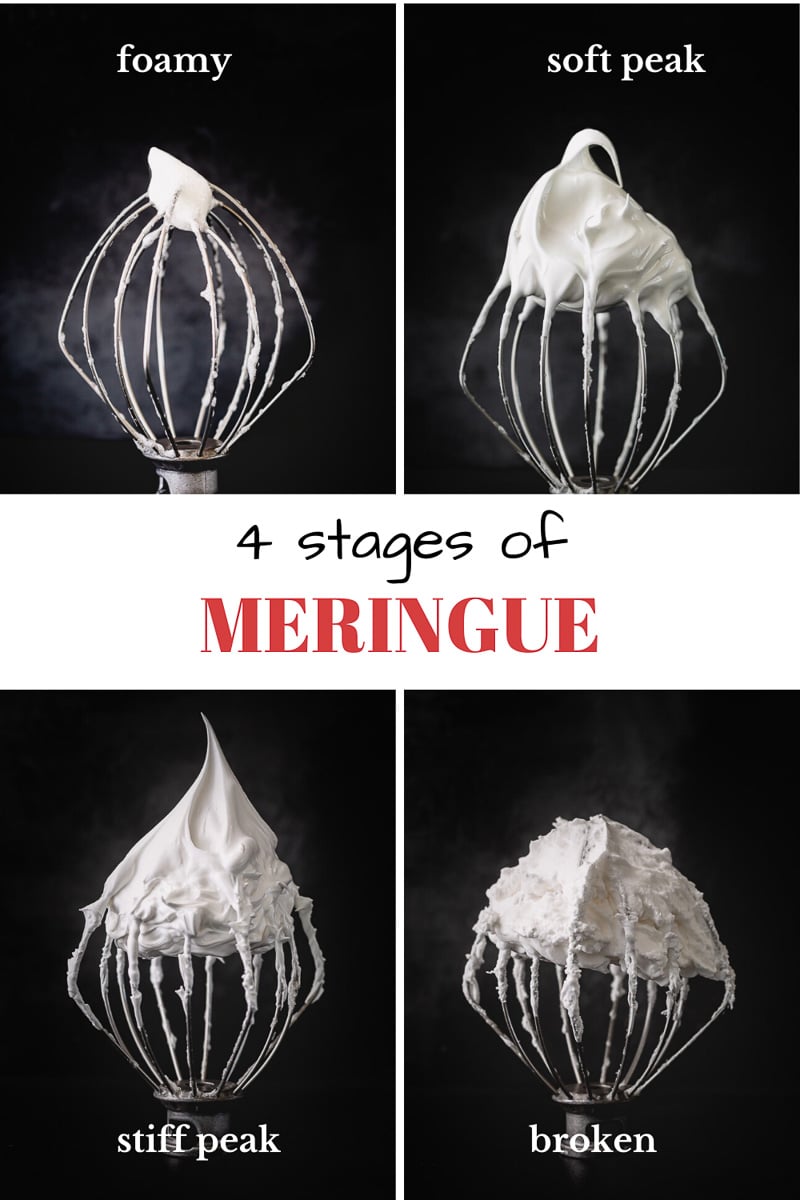
Folding French Meringue into The Almond Sponge Batter
Add half of the French Meringue to the Almond Sponge Batter, and fold it gradually.
Once the first batch of the French Meringue has been fully incorporated, add in the remaining French Meringue.
Again, ensure the French Meringue has been fully incorporated into the mixture (no visible French Meringue in the mixture).
What are the indications that the batter is mixed perfectly, not overmixed, and ready to receive the dry ingredients?
The mixture has a smooth and cohesive texture, filling back in slowly without collapsing.
If shaken, the mixture should begin to pull away from the sides of the bowl, indicating good consistency.
The volume should still feel light and airy, with the meringue maintaining its stability.
This stage is not necessarily the classic 'ribbon stage' seen when mixing egg and sugar for the batter but rather a well-mixed consistency that incorporates the lightness of the meringue while ensuring that the batter is ready to receive the dry ingredients.
The batter should have a consistent color and texture throughout, with no visible streaks of meringue or almond mixture.
The mixture should appear smooth and glossy, indicating that the meringue has been properly folded in without breaking down.
The more the folding the more fluid the mixture will be, hence, it will deflate the mixture causing it to become dense.
A deflated meringue means that the air that was whipped into the mixture has been forced out.
Folding the Dry Ingredients into the Mixture
Once the mixture has been fully incorporated, add half of the dry ingredients into the mixture and fold it gradually.
Once the first batch of the dry ingredients has been fully incorporated, add the remaining dry ingredients into the mixture.
Again, ensure the dry ingredients have been fully incorporated into the mixture (no visible dry ingredients and no lumps)
Folding the Melted Butter into the Mixture
Prepare a small bowl, and mix the melted butter with a small portion of the batter mixture. This is known as the “tempering” or sacrificial” method.
Once the small portion of the batter mixture and the melted butter is fully incorporated, add all of it back to the original mixture.
Again, ensure all the mixture has been fully incorporated, then pour it into a baking tray with a silicon mat or a parchment paper.
What are the indications that the batter mixture is now ready to be poured into a tray and baked?
The mixture should be stiff and not too fluid, an indication can be made by lifting some of the batter using a spatula and letting it drop on top of the batter, the dropped batter should stay in its position for a while before collapsing back into the mixture. If the lifted batter mixture collapses straight away after being dropped, that’s an indication that the mixture has been overmixed.
What is the “tempering” or “sacrificial” method?
This technique involves mixing a small portion of the batter with the melted butter before incorporating it back into the main batter. The purpose is to ensure that the melted butter is evenly distributed throughout the batter without deflating it or causing it to sink to the bottom.
By doing this, you help maintain the light and airy texture of the batter, which is especially important in delicate cakes like sponge cakes or genoise. This method helps to avoid overmixing and ensures a more uniform texture in the final cake.
Why it is recommended to fold the French Meringue into the Almond Sponge Batter rather than mixing the dry ingredients first?
Folding the French Meringue into the Almond Sponge Batter is recommended rather than mixing the dry ingredients first because folding helps to maintain the airiness of the meringue. This air incorporation is crucial for the light and fluffy texture of the Joconde sponge cake.
Another reason for folding the meringue into the Almond Sponge Batter first is indeed to stabilize the mixture for easier incorporation of the dry ingredients later. By initially folding in the meringue, you create a base that is lighter and fluffier, which can better accommodate the subsequent addition of dry ingredients without losing volume.
Why do we need to divide the French Meringue into batches when folding it into the Almond Sponge Batter, and why is a mixer machine not used?
It is also recommended to fold half of the meringue first to gently integrate it without deflating the airy structure. Adding all the meringue at once can overwhelm the batter, causing it to lose volume. You can add the remaining meringue once the first half has been incorporated and the mixture appears uniform and smooth, indicating that it can accommodate more volume.
Folding instead of using a machine to mix is essential because mechanical mixing can deflate the meringue, resulting in a denser cake. The folding technique carefully blends the ingredients while preserving the incorporated air, ensuring the desired lightness and texture.
Why do we use melted butter but not solid butter?
Melted butter is often used instead of whole solid butter in recipes like Joconde sponge cake because it can easily integrate into the batter, ensuring a smooth mixture. Using melted butter helps to maintain a light and airy texture, which is essential for sponge cakes.
The liquefied form allows for an even distribution of fat and moisture, contributing to the cake's rich flavor and soft texture. Solid butter can create lumps in the batter and may not blend as well, potentially affecting the cake's rise and overall lightness.
Using solid butter would require creaming, which incorporates air differently and is more suitable for denser cakes like pound cakes or butter cakes.
Meringue Texture and Preparation
Meringue Basics
White unfolded meringue is often used in various recipes.
Essential to monitor the texture during preparation.
Observation of Consistency
Check the meringue consistency before proceeding.
If it is too stiff, adjustments may be needed before baking.
Melting Process
Ensure the ingredients, especially any fat, are melted and fully incorporated before mixing.
Observe how the meringue changes when ingredients are added or manipulated.
Technique for Achieving Desired Consistency
Stopping Point
Knowing when to stop mixing is crucial. Too much mixing can lead to a fluid consistency that is undesirable for meringue.
Visually assess the mixture; it should not be overly liquid.
Texture Indicators
If shaken, the mixture should begin to pull away from the sides, indicating good texture.
A perfect pull is a sign of achieving the right balance; if it pulls too quickly, it could mean you did not mix gently or far enough.
Aim for a smooth, cohesive texture that slowly fills back in without collapsing.
Final Steps in Meringue Preparation
Finishing Touches
Once the desired consistency is reached, carefully incorporate any additional ingredients (if required).
Observe the volume and stability of the meringue; it should hold its shape well.
The final mixture should feel light and airy but still stable enough for further processing or baking.