Chemical Bonding
metal (+) and nonmetal (-) , ionic
only ever single bonds
nonmetal (-) and nonmetal (-) , covalent
share electrons to obtain a stable noble gas configuration
single, double, or triple bonds
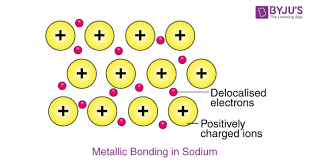
metal (+) and metal (+) , metallic
metals have more valence electron shell orbitals than electrons
delocalized electrons is what gives metals their characteristic properties, for example, if the ends of a bar of metal are connnected to a source of electric current, electrons from the external source enter the bar at one end
a bonding scheme for metals must also account for the properties metals share:
conduct electricity
conduct heat
mallebility and ductility
lustrous
they follow the electron sea model or the free electron model, where they have released their electrons and are embedded in a sea of electrons
octect rule - atoms react by sharing or transferring electrons in order to obtain a stable noble gas configuration. Noble gases (except He) have 8 valence electrons
metals lose electrons and form positive ions called cations
nonmetals gain electrons and from negative ions called anions
properties of ionic compounds:
crystalline solids at room temperature
arranged in a lattice strcture
high melting and boiling points, soluble, hard but brittle, conduct electricity when molten or aqueous
properties of of covalent compounds:
gases liquid and solid and room tempertature
solid are usually soft
evapourate readily and have low melting and boiling points
not soluble in polar, soluble in non polar
do not conduct electricity