my notes
western frontier: lecture 1
homestead act
good deal
morrill land grants
land for farming and education, which helped in the development of agriculture and higher education in the United States
30,000 acres of fed land
colleges
u of florida
florida a&m
railroads/transcontinental railroad
Pacific Railway Acts: Legislation passed in the 1860s that provided federal support for the construction of the transcontinental railroad, fostering economic growth and expansion across the United States.
gov bonds and land grants
railroads received 175 mill acres from the gov
gov gives railroads land for free
impact:
communication
easy transport of people, messages, goods
create new markets and increase economic opportunities, enhancing overall productivity and fostering innovation.
commerce
settlement and expansion
transcontinental railroad
central pacific (w) and union pacific (e)
promontory point (1869)
golden spike
immigrants working on railroad - very dangerous
ap psych connection: phineas gage
rod in the eye
national market
west sends agriculture and raw materials to east coast
east sends people and finished goods to the west
mining frontier
sutter’s mill
california gold rush
boom town
town that develops around mining
ghost town
once miners abandon the area due to depletion of resources, these towns often become ghost towns, with abandoned buildings and a dwindling population.
fosters diversity
immigrants from asia, europe, south america
african americans, indigenous people
cattle drives help with money
people living together
more diversity, but also conflict
gender gap
for every 10 men, only 1 woman
not a lot of authority, infrastructure
the cattle frontier
cattle drivers
texas longhorn
chicago stockyards
barbed wire fences bc not enough wood
cattle can’t roam as freely
farming frontier
western society
male dominated
mostly families settled
the risk of losing the american frontier (turner thesis) - shows up on ap exam
manifest destiny
once frontier closes, its going to create problems for american society
without frontier available, fear of overcrowding, feeling stuck
innovation
barbed wire
mechanization of farming
mechanical reaper
100x of production speed of traditional way
surplus production can significantly reduce labor costs and lead to increased profitability for farmers
falling profits and prices
bonanza farms
big corporate farms, funded by investors, can afford technology, shipping, etc.
railroads charging lot to ship
lot of homesteaders fail
railroad tycoons
bad
greedy railroad people
geographic monopoly market
many buyers (farmers)
one seller (the railroad)
This creates a situation where railroads can charge exorbitant rates, leading to significant profits at the expense of local farmers.
can’t get it anywhere else, bad quality, no competition, high price
national grange of the patrons of husbandry (grangers)(1867)
cooperatives, info exchange, social and political center, fought unfair practices of RR companies
frontier and indigenous people
plains natives lifestyle
sioux semi nomadic, but once they had horses, they follow the buffalo
rely on bison to support their diet, clothing, and shelter, using every part of the animal in a sustainable manner
provided essentials of indigenous life
lifestyle changing bc of bison population decrease
gov force onto reservations
reservations
concentrations of tribes through separate treaties
tribal chiefs selected by white officials
us gov changing indigenous way of life
oklahoma land rush (april 1889)
sooners
white settlers taking native american land sooner than they should
boomers
ones speaking up
open up oklahoma land
violating treaties
indian removal act (period 1)
seminole, creek, cherokee, choctaw, chickasaw
fort laramie treaty
agreed to by the lakota and us in 1868
created great sioux reservation
includes sacred black hills
white man finds “gold”in the Black Hills in 1874, leading to increased tensions and eventual violation of the treaty by the U.S. government
10,000 white settlers
lakota chief sitting bull creates sun dance alliance in reaction to the settlers
US sent army to quell indian alliance
native american victory (battle of little bighorn)
june 26, 1876
us responds to defeat by pouring men and material on the plains in a campaign of near extinction
col. custard
bounty on the bison destroys food stock of plain indians
led to plains wars
later becomes mount rushmore
plains wars
native american leaders and warriors
cochise and geronimo (apache)
crazy horse and sitting bull (lakota)
americanization of indigenous people
a century of dishonor (1881)
white supremacist lens
they should assimilate
dawes severalty act (1887)
us gov offering 160 acre plots of land from tribal territory
separate tribes
breaking up community, communication, ties to each other
granted citizenship
tried to assimilate by farming
ghost dance movement
wovoka - movement leader
stand up against further us white settlement
uniting tribes
wounded knee massacre
december 28, 1890
253 plains indians massacred by us troops
half women and children
carlisle industrial school
boarding schools to assimilate the indigenous youth in order to gradually make the indigenous way of life extinct, reflecting a broader policy of cultural erasure and forced integration that aimed to strip Native American children of their languages, traditions, and identities
gilded age: lecture 2
2nd industrial revolution
improved quality of life, but under harsh and dangerous working conditions
problems with corruption, pollution, overcrowding, disease, etc.
mechanized creation of steel
lighter
powered by petroleum and electricity
1850-1914
europe, US, japan
internal combustion engine, automobile, lightbulb, telegraph, telephone, radio, electric motors, railways, trams, elevator, subway, typewriter, phonograph, portable camera, zipper, air conditioning, airplane, model t (mass produced car)
rise in wealthy class
more of a gap between wealthy and poor
publicly held corporations
people can buy stock in that company
helped fuel the second wave of industrialization
buying and selling stocks
incorporation
business holders can only lose business assets and not personal assets
integrative business models
horizontal integration
buy the competitors
vertical integration
buy all of the aspects of production
ex: sugar mill, shipping company, etc.
effects
limited competition
maximized profits
lowered costs
monopolies at the time
standard oil trust
rockefeller
horizontal integration
used threats, bribes
not a very nice business guy
carnegie steel company
andrew carnegie
vertical integration
bessemer process: a method of steel production that greatly increased efficiency and lowered costs by using a blast of air to remove impurities from molten iron
focused on philanthropy
gospel of wealth
increase in steel
steel skyscrapers
ran out of room- instead of building out, they build up
urbanization
sherman antitrust act 1890
government attempt to control monopolies like standard oil
vaguely written - difficult for courts to interpret
rarely enforced against businesses
applied more toward labor unions (bruh????)
taylorism or scientific management
standardization and production based on science and time efficiency
hierarchies and subdivisions of labor
many assembly lines
led to devaluing and deskilling of labor as tasks became more repetitive and specialized, resulting in workers losing their broader skill sets
labor conditions
poor working conditions
miners had fires and gas leaks
factory workers had gas leaks, chemicals, dangerous machinery
long hours
no benefits → exhaustion and disease
1882: average 675 workers died on the job per week
1881-1900: about 35,000 workers died on the job each year
solution: labor unions
collective bargaining
demand higher wages, benefits, shorter working days, safer working conditions
used political action, closed shops, picketing, rallies, work slowdowns, boycotts, strikes, sabotage
types:
industrial/national unions
organized ALL workers in an industry
knights of labor
est. 1869 in philly, pa
skilled and unskilled laborers
african americans and women included
craft unions
skilled workers across industries
american federal of labor (AFL)
est 1886 in columbus, oh
samuel gompers (1887)
gilded age society and reform: lecture 3 (absent)
1865 to 1898
gild
growth
rapid industrial and urban growth
inequality
huge gap between wealthy and poor
labor
factory work, wage labor, strikes
discontent
reform movements and criticism
3rd great awakening (1865-1920)
religious revival centered in cities
response to industrial issues
postmillennialism: christians must reform society to prepare for christ’s return
inspired social gospel movement
led to activism in form of missions, temperance, anti-poverty work, immigrant aid, salvation army
social gospel
applied christian ethics to poverty, labor exploitation, and urban conditions
christianity required social action, not just personal salvation
emphasized the importance of community and social welfare initiatives as a means to reflect true Christian values
societal responsibility to improve living conditions
influence progressive era reforms like housing laws, labor protections, settlement work
YMCA and YWCA
BUT
Josiah Strong, our country
merced social gospel with white supremacist ideals
will be a push for imperialism
social gospel led to reform, by contrast social darwinism leads to justification for inequality
social gospel & reform
community centers in immigrant neighborhoods
workers lived among those they served
run by educated middle class women
early foundation of social work
services
english classes, kindergarten, job training, health clinics, recreation
promoted social democracy
respect across class lines and shared community responsibility
jane addams and hull house
urban and social reform
henry george, progress and poverty (1879)
industrial growth creates wealth and deep poverty
land values rise as cities grow, so landowners gain wealth without labor
proposed single tax on land to reduce unearned wealth and fund public needs
sparked national debates on inequality and laissez-faire capitalism
jacob riis, how the other half lives (1889)
the first major use of flash photography to expose life in the poorest of urban centers
revealed cramped rooms, disease, overcrowding, and unsafe buildings
influenced public opinion into supporting housing codes and sanitation reforms
helped shift middle-class awareness toward caring about urban poverty
ostentatious wealth and conspicuous consumption
upper class
nouveau-riche
captains of industry
vanderbilt mansion had 43 bathrooms bruh
middle class
white collar managers
small business owners
engineers
office staff
sales
educators
bureaucrats
highly educated
working class
blue collar factory and manufacturing workers
rise in unskilled labor
2/3 of workforce were wage workers
social darwinism
survival of the fittest and continuation of white supremacist ideals
believed competition between classes and nations leads to social evolution
success came from natural superiority
poverty came from natural weakness
opposed social gospel and labor unions
claimed aid “weakened” society
fueled and influenced
laissez-faire economics
racism, nativism, and eugenics
gospel of wealth
based on article “wealth” by andrew carnegie
argues millionaires had duty to use wealth for public good
rejected handouts and preferred funding institutions that uplifted society like libraries and universities
provided moral justification for massive philanthropic giving
“help those who will help themselves”
gilded age philanthropy
andrew carnegie
contributed to construction of over 2k libraries
donated 90% of fortune
carnegie hall
carnegie-mellon university
john d. rockefeller
contributed to growth of university of chicago
medical research and facilities at johns hopkins and harvard
cornelius vanderbilt
vanderbilt university
donations to various churches
j.p. morgan
benefactor to metropolitan museum of art (the met)
philanthropy uplifted society, but did not challenge equality/inequality
gilded age immigration: lecture 4 (absent)
multiculturalist perspective
america’s strength lies in its diversity
1850-1900: us pop more than tripled
arrival of 16.2 million immigrants fueled the growth
8.8 million more came 1901-1910 (peak immigration years)
gilded age urbanization
growth of cities
causes
industrialization
farm mechanization
immigration
push factors of immigration
religious persecution
ex: pogroms in russia
wars/political persecution
poverty/overcrowding
irish potato famine
pull factors of immigration
hope of finding industrial work
most immigrants settle in cities where jobs are
letters from relatives
homestead act of 1862
cheap fares on new steam ships
old immigrants and new immigrants
lower class passengers in steerage only allowed limited deck time
disease spread quick
some died over week+ long journey
“old” immigrants
N and W europe (england, france, germany)
“new” immigrants
S and E europe (italy, greece, russia, poland)
many catholic or jewish
immigration and ethnic enclaves
ex: little italy, chinatown
provided community and resources
immigrants can speak home language, enjoy cultural traditions, and eat traditional food
nativism
aka xenophobia
prejudice against people from other countries
didn’t want job competition
prejudice against catholics, jewish, people of color
feared political influence - socialism and anarchy
immigration acts of 1882 and 1891
chinese exclusion act
“Forbid convicts, lunatics, idiots, diseased, disabled or immigrants unable to care for themselves”
social darwinism
problems arose in cities as populations grew
Jacob Riis
invention of flash photography exposed living conditions
tenement housing
cramped, often exterior bathrooms, one room, sometimes no windows or proper ventilation
urban problems
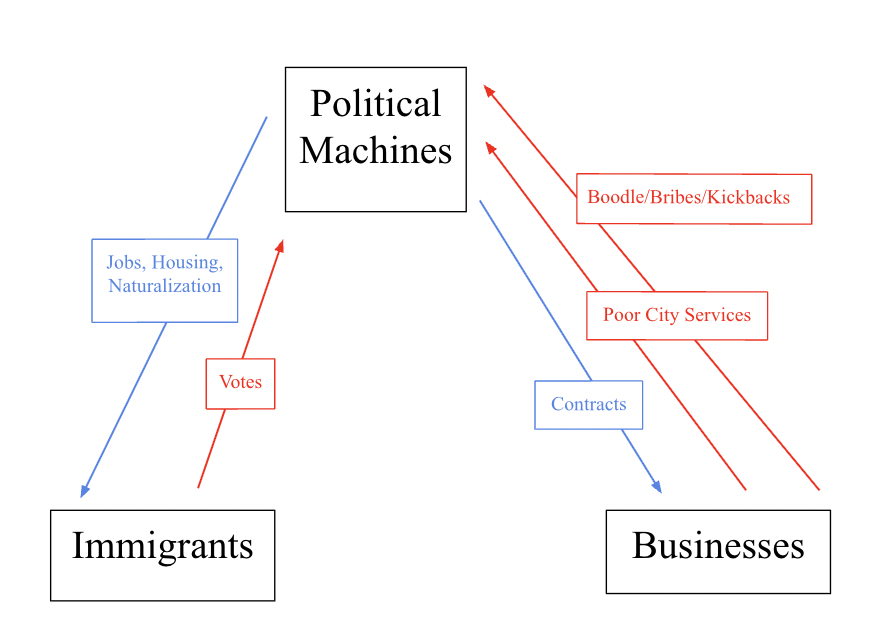
political machines and boss politics take advantage of immigrants
political machines: an organized group that controls a political party within a city through a system of patronage and manipulation. They maintain power by providing benefits, such as jobs, housing, and services, to supporters in exchange for their votes, thus perpetuating a cycle of dependency that reinforces their authority and influence in local governance.
overcrowding
infrastructure didnt keep pace w/ urban sprawl
tenement living
pollution
sanitation/water treatment
indoor plumbing for wealthy
no systemized public sanitation
disease
cholera, yellow fever, tuberculosis
25% of babies died before age 1
crime
poverty and high unemployment
immigration and politics
tammany hall
NY’s political machine
william “boss” tweed
graft (abusing power to make money) and corruption
rigged “elections”
votes for favors
migration
exodusters
after union troops removed from south, racial violence and political oppression and segregation increase
many black families move west to states like oklahoma and kansas in hopes of better opportunities and treatment
chinese immigration
angel island (ca)
many asian immigrants forced to stay on island for weeks
chinese immigrants pulled by gold rush/railroad and pushed by opium wars
increased nativism towards asian immigrants in the west
san francisco riot of 1877
chinese exclusion act
us government halts chinese immigration all togetehr, wit few exceptions (1882)
yick wo vs. hopkins (1886)
SF refuses to issue permits to chinese laundrymen
segregation in schools
immigration discrimination
foreign miners tax (1850)
chinese exclusion act (1882)
excluded for a total of 60 years
oppression
hard labor in western states and territories
lynching and massacres (1871, los angeles - 20 killed)
banned from obtaining citizenship (1878)
panic of 1873 and racism fuel anti-chinese propaganda
gilded age politics: lecture 5 (absent)
political machines
tammany hall
william “boss” tweed
graft and corruption in NYC
“elections”
era of “forgettable presidents”
rutherford b. hayes
james garfield
chester arthur
benjamin harrison
grover cleveland
william mckinley
political issues
gold/silver debate (bimetallism)
protective tariffs
since war of 1812 to protect american industry from foreign comp
no longer necessary as US is largest industrial power
lowering tariffs could break up trusts, but provides large source of income for gov
patronage (compare to spoils system)
political philosophy: laissez-faire and social darwinism
republican party factions (1880)
political patronage and corruption in government
resulted in favoritism, bribery, waste and inefficiency
political patronage: a political practice where political leaders provide government jobs and favors to their supporters, often in exchange for political loyalty and votes
republican stalwarts
favored political machines and spoils system patronage
republican half-breeds
favored civil service system reform and a merit system (but privately also used some patronage)
election of 1880 - republican unity
james garfield
half-breed for president
chester arthur
stalwart for vice president
assassination of james garfield
chester arthur (stalwart) is president
civil service reform
causes
graft and corruption
garfield’s assassination
pendleton civil service reform act (1883)
us civil service commission
federal employees based on expertise, civil service exams
election of 1884
grover cleveland (d)
james g blaine (r)
campaign
mugwumps
3rd faction of republicans
supported democrat cleveland
77.5% voter turnout
grover cleveland (d) (1885-1889)
interstate commerce act (1887)
attempts to regulate railroads
interstate commerce commissions (ICC)
pursued tariff reform
served a split term
depression of 1893 (& haymarket riot to lesser extent) ruins 2nd term of presidency
benjamin harrison (r) (1889-1893)