5- Seeds, Germination, and Primary Growth
A. Seeds!
Produced by two major groups of plants: Angiosperms and Gymnosperms
Each seed is the result of one fertilized ovule from the parent plant.
Some components of the seed:
Seed coat: or testa
Role: protection, composed of parenchyma and scelerids
dies and shed at maturity
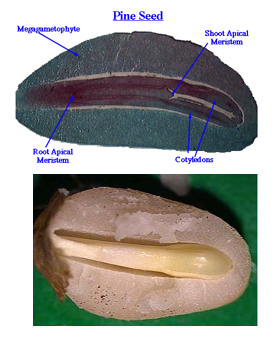
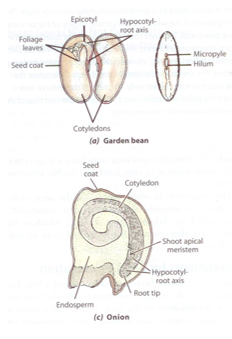
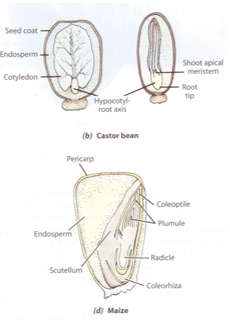
Embryo (a complex, multipartite structure)
contains all sites cells the plant will need to initiate growth
-Embryonic axis: Shoot and root structures
Shoot structures: plumule (leaves), epicotyl and hypocotyl (stem)
Root structures: radicle (will become root)
-Cotyledons: “seed leaves”, one or more
may be primary location of energy storage used in germination
Endosperm: nutrient-rich storage
-corn/cereal grains→ high mass endosperm
B. Dormancy and Germination
Dormancy is defined as a period of growth inactivity.
Certain seeds remain dormant and viable for an extended period of time—others don’t.
cool storage, dark, dry, little/low air circulation
Different species have different requirements to break dormancy and germinate. These requirements may be environmental and/or physiological.
temperature → period of cold followed by warm (winter)
day length change
injury/abrasion to seed coat → scarification
smoke compound/heat from low grade fire (ex. Pimus sarrotina, lodge pine, sand pine)
hormone levels
Germination is defined as the process of initiating embryonic growth of the emergence of shoot and root
Imbibition: water absorption through pores in seed coat → seed swelling as it “drinks in”
C. Root and Shoot Primary Growth
MERISTEMS (Meristo= to divide)
Characteristics of meristems or meristematic cells of roots and shoots
small
thin primary walls
mostly nucleus by volume
MERISTEM TYPES
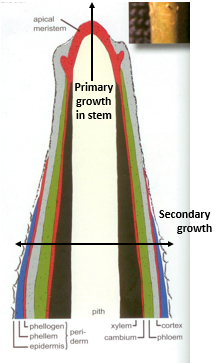
APICAL (tip ends)—Apical meristems contribute to primary growth—growth in length or height or initiation of new organs or branches.
Examples of apical meristems:
shoot apical meristems (SAM) → found in buds
root apical meristems (RAM)
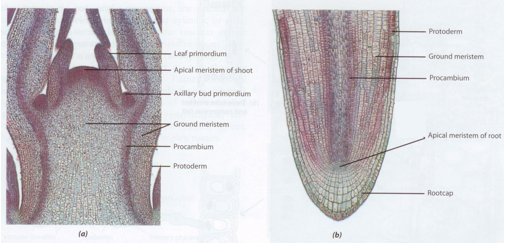
Primary meristems are derived from shoot and root apical meristems. There are three primary meristems that correspond to the three tissue systems:
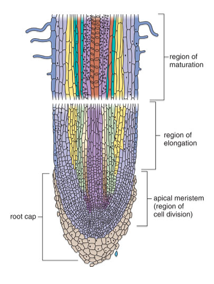
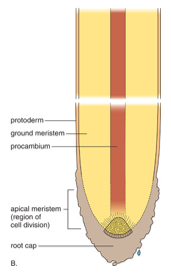
Apical Meristem
→ Protoderm → Dermal
→ Procambium → Vascular
→ Ground → Ground
In roots, root apical meristems at the end of each root branch produce a protective structure over the meristem called a root cap.
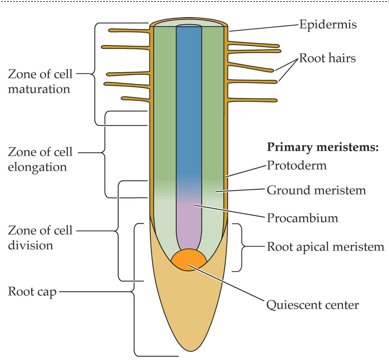
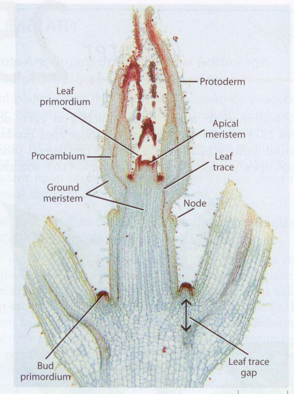
Shoot apical meristems have distinct appearances, depending on the plant group, but do not produce a cap. Young, developing leaves cover the meristem instead. Refer to the handout diagrams of SAM organization in dicots.
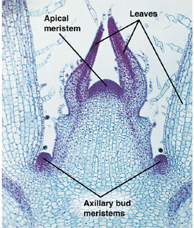
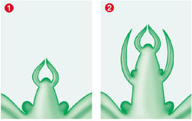
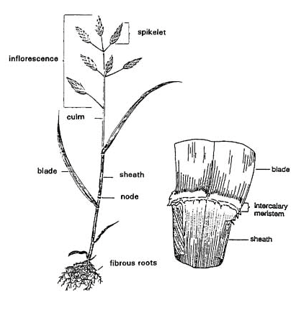
INTERCALARY—Intercalary meristems occur between 2 mature tissues. These meristems frequently occur at the bases of grass leaf blades, contributing to leaf elongation from the base. The growth resulting from intercalary meristems is considered primary growth.
LATERAL—Lateral meristems contribute to secondary growth—growth in width or girth.
Examples of lateral meristems contributing to secondary growth: