Membrane transport
Key terms
Term | Meaning |
|---|---|
Passive transport | Type of transport that does not require energy to occur |
Concentration gradient | A region of space over which the concentration of a substance changes |
Permeability | The quality of a membrane that allows substances to pass through it |
Equilibrium | The state at which a substance is equally distributed throughout a space |
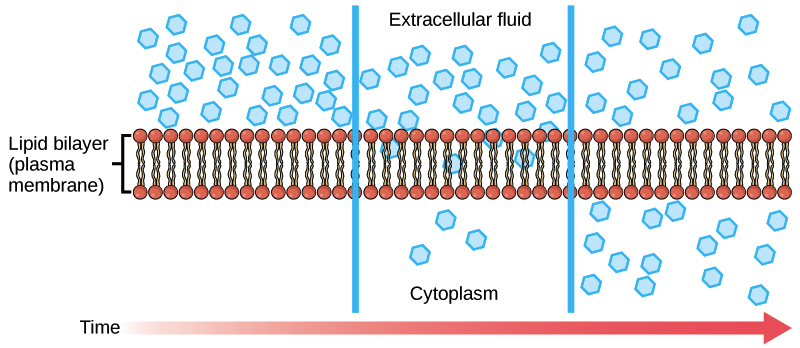
Diffusion: substances move from an area of high concentration to an area of low concentration until the concentration becomes equal throughout a space.
Facilitated Diffusion
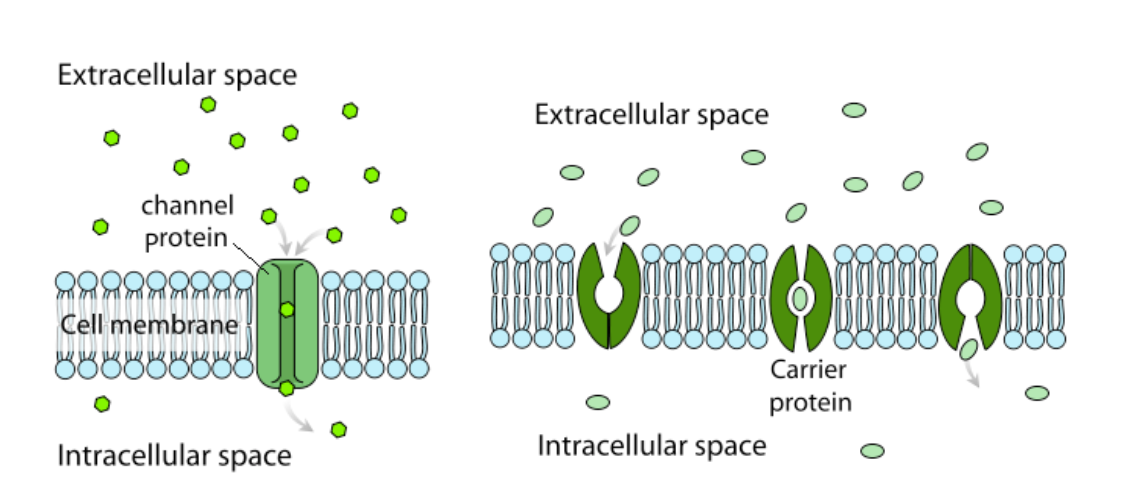
Membrane proteins can either be channel or carrier proteins.
Key terms
Term | Meaning |
|---|---|
Active transport | Type of transport that requires an input of energy to occur |
Concentration gradient | A region of space over which the concentration of a substance changes |
ATP | Adenosine triphosphate, the primary energy carrier in living things |
Active Transport
During active transport, substances move against the concentration gradient.
moves from an area of low concentration to an area of high concentration.
process is “active” because it requires the use of energy
(usually in the form of ATP)
opposite of passive transport
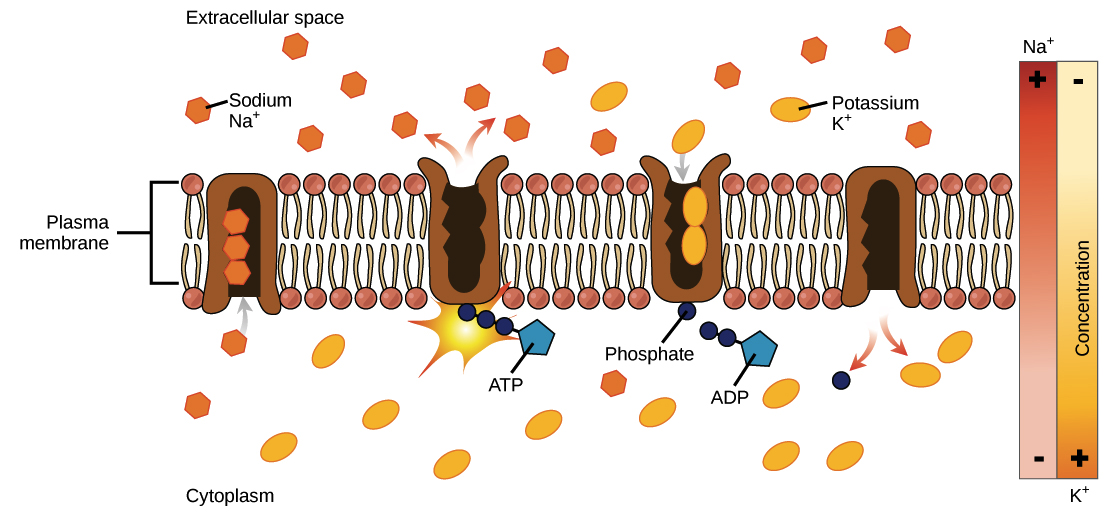
requires the assistance of carrier proteins, which change conformation when ATP hydrolysis occurs.
Active vs. Facilitated Diffusion
both use proteins to assist in transport.
active transport works against the concentration gradient, moving substances from low to high
in addition the both use different types of proteins
active transport uses carrier proteins, NOT channel proteins.
they need ATP in order to change conformation
Channel proteins are not used because substances can only move through them along the concentration gradient
Bulk Transport