Balancing chemichal equations
Introduction to Balancing Chemical Equations
Importance of balancing equations: Ensures conservation of mass, meaning the number of atoms of each element must be the same on both sides.
Example 1: Magnesium and Nitrogen
Reaction: Magnesium (Mg) + Nitrogen gas (N₂) ➔ Magnesium nitride (Mg₃N₂)
Left side:
1 Mg (coefficient 1, no subscript indicates 1 atom)
2 N (1 × 2 = 2, coefficient 1 and subscript 2)
Right side:
3 Mg and 2 N (from product Mg₃N₂)
To balance magnesium: Add coefficient of 3 in front of Mg, making both sides 3 Mg and 2 N.
Example 2: Nitrogen and Hydrogen to Form Ammonia
Reaction: N₂ + H₂ ➔ NH₃
Left side:
2 N (1 × 2 for N₂)
2 H (1 × 2 for H₂)
Right side:
1 N (subscript 1 for NH₃)
3 H (since 2 × 1 = 2, so we have 2 molecules)
To balance:
Change coefficient in front of NH₃ to 2 for N: 2 N on both sides.
Three H from NH₃ to balance; thus, add 3 in front of H₂.
Example 3: Sulfur and Fluorine Reaction
Reaction: S₈ + F₂ ➔ SF₆
Left side:
8 S (since S exists as S₈)
2 F
Right side:
1 S (SF₆)
6 F (SF₆)
First balance F by putting a coefficient of 3 in front of F₂, resulting in 6 F on both sides.
Then balance S by adding 8 in front of SF₆.
Balancing Combustion Reactions
Example 4: Combustion of Propane
Reaction: C₃H₈ + O₂ ➔ CO₂ + H₂O
Start with C, then H, and finally O (to save for last).
Left side:
3 C, 8 H, 2 O
Right side:
1 C, 2 H, and 2 + 1 (total of 3 O)
Balance C first: 3 CO₂ on the right side, resulting in 3 C.
Balance H: Place 4 in front of H₂O to get 8 H.
Adjust O last to ensure total equals 10 O on both sides (adjust coefficient of O₂ accordingly).
Example 5: Combustion of Butane
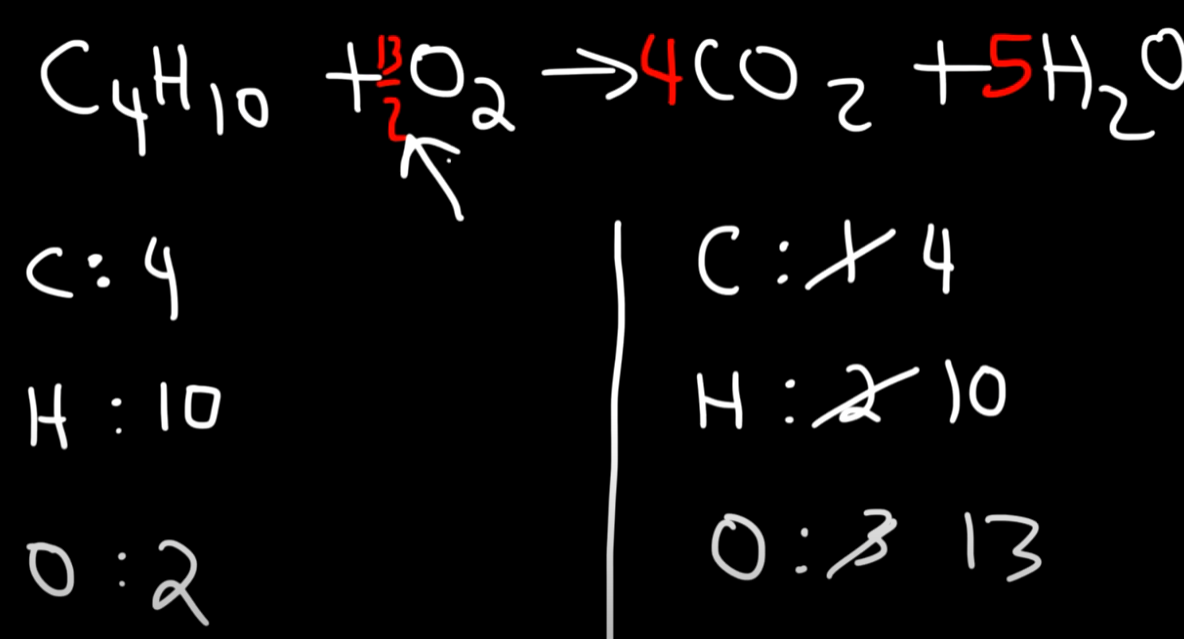
Reaction: C₄H₁₀ + O₂ ➔ CO₂ + H₂O
Follow similar steps:
Balance carbon first (4 in front of CO₂),
then H (5 in front of H₂O),
finally adjust O₂ to get whole numbers.
Left side: 4 C, 10 H, and the O from O₂ must equal the total oxygen atoms required from the products.
Right side: Each CO₂ contributes 2 O (4 CO₂ gives 8 O) and each H₂O gives 1 O (5 H₂O gives 5 O), leading to a total of 13 O.
Thus, add 13/2 in front of O₂ (since O₂ contributes 2 O) on left side
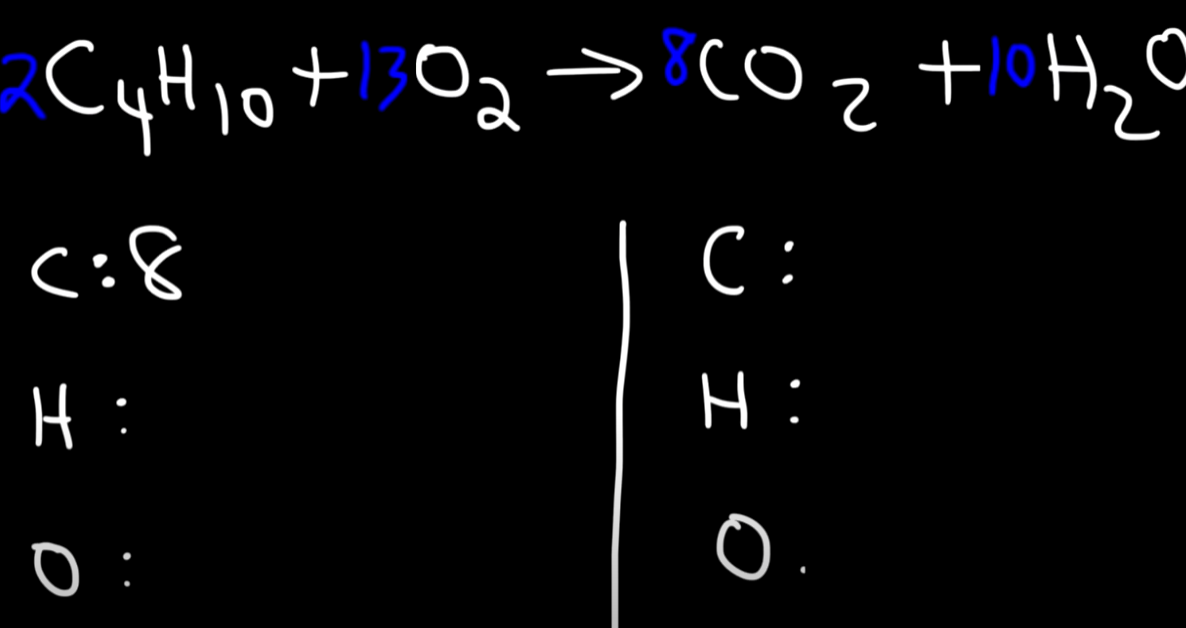
To avoid fractions, multiply all coefficients by 2, leading to 2 C₄H₁₀ + 13 O₂ ➔ 8 CO₂ + 10 H₂O
Single Replacement Reaction
Example 6: Aluminum and Copper Chloride
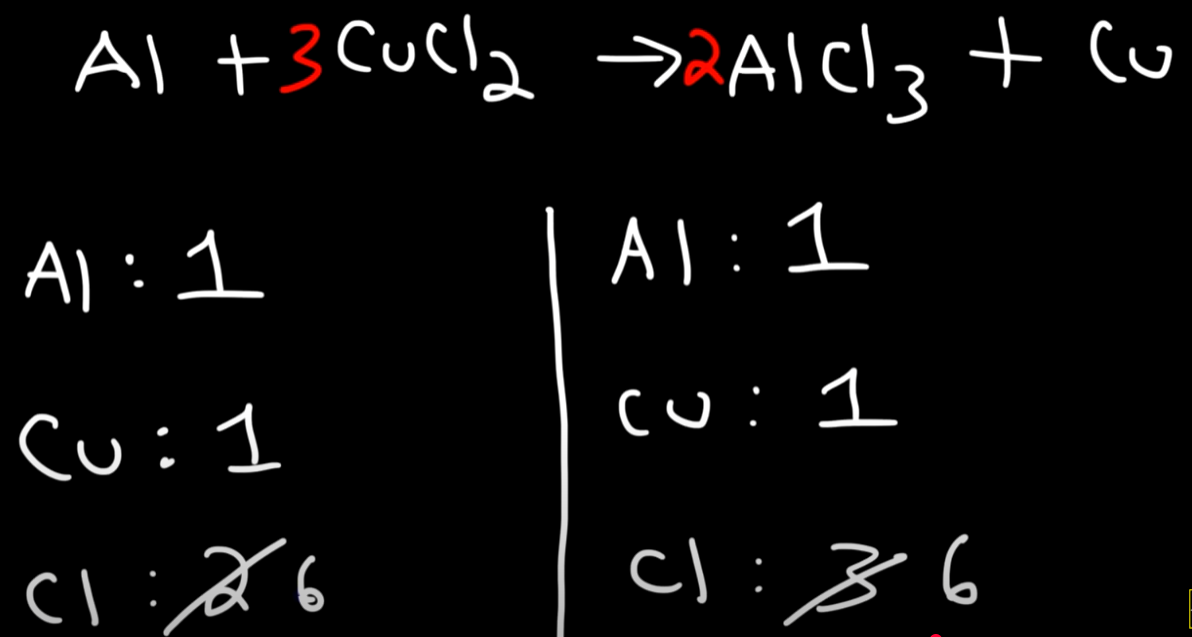
Reaction: Al + CuCl₂ ➔ AlCl₃ + Cu
Balance Cl first by finding LCM (Least Common Multiple) of 2 and 3, leading to adding coefficients of 3 and 2 respectively for Cl
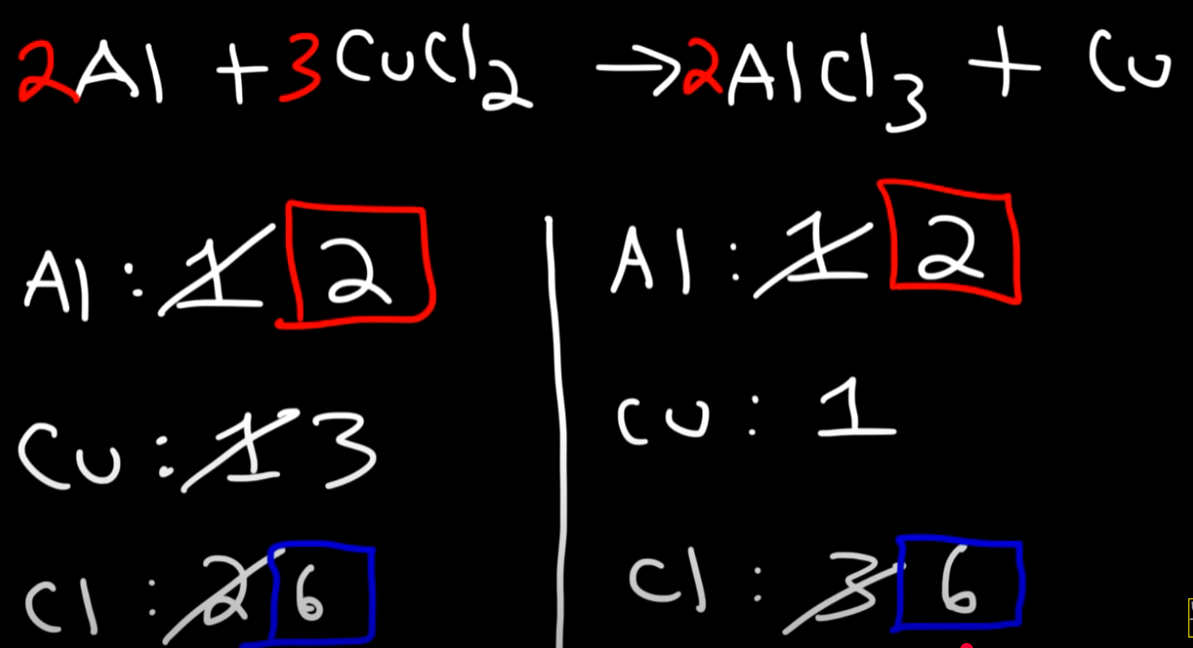
Adjust Aluminum and Copper atoms accordingly to ensure they match (place 2 in front of Al on left and 3 for Cu on right)
Double Replacement Reaction
Example 7: Sodium Phosphate with Calcium Chloride
Reaction: Na₃PO₄ + CaCl₂ ➔ Ca₃(PO₄)₂ + NaCl
Focus on balancing polyatomic ions as units, specifically the phosphate ion (PO₄) and chloride ions (Cl).
Left side:
3 Na (from Na₃PO₄)
1 PO₄ (from Na₃PO₄)
1 Ca (from CaCl₂)
2 Cl (from CaCl₂)
Right side:
3 Na (from NaCl)
3 Ca (from Ca₃(PO₄)₂) because each Ca₃(PO₄)₂ contributes 3 calcium ions
2 PO₄ (from Ca₃(PO₄)₂)
2 Cl (from 2 NaCl)
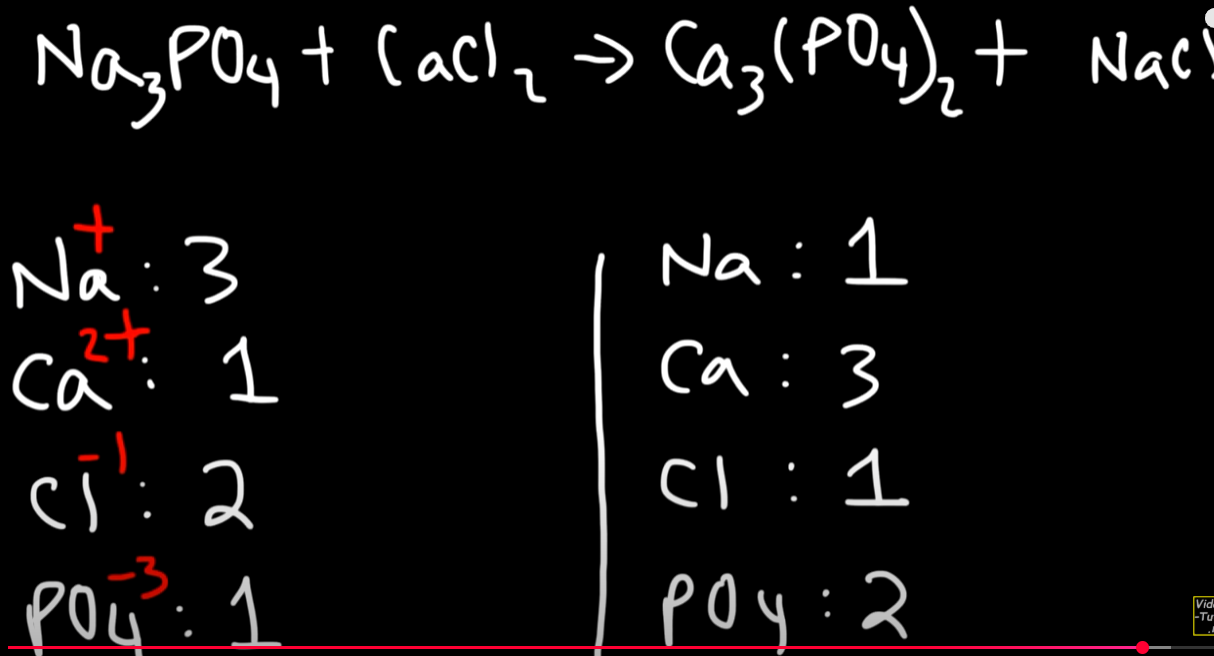
To balance:
Start by balancing phosphate (PO₄), since there is 1 on the left and 2 on the right, add a coefficient of 2 in front of Na₃PO₄: 2 Na₃PO₄ + CaCl₂ ➔ Ca₃(PO₄)₂ + NaCl.
This gives 6 Na (2 × 3) on the left, which means you need a coefficient of 6 in front of NaCl.
Therefore, adjusting the final reaction we come to:
2 Na₃PO₄ + 3 CaCl₂ ➔ Ca₃(PO₄)₂ + 6 NaCl.
Check:
Left side: 6 Na, 2 PO₄, 3 Ca, 6 Cl
Right side: 6 Na from 6 NaCl, 2 PO₄ from Ca₃(PO₄)₂, and 3 Ca from Ca₃(PO₄)₂, balancing the reaction successfully.
always balance the unit with the highest charge - makes it easier to balance