Chapter 12 - Self-Control Techniques
Self-Control
behavior modification principles describe relationships among environmental conditions and resultant behavior
most often, we discuss techniques in terms of managing others’ behaviors
can be applied to one’s self
applying behavior modification techniques to alters one’s own behavior
AKA self-management
works with behaviors that aren’t readily observable to others
useful!
we all have things we want to change about ourselves
extends range of applications
situations not readily accessible to the therapist
problems not accessible to the therapist
private events can be viewed as operant responses
can be altered by varying antecedents and consequences
only the clients can observe covert behavior
thus, client is the best person to provide contingent consequences
advantages
prevents appropriate behavior from coming under stimulus control of certain external individuals
may lead to more effective monitoring of behavior
some individuals perform better when they contribute to planning
self-control is an eventual goal for all behavior modification interventions
goal: after intervention, clients can apply techniques to themselves to alter new behaviors across different situations
but, often external help is needed to begin a program
Defining Self-Control
refers to those behaviors that a person deliberately undertakes to achieve self-selected outcomes
techniques work by getting you to perform a controlling response to alter probability of a controlled response
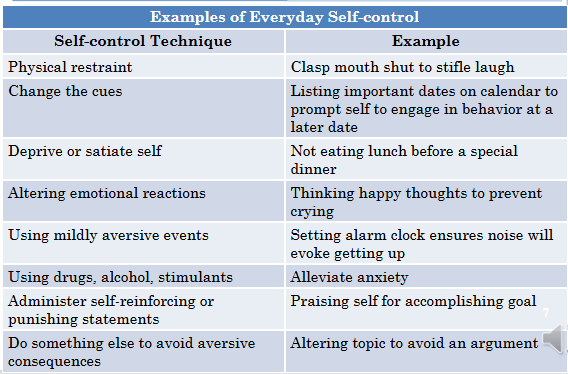
Development of Self-Control
self-control reflects behaviors that are learned
early development: behaviors are controlled by external agents
over time, achieving a standard may become reinforcing because it’s been paired with past external reinforcement
interactions with others continue to influence
explicit statements of praise
modeling
culture
direct reinforcement
Self-Control Techniques
self-assessment
self-monitoring
stimulus control
self-reinforcement and punishment
alternative training
biofeedback
self-help resources
Self-Assessment
assess one’s own functioning in a one-shot effort
many screening tools available, often over the Internet
sometimes, promotes change on its own
problems:
information may not be accurate
may be unnecessarily alarming
may not provide information on the positive behavior needed for change
not effective for most of the population
Self-Monitoring
systematically observing one’s own behavior over time
most aren’t aware of extent of engagement in particular behaviors
unclear why self-monitoring → behavior change
maybe provides feedback
research suggests it’s a weak intervention
Stimulus Control
behaviors are performed in the presence of specific stimuli
3 problem types involving maladaptive stimulus control
clients wants to change behaviors are under the control of many stimuli
behavior isn’t controlled by stimuli & control is desirable
some behaviors are under the control of inappropriate stimuli
awareness of how certain stimuli control behavior is helpful
can avoid problem situations
over time, approximate tempting situations
eventually, return to tempting situation
to use stimulus control, therapist must talk with client to explain how it works & identify controlling stimuli
often used with insomnia
rules for treating insomnia
lie down intending to go to sleep only when you are sleepy
do not use your bed for anything except sleep & sex
no reading, watching TV, worrying
if you can’t fall asleep, get up and go to another room. Return to your bedroom only when you are sleepy
if you still cannot fall asleep, repeat prior step. Do this as often as necessary
set your alarm and get up at the same time every day, irrespective of how much sleep you got
do not nap
Self-Reinforcement & Self-Punishment
client administers consequences to self
self-reinforcement
person is free to reward self at any time
regardless of if response is performed
behavior followed by self-administered consequences must increase
self-punishment
person is free to punishment self at any time
regardless of if response is performed
behavior followed by self-administered consequence must decrease
used in frequently
programs usually incorporate positive reinforcement
sometimes can work through imagery
imagine reinforcement or punishment
Self-Reinforcement Procedures
self-determined reinforcement
self-administered reinforcement
Self-Punishment
used infrequently
when used, programs also incorporate positive reinforcement
Alternate Response Training
train person to engage in responses that interfere with or replace the undesired response
most common form: control anxiety through relaxation
Biofeedback
captures intervention techniques designed to alter physiological processes through training
heart rate
brainwave activity
blood pressure
procedure
provide info to clients about ongoing physiological processes
display on moment-to-moment basis
goal: change physiological processes
why is this a self-control technique?
teach clients techniques to use themselves
applications
cardiac arrhythmia
tachycardia
hypertension
muscle paralysis and inactivity
seizure activity
sexual arousal
anxiety
two concerns:
effectiveness compared to relaxation
can’t always implement by themselves
Self-Help Resources
techniques clients implement for themselves with little/no therapist assistance
AKA self-help manuals, bibliography
available for:
anxiety
depression
substance use and abuse
eating disorders
dysfunctional relationships
stress
grief-management
sexual dysfunction
perfectionism
low self-confidence
often describe a stepwise way for the client to alter problem
can be effective - effectiveness if enhanced if supervision/guidance is available
advantages
may prompt people to seek help from trained professional
reach clients who are unwilling to meet with a therapist
disadvantages
transient
may harm
make exaggerated claims
can be slow
client may not execute procedures correctly or effectively
Overall Strengths & Limitations of Self-Help
advantages
techniques more accessible to public
less stigma than traditional therapy
less costly
client can play more direct role in treatment
concerns
little research
failure might lead client to doubt traditional treatment
lack of adherence to procedures
attrition