The Supreme Court
Judicial Review
In the previous lesson, we introduced the basics about the Supreme Court. It's made up of nine justices and has largely appellate jurisdiction, with a few exceptions. However, the Supreme Court has power beyond simply being able to overturn the decisions of lower courts. It also has the power of judicial review: the right to declare a law or executive action unconstitutional.
The Supreme Court's authority to execute judicial review is not explicitly stated in the Constitution. Instead, it stems from an important legal case following the election of 1800. In this election, John Adams, a Federalist, was the incumbent president and ran for a second term against Thomas Jefferson of the Democratic-Republican Party. The election was contentious, but in the end, Jefferson was victorious.
Unfortunately, the election of a new president meant that Adams would not have as much influence because he had become a lame-duck president. Before leaving office, though, he was able to commission a few federal judges. This action led to one of the Supreme Court's most influential decisions.
The commissions for the new federal judges were signed by Adams, but they were not all delivered before he left office. When Jefferson took office and saw the undelivered commissions, he decided not to deliver them. Thus, none of the judges that Adams appointed were able to assume their positions. Instead, Jefferson intended to commission his own judges.
One of the judges that was given a commission by John Adams, William Marbury, petitioned the Supreme Court to compel Jefferson's secretary of state, James Madison, to deliver his commission. The Court could do this by sending Madison a writ of mandamus—a court order sent to a government official that orders the official to carry out a certain task.
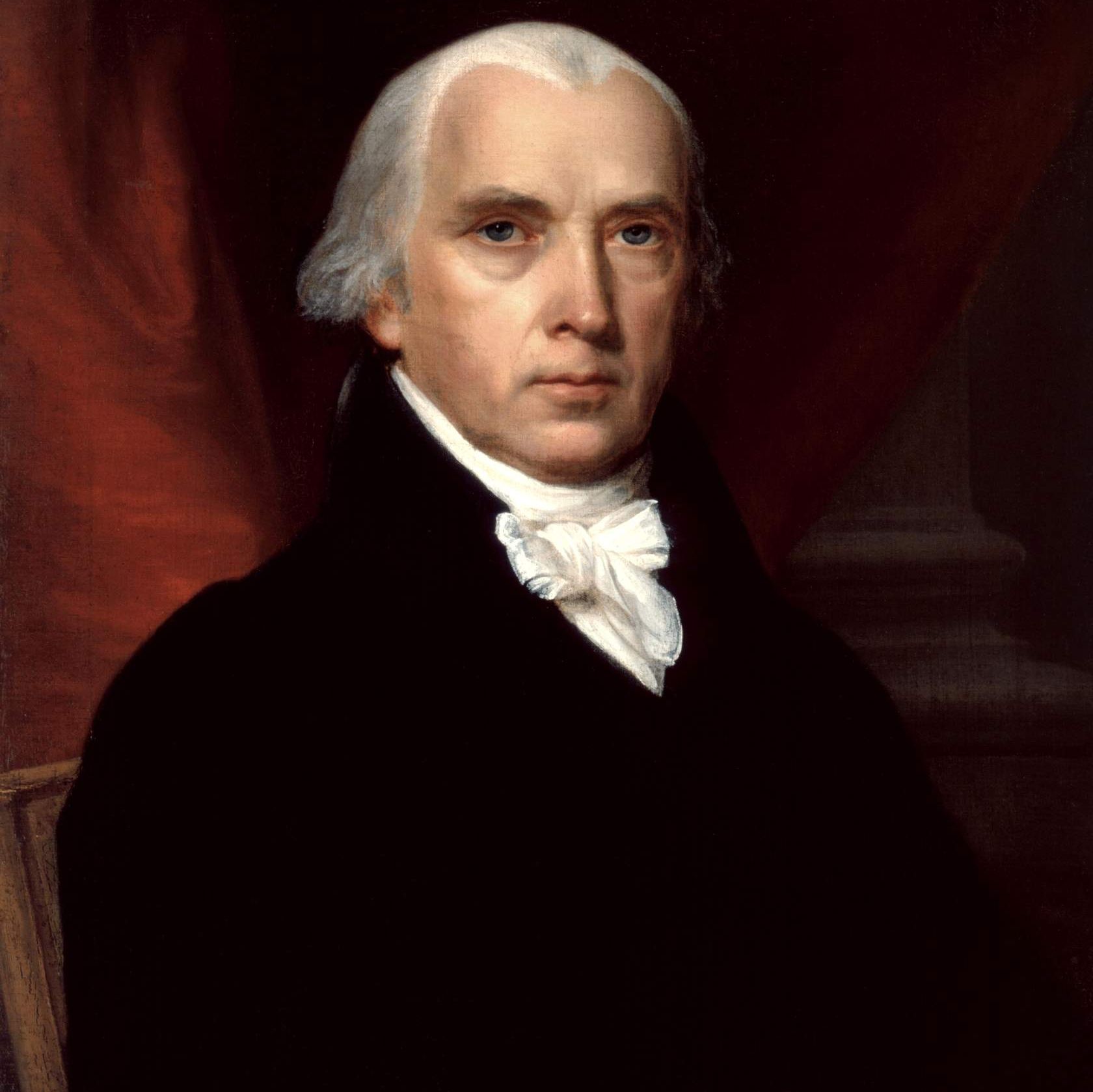
James Madison
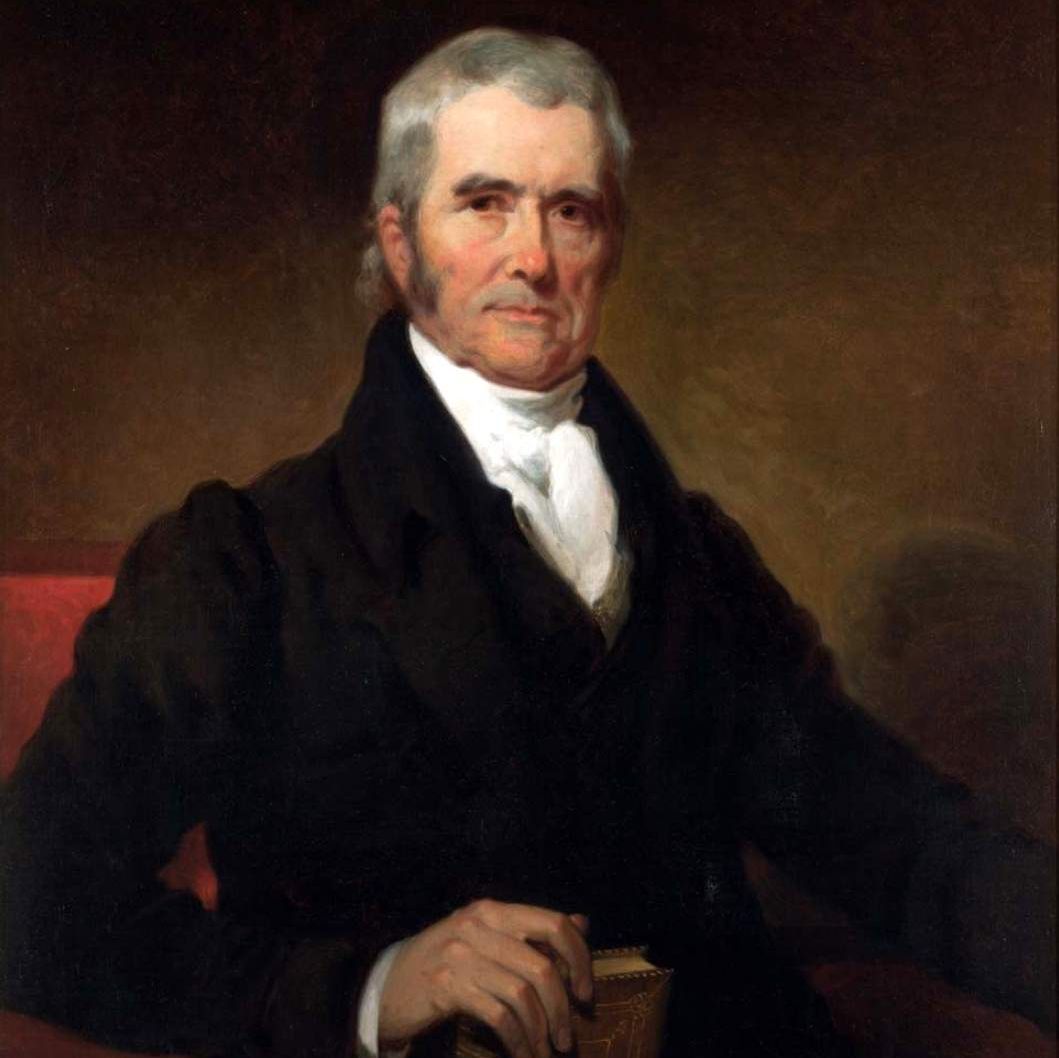
John Marshall
All of this led to the case Marbury v. Madison. The ruling, which was written by Chief Justice John Marshall, had several important parts.
First, Marshall did note that Madison's refusal to deliver Marbury's commission was illegal.
Second, Marshall said that, according to the Judiciary Act of 1789, the Supreme Court did have original jurisdiction to issue a writ of mandamus that would compel Madison to deliver the commission.
Third, however, Marshall declared that the section of the Judiciary Act of 1789 that gave the Supreme Court that original jurisdiction was unconstitutional. Article III of the Constitution explicitly states that the Supreme Court only has original jurisdiction over cases involving foreign officials or one of the states, and Marbury's case involved neither. Marshall ruled that, because the Constitution does not grant the Supreme Court original jurisdiction to issue writs of mandamus, any law that tries to give the Supreme Court such jurisdiction is unconstitutional.
Therefore, Marshall ruled that, while Marbury deserved to have his commission delivered, the Supreme Court did not have the authority to issue a writ of mandamus to force Madison to deliver it. In addition, Marshall declared the section of the Judiciary Act of 1789 that granted the Supreme Court that authority to be unconstitutional and thus null and void.
In this way, the Marbury v. Madison ruling set the precedent for judicial review, which has been used heavily throughout the history of the Supreme Court ever since this ruling was made.
For more information on this case, watch the video below.
Judicial Activism vs. Judicial Restraint
There are two types of judicial review: judicial activism and judicial restraint.
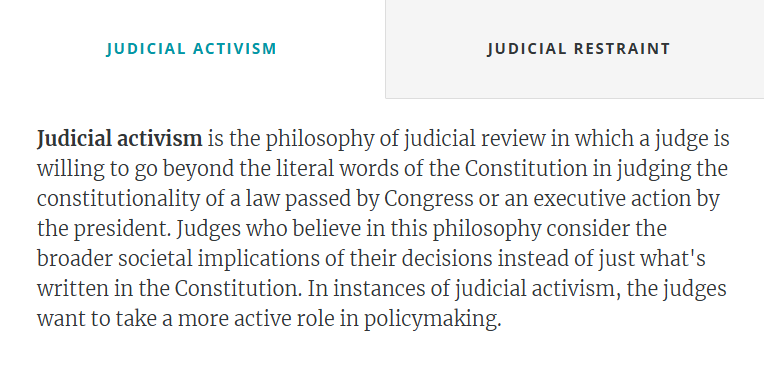
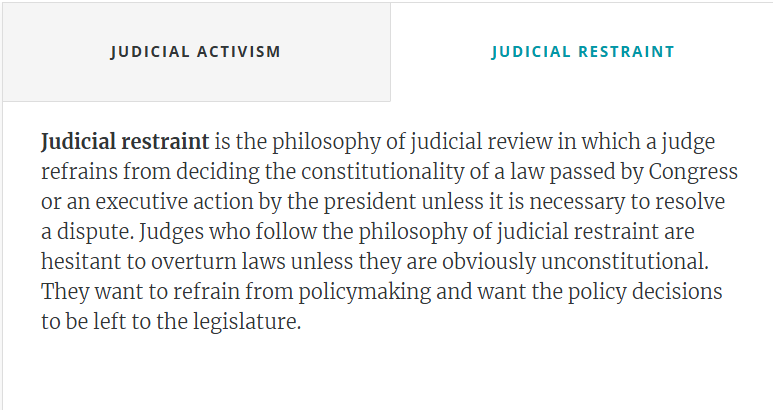 These two views should not be confused with conservatism and liberalism. The Supreme Court has used judicial review from both perspectives of restraint and activism throughout its history.
Procedure in the Supreme Court
As we've indicated previously, the Supreme Court primarily has appellate jurisdiction. Therefore, most of the Supreme Court's cases are appeals from the US courts of appeals. However, the Supreme Court does not have to hear any appeal that it does not want to hear. In fact, the Supreme Court accepts very few of the appeals that are made to it. For the Court to hear a case, the case must present "importance beyond the facts and parties involved" (Boag v. MacDougall 1982). For a case to be considered, the legal issue usually must involve a substantial federal question, such as interstate commerce, gun rights, abortion, privacy rights, or criminal procedure.
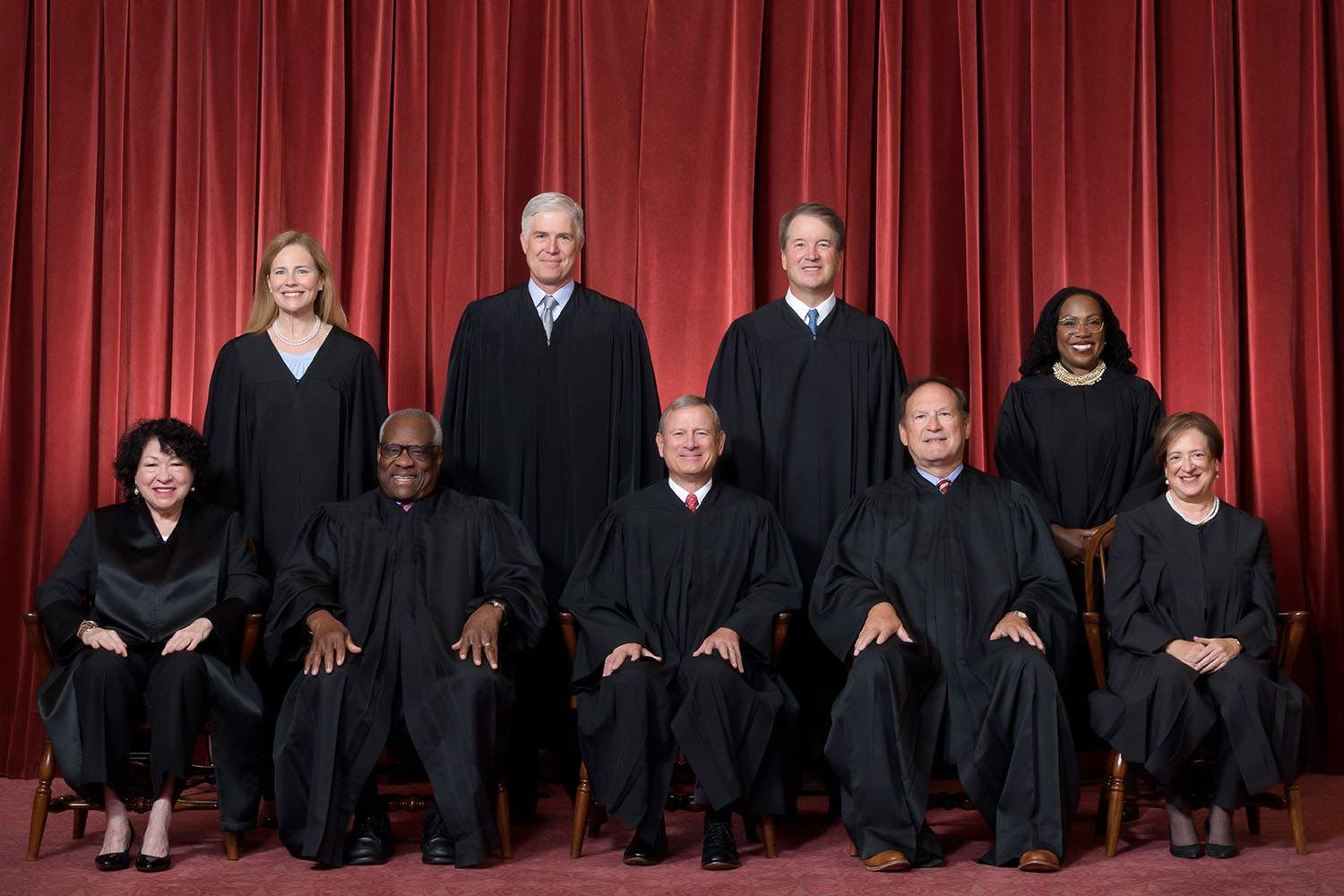
The justices of the Supreme Court as of 2022. From left to right: Sonia Sotomayor, Amy Coney Barrett, Clarence Thomas, Neil Gorsuch, John Roberts, Brett Kavanaugh, Samuel Alito, Ketanji Brown Jackson, and Elena Kagan.
Writs of Certiorari and the Rule of Four
Cases are appealed using a petition for a writ of certiorari. The Court considers all of the petitions that it receives, and if four of the nine justices agree to hear the case, the writ is issued, and the case is scheduled for a hearing. This is known as the rule of four—if four justices vote to hear a case, then the Court will hear it. The Court receives seven to eight thousand petitions for a writ of certiorari each year, but it only grants about eighty to one hundred of them. In other words, the Court only hears about eighty to one hundred cases each year. The Supreme Court will often grant certiorari when one or both of the following are present:
Two or more federal circuit courts of appeals have decided the same issue in a different manner.
The highest state court has held a federal or state law to be in violation of the Constitution or upheld a state law when a petitioner was claiming the law was in violation of the Constitution.
Briefs, Oral Arguments, and Conferences
If a case makes it to the Supreme Court, the Court is in session from early October until the end of June. It is not a court like one sees on television. Both sides of the case will submit a written brief that summarizes their points of view. Then, lawyers for both sides will present a short oral argument, which lasts roughly thirty minutes. No witnesses may be called. During this oral argument, the lawyers will have to respond to questions that are asked by the justices. After the oral arguments are concluded, the justices will meet in conference to discuss the case. No one else is allowed to enter the room.
Opinions
Once the justices are finished discussing the case in conference, they will take a vote. All cases in the Supreme Court are decided by majority vote. The Court typically hands down three types of decisions:
To uphold the lower court's decision.
To reverse or overturn the lower court's decision.
To reverse the lower court's decision and to send the case back to the lower court for further action.
Once this is done, the justices will write one or more opinions. In legal terms, an opinion provides a summary of a court case and an argument for why the court made the decision that it did or why a justice voted the way that he or she did. There are three types of opinions that can be written:
Majority Opinion: This opinion is written by a justice that voted for the winning side and explains the Court's decision. Every case will have a majority opinion.
Concurring Opinion: This type of opinion is written when a justice agrees with the majority opinion but for a different reason.
Dissenting Opinion: This opinion reflects the opinion of the minority and explains why a justice voted against the majority.
Federal Judicial Administration
The Administrative Office Act of 1939 largely created the current administration of the federal judiciary. It established the Administrative Office of the US Courts and judicial councils.
Today, the chief justice is not only the presiding officer of the Supreme Court but also the head of the federal judiciary system. In this role, the chief justice is able to appoint people to key administrative positions and is a member of several administrative organizations, including the Judicial Conference of the United States, the Administrative Office of the US Courts, and the Federal Judicial Center.
The Judicial Conference of the United States is the administrative policymaking organization of the federal judicial system and is composed of the chief justice, chief judges of the courts of appeals, one district judge from each circuit, and the chief judge of the Court of International Trade. Because the Conference only meets semiannually for two-day sessions, most of the work is done by about twenty-five committees appointed by the chief justice. The Judicial Conference directs the Administrative Office in administering the budget, makes recommendations to Congress concerning judicial affairs, and plays a major role in the impeachment of federal judges.
The Administrative Office of the US Courts has handled the daily tasks of the federal courts since 1939. The director of the Administrative Office is appointed by the chief justice, and the Office is responsible for lobbying, housekeeping, and accounting for the federal judiciary.
The Federal Judicial Center is the research and training arm of the federal judiciary. It is headed by the chief justice, the director of the Administrative Office, and judges from the US district courts, US courts of appeals, and bankruptcy courts. This organization's principal duty is the education and training of federal judges, probation officers, and court staff.
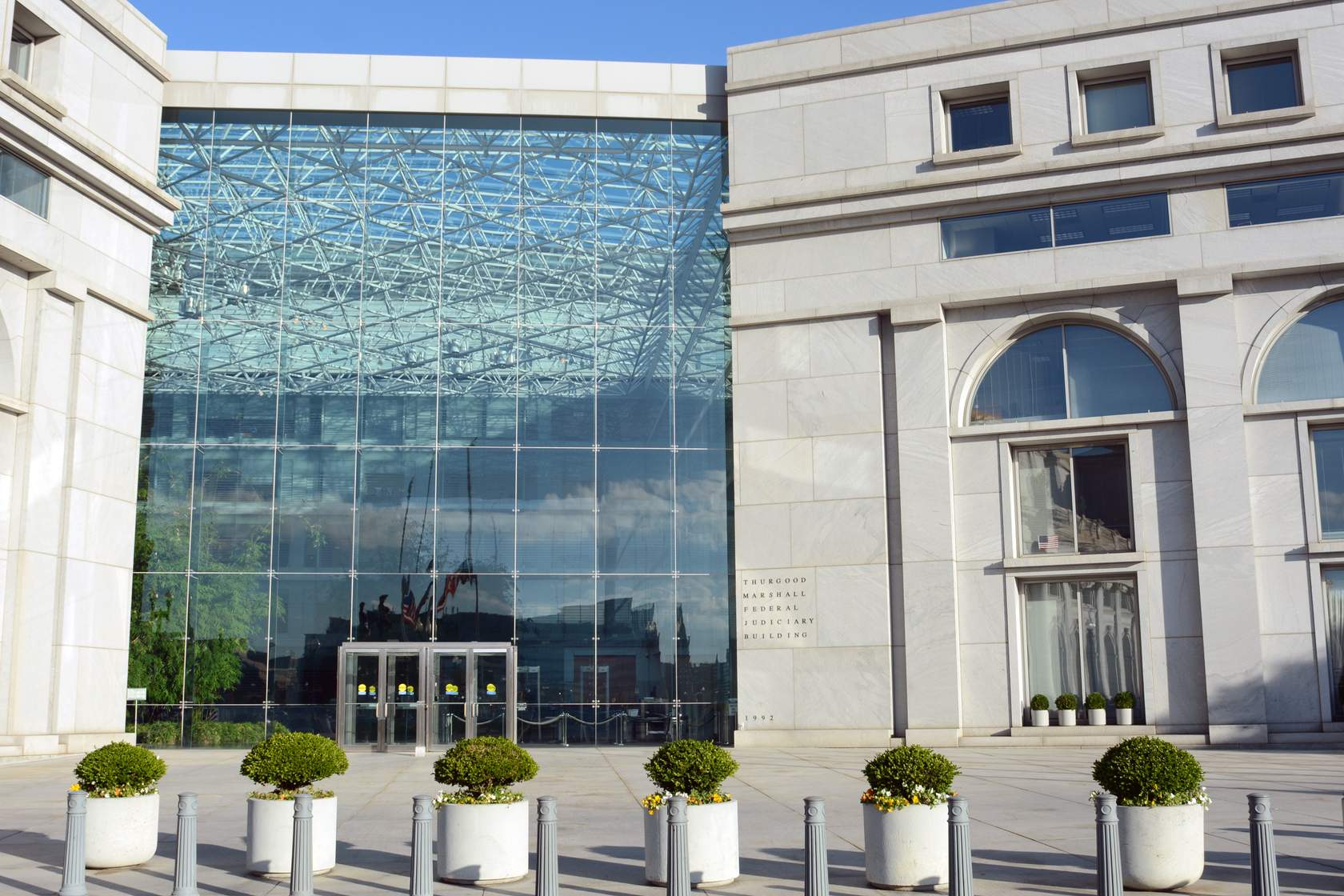
The Thurgood Marshall Federal Judiciary Building contains the offices of the Administrative Office of the US Courts, the Federal Judicial Center, and several other judiciary organizations.
Rising caseloads have been a reality for the federal judiciary since the inception of the United States; however, in the last fifty years, caseloads have dramatically increased. District court filings have increased sixfold, and courts of appeals cases have increased tenfold.
Two interesting dynamics come into play in this problem, both with deep historical roots. First, while in the past, the number of federal judgeships has increased with rising caseloads, this is not the case today. Partisan politics in Congress make it difficult to create and fill new judgeships. Second, if the number of judgeships cannot be increased, then the other popular option is to reduce federal jurisdiction, which is also unlikely due not only to political agendas but also to a historical feud between the nation's lawmakers and law interpreters, or judges. This has resulted in a large increase in the number of cases each judge must hear, putting a strain on America's justice system.
The Supreme Court and Its Influence
Some people question whether the Supreme Court has too much influence over decisions that affect public policy. There is much debate about how to effectively answer this question. Some feel that the Supreme Court has gone beyond its reach. Others believe that the Supreme Court is the final authority and that its decisions are needed to clear up confusion over the nation's laws. Some of the decisions of the Supreme Court have affected public policy in the realm of the right to privacy and the freedom of expression. The Supreme Court has made public policy involving slavery, segregation, abortion, flag burning, corporate power and corruption, capital punishment, and other controversial issues.