SPRING UNIT 4
Solvent- dissolving medium
Solute- disolved particles
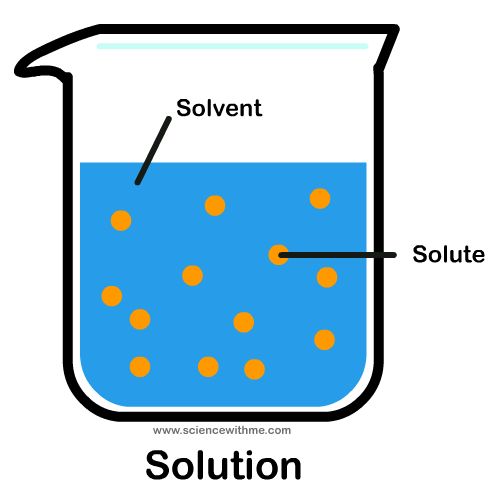
Solution- a homogeneous mixture formed when a solute is dissolved in a solvent, resulting in a single-phase system.
Tyndall effect- Solution vs Colloid: When a light is shone through a colloid, the light is scattered, making the beam visible, whereas in a true solution, the light passes through without scattering, showing the uniformity.
Colloid- a mixture where microscopic particles are dispersed throughout a substance, remaining suspended and not settling out over time. Cannot be separated by filter paper. (1-1000nm)
Suspension- 1000nm+ a heterogeneous mixture where solid particles are suspended within a liquid, causing the mixture to appear cloudy and settle over time. Can determine if Suspension because when left undisturbed will settle into layers.
Solubility- Determines whether a substance will dissolve.
Rate of Salvation- How fast it will dissolve.
Electrolyte- a substance that conducts electricity because of its dissociation into positively and negatively charged ions.
Ionic Compounds = electrolytes because they dissociate into ions when dissolved in water, allowing them to conduct electricity effectively.
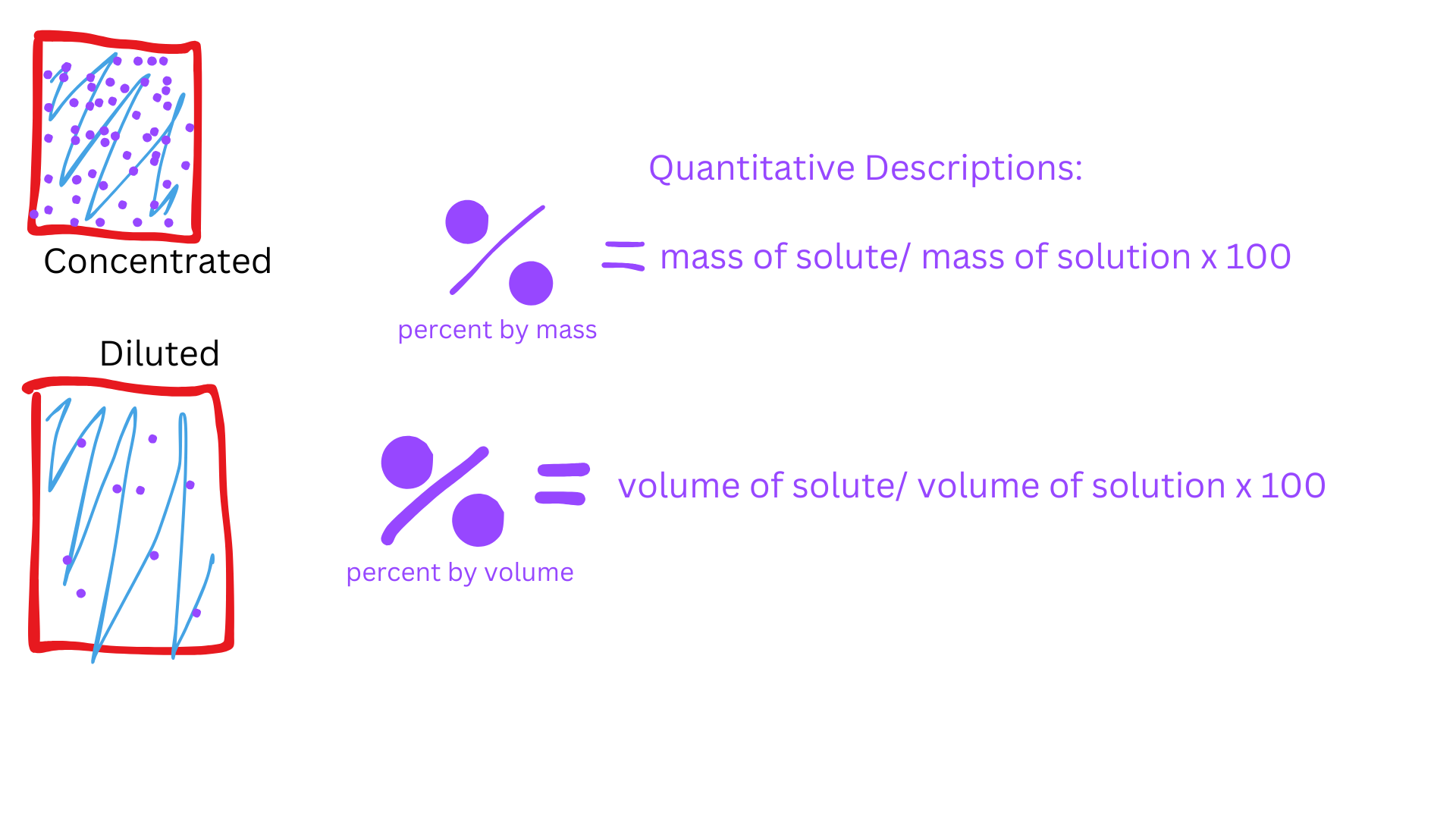
Molarity (M) = n/liters of solution
Most common concentration unit in chemistry
Molality (m) = n/kg of solvent
Volume can change with temperature.
altering the molarity, but not changing molality.
Diluting Molar Solutions - M1V1 = M2V2
Solubility Curves
Unsaturated- A solution that contains less solute than it can dissolve at a given temperature.
Saturated- A solution that contains the maximum amount of solute that can be dissolved at a given temperature.
Supersaturated- Unstable and can make crystal structures.
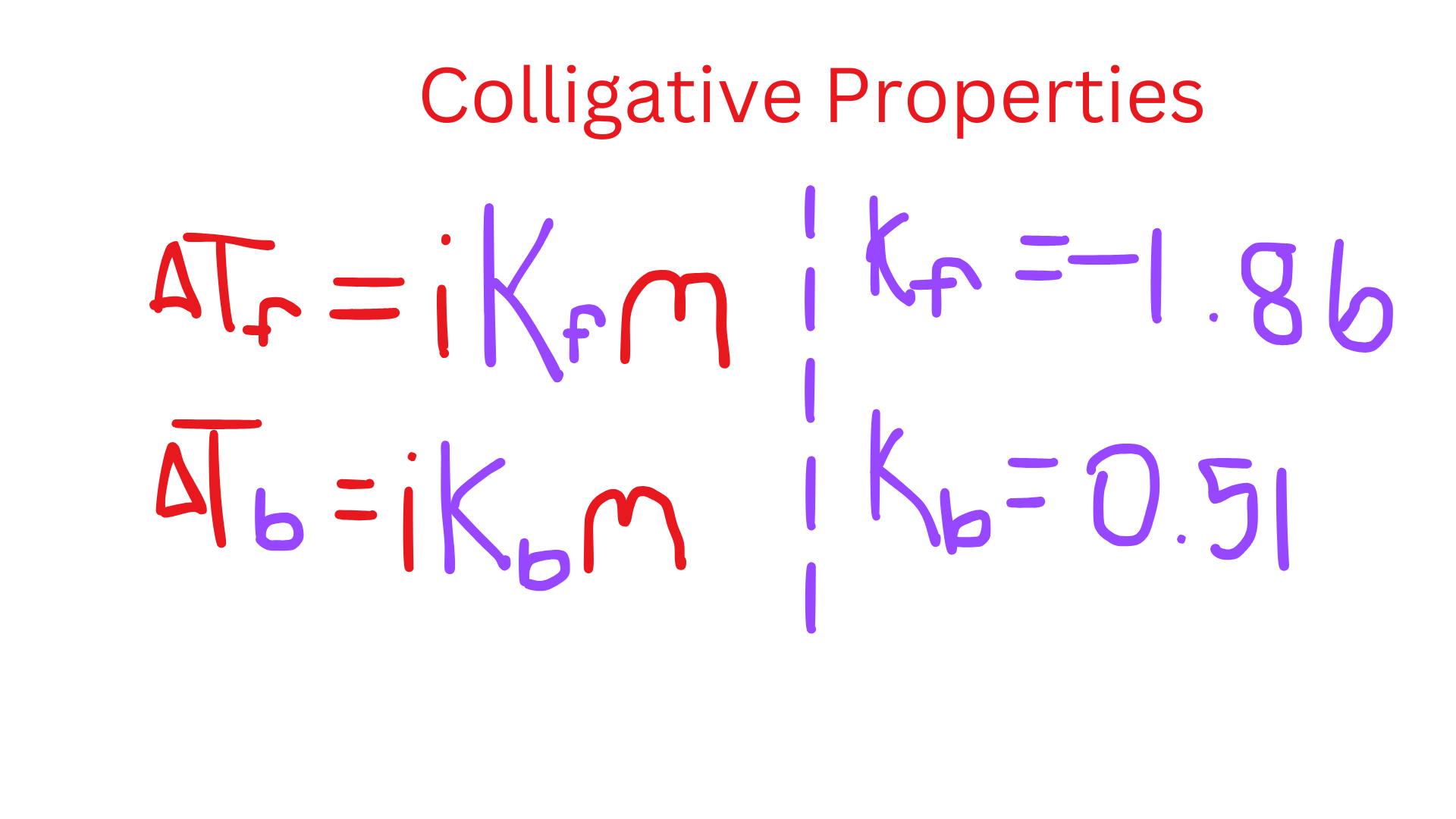
Colligative Properties
Colligative properties are properties that depend on the number of solute particles in a solution, rather than the identity of those particles. These include boiling point elevation, freezing point depression, vapor pressure lowering, and osmotic pressure.
Miscible vs Immiscible- miscible liquids are those that can mix in any proportion without separating, while immiscible liquids do not mix and instead form distinct layers when combined. *****ONLY FOR LIQUIDS
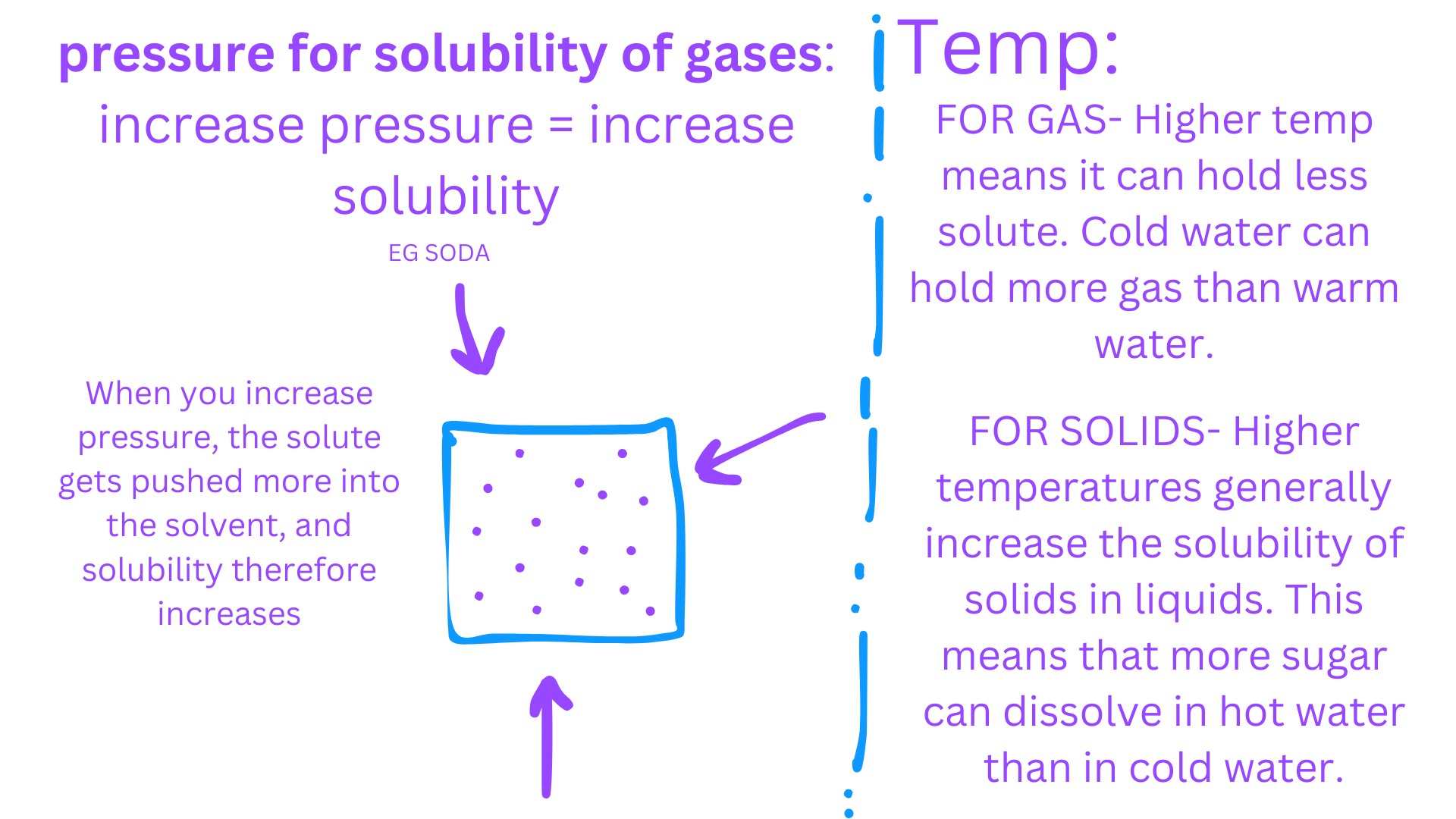
PRESSURE VS TEMP VS SOLUBILITY
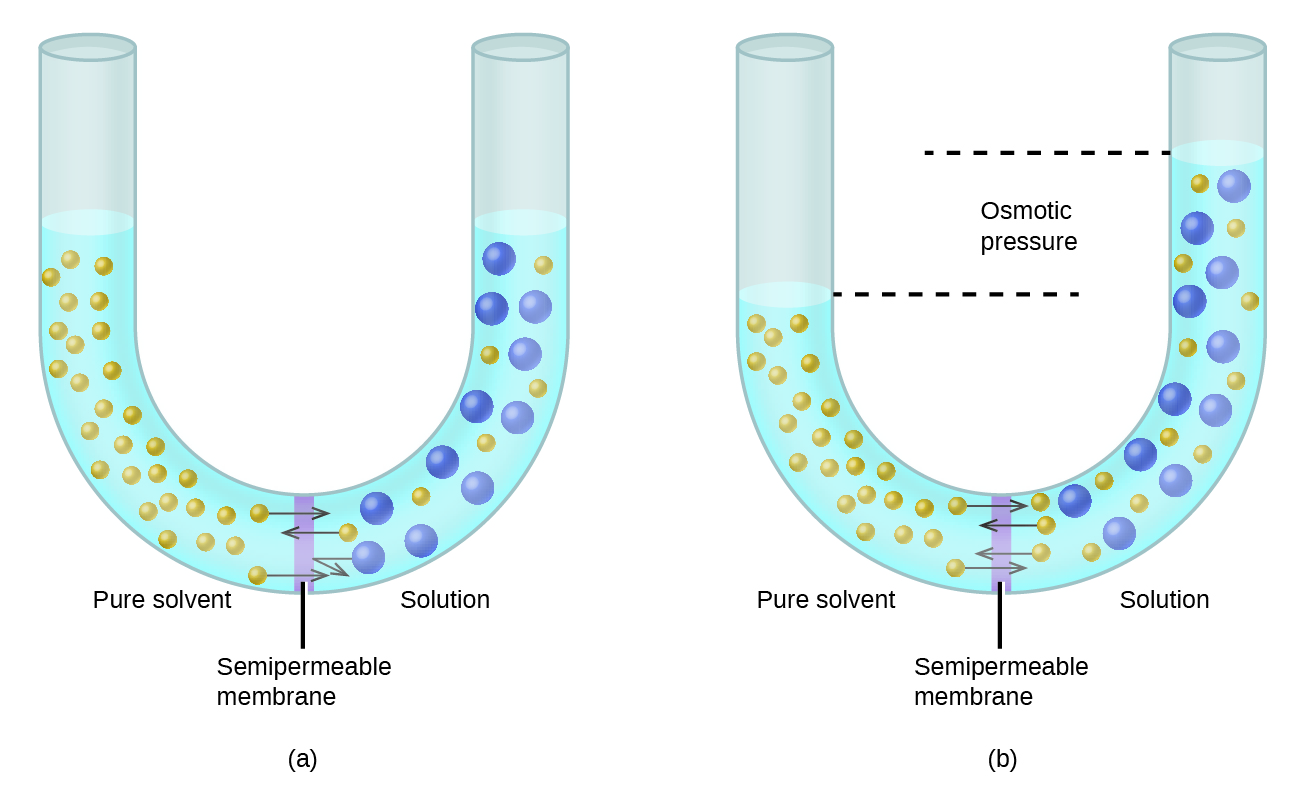
Osmotic Pressure- the pressure required to prevent the flow of solvent into a solution through a semipermeable membrane, and it is directly proportional to the solute concentration.