Study Guide on Neisseria
Modified Thayer-Martin Medium (MTM) and Variants
MTM: Modified Thayer-Martin Medium
NYC Medium: New York City Medium
aML: Martin-Lewis Medium
Family Neisseriaceae
Genera: Includes Neisseria, Kingella, Eikenella, and 32 other genera.
Neisseria Species:
Characteristics: Gram-negative cocci, usually found in pairs (diplococci).
Pathogenic Species:
Neisseria gonorrhoeae (gonococci): Exclusively pathogenic for humans, typically found inside polymorphonuclear cells (PMNs). Causes gonorrhea.
Neisseria meningitidis (meningococci): Also exclusively pathogenic for humans, associated with diseases such as meningitis and sepsis.
Non-pathogenic Species: Many Neisseria species are normal inhabitants of the human respiratory tract, rarely causing disease.
Table 20-1: Biochemical Reactions of the Neisseriae and Moraxella catarrhalis (High-Yield for Identification)
Growth on Media: MTM, ML, NYC Medium (selective media used for isolation of pathogenic Neisseria).
Acid Produced from Carbohydrates:
Glucose: + for N. gonorrhoeae, N. meningitidis, N. lactamica; - for others (key differentiator).
Maltose: + for N. meningitidis, N. lactamica; - for others (key differentiator).
Lactose: + for N. lactamica; - for others.
Sucrose or Fructose: - or Variable for all listed.
Morphological and Identification Characteristics
Typical Organisms
General Structure:
An aerobic, Gram-negative, nonmotile diplococcus (0.8 m in diameter).
Kidney bean-shaped; when in pairs, the flat or concave sides are adjacent.
Figures:
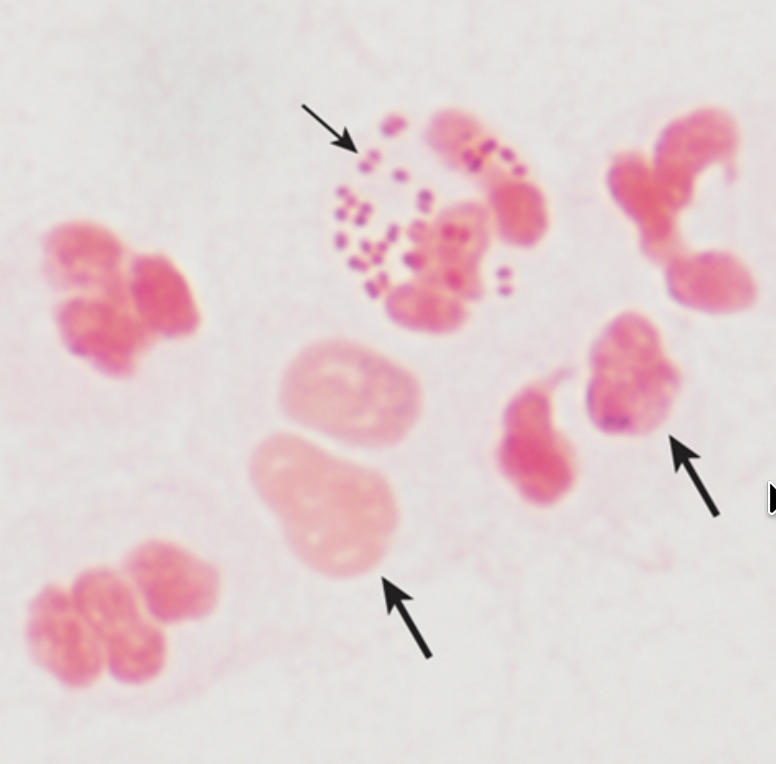
Figure 20-1: Gram-stain of urethral exudate from a gonorrhea patient showing PMNs with intracellular diplococci (N. gonorrhoeae) — High-Yield Visual.
Culture Characteristics
Pathogenic and non-pathogenic Neisseria can be differentiated based on their ability to grow on agar types:
Optimal Conditions: 5% CO2 at 37°C is optimal for growth (capnophilic).
N. meningitidis: Grows on blood agar and selective media.
N. gonorrhoeae: Requires enriched chocolate agar and/or selective media for optimal growth (fastidious organism).
Selective Media: Contains vancomycin, colistin, nystatin/trimethoprim (VCN/VCNT) to inhibit commensal growth. Examples: MTM, NYC, ML.
Colony Characteristics: Grows in convex, mucoid colonies (1–5 mm).
Growth Characteristics
Aerobic Conditions: Neisseriae prefer aerobic environments but some species like N. gonorrhoeae can grow anaerobically.
Carbohydrate Metabolism: Produce acid through oxidation (not fermentation), crucial for identification via oxidase tests.
Oxidase Test: Use filter paper soaked with tetramethyl-p-phenylenediamine hydrochloride; positive results lead to rapid dark purple coloration (all Neisseria species are oxidase-positive) — Testable Concept.
Nutritional Needs: Most Neisseria are non-nutritionally demanding, except for meningococci and gonococci that prefer media with organic substances (e.g., amino acids, vitamins).
Neisseria gonorrhoeae (Gonococci)
Unique Characteristics
Metabolism: Oxidizes glucose; smaller colony size than other Neisseriae species.
Auxotypes: Gonococci auxotypes requiring arginine, hypoxanthine, and uracil (Arg−, Hyx−, and Ura−) grow slower. These auxotypes are often associated with disseminated infections.
Antigenic Structure (Virulence Factors)
Pili (Fimbriae): Hairlike appendages (molecular weight: 17-21 kDa) for crucial initial adhesion to host epithelial cells, resistance to phagocytosis, and undergo extensive antigenic variation to evade antibody response — High-Yield.
Por Proteins (Protein I): Integral outer membrane proteins (molecular weight: 32-36 kDa) forming pores for nutrient acquisition, resist phagolysosome fusion within phagocytes, and contribute to serum resistance.
Opa Proteins (Protein II): Involved in tighter adhesion to host cells, invasion, and modulate immune response. Can vary per strain with multiple genes (molecular weight: 20-28 kDa). Expression is linked to colony opacity.
Lipooligosaccharide (LOS): Lacks long O-antigen side chains compared to LPS; an endotoxin responsible for much of the inflammatory damage. Sheds into the environment as 'blebs' or outer membrane vesicles. Associated with pathogenicity, immune evasion (e.g., sialylation of LOS mimics host glycans), and triggers intense inflammatory response.
IgA Protease: Cleaves human IgA1, helping the bacteria to evade mucosal immunity.
Pathogenesis and Clinical Findings (Expanded)
Infection Mechanism: N. gonorrhoeae primarily infects mucosal surfaces by adhering via pili and Opa proteins, invading non-ciliated epithelial cells. Intracellular survival and rapid multiplication allow it to evade host defenses and trigger inflammation. Endotoxin (LOS) is a major contributor to symptoms.
Infection Sites: Primarily genitourinary tract, rectum, pharynx, and eyes.
Clinical Manifestations: Acute suppurative infections leading to chronic inflammation.
Men:
Urethritis: Most common manifestation. Symptoms include dysuria (painful urination) and purulent urethral discharge. Incubation: 2-7 days. Often symptomatic.
Epididymitis: Less common, usually unilateral testicular pain and swelling.
Women:
Cervicitis: Most common site of infection. Often asymptomatic (up to 50% of cases), but can present with vaginal discharge, dysuria, intermenstrual bleeding. Untreated cervicitis can lead to complications.
Pelvic Inflammatory Disease (PID): Ascending infection from the cervix to the uterus (endometritis), fallopian tubes (salpingitis), and ovaries (oophoritis). Causes lower abdominal pain, fever, abnormal uterine bleeding, dyspareunia. Major cause of infertility, ectopic pregnancy, and chronic pelvic pain — High-Yield Complication.
Perihepatitis (Fitz-Hugh-Curtis syndrome): Inflammation of the liver capsule and adjacent peritoneum, causing right upper quadrant abdominal pain. Often associated with PID.
Extragenital Infections (both sexes):
Pharyngitis: Sore throat, usually mild or asymptomatic.
Proctitis: Anal discomfort, discharge, tenesmus.
Conjunctivitis: Purulent discharge. Ophthalmia neonatorum (gonococcal conjunctivitis of newborns) acquired during passage through birth canal; can lead to blindness if untreated. Preventive treatment with erythromycin eye ointment is standard — High-Yield for Newborns.
Disseminated Gonococcal Infection (DGI): Occurs in 1-3% of untreated infections, often from asymptomatic mucosal infections. Bacteria disseminate via the bloodstream.
Arthritis-Dermatitis Syndrome: Most common DGI presentation. Characterized by polyarthralgia (migratory joint pain), tenosynovitis (inflammation of tendon sheaths, commonly wrists, ankles), and sparse skin lesions (pustules or hemorrhagic papules on extremities) — High-Yield Clinical Finding.
Septic Arthritis: Involves a single joint (commonly knee, wrist, ankle); purulent synovial fluid.
Rare Complications: Endocarditis, meningitis.
Neisseria meningitidis (Meningococci)
Antigenic Structure (Virulence Factors)
Serogroups: At least 13 identified based on capsular polysaccharides, with A, B, C, X, Y, and W-135 being most significant globally. Serogroups A, B, C, Y, W-135 are included in current vaccines — Testable Concept.
Virulence Factors: Thick polysaccharide capsule is the primary virulence factor, aiding in immune evasion by resisting phagocytosis and complement-mediated lysis. Undergoes molecular mimicry (e.g., serogroup B capsule resembles host neural adhesion molecules). Pili, Opa proteins, and LOS also contribute to pathogenesis.
Pathogenesis and Clinical Findings (Expanded)
Infection Mechanism: N. meningitidis colonizes the nasopharynx via pili, overcoming local defenses. It can then invade the bloodstream, facilitated by its antiphagocytic capsule. Once in the blood, it can cross the blood-brain barrier to cause meningitis or lead to systemic sepsis. The release of large amounts of LOS (endotoxin) during rapid bacterial multiplication and lysis causes the severe systemic inflammatory response (sepsis) and vascular damage.
Infection Mechanism: Predominantly infects through nasopharynx, leading to bacteremia.
Clinical Presentation: Meningitis or meningococcemia (sepsis) are the most common and severe forms.
Meningitis: Sudden onset of fever, severe headache, nuchal rigidity (stiff neck), photophobia (light sensitivity), and altered mental status (confusion, lethargy, coma). Kernig's and Brudzinski's signs may be present. Can progress rapidly to coma and death — High-Yield Clinical Findings.
Meningococcemia (Sepsis): A severe, rapidly progressive systemic infection. Characterized by:
Petechiae and Purpura: Characteristic non-blanching, diffuse rash (small hemorrhagic spots spreading to larger ecchymoses) due to vasculitis and capillary thrombosis caused by LOS — Classic Sign / High-Yield.
Disseminated Intravascular Coagulation (DIC): Activation of coagulation cascade leading to microthrombi, organ damage, and paradoxical bleeding.
Hypotension and Shock: Due to widespread vasodilation and capillary leakage induced by LOS.
Waterhouse-Friderichsen Syndrome: A fulminant form of meningococcemia characterized by massive bilateral adrenal hemorrhage, leading to acute adrenal insufficiency, profound shock, and rapid death — Life-Threatening / High-Yield.
Less Common Manifestations: Pneumonia, arthritis, pericarditis.
Diagnostic Tests
Laboratory Specimens: Blood, CSF, nasopharyngeal swabs (for carriers).
Culture Method: Smears from CSF or blood plated on appropriate media (chocolate agar, blood agar, selective media for N. meningitidis); oxidase test for identification. Gram stain of CSF showing Gram-negative diplococci (intra- or extracellular) is highly suggestive.
Molecular Methods: Nucleic Acid Amplification Tests (NAATs) are increasingly used for rapid and sensitive detection, especially for N. gonorrhoeae and N. meningitidis. Allows detection even after antibiotic administration.
Serology
Antibodies: Measured via latex agglutination (for capsular polysaccharides), associated with certain strains and induced by prior infections or vaccinations. Used for rapid detection of capsular antigens in CSF or blood.
Treatment Guidelines (High-Yield Concepts)
Neisseria gonorrhoeae Treatment
Current Recommendations: Due to rising antibiotic resistance, dual therapy is recommended: Ceftriaxone (250 mg IM single dose) + Azithromycin (1 g orally single dose). This provides synergistic action and may slow resistance development — Critical / High-Yield.
Alternative Treatments: In case of azithromycin allergy, use doxycycline (100 mg twice daily for 7 days).
Neisseria meningitidis Treatment
Primary Drug: Penicillin G is typically effective. High doses are needed to penetrate the blood-brain barrier. Alternatives include cefotaxime or ceftriaxone for allergic patients or empirical treatment until sensitivities are known. Early treatment is critical to reduce mortality.
Epidemiology, Prevention, and Control (High-Yield Concepts)
Gonorrhea
Incidence Rates: Fluctuated over decades, with increased infection rates in the last few years. Second most common bacterial STI.
Transmission: Exclusively via sexual contact; high risk with asymptomatic carriers, especially women.
Prevention Methods: Education, screening of high-risk populations, mechanical prophylaxis (condoms), and application of erythromycin ointment for newborns preventing conjunctivitis (Crede's prophylaxis).
Meningococcal Disease
Epidemiological Patterns: Sporadic cases are common; epidemics occur in specific geographic areas (e.g., the 'meningitis belt' in sub-Saharan Africa). Spread by respiratory droplets.
Vaccine Recommendations: Routine vaccination (polysaccharide and conjugate vaccines for serogroups A, C, Y, W-135; protein-based vaccines for serogroup B) in adolescents and at-risk groups (e.g., travelers to endemic areas, military recruits, complement deficiencies) — High-Yield for Prevention.
Chemoprophylaxis: Recommended for close contacts post exposure to confirmed cases (e.g., rifampin, ciprofloxacin, ceftriaxone) to eradicate nasopharyngeal carriage.
Other Neisseria Species
Non-Pathogenic: N. lactamica rarely causes disease; part of respiratory tract normal flora.
Grows on selective agar used for pathogenic Neisseria.
Differentiated by positive lactose utilization.
Moraxella catarrhalis: Previously known as Branhamella catarrhalis; causes infections like otitis media, sinusitis, bronchitis, and pneumonia, especially in children and immunocompromised individuals. Resistant to penicillins due to beta-lactamase production but susceptible to many other antibiotics.
Chapter Summary
Major pathogens include N. gonorrhoeae (causes gonorrhea) and N. meningitidis (causes meningitis and sepsis). Both have significant virulence features facilitating disease in healthy individuals. Most Neisseria species exist as part of normal flora and vary in growth requirements. Diagnosis primarily through NAATs with treatment involving specific antibiotics based on resistance patterns. Vaccination remains a primary preventive strategy against meningococcal infections.