10/10(new)
Direct Capitalization & Cap Rates
Income Approach
often called “income capitalization”
capitalize: the process of converting future income into a present value
Real estate development (ground-up construction) has slightly different considerations
How much income does the subject generate
buyers perspective
Will the subject supply the magnitude of income I need, at the time I need it, with the appropriate risk?
underlying assumptions
The value of a real estate can be estimated from the present value of its future anticipated income
two methods
Direct capitalization - is a real estate valuation method that estimates a propertys market value by dividing a single year's net operating income (NOI) by a market-derived capitalization rate (cap rate)
Property value = net operating income/ capitalization rate
discounted cash flows (DCF)- is a valuation method that estimates the value of an investment today based on its projected future cash flows
present value= cash flow/ (1+discount rate)^time
how do DCF and Direct Cap Differ?
both models require a calculation of the Net Operating Income (NOI) which is the “cash flow” to the owner?
direct capitalization requires:
first year (NOI)
selection of an applicable cap rate
DCF valuation requires:
estimate of holding period
estimates of annual CF (NOI) over the holding period
estimate of the reversion (expected sale of the property)
selection of discount rate (based on OCC or IRR)
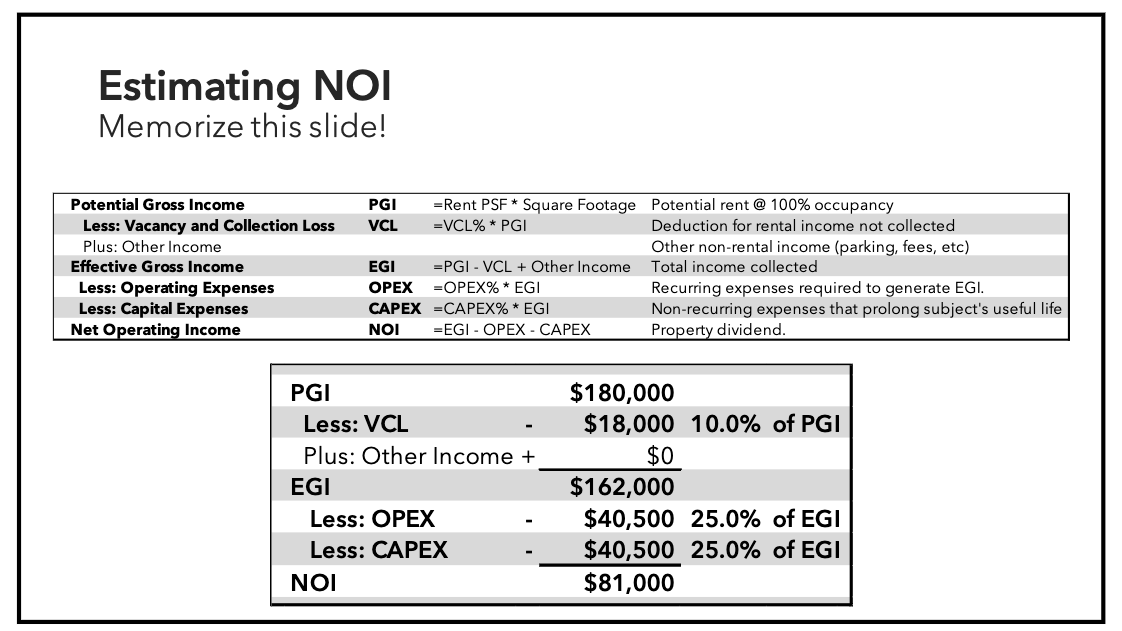
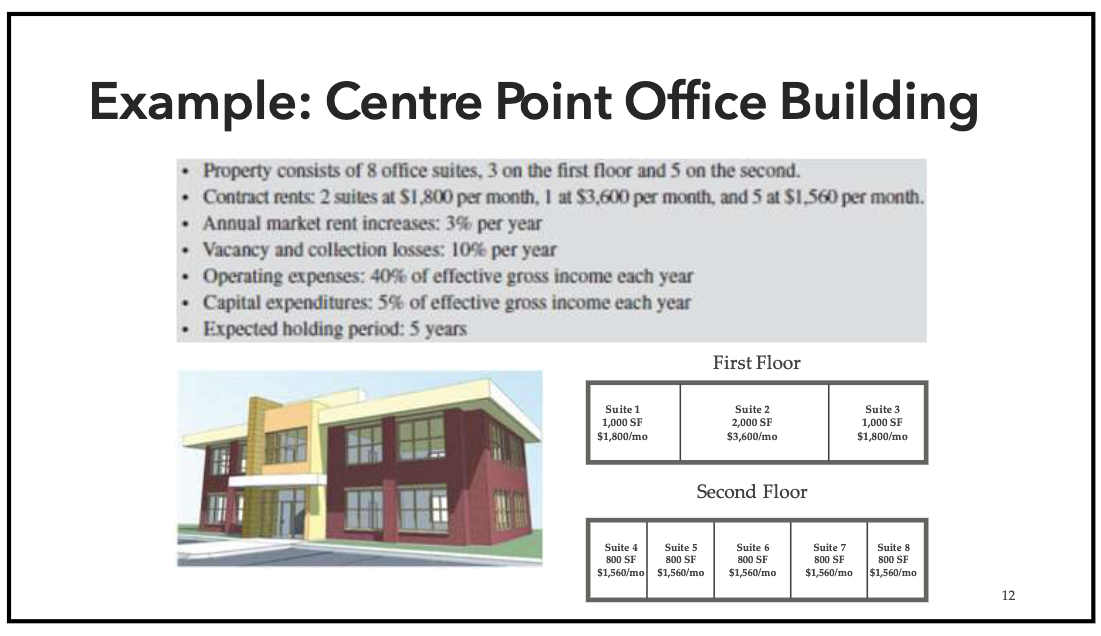
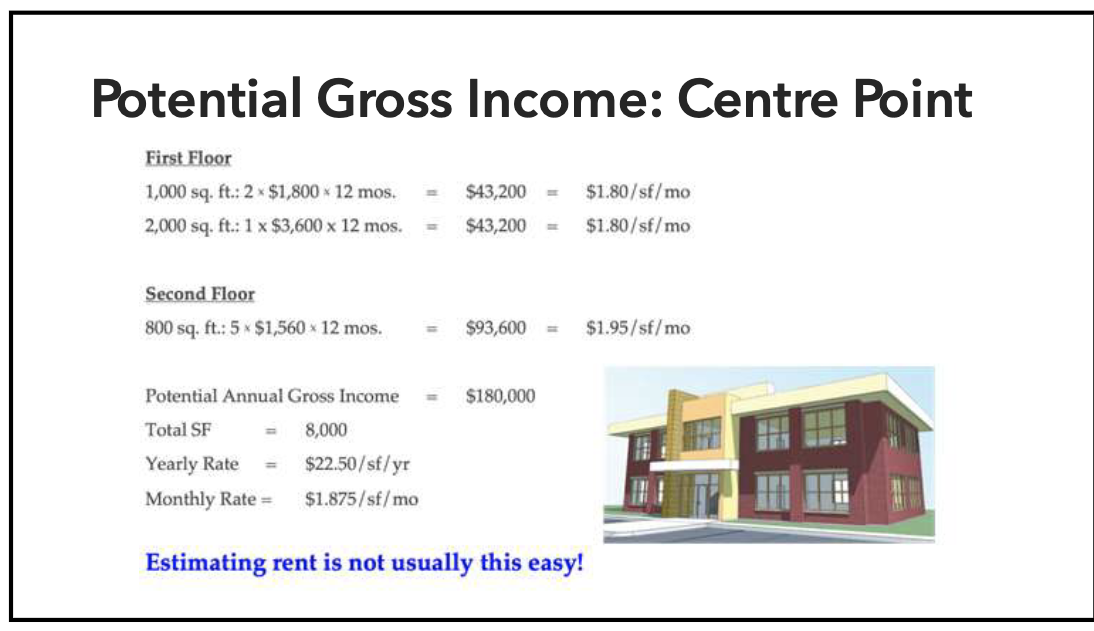
Potential Gross Income (PGI)
rental income assuming 100% occupancy
sometimes referred to as potential gross revenue (PGR)
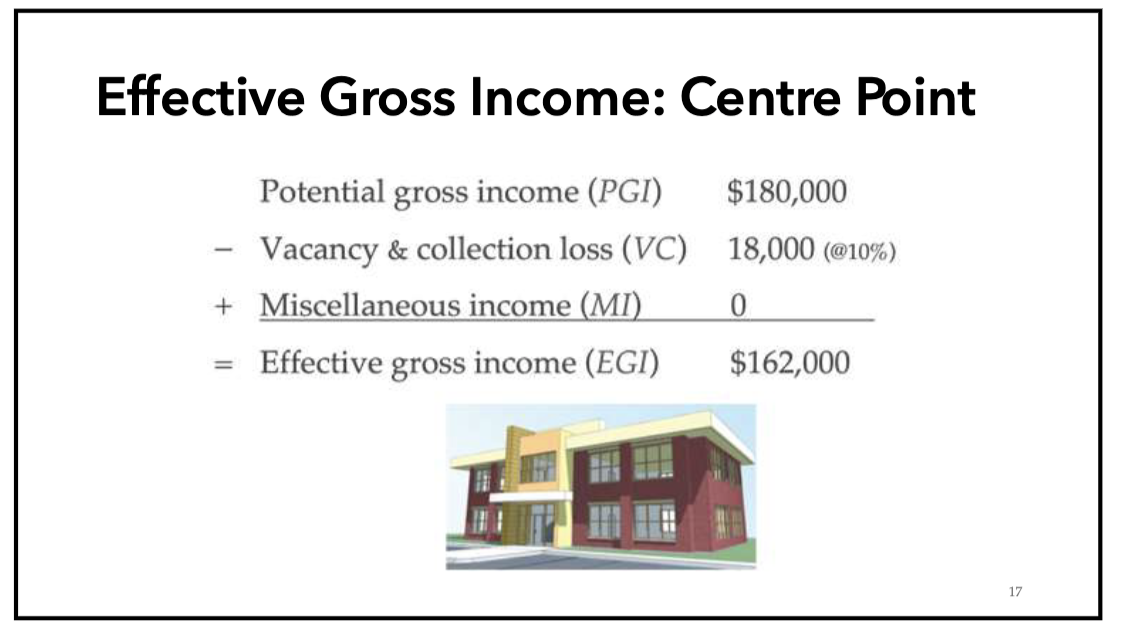
vacancy and collection loss
we must transition our income forecast from “potential” to “effective”
one difference is the amount of income effectively reaalization
vacancy and collection (VC) loss is based on:
historical experience of subject property
competing properties in the market
“natural vacancy” rate: vacancy rate that is expected in a stable or equilibruim marker
other income
income other than rents
does not include expense reimbursements ( we treat those separately)
other/ misc. income
garage rentals and parking fees
laundry and vending machines
clubhouse rentals
operating expenses (OPEX)
ordinary, recuring expenditures necessary to keep a property functioning competitvely. required to generate EGI
fixed: DOES NOT vary with occupancy ( at least in the short-run)
insurance
real estate tax
variable: DOES vary with occupancy
CAM (common area maintenance)
management
utilities
janitorial
DOES NOT include:
mortgage payments
tax depreciation
capital expenditures
capital expenditures (CAPEX)
non-recurring expenditues that increase value of structure and prolong its useful life:
roof replacement
additions
HVAC replacement
resuracing of parking area
capital (rather than expense payments) are being put into the property
for our purposes, we are primarily focused on the “bottom" line” (NOI/net cash flows)
however, there are tax motivations for classifying expenditures as operating expenses vs. capital expenditures
different treatments of CapEX