Chapter 6B
Policies to Maintain Full Employment
Resources used in the production process can be over-employed or underemployed.
When resources are used effectively + sustainably, production is at its potential or natural level.
when resources are not used effectively, resources are underemployed:
high unemployment, few hours worked, idle equipment, lower than normal production of goods + services.
when resources are not used sustainably, labor is over-employed:
low unemployment, many overtime hours, over-utilized equipment, higher than normal production of goods and services.
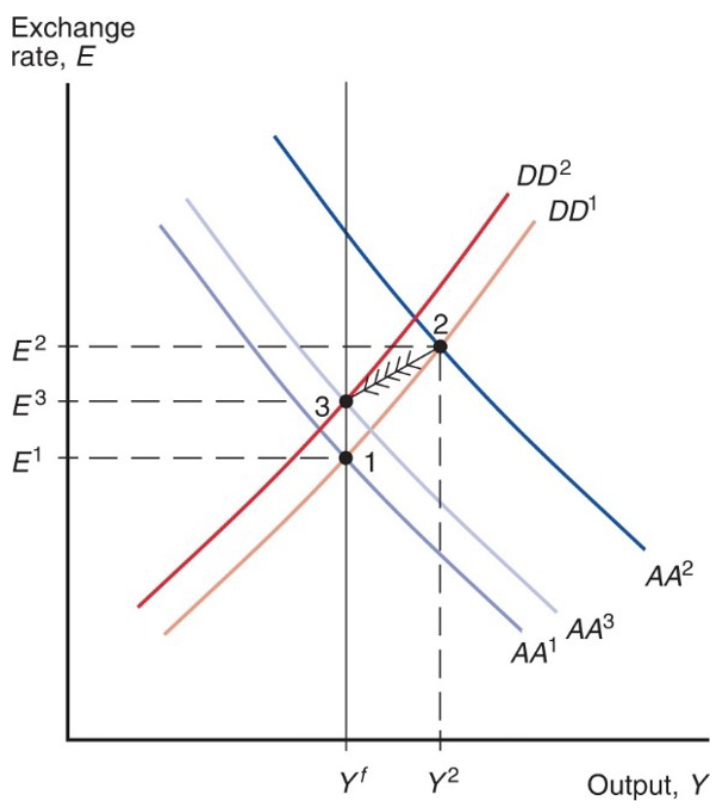
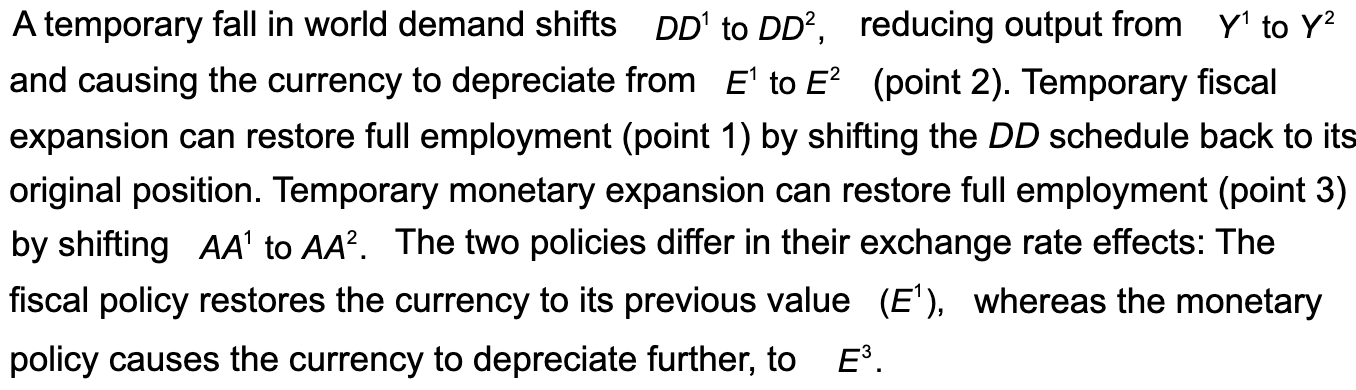
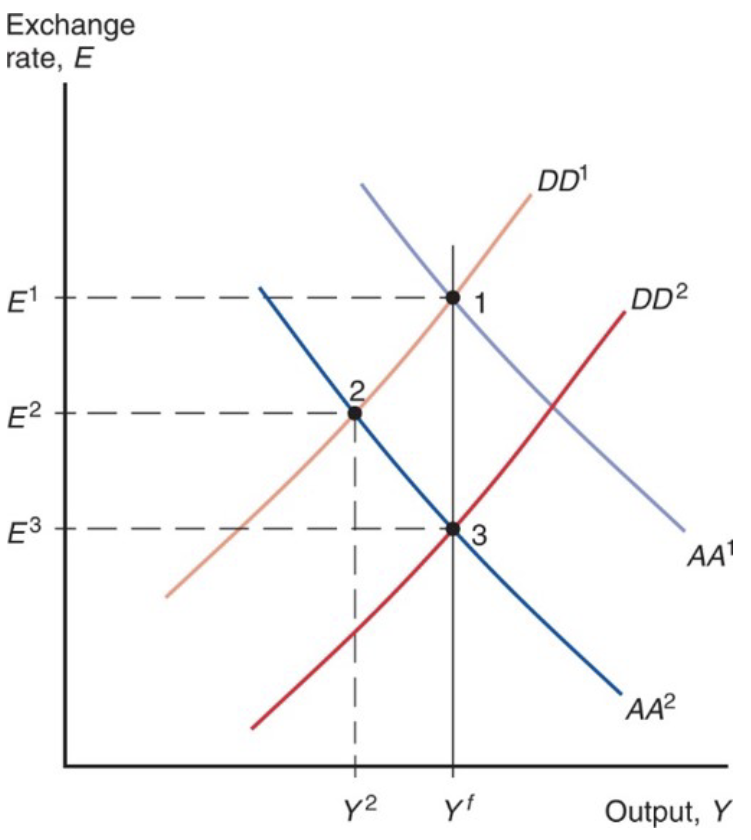
Maintaining Full Employment after Temporary Fall in World Demand for Domestic Products
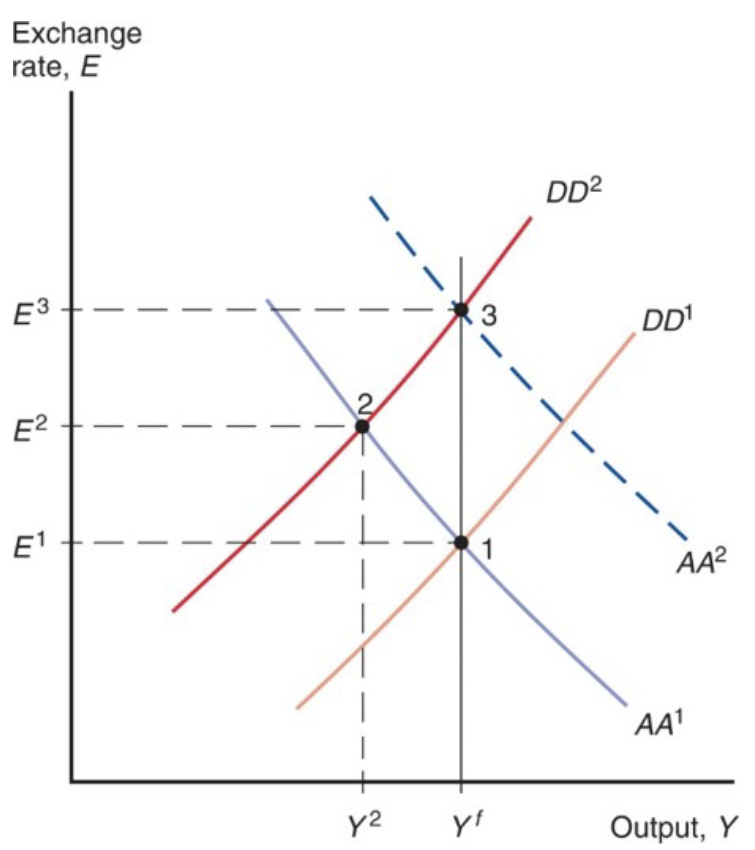
Policies to Maintain Full Employment After Increase in Money Demand
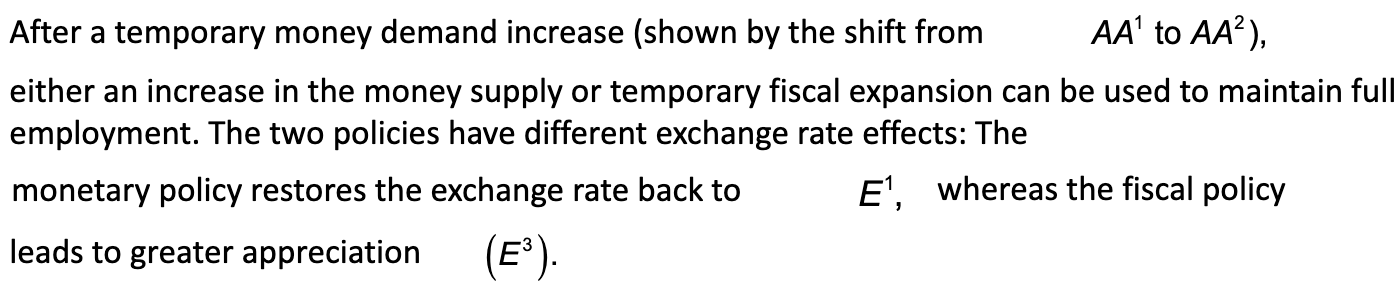
Policies to maintain full employment may seem easy in theory, but are hard in practice.
We assumed prices + expectations don’t change, but in reality people may anticipate effects of policy changes and modify their behaviour;
e.g. workers may require higher wages if they expect overtime and easy employment
producers may raise prices if they expect high wages and strong demand due to monetary + fiscal policies.
thus, fiscal + monetary policies may create price changes and inflation, preventing high output and employment: known as inflationary bias.
Economic data is difficult to measure and understand.
e.g. policy makers cannot interpret data about asset markets and aggregate demand with certainty and may sometimes make mistakes.
Changes in policies take time to be implemented + to affect the economy.
since they are slow, policies may only affect the economy after disruptive effects of economic changes have disappeared.
Policies are sometimes influenced by political or bureaucratic interests.
Permanent Changes in Monetary Policy
Permanent policy changes are assumed to modify people’s expectations about ex rates in the long run;
e.g. a permanent increase in the quantity supplied of monetary assets has several effects:
it lowers interest rates in the short run and makes people expect future depreciation of the domestic currency;
increasing expected RoR on foreign currency deposits.
the domestic currency depreciates (E rises) more than when expectations are constant.
the AA curve shifts up (right) more than when expectations are constant.
Short-Run Effects of Permanent Increase in Money Supply

Long Run Effects of Permanent Changes in Monetary Policy
With employment and hours above their normal levels, there is a tendency for wages to rise over time.
With increasing wages and strong demand for goods + services, producers have incentive to raise prices over time.
Both higher wages and higher output prices are reflected in a higher level of average prices (inflation).
Long-Run Adjustment to Permanent Increase in Money Supply