Changing Populations Vocab
North South Divide - Comparing the northern and southern hemispheres
HIC - High income countries
LIC - Low income countries
MDC - Most developed countries
LDC - least developed countries
Development gap - disparity between the rich and poor
OPEC - organization of Petroleum Exporting Countries
G7/G20 - Biggest economies in the world (G70) top 7 top 20 economies
Place - Where are people living - push and pull factors
Distribution
Density - number of things in an area
Agricultural Density - total number of farmers per unit of farmable land
Arithmetic Density - human resident to land area
Carrying Capacity - number of people one place can support
Census - a study of the people in an area
Child mortality rate - number of babies who die before the age of five per thousand live births each year
Cornucopian theory - Population growth is a good thing
Crude birth rate - number of babies born each year per 1000
Crude death rate - number of deaths per 1000
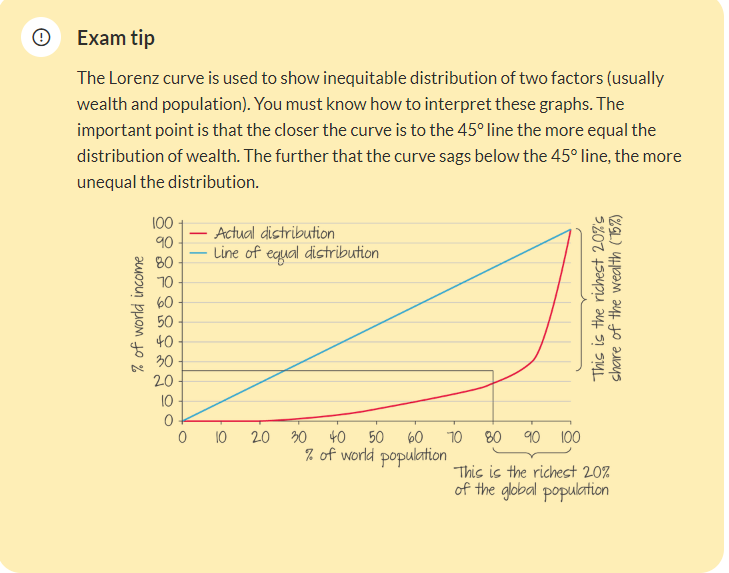
Demographic transition - how a country changes over time
Demography - study of human population
Dependency ratio - the amount of working to non working people
Doubling time - number of time for a population to double
Ecumene - inhabited land
Emigration/immigration - people who leave and people who are in a new countries
Infant mortality rate - number of babies who die before the age of one per thousand live births each year
J-curve - sudden acceleration (exponential growth)
Life expectancy - estimate span of life
Malthusian theory - population and food relationship
Natalist - promote and support human reproduction
Natural increase rate - higher birth rate than death rate
Overpopulation - too many people for one area
Physiological density - total population per unit of arable land
Population center - main point of population
Population pyramid - a model that shows population in regards to the different sexes
Push/ pull factors - things that attract and defer people from a location
Refugee - someone who left their country due to forced migration
S-curve - logistic growth
Sex ratio - females to males
Total fertility rate
Urbanization - more people move to cities or towns
Suburbanization - more people around a city or town
Zero population growth - equilibrium
LEDC - Less economically developed country
NIC - Newly industrialized country
Migration - people moving from one place to another but not forever
Population momentum
Population projection - what the population might become based on knowledge of the present and past0
Megacity - 10 million people or more (bright lights syndrome
Forced migration - people have to leave their home due to conflict or unsafe situations
Trafficking - buying or selling goods illegally
Demographic dividend - the economic growth that can occur when there is change in economic ages
Stage 1: No Countries
Stage 2: Bolivia, Uganda, Afghanistan
Stage 3: India, South Africa, UAE, Jamaica
Stage 4: Brazil, Canada, US, most of Europe, China
Stage 5: Japan is the closest country to stage
Challenges: of changing populations
Aging population
Human trafficking
Financial disparity
Homelessness
Human rights
Human Trafficking: often found in LDCs and megacities
21 million victims around the world
40% are forced to do work
53% exploited in sex industry
12 countries for organ removal
7% petty crime and children are in armed conflict
40% of countries convicted fewer than 10 traffickers
Opportunities:
Demographic Dividend - infrastructure improves
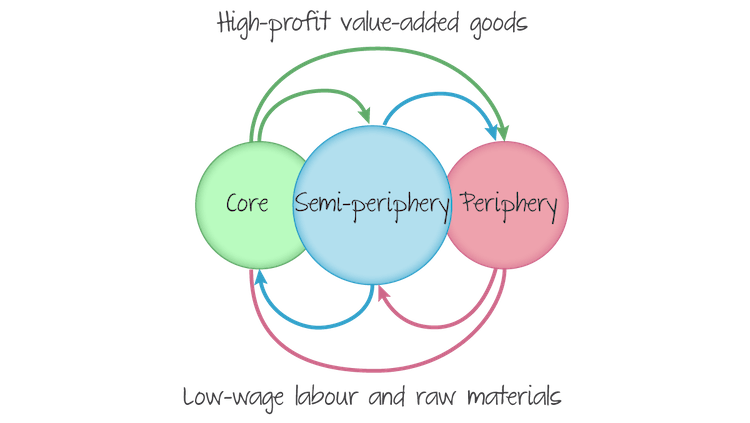 core - periphery model - identifies and explains spatial differences
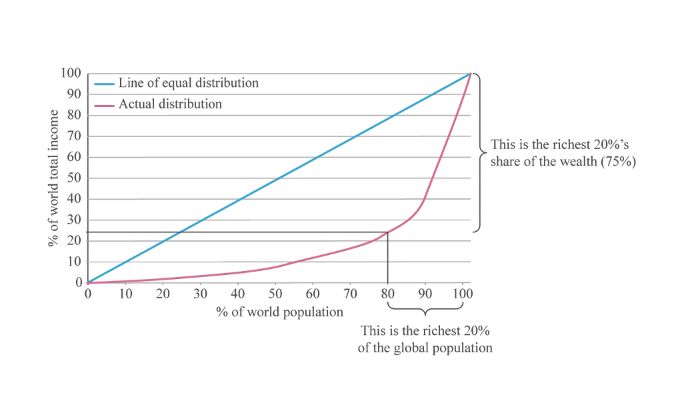 How to read the Lorenz curve